Renter-Friendly Bathroom Wallpaper: Moisture & Sizing Guide
Install renter-friendly bathroom wallpaper without peeling. Humidity prep, pattern repeat math, moisture ventilation, and damage-free move-out removal.
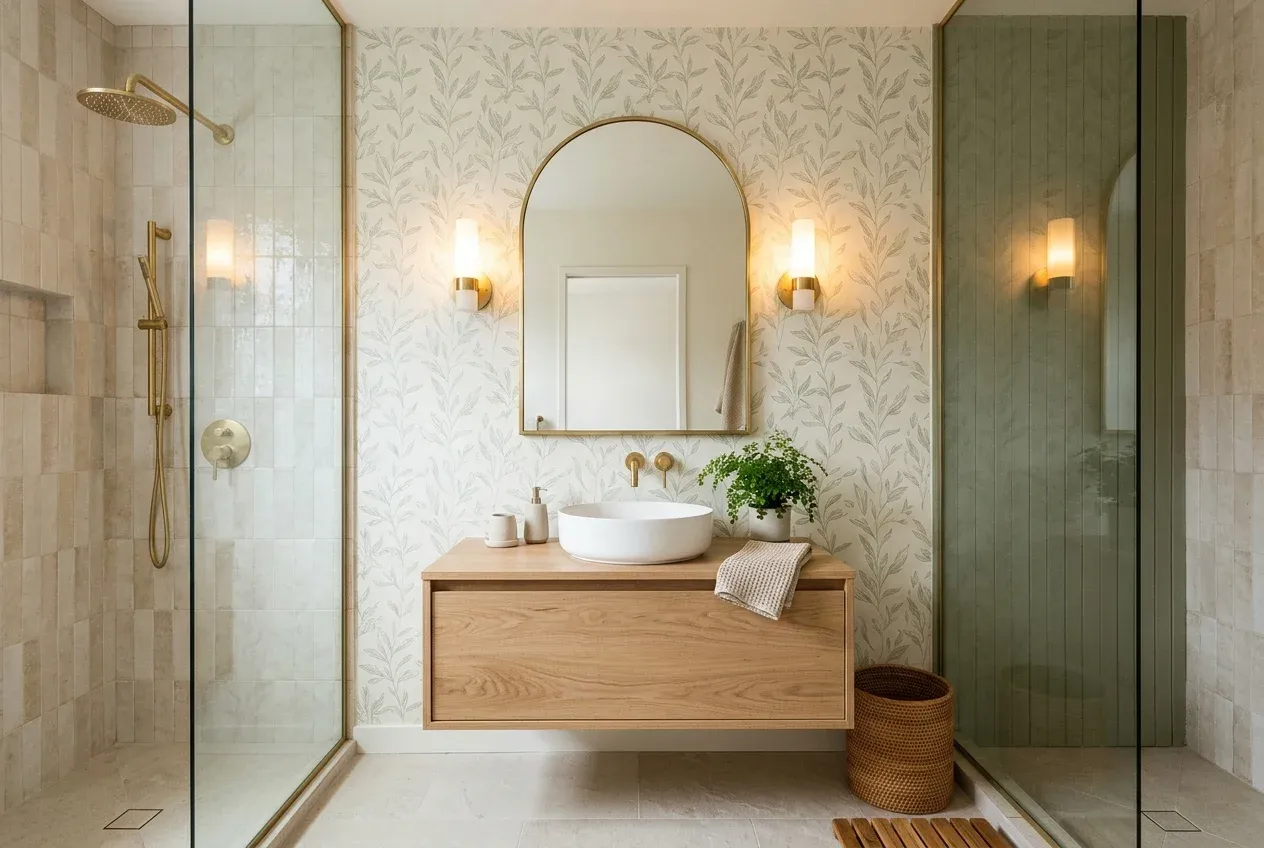
Room specifications
- Room ScaleSmall powder room or rental bathroom (about 40 sq ft)
- Design StyleWarm Minimalist / Japandi
- Budget TierBudget ($)
- Palette Swatches4 colors
Peel-and-stick wallpaper calculator
Enter the wall, the match type and your roll. It gives the wall area, the extra to allow and how many rolls to buy.
One wall: 40 sq ft (3.7 sq m). With a 15 to 20% allowance for the pattern, order 46 to 48 sq ft (4.3 to 4.5 sq m). A 20.5 in x 16.4 ft roll covers 28 sq ft, so buy 2 rolls. Roll width, length and repeat vary by product: check the label before you order.
The wall laid flat to scale. Each strip is one roll width, so the seams show where the panels meet.
Full-page version: Peel-and-Stick Wallpaper Calculator: Rolls Needed
Peel-and-stick wallpaper can work in a rental bathroom, but only on a smooth, sealed, low-sheen painted wall (satin or eggshell), and only if the room dries out well after showers. Test one sample for a week before you buy rolls, run the exhaust fan after every shower, and wait about 48 hours after a hot shower before applying anything. Whether it holds depends far more on the wall and the humidity than on the brand.
Most leases forbid permanent painting or pasted wallpaper, so renters often put up with a beige builder-grade room. A self-adhesive wallpaper on one wall is the lowest-risk way to change that, and it comes off with warmth and patience.
Will it stick to your bathroom walls?
Check the surface before anything else. The adhesive grips smooth, sealed paint and fails on most other surfaces.
| Surface | Does it hold? | Why |
|---|---|---|
| Satin or eggshell painted drywall | Yes | Smooth and sealed, so the adhesive grips |
| Semi-gloss painted drywall | Yes, after a wipe-down | Remove any sheen residue first |
| Orange-peel textured drywall | No | The adhesive bridges the peaks, not the valleys |
| Matte or chalk-finish paint | No | Porous, and the paint can lift on removal |
| Bare or primed drywall | No | Unsealed paper tears on removal |
| Tile or glass | Sometimes | Non-porous; a bonding primer may be needed, and it is a bigger commitment for a rental |
| Existing wallpaper | No | The adhesive bonds to the old paper, not the wall |
Peel-and-stick is also not a good match for surfaces that get direct spray. Keep panels well away from the shower stall; about 12 in (30 cm) is a minimum, and 18 to 24 in (46 to 61 cm) is safer, so spray does not loosen the edges.
The one-week sample test
Before you commit, order a small sample and stick it in the corner of the bathroom for 7 days of daily showers. If the edges lift or bubble, the product will not last on that wall. This costs one sample and can protect your deposit. A tack test also tells you how the adhesive behaves when you peel it off, so try removing the sample slowly at the end of the week.
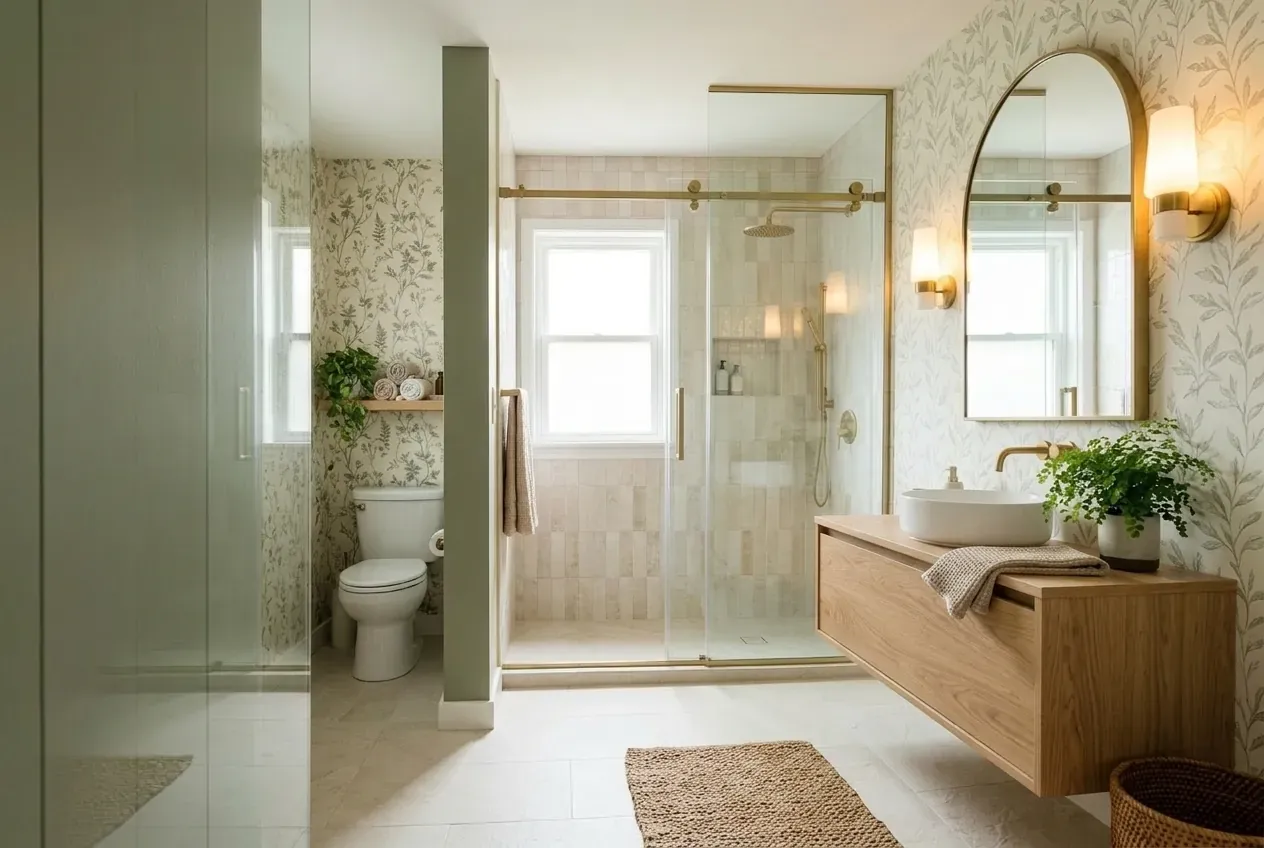 The same room seen from the opposite end, so you can judge the layout from the far side.
Moisture and ventilation
Wallpaper in a bathroom is mostly a ventilation problem.
- Run the exhaust fan for around 20 to 30 minutes after showers; 10 minutes is a bare minimum. If there is no fan, use a window, or the guidance in the dehumidifier sizing guide.
- Dry the wall first. Drywall absorbs vapour that can get trapped under vinyl and cause bubbles. Let the room dry for about 48 hours of normal use, with the fan on, before installing.
- Choose a wipeable vinyl or polyester paper and avoid thin paper types, which do not like steam.
- Wipe, do not scrub. Use a soft cloth and mild cleaner.
How much to buy
Covering every wall is rarely a good idea in a small bathroom. An accent wall behind the vanity or mirror gives most of the visual effect for far less material, and every seam you add is another place for steam to get in.
- A single accent wall in a typical 5 x 7 ft bathroom is roughly 40 to 60 sq ft (3.7 to 5.6 sq m).
- A full wrap is about 140 to 180 sq ft (13 to 17 sq m).
Pattern repeat is the vertical distance before the design repeats, and it decides how much you throw away:
- No repeat or free match: order about 10% extra.
- Straight match, a 12 to 24 in (30 to 61 cm) repeat: order about 15 to 20% extra.
- Drop match: order about 20 to 25% extra, because every second drop is offset.
These are rules of thumb; check the maker’s guidance. For a 40 sq ft wall with a 20% allowance, buy for about 48 sq ft. A single roll of around 28 sq ft will not be enough even though the wall measures 40.
Where to place it
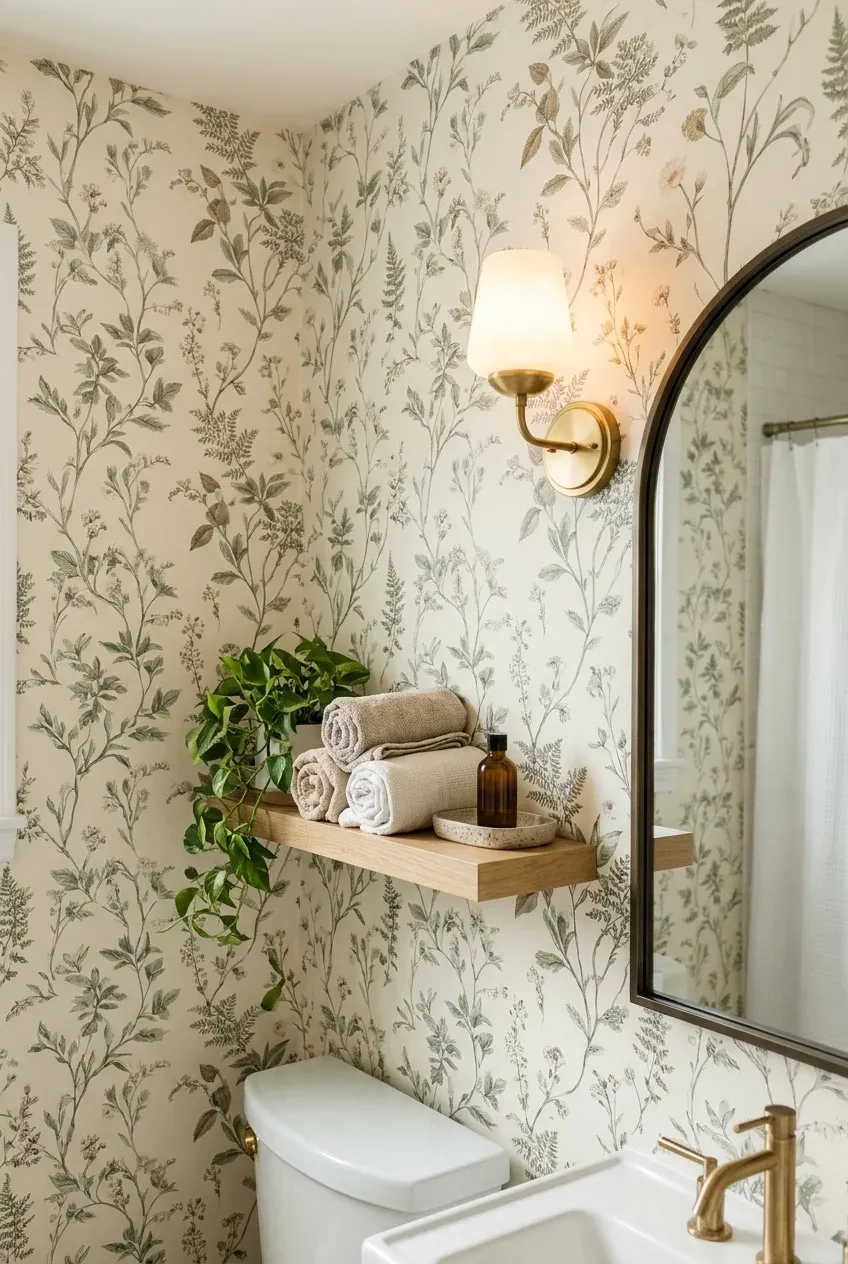
Behind the vanity and mirror. The most common choice and the best for a 5 x 7 ft room. Put the paper on the single wall behind the mirror and toilet. A delicate botanical line print or a warm abstract in a muted green gives the room a focal point. For layout around that wall, see the floating vanity clearance guide.
Above existing tile. If the bathroom has tile to about 48 in, apply paper to the drywall above the tile cap. A linen-look vinyl softens the cold ceramic. Make sure the join between tile and paper is clean and not in the splash zone.
A small powder room. In a windowless half bath, wrapping all four walls in a darker botanical print can feel deliberate. Pair it with a warm light; the wireless sconce guide covers rental-safe options. Keep seams out of the splash area, and see dark moody wallpaper tips for choosing a print.
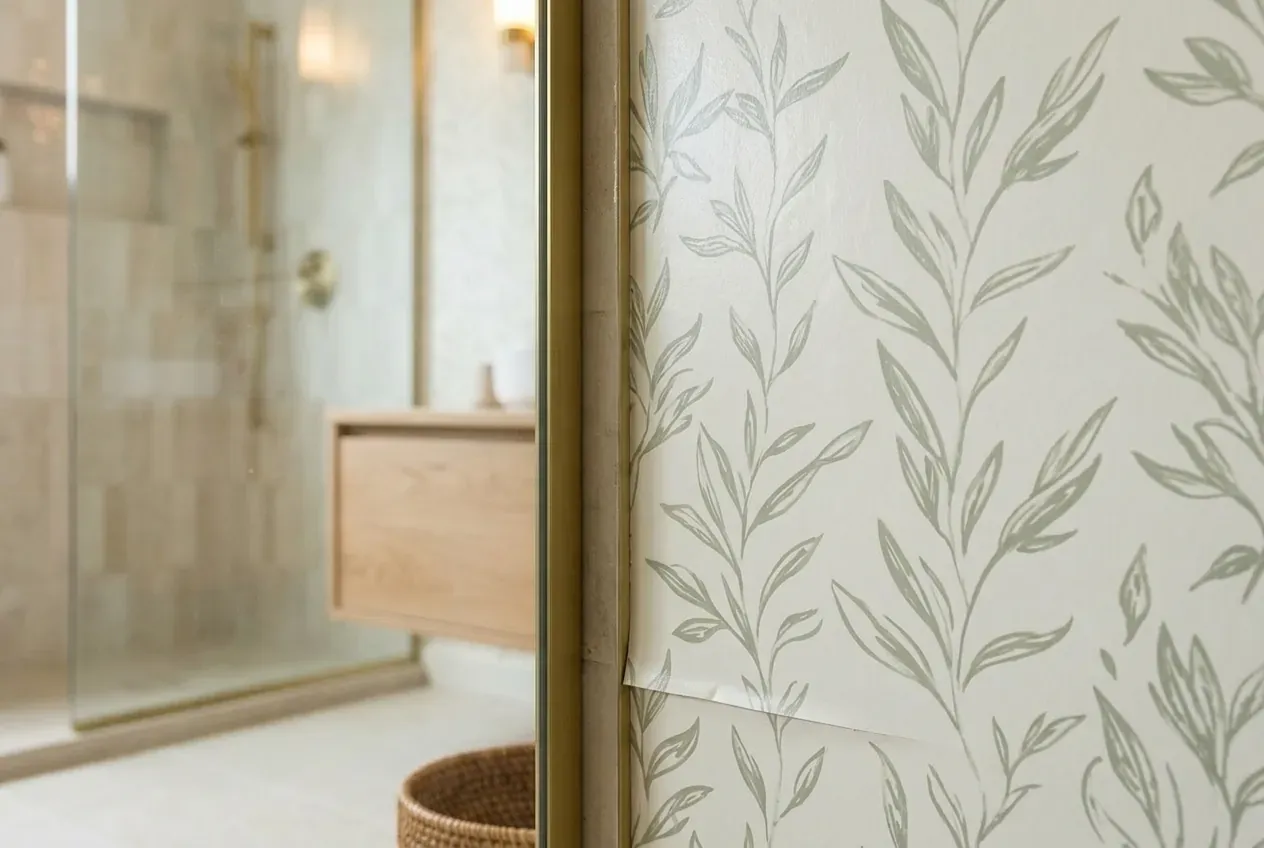 A closer look at the material finishes and the clearances that keep the layout usable.
Wallpaper or stick-on tile?
They solve different problems. Smart tiles and peel-and-stick backsplash tile are rigid or gel-faced and meant for splash zones. Wallpaper is a thin sheet for large flat painted walls.
| Peel-and-stick wallpaper | Peel-and-stick tile | |
|---|---|---|
| Best surface | Large flat painted walls | Splash zones behind sinks |
| Steam tolerance | Moderate, needs good ventilation | Higher, with a water-resistant face |
| Removal | Warm and peel slowly | Warm and peel, stiffer |
| Cost per sq ft | Lower | Higher |
Use wallpaper above the splash line and tile in the wet zone. The stick-on tile guide covers that side. For living-room use, see the renter-friendly wallpaper in a living room guide, and compare paint against paper in accent walls for renters.
Installing it step by step
- Clean the wall with a 50/50 mix of isopropyl alcohol and water to remove hairspray, soap film and dust, and let it dry fully. Wait a day if you can.
- Draw a plumb line with a level, about 20.5 in out from the corner, to guide your first panel edge. Use the panel width of your product to set the distance.
- Peel back about 12 in of backing at the top and press the first panel from the ceiling down, smoothing with a felt-edge squeegee to push out bubbles.
- Work down the panel, peeling more backing as you go.
- Overlap seams by about 1/16 in (1.6 mm) so gaps do not show if the vinyl shrinks in winter heat.
- Trim at the ceiling and baseboard with a sharp blade, and press edges flat.
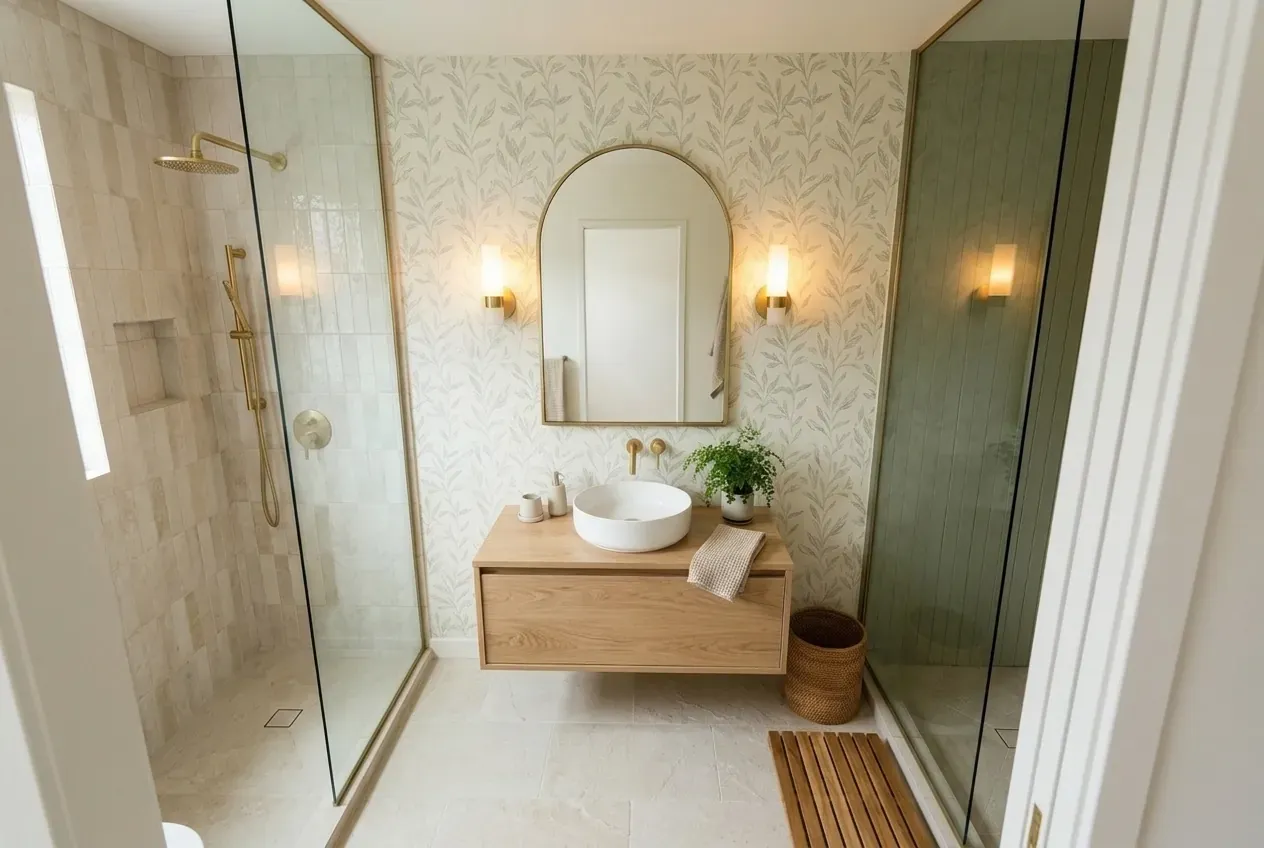 From above and to one side, the full footprint and the walkway read at a glance.
Move-out removal
Do not yank the paper off at a right angle. Warm the top seam with a hairdryer on low for about 10 seconds to soften the adhesive, then peel slowly downward at a sharp angle close to the wall. If any adhesive stays behind, ask the manufacturer for the safest remover for your paint. Removal on poorly sealed or matte paint can lift paint, which is why the sample test matters.
Common mistakes
- Applying right after a hot shower.
- Skipping the sample test on textured or matte walls.
- Running paper too close to the shower.
- Under-ordering and then finding a different batch does not match.
- Pulling it off fast on moving day.
Before you order
- Confirm the wall is smooth, sealed and satin or eggshell.
- Order a sample and test it for 7 days.
- Plan one accent wall, away from the shower.
- Work out the roll count with the repeat allowance.
- Make sure the fan runs after showers.
- Check your lease before applying anything to the walls.
Curated Color Palette & Key Textures
- Alabaster Chalk #F5F2EB
- Sage Moss #9AA58A
- Light Oak #C9A97C
- Charcoal Ink #2F3135
General references
Dimensions in these guides are typical planning ranges, not legal minimums, and they can differ by jurisdiction. Use the references below as starting points, then confirm local code and your lease before making changes.
FAQ
Can bathroom wallpaper survive daily shower humidity?
Yes, high-grade vinyl or moisture-resistant polyester self-adhesive wallpapers withstand regular humidity when paired with an exhaust fan that runs for 20 minutes post-shower.
Does removable wallpaper ruin rental bathroom paint?
No, premium water-based acrylic adhesives release cleanly without residue or peeling when warmed gently with a hairdryer during move-out removal.
How much extra wallpaper should you order for pattern matching?
Always order 15 to 20% extra square footage to account for pattern repeat drops, edge trimming, and seam alignments.
Will peel and stick wallpaper stick to bathroom walls?
It bonds to smooth, sealed, low-sheen paint such as satin or eggshell. It will not hold on orange-peel texture, matte or chalk finishes, bare drywall, or existing wallpaper. Run a 7-day tack test with one sample before buying rolls.
What is the difference between peel and stick wallpaper and smart tiles?
Wallpaper is a thin paper or vinyl sheet for large flat painted walls; smart tiles are rigid or gel tiles for splash zones behind sinks and stoves. Wallpaper costs $1 to $4 per sq ft, backsplash tile $6 to $15, so use each where it performs.
How much wallpaper do you need for a small bathroom accent wall?
A single accent wall in a 5x7 ft bathroom measures 40 to 60 sq ft (3.7 to 5.6 sq m). Add 15 to 20% for pattern repeat, which brings it to roughly 48 sq ft. A full wrap needs 140 to 180 sq ft.
Save this idea

Keep reading
Related rooms
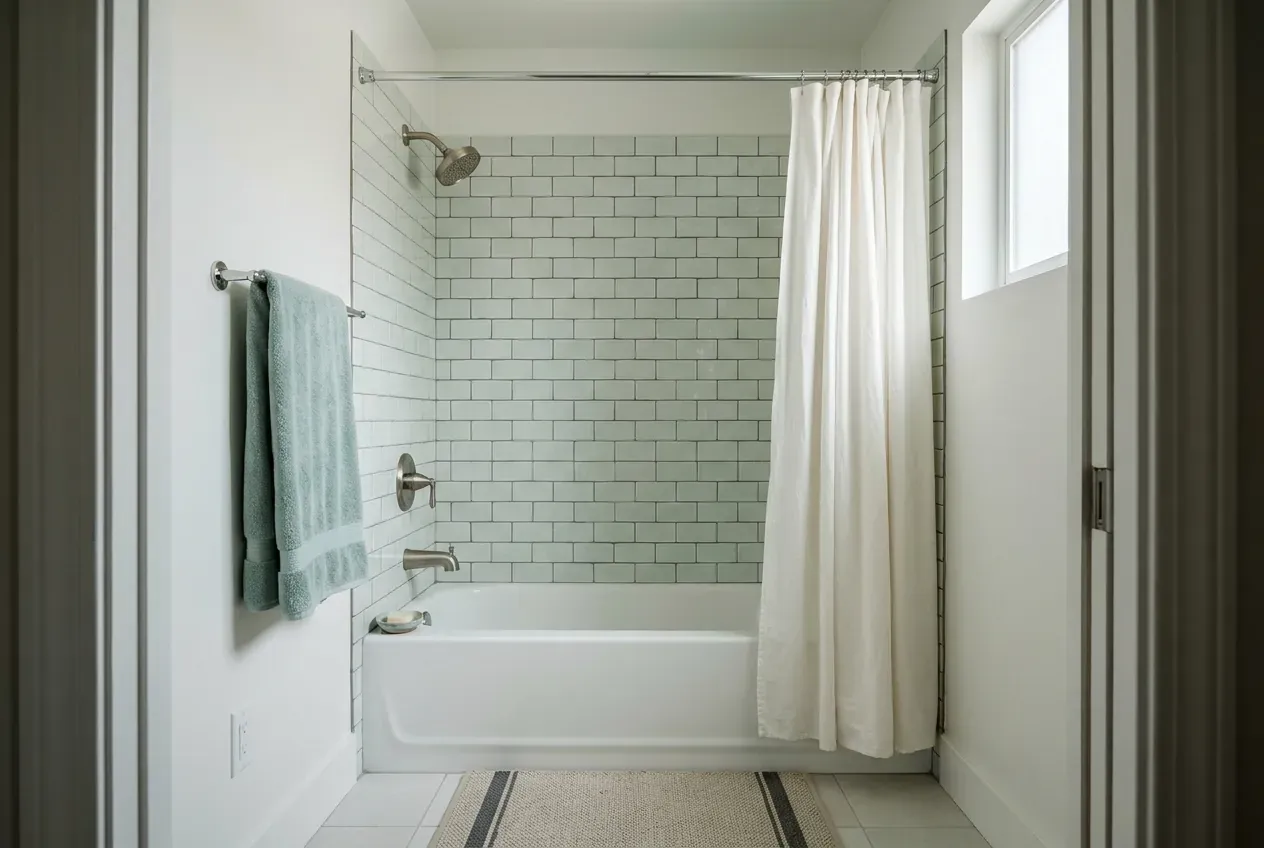
Standard Shower Head Height: 72 to 80 in (183 to 203 cm)
Standard shower head height: mount a fixed head 72 to 80 in (183 to 203 cm) above the floor, 6 in above the tallest user, valve at 38 to 48 in.
Standard Interior Door Sizes: Widths, Heights, Clearances
Standard interior door sizes: 24 to 36 in (61 to 91 cm) wide and 80 in (203 cm) tall, with clear openings, rough-opening sizes and swing clearance.
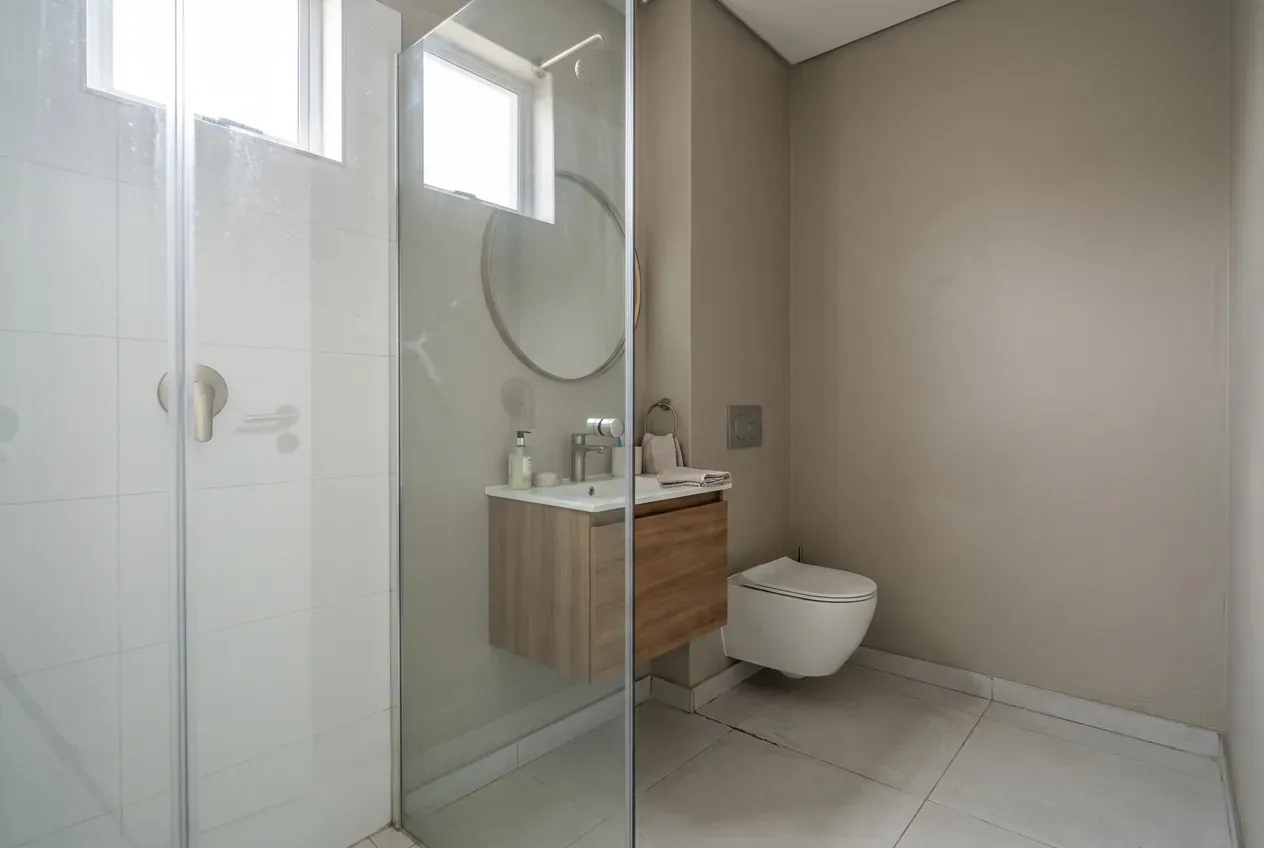
What Is a 3/4 Bathroom? Layouts, Sizes & Code Clearances
What is a 3/4 bathroom? A toilet, sink and shower with no tub, in as little as 5 x 7 ft (152 x 213 cm). Compare quarter, half and full baths.