Bedroom Mirror Placement in a Small Room
Bedroom mirror placement for small rooms: the height that makes a full-length mirror work, where reflection adds light, and renter-safe hanging.
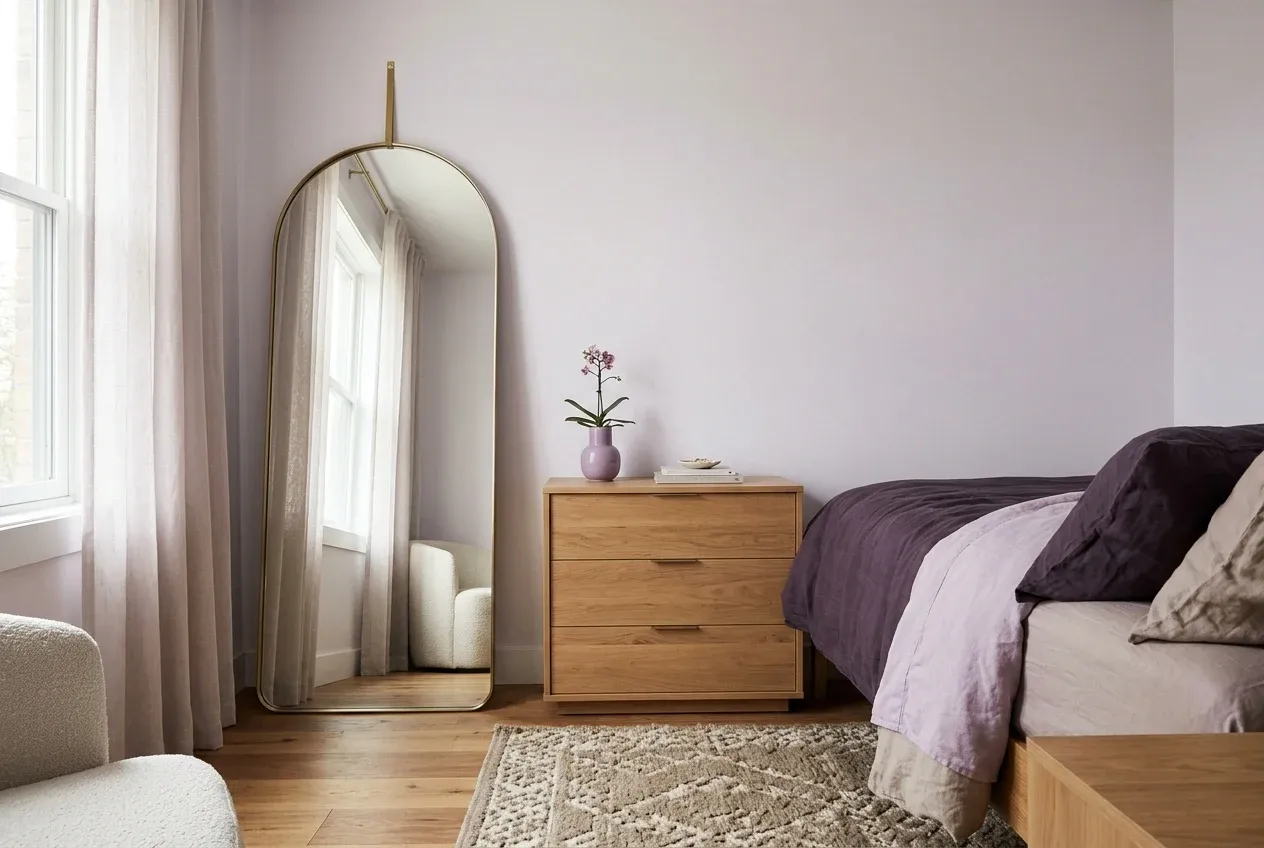
Room specifications
- Room ScaleSmall bedroom (about 10 x 10 ft) with one dresser and a closet door
- Design StyleLilac Mist / Soft Modern
- Budget TierMid-Range ($$)
- Palette Swatches4 colors
Put a bedroom mirror on the wall beside or perpendicular to the window, or across from a dark corner, so it bounces daylight deeper into the room. Avoid hanging it where it faces the bed directly or lines up with a street-facing window, where passing headlights can reflect onto your pillow.
In a 10 x 10 ft bedroom a mirror does two jobs. It lets you check an outfit before leaving, and it sends scarce window light into dim corners. On the wrong wall it just doubles a messy laundry chair.
Where it goes
Stand beside the planned spot around midday and look into the reflection. You want to see sky, window greenery or a calm stretch of wall, not clutter. That quick look decides the position better than any rule.
Two things to avoid:
- Directly facing the bed. Many people find it restless at night, and it catches movement when you wake up.
- Straight across from a street-facing window. Car lights bounce across the room and onto the bed.
For hallway and entry mirrors, the entryway mirror with shelf guide and the apartment entryway mirror decor guide cover different needs.
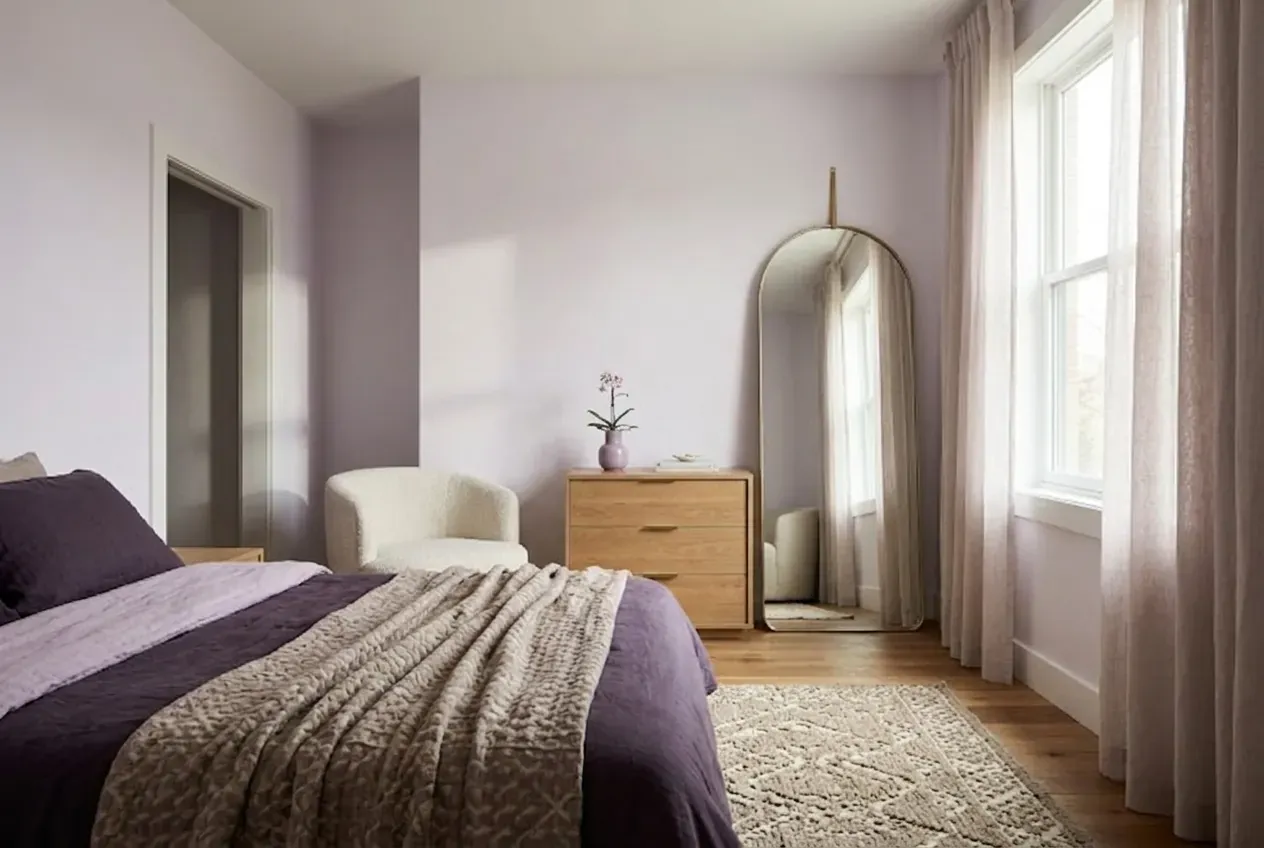 The same room seen from the opposite end, so you can judge the layout from the far side.
How high to hang or lean it
For a full-length mirror, set the bottom edge 6 to 8 in (15 to 20 cm) off the floor. A 60 in (152 cm) mirror then tops out at 66 to 68 in (168 to 173 cm), so the glass covers head to toe without wasting height at ankle level. A framed picture follows a different rule, centered at 57 in (145 cm); see how high to hang pictures.
| Mirror type | Base height | Top lands at | Fixing |
|---|---|---|---|
| 60 in full-length | 6 to 8 in (15 to 20 cm) | 66 to 68 in (168 to 173 cm) | Anti-tip strap |
| 64 in arched lean | About 6 in (15 cm) | About 70 in (178 cm) | Strap to a stud |
| Above a dresser | 4 to 6 in (10 to 15 cm) above the top | Eye level | Anchor or lean |
Over a dresser, keep the bottom frame 4 to 6 in above the top and make the mirror about 60 to 75% of the dresser’s width. Keep items directly in front of the glass under 8 in (20 cm) tall so the reflection stays open instead of doubling the clutter.
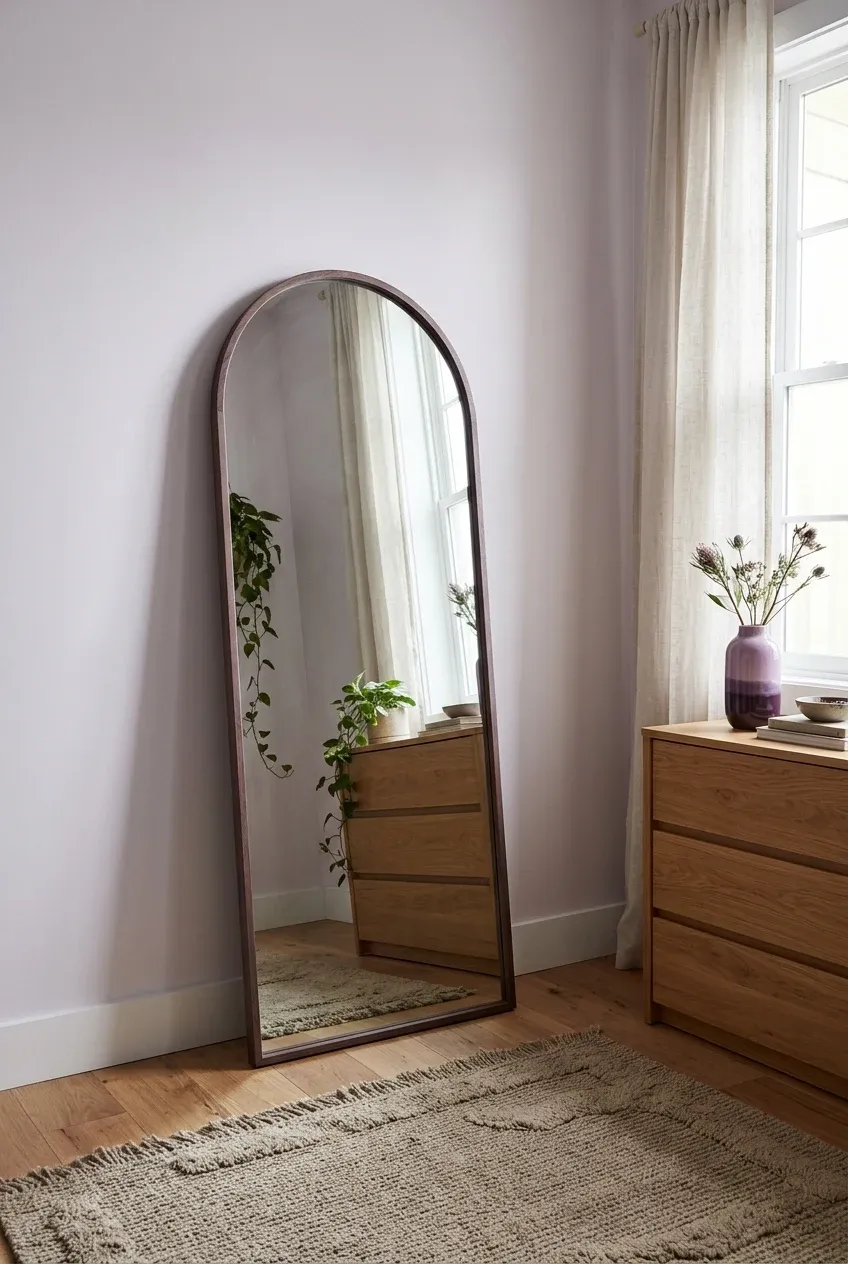
With a tall arched mirror, lifting the base slightly or leaning it back at a gentle angle helps taller people see their full head without crouching.
Leaning versus hanging in a rental
Leaning a full-length mirror saves you from patching holes. A leaning mirror needs only 3 to 4 in (8 to 10 cm) of floor depth from the baseboard, which is much less than a freestanding cheval stand.
Whatever you choose, secure it:
- Lean it: attach a slim anti-tip strap to the top back edge and anchor it to a stud or a suitable wall anchor. Add rubberised pads under the bottom corners so it cannot slide.
- No holes allowed: use an over-the-door mirror with foam pads on the closet door, or a lightweight acrylic mirror on weight-rated interlocking adhesive strips. Do not rely on adhesive for heavy glass; check the pack rating.
Never lean a heavy glass mirror without a strap in a room where kids or pets run around. A tip-over is a safety problem, not just a tidiness one.
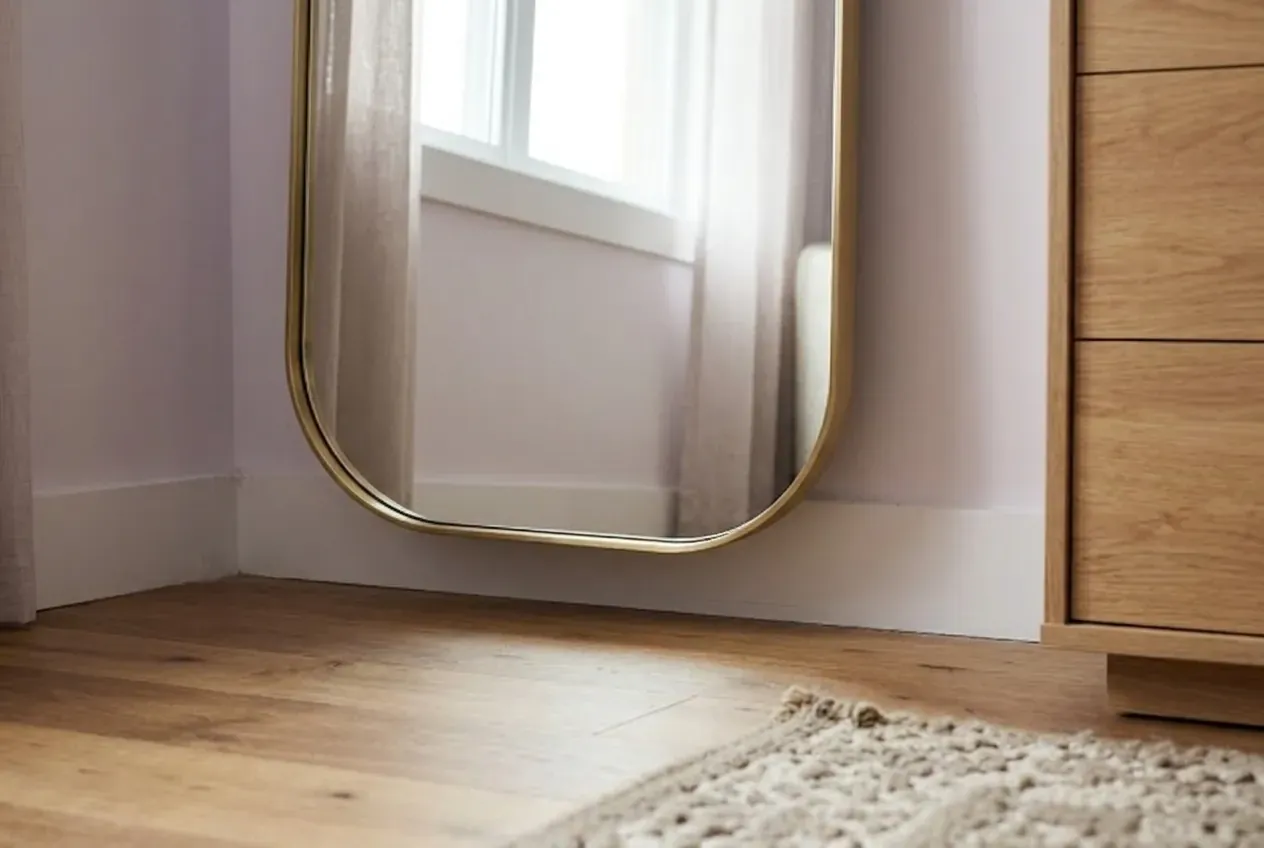 Close up: Mount a full-length mirror so its bottom edge sits 6 to 8 in (15 to 20 cm) off the floor, which puts the usable reflection at eye level for a 5 ft 6 in user.
Using one big mirror instead of several small ones
One large mirror, around 22 x 64 in (56 x 163 cm), beside a window expands a small room far better than three small decorative mirrors scattered across a wall. Pair it with a warm 2700K bedside lamp so the reflected light stays soft, and keep the nearby colours calm and muted. If a wall of wardrobes or a window leaves only one narrow slot, use a tall slim mirror rather than a wide short one.
See how seating balances the opposite wall in the bedroom seating ideas guide. If you are adding plants near the glass, check the small indoor plants guide for light and clearances.
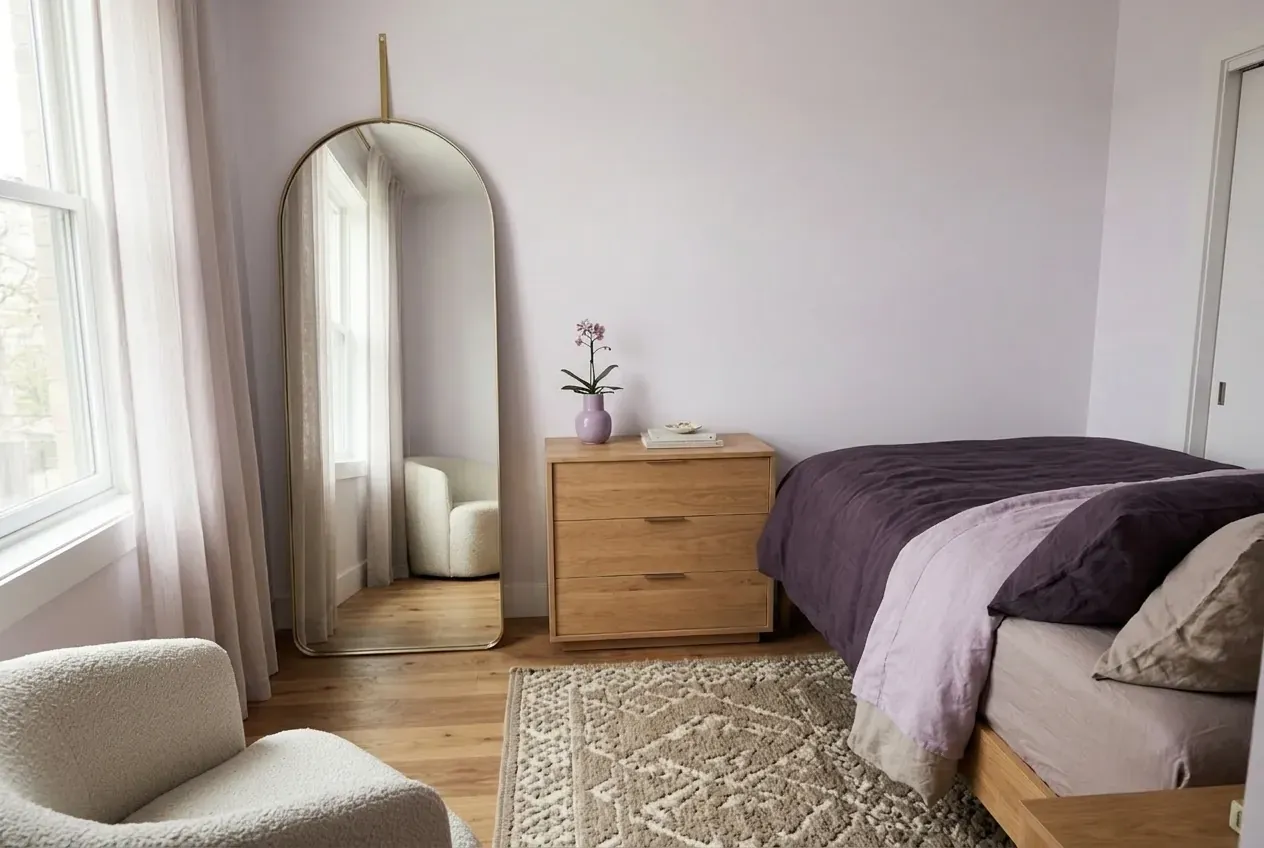 From above and to one side, the full footprint and the walkway read at a glance.
Colour around the mirror
A mirror shows whatever faces it. A pale, soft wall such as a light lilac-grey reflects calmly, while a dark corner just makes a dark picture. If the reflection looks heavy, add a pale throw or a plant on the opposite side rather than adding more mirrors.
Before you hang or lean it
- Stand at the spot at midday and check what the mirror would reflect.
- Make sure it does not face the bed or a street-facing window.
- Set the bottom edge 6 to 8 in off the floor for a full-length mirror.
- Plan the anti-tip strap, anchor or foam pads before the mirror arrives.
- Check the weight against any adhesive you plan to use.
- Clear everything within 8 in in front of the glass.
Curated Color Palette & Key Textures
- Lilac Mist #F3F0F5
- Mauve Orchid #B4A7C9
- Deep Plum #4A3B5C
- Taupe Cream #A8967A
General references
Dimensions in these guides are typical planning ranges, not legal minimums, and they can differ by jurisdiction. Use the references below as starting points, then confirm local code and your lease before making changes.
FAQ
Where should a mirror go in a small bedroom?
Place it perpendicular to a window to bounce daylight across the room, or opposite a dark corner—avoiding spots that face the bed directly.
How high should I hang a full-length mirror?
Position the bottom edge 6 to 8 in (15 to 20 cm) above the floor so the usable glass sits cleanly at eye level.
Can I lean a mirror in a rental?
Yes—just attach a slim anti-tip safety strap at the top back edge and place rubberized pads under the bottom corners so it cannot slip.
Save this idea

Keep reading
Related rooms
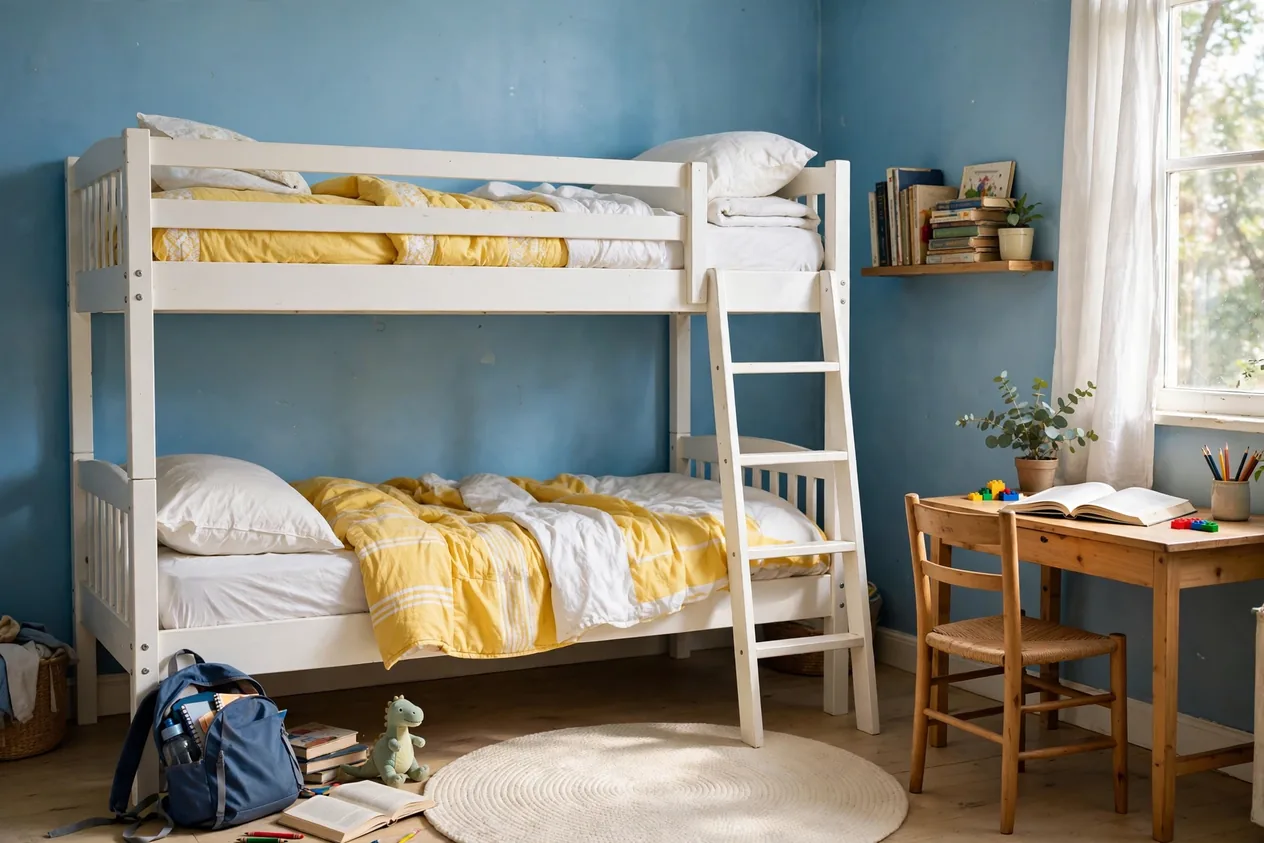
Bunk Bed Dimensions: 5 Sizes, Clearances & Safety Gaps
A twin bunk is 77 x 41 in (196 x 104 cm) and about 62 in tall: all 5 standard sizes, the 5 in guardrail rule, deck spacing and the ceiling check.
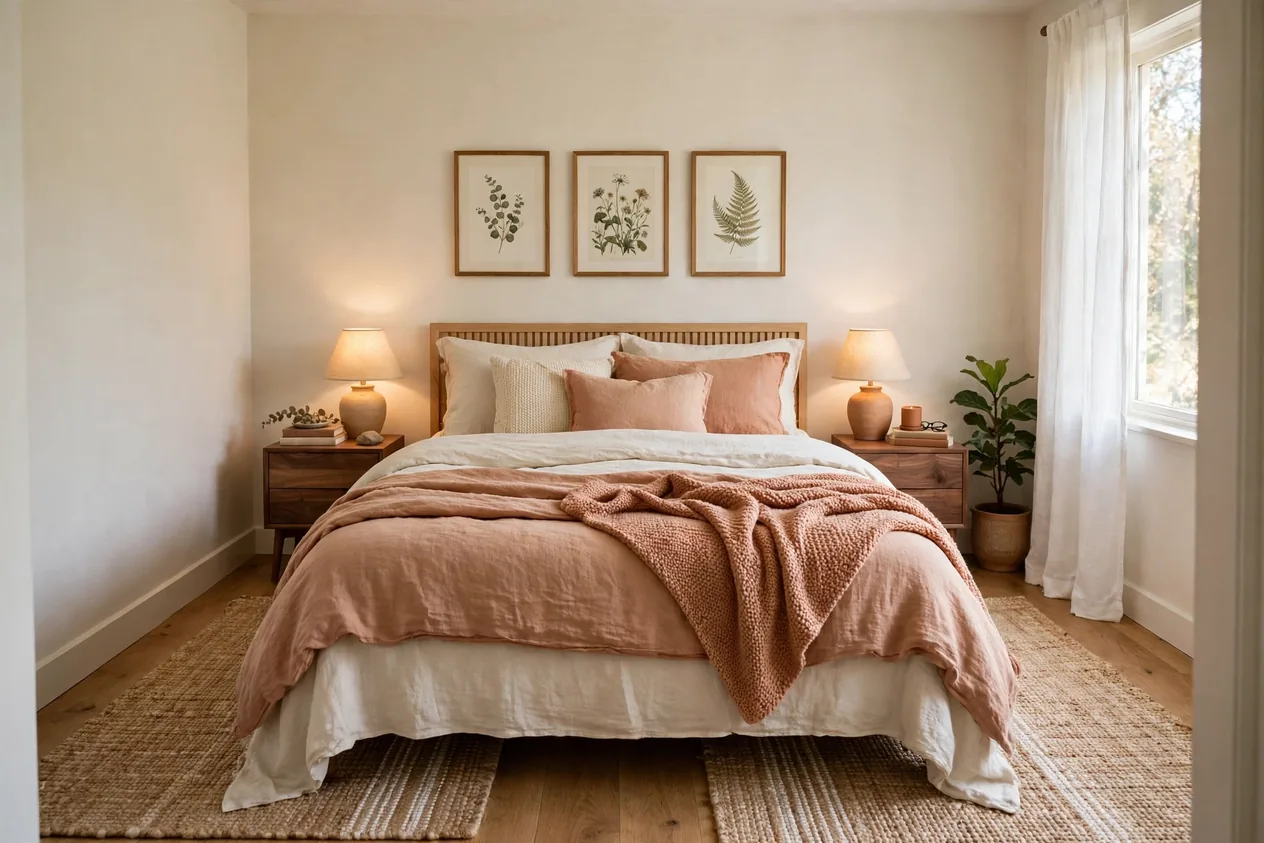
Standard Bed Sizes: Queen 60 x 80 in (152 x 203 cm)
Standard bed sizes in inches and cm: a double (full) is 54 x 75 in, a queen 60 x 80, a king 76 x 80, a California king 72 x 84, plus the room each needs.
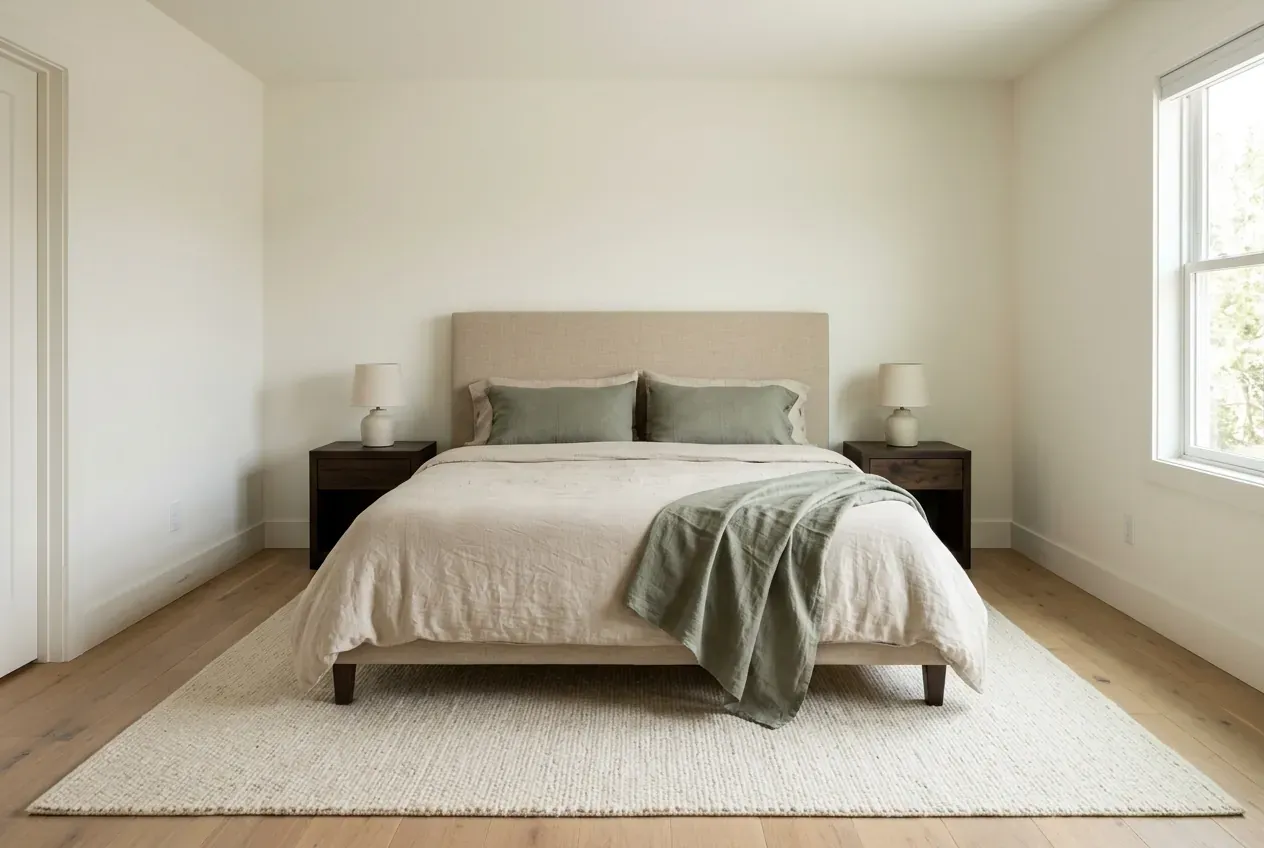
Rug Size for a King Bed: 8x10 Shows 22 in Each Side
Rug size for a king bed: an 8x10 ft rug shows 22 in (56 cm) each side and 43 in past the foot; a 9x12 shows 34 in. See the maths, a chart and a calculator.