Entryway Mirror with Shelf: Narrow Hallway Rules
Entryway mirror with shelf for narrow hallways: a 3.5 to 4.5 in (9 to 11 cm) shelf projection, 58 to 60 in (147 to 152 cm) mounting height, key storage.
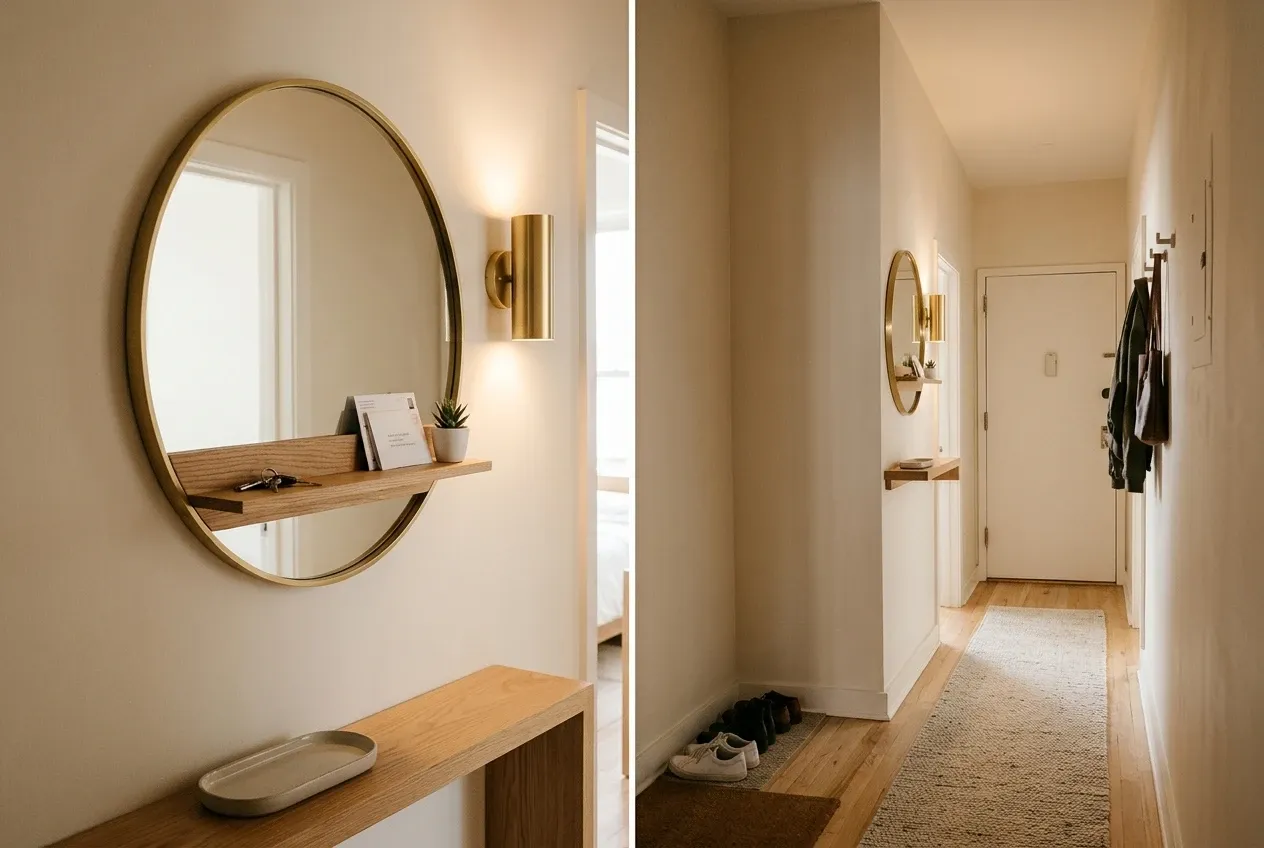
Room specifications
- Room ScaleNarrow apartment entryway (about 3 x 6 ft)
- Design StyleWarm Minimalist / Functional Entry
- Budget TierBudget ($)
- Palette Swatches4 colors
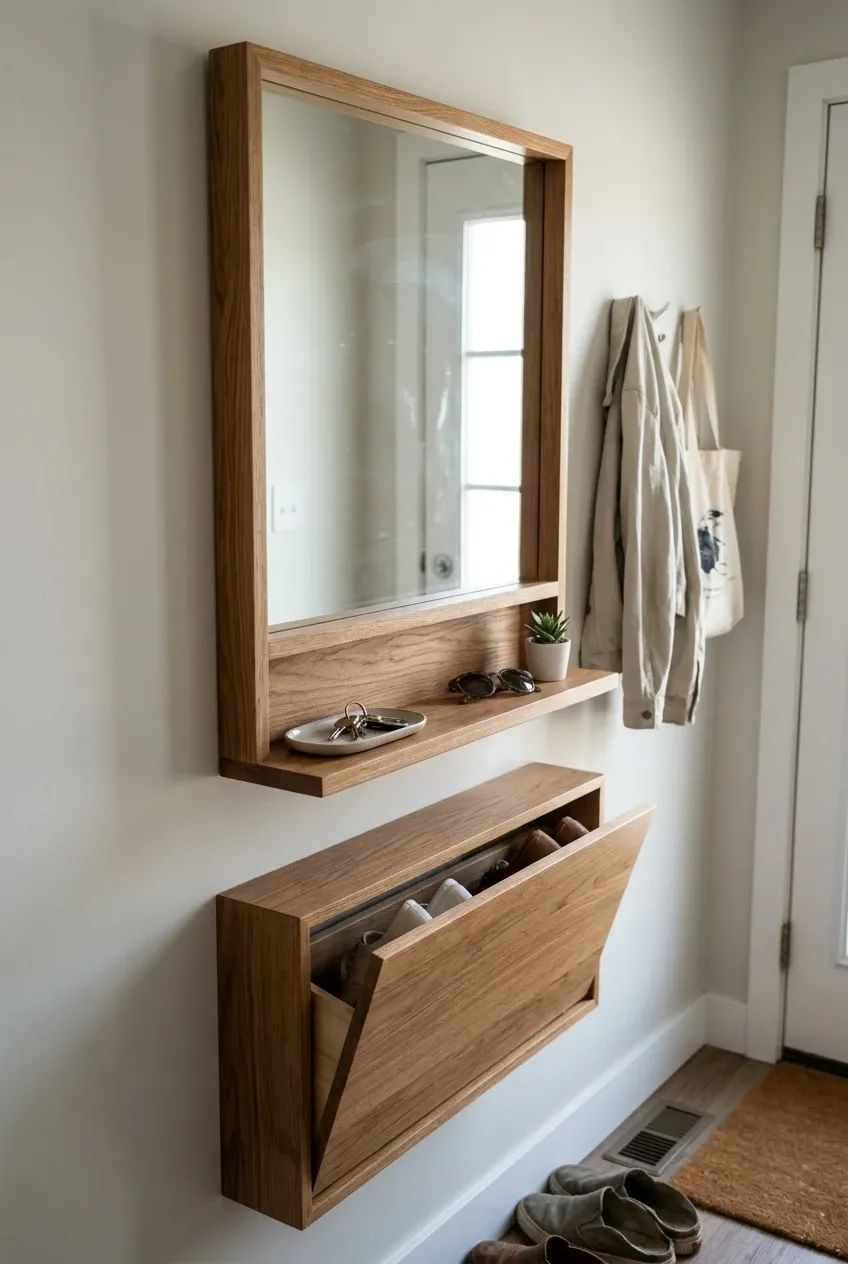
In a narrow hallway, mount an entryway mirror with a shelf so the centre of the glass sits at 58 to 60 in (147 to 152 cm) above the floor, and keep the shelf no deeper than 3.5 to 4.5 in (9 to 11 cm). That gives you a place for keys, sunglasses and a few letters without a table, and it stays out of the way of coats and elbows in a passage about 3 ft wide.
The rest of this guide covers where to hang it relative to the door, how much weight it will carry, and what to put on the shelf so it stays useful rather than turning into a pile.
Where to hang it
Place the unit on the wall next to the front door, at the point where you naturally stop to put on shoes or grab keys. Three checks decide the spot:
| What to check | Aim for | Why |
|---|---|---|
| Mirror centre height | 58 to 60 in (147 to 152 cm); 56 in (142 cm) at the lowest | Puts the reflection at roughly eye level |
| Shelf depth | 3.5 to 4.5 in (9 to 11 cm) | Holds keys without catching coats |
| Hallway width left | 32 to 36 in (81 to 91 cm), 28 in (71 cm) at the lowest | Keeps a two-way path; check local code for any legal egress width |
Never put a mirror where the door handle can hit the frame. Open the door fully, and hang the mirror at least 6 in past that arc, or fit a doorstop so the door cannot reach the glass.
A mirror opposite an open doorway or a lit room reflects that light into a dark corridor and makes it feel wider. It does not change the real width, so keep the clear path measurement in mind.
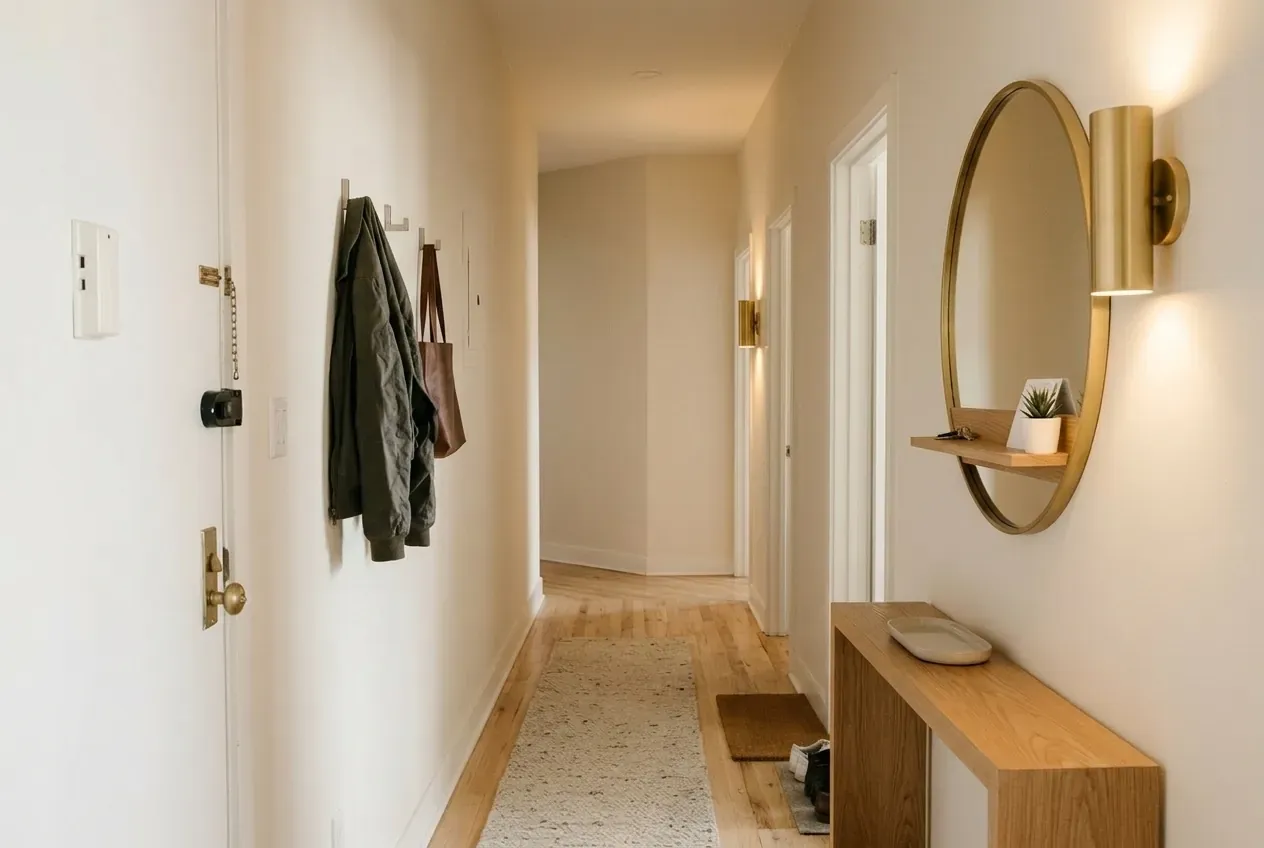 The same room seen from the opposite end, so you can judge the layout from the far side.
What size and shape?
A 24 in round mirror with a shallow oak or brass ledge suits a 36 in wall beside the door. The ledge takes a small key dish, sunglasses and two letters, and hooks under it hold key rings. Add a warm light above it, and a wireless sconce works if there is no wiring.
A tall, slim capsule mirror (about 16 x 54 in) works if you also want a last full-length check before leaving. A vertical coat-peg rail beside it adds storage without depth.
A picture ledge with a leaning mirror is the lightest option for micro-entries. Keep the ledge to about 4 in deep and attach it properly. A leaning mirror also needs a way to stop it sliding, such as a rubber stopper at the base.
A tall arched or pill-shaped mirror, 20 to 24 in wide by 36 to 48 in tall (51 to 61 cm by 91 to 122 cm), softens boxy hallway corners and reflects more light. Hung over a console or ledge, keep the mirror width to 60 to 75% of the surface below it and leave 4 to 6 in (10 to 15 cm) between the shelf and the glass.
A full-length leaner (about 24 x 66 to 70 in, 61 x 168 to 178 cm) sits with its bottom 4 to 8 in (10 to 20 cm) off the floor and gives a full-body check. Tether the top rear of the frame to the wall with a cable and anchor so it cannot tip.
A lightweight acrylic-backed mirror on the back of the door suits an entry where every wall is taken by doors. Use over-door brackets.
Pair the wall with floor storage like the slim shoe cabinet guide and the entryway shoe storage layout, keeping the floor aisle clear.
How to mount it safely
A mirror with a wooden shelf and a bowl of keys can weigh enough that adhesive strips alone are not a safe choice, and bags set down on the shelf add downward force. Typical advice:
- Find a stud with a stud finder and mark it near the entry.
- Fix a mounting bracket or cleat into the stud with wood screws long enough to reach it, and check that it is level.
- If no stud is available, use heavy-duty wall anchors rated well above the item’s weight, following the maker’s instructions.
- Hang the mirror on the cleat and push on it to test.
- Stick small felt or rubber bumpers to the bottom corners so the frame hangs flat and does not rattle when the door closes.
For a renter who wants minimal damage, a mirror under about 30 lb (13.6 kg) can hang on two hardened steel picture hooks driven at an angle, which leave small pinholes that patch easily. Above about 40 lb (18.1 kg), use an interlocking aluminium French cleat anchored into at least one stud. Always match hardware to the maker’s printed weight rating.
Aim the mirror at an open living room window or a light wall, not at an open bathroom door or a shoe rack, so it reflects light rather than clutter.
In a busy corridor where bags brush past, choose a mirror with a safety-backed or shatter-resistant back so broken glass stays together. Check the product listing. In a rental, ask the landlord before drilling, and know that small screw holes are easy to patch.
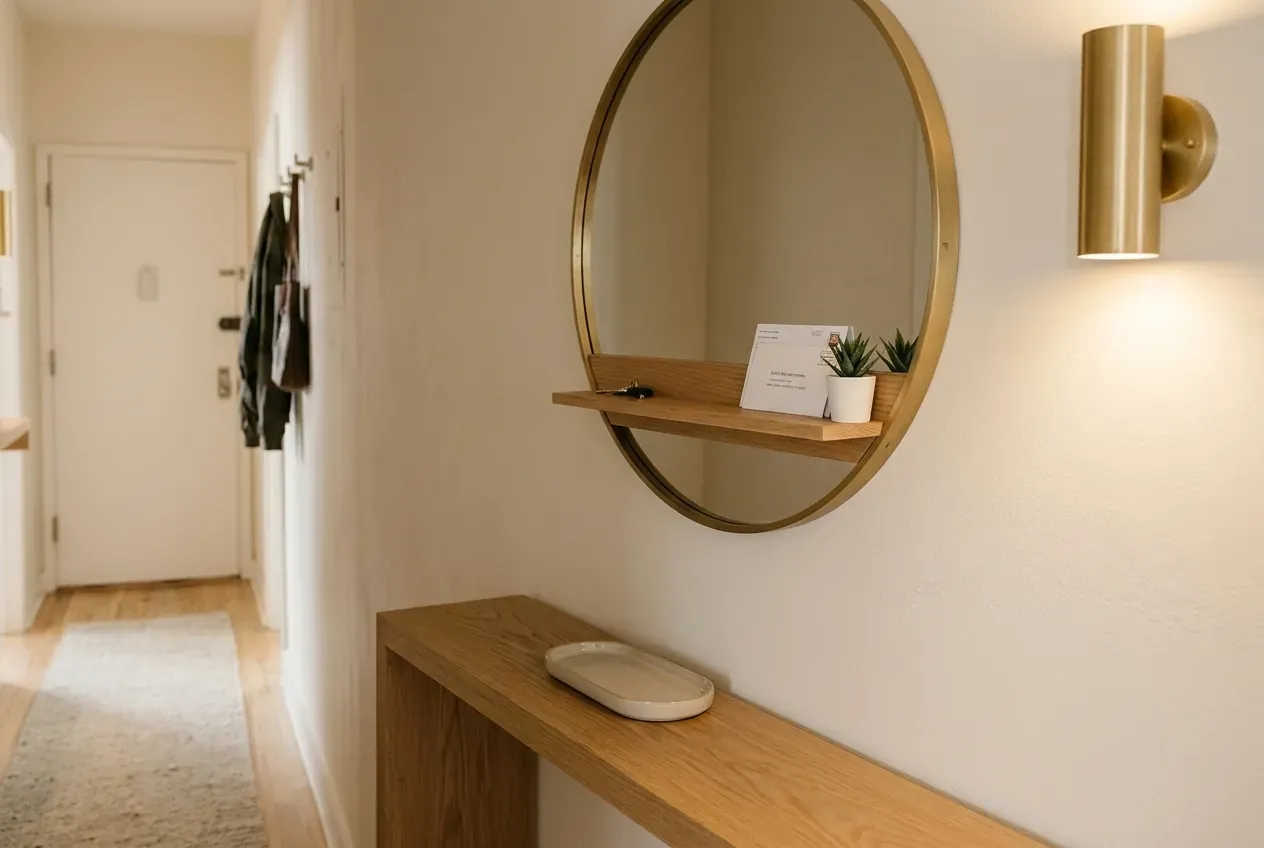 Close up: Mount entryway mirrors with shelves so the mirror optical center sits at 58 to 60 inches (147.3 to 152.4 cm) above finished floor, with shelf projection capped at 4 inches.
What belongs on the shelf
- One small tray or dish for keys.
- Sunglasses or a card holder.
- A short stack of mail, no more than a day or two.
- A scent or object only if there is space left.
Hooks below the shelf take bag straps or keys. For where to put the mail you cannot leave on a shelf, see the keys and mail storage guide.
Colour and finish
Pale walls with a wood shelf and a brass or dark metal frame keep a windowless entry bright and warm. Choose one metal and one wood, and avoid heavy frames that add visual weight in a small space.
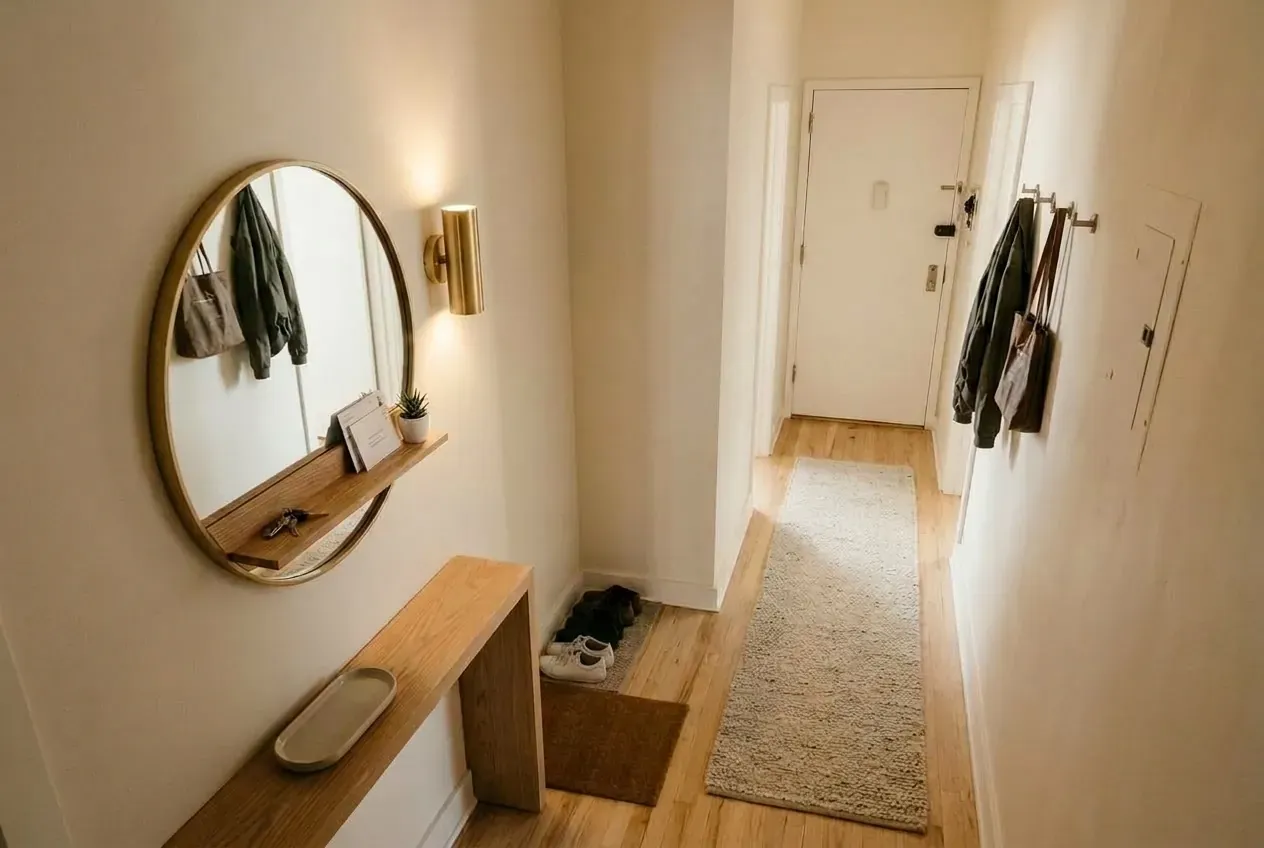 From above and to one side, the full footprint and the walkway read at a glance.
Common mistakes
- Hanging the mirror so high or low that you cannot see yourself.
- A shelf deeper than 4 to 5 in, which catches coats and shoulders.
- Mounting where the door handle swings into the glass.
- Relying on adhesive for a heavy unit.
Before you buy
- Measure the wall width beside the door and the arc of the door swing.
- Mark 58 to 60 in for the centre of the glass.
- Check the shelf depth on the spec sheet: 4 in or less.
- Find a stud or choose proper anchors.
- Decide where mail, sunglasses and keys will each go. See also the entryway hallway styling ideas and the mirror placement rules.
Curated Color Palette & Key Textures
- Bone White #F6F4EE
- Natural White Oak #C8A882
- Aged Brass #B89255
- Matte Iron #2B2A28
General references
Dimensions in these guides are typical planning ranges, not legal minimums, and they can differ by jurisdiction. Use the references below as starting points, then confirm local code and your lease before making changes.
FAQ
How high should an entryway mirror with a shelf be mounted?
Position the unit so the center of the mirror glass aligns with eye level at 58 to 60 inches (147.3 to 152.4 cm) above the finished floor.
What is the maximum shelf depth for a narrow 36-inch apartment hallway?
Cap shelf depth at 3.5 to 4.5 inches (8.9 to 11.4 cm) to provide key storage without snagging coats or elbows during passage.
Can an entryway mirror make a narrow dark hallway look wider?
Yes, placing a mirror opposite an open doorway reflects light from adjacent rooms, visually doubling perceived hallway width.
Can you hang a heavy mirror in an apartment without drilling into studs?
Use two interlocking aluminium French cleats or angled brass picture hooks that leave only small pinholes, and match the hardware to the maker's printed weight rating.
What shape mirror works best in a narrow hallway?
A tall arched or pill-shaped mirror 20 to 24 in wide by 36 to 48 in tall (51 to 61 cm by 91 to 122 cm) softens boxy corners and reflects more light.
Save this idea

Keep reading
Related rooms
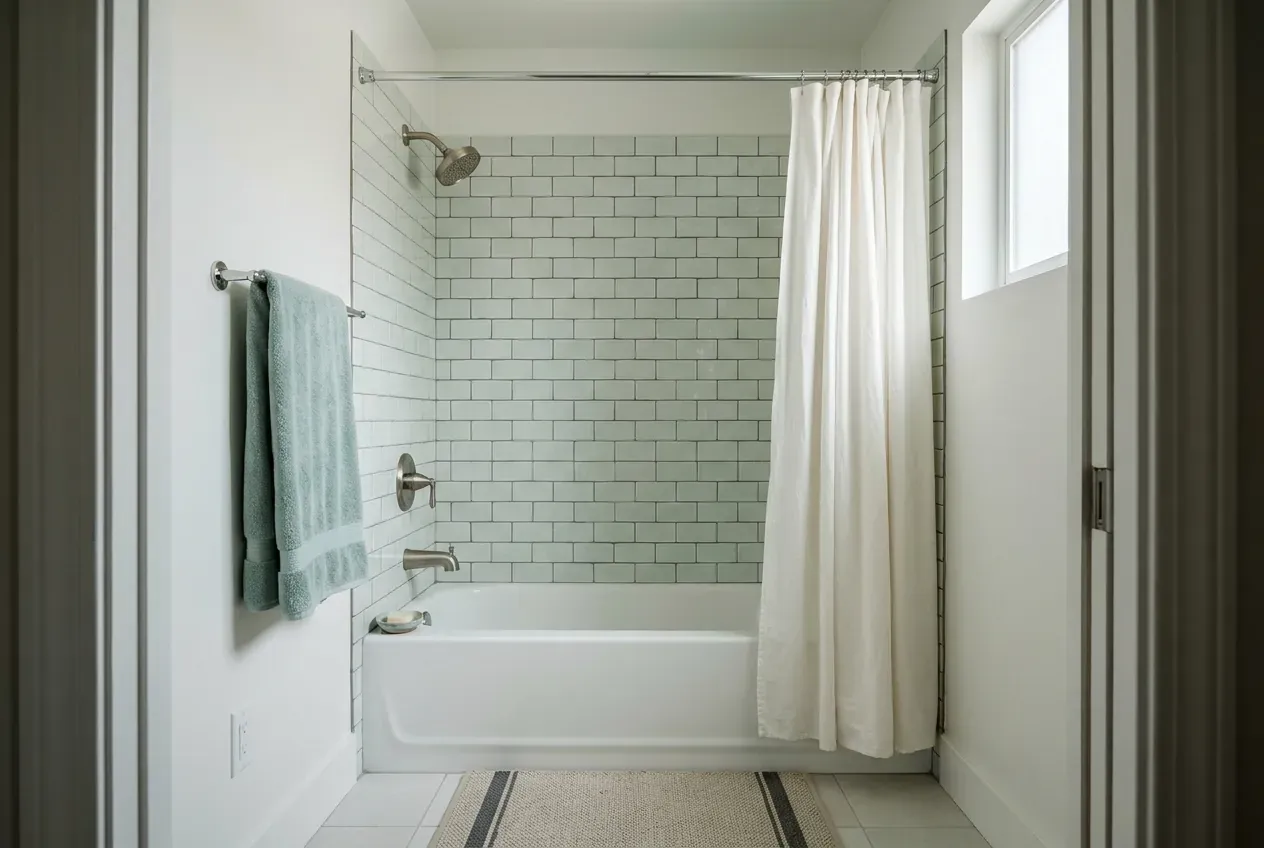
Standard Shower Head Height: 72 to 80 in (183 to 203 cm)
Standard shower head height: mount a fixed head 72 to 80 in (183 to 203 cm) above the floor, 6 in above the tallest user, valve at 38 to 48 in.
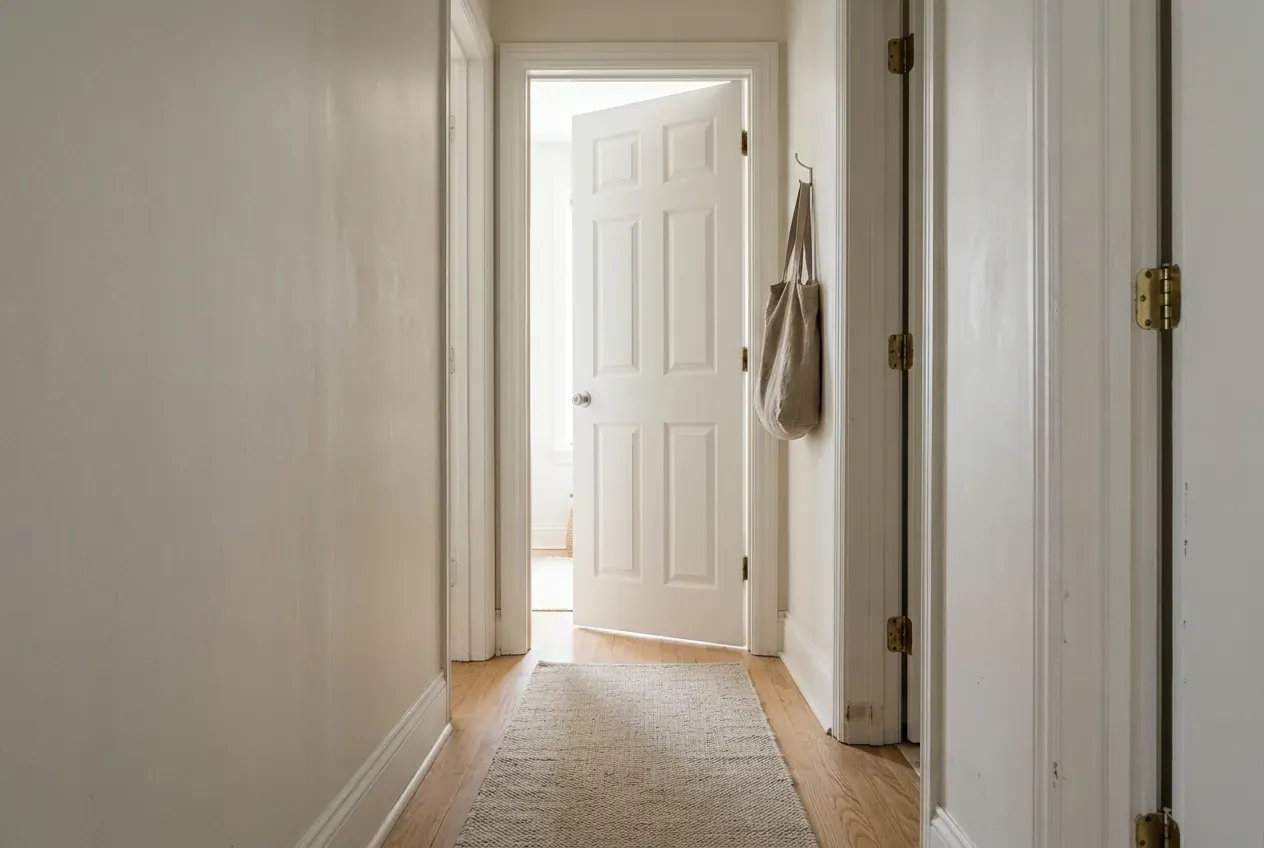
Standard Interior Door Sizes: Widths, Heights, Clearances
Standard interior door sizes: 24 to 36 in (61 to 91 cm) wide and 80 in (203 cm) tall, with clear openings, rough-opening sizes and swing clearance.
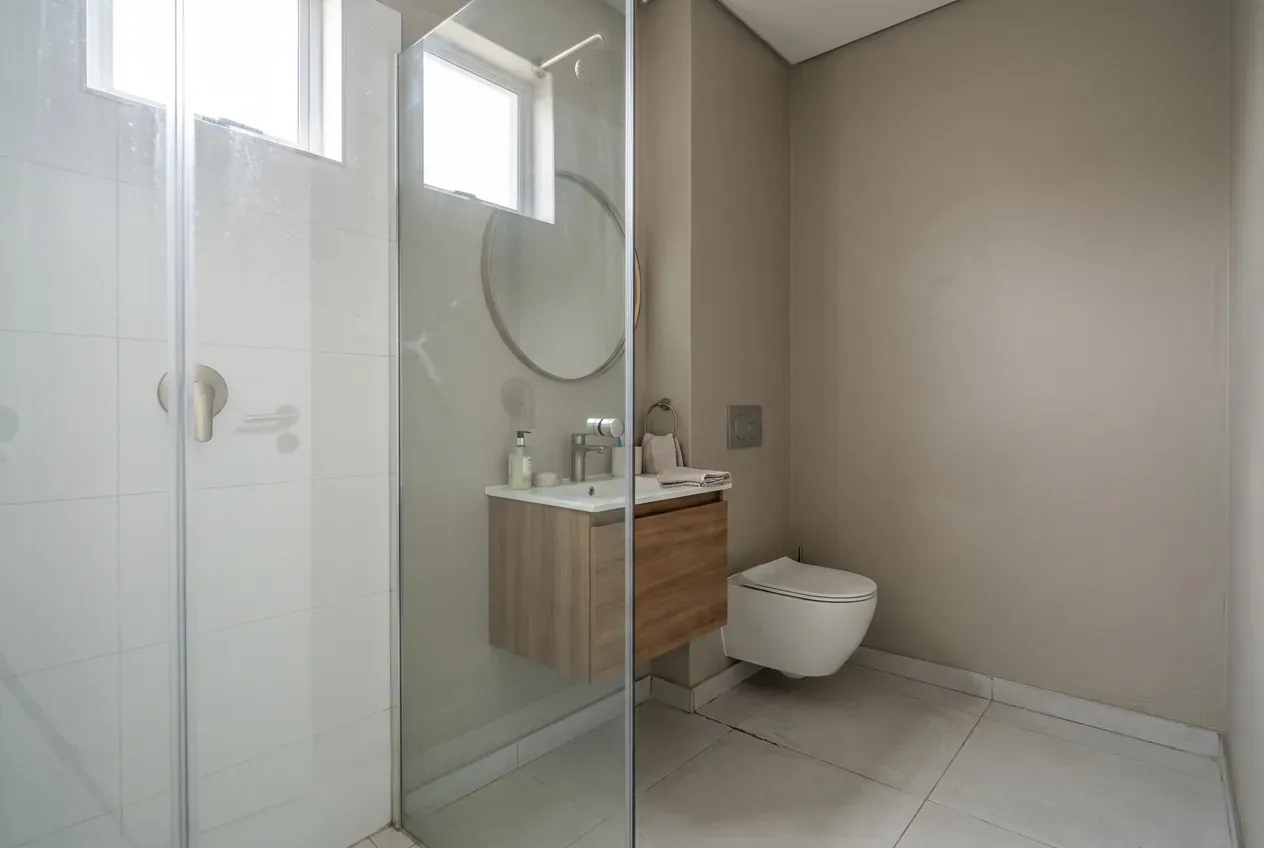
What Is a 3/4 Bathroom? Layouts, Sizes & Code Clearances
What is a 3/4 bathroom? A toilet, sink and shower with no tub, in as little as 5 x 7 ft (152 x 213 cm). Compare quarter, half and full baths.