Standard Shower Head Height: 72 to 80 in (183 to 203 cm)
Standard shower head height: mount a fixed head 72 to 80 in (183 to 203 cm) above the floor, 6 in above the tallest user, valve at 38 to 48 in.
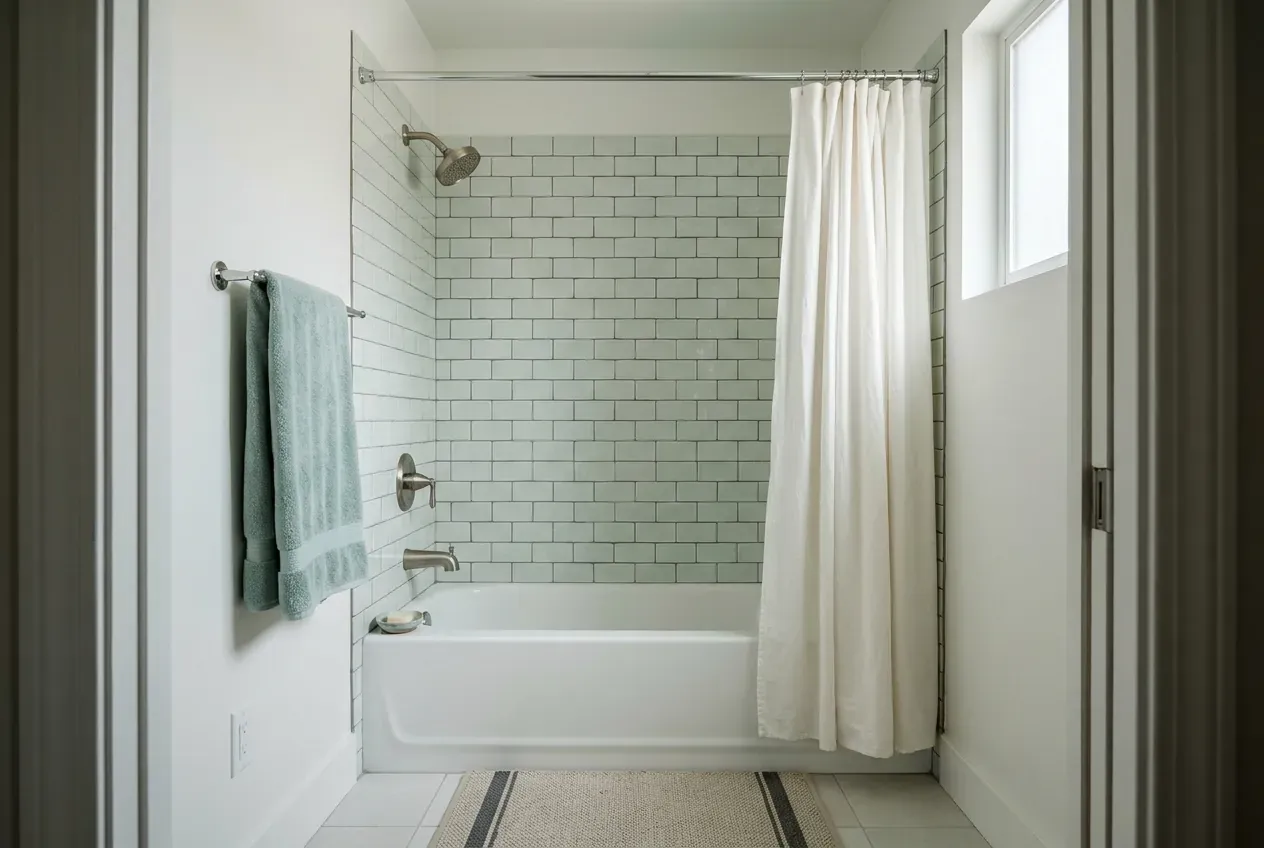
Room specifications
- Room ScaleSmall bathroom (about 5 x 8 ft) with a tub-shower
- Design StyleWarm Minimalist / Japandi
- Budget TierBudget ($)
- Palette Swatches4 colors
The standard shower head height is 72 to 80 in (183 to 203 cm) above the floor of the shower or tub. To pick the exact number, add 6 in (15 cm) to the height of the tallest person who showers there: a 72 in (183 cm) user needs the head at 78 in (198 cm). Put the valve handle at 38 to 48 in (97 to 122 cm).
We did not find a building-code figure for where a fixed showerhead must go, so the numbers below are common guidelines plus two named standards (NKBA and ADA), not building code. Where a figure is worked out here, the maths is shown, so you can swap in your own measurements.
Shower head height at a glance
| Item | Height above the shower or tub floor | Where the figure comes from |
|---|---|---|
| Fixed showerhead, usual range | 72 to 80 in (183 to 203 cm) | Trade and retail guides; about 80 in is the figure retailers quote as typical |
| Head for a 72 in (183 cm) user | 78 in (198 cm) | Worked out: 72 in + 6 in headroom |
| Head for a 66 in (168 cm) user | 72 in (183 cm) | Worked out: 66 in + 6 in |
| Head for a 76 in (193 cm) user | 82 in (208 cm) | Worked out: 76 in + 6 in, just above the usual range |
| Valve handle | 38 to 48 in (97 to 122 cm) | NKBA Bathroom Planning Guidelines |
| Hand-held spray hose | at least 59 in (150 cm) long | 2010 ADA Standards, section 608.6 |
How to work out the right shower head height
Start with the people, not the wall. Guides recommend placing the head 3 to 6 in (8 to 15 cm) above the head of the tallest user. This guide uses the full 6 in (15 cm), because a head that sits just over the top of the hair leaves no room to move and gets in the way when you lift your arms.
The sum is: head height = tallest user’s height + 6 in.
- A user 5 ft 6 in tall (66 in, 168 cm) needs 66 + 6 = 72 in (183 cm).
- A user 6 ft tall (72 in, 183 cm) needs 72 + 6 = 78 in (198 cm).
- A user 6 ft 4 in tall (76 in, 193 cm) needs 76 + 6 = 82 in (208 cm), a little above the usual range, so check the arm and ceiling before buying a tall head.
For a shared bathroom, plan around the tallest person and give the shortest person a hand-held unit on a slide bar. A fixed head that is too high for a child or a shorter adult is not a mistake, as long as the spray can come down to where they stand.
Where to put the shower valve
The NKBA Bathroom Planning Guidelines put shower controls between 38 and 48 in (97 and 122 cm) above the floor, and out of the direct spray where the layout allows. In a tub-shower, many people prefer the lower half of that range so the handle clears the tub rim. Whichever height you choose, stay inside the range so adults can reach it without stretching and a hand-held unit can still hang within reach.
If the controls sit on the side of a walk-in shower nearest the door, you can switch the water on and let it warm up without stepping in. The walk-in shower clearances guide shows how that side placement works with a 30 in (76 cm) minimum stall.
Fixed head or hand-held: which height rules apply
The 2010 ADA Standards (section 608.6) require a shower spray unit that can be used as a hand-held unit, on a hose at least 59 in (150 cm) long. The ADA does not govern a private apartment, but the 59 in hose length is a useful buying rule because it is long enough to use the unit from a slide bar at standing, seated and child height.
Use the hand-held unit for:
- Children and shorter adults, who can hold it at their own height.
- Rinsing the tub, a pet or a shower curtain liner.
- Anyone who showers seated.
Keep the fixed head for the tallest user’s normal shower.
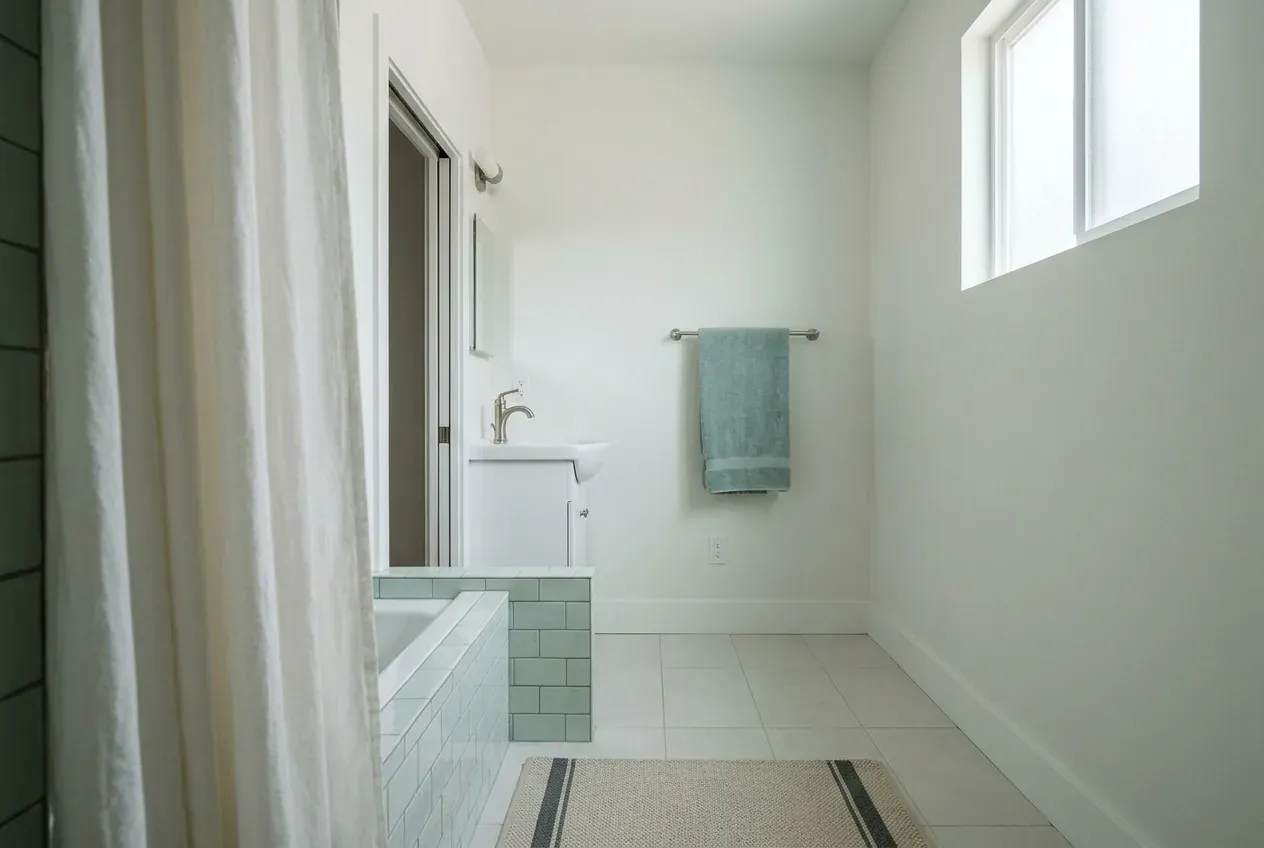 The same bathroom seen from the doorway, so you can judge head and valve height from the room side.
Shower head height with a curtain or glass screen
In a tub-shower, the curtain rod normally sits about 75 to 77 in (191 to 196 cm) above the tub floor, as set out in the standard shower curtain size guide. A head at 78 in (198 cm) sits just above that rod line, so it is mounted inside the curtain, not behind it.
In a walk-in shower with a glass screen, the same 78 in head works with a screen 78 to 84 in (198 to 213 cm) high, the range the walk-in guide recommends so that spray does not arc over the top.
Renters: change the arm, not the pipe
You usually cannot move the supply pipe in a rental, and you do not need to. Three swaps change the experience without touching the wall:
- Longer or angled shower arm. Moves the head out from the wall, so a tall user is not stooping under it.
- Slide bar with a hand-held unit. Lets every person set their own height. Keep the original arm so you can put it back when you move out.
- Spray head with a swivel ball. Tilts the spray down on a head that is higher than you would choose.
Store the original shower arm and head in a labelled bag so the bathroom can go back exactly as it came.
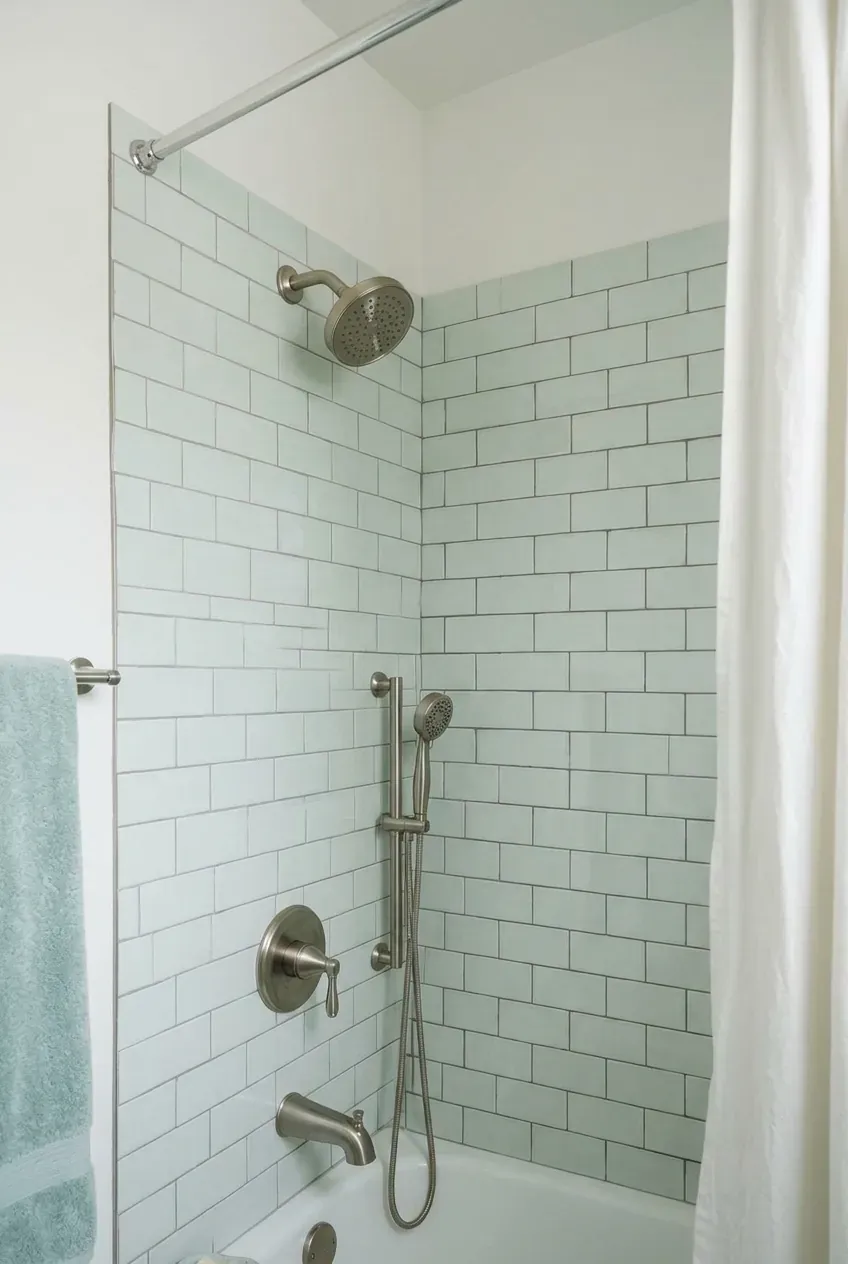
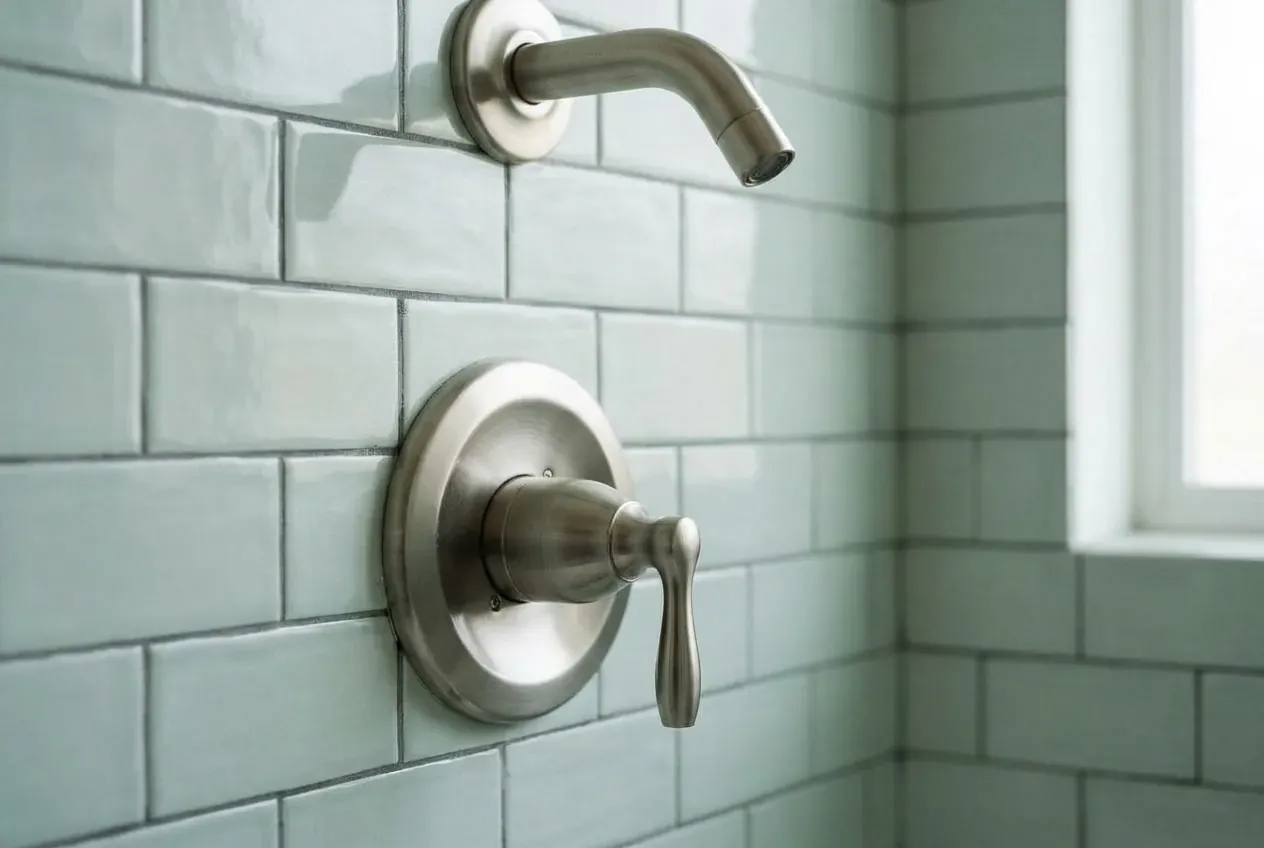 Close up: the valve sits low enough to reach from outside the spray, well below the head.
Common shower head height mistakes
- Setting it for the installer, not the tallest user. Check the height with the tallest person standing in the shower.
- Mounting the valve above 48 in (122 cm). The handle becomes a reach for shorter adults and children.
- Forgetting the tub floor. Measure from the floor of the shower or tub, not from the bathroom floor, because a tub rim adds height.
- Choosing a rain head without checking the ceiling. A large overhead head needs space above and around it; read the maker’s template before you drill.
- Skipping a hand-held unit. One head at one height rarely suits everyone.
Colour and finish
Keep the wet wall calm and light. A pale glass-like tile such as Steam Glass (#E9F0EE) with Sea Glass Tile (#A9C7BF) accents and Brushed Nickel (#8E9A9D) fixtures keeps the spray and the fixtures easy to read, while Wet Slate (#2B3639) grout or a dark mat gives contrast at the floor.
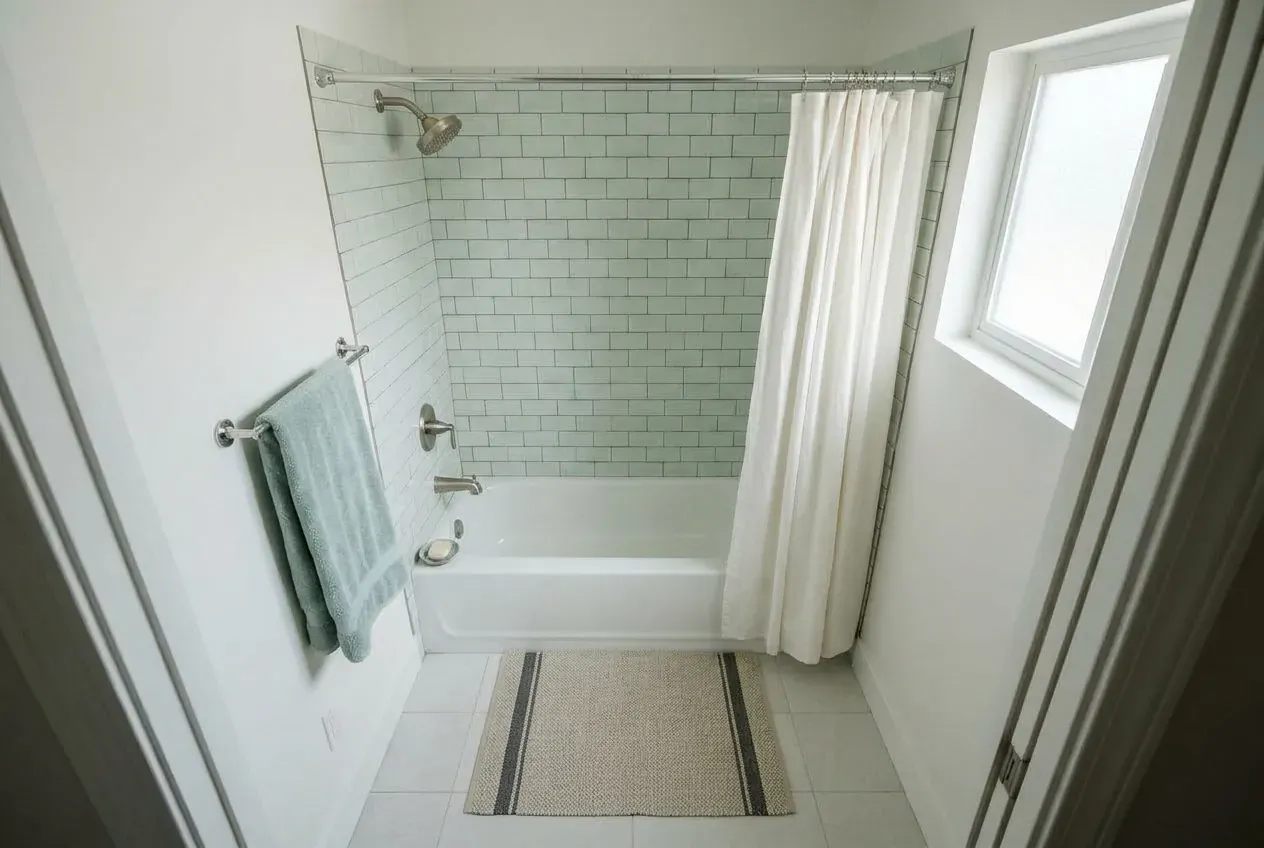 From above and to one side, the head, the curtain and the floor path read at a glance.
Before you buy or drill
- Measure the tallest user and add 6 in (15 cm).
- Decide whether the shower needs a hand-held unit, and buy a hose of at least 59 in (150 cm).
- Mark the valve height between 38 and 48 in (97 and 122 cm).
- Check the curtain rod or glass screen height against the head.
- Hold the new head at the marked height with a helper before you fix anything.
Curated Color Palette & Key Textures
- Steam Glass #E9F0EE
- Sea Glass Tile #A9C7BF
- Brushed Nickel #8E9A9D
- Wet Slate #2B3639
General references
Dimensions in these guides are typical planning ranges, not legal minimums, and they can differ by jurisdiction. Use the references below as starting points, then confirm local code and your lease before making changes.
FAQ
How high should a shower head be mounted?
A fixed showerhead is usually mounted 72 to 80 in (183 to 203 cm) above the floor of the shower or tub. Add about 6 in (15 cm) to the height of the tallest person who showers there: a 72 in (183 cm) user needs a head at 78 in (198 cm).
What is the standard shower valve height?
Place the valve handle 38 to 48 in (97 to 122 cm) above the shower floor, the range in the NKBA Bathroom Planning Guidelines. That keeps it within easy reach and lets you turn the water on from outside the spray.
Is a higher shower head better?
Only up to a point. A head 6 in (15 cm) above the tallest user gives clear headroom, and most guides stop at about 80 in (203 cm) for a standard head. Beyond that, a hand-held unit on a slide bar is the easier way to serve children and to rinse.
How do I lower or raise a shower head without moving the pipe?
Change the shower arm. A longer or angled arm changes how far the head sits from the wall, and an adjustable slide bar with a hand-held unit lets each person pick a height. Neither one moves the supply pipe, so the fixed head stays where it is.
Save this idea

Keep reading
Related rooms
Standard Interior Door Sizes: Widths, Heights, Clearances
Standard interior door sizes: 24 to 36 in (61 to 91 cm) wide and 80 in (203 cm) tall, with clear openings, rough-opening sizes and swing clearance.
What Is a 3/4 Bathroom? Layouts, Sizes & Code Clearances
What is a 3/4 bathroom? A toilet, sink and shower with no tub, in as little as 5 x 7 ft (152 x 213 cm). Compare quarter, half and full baths.
Toilet Paper Holder Height & Placement Guide (in & cm)
Toilet paper holder height: 26 in (66 cm) to center and 8 to 12 in (20 to 30 cm) in front of the bowl per NKBA, plus ADA kids' heights and no-drill fixes.