Toilet Paper Holder Height & Placement Guide (in & cm)
Toilet paper holder height: 26 in (66 cm) to center and 8 to 12 in (20 to 30 cm) in front of the bowl per NKBA, plus ADA kids' heights and no-drill fixes.
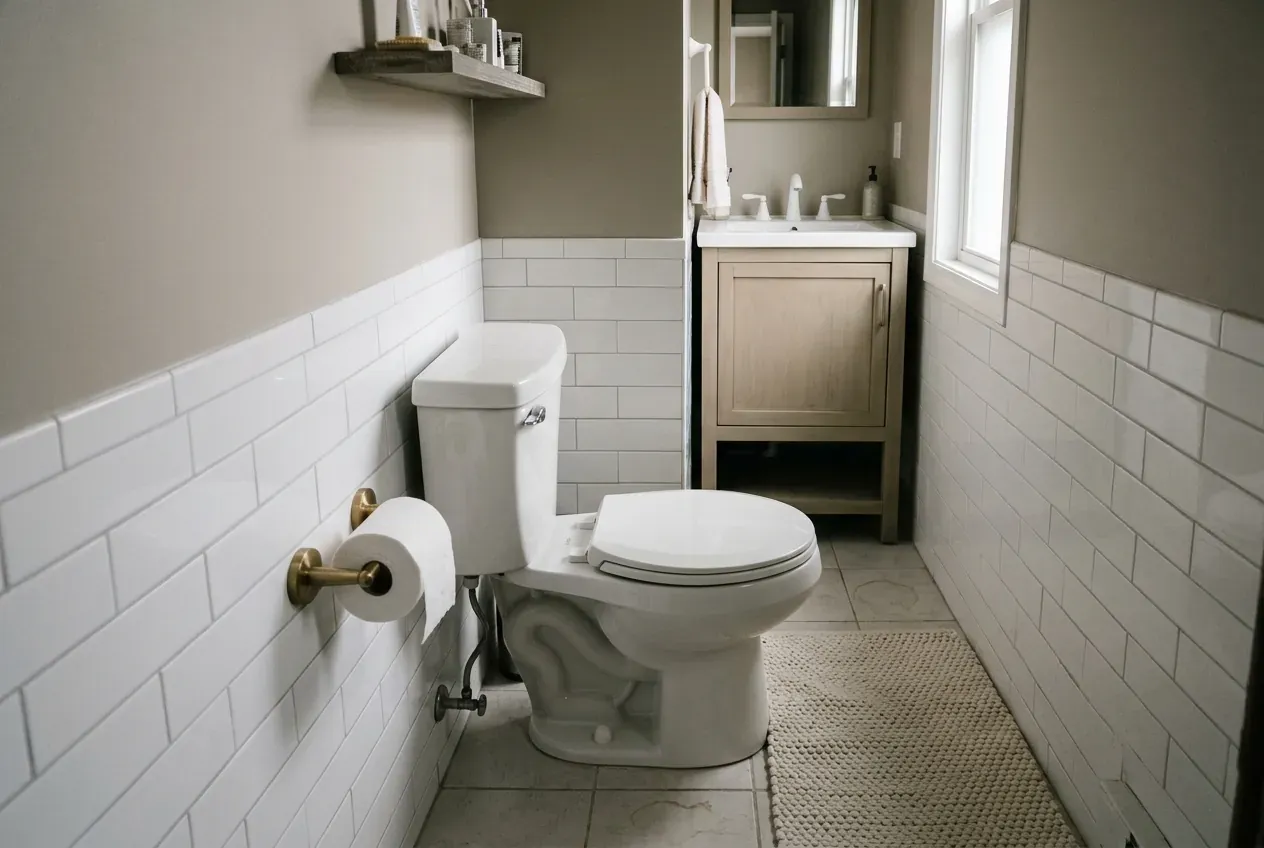
Room specifications
- Room ScaleSmall bathroom (about 5 x 7 ft)
- Design StyleWarm Greige and Brass
- Budget TierBudget ($)
- Palette Swatches4 colors
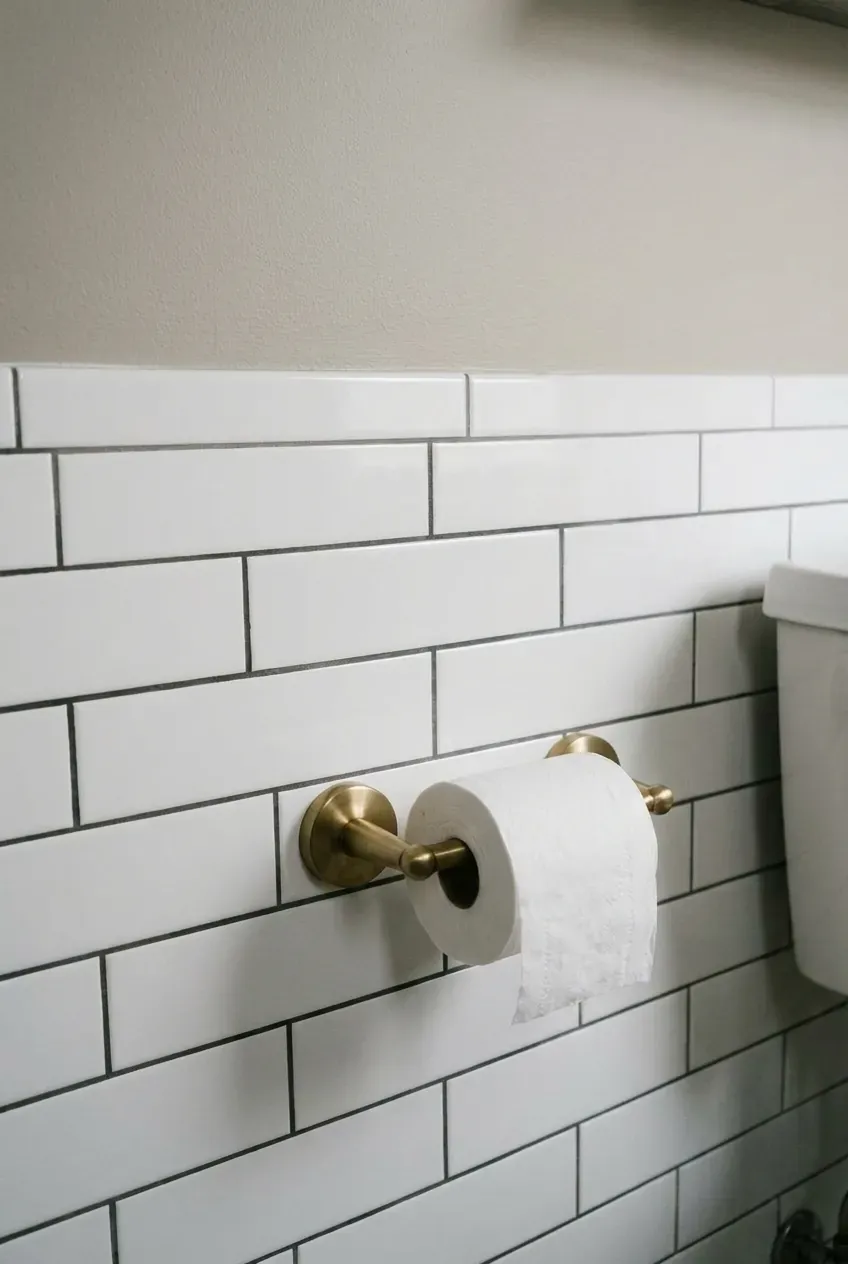
The standard toilet paper holder height for a residential bathroom is 26 in (66 cm) above the finished floor, mounted 8 to 12 in (20 to 30 cm) in front of the front edge of the toilet bowl. These residential dimensions are ergonomic planning guidelines, not mandatory building code.
| Standard or Scenario | Height Above Floor | Distance in Front of Bowl | Where It Applies |
|---|---|---|---|
| Residential guideline (NKBA) | 26 in (66 cm) centered | 8 to 12 in (20 to 30 cm) | Typical private home bathrooms |
| Accessible rooms (2010 ADA §604.7) | 15 to 48 in (38 to 122 cm) outlet | 7 to 9 in (18 to 23 cm) to centerline | Public, commercial, accessible units |
| Comfort-height toilet (17–19 in / 43–48 cm) | 26 to 28 in (66 to 71 cm) centered | 8 to 12 in (20 to 30 cm) | Taller adults in home baths |
| Kids’ bathroom adjustment | 20 to 22 in (51 to 56 cm) centered | 8 to 10 in (20 to 25 cm) | Primary use by young children |
| Freestanding floor stand | 24 to 26 in (61 to 66 cm) arm | 8 to 12 in (20 to 30 cm) forward | Rentals and open walls |
| Children’s accessible rooms (2010 ADA §604.9) | 14 to 19 in (36 to 48 cm) to centerline | 7 to 9 in (18 to 23 cm) | Facilities built for children |
Where the Toilet Paper Holder Goes: Height and Distance at a Glance
Setting the height of a toilet paper holder accurately depends on two paired measurements: vertical height off the finished floor and horizontal distance forward of the bowl. As shown in the scaled diagram above, the National Kitchen & Bath Association (NKBA) Bathroom Planning Guidelines center the holder at 26 in (66 cm) above the floor and 8 to 12 in (20 to 30 cm) in front of the front edge of the toilet bowl.
That 8 to 12 in (20 to 30 cm) forward offset matches how your arm bends when seated on a 15 to 17 in (38 to 43 cm) toilet. Mounting the roll straight beside your hip forces your elbow into the wall, while going beyond 14 in (36 cm) makes you lean forward. In a compact 5 x 7 ft (152 x 213 cm) bathroom, staying near 8 to 10 in (20 to 25 cm) keeps the holder out of the doorway path. Treat these numbers as ergonomic design guidelines, not building code, and do a quick sit test on the closed lid before drilling.
Guideline Versus Accessible Rooms: NKBA vs 2010 ADA Standards
Bathroom charts often blur residential guidelines with federal accessibility rules, so separate the two before marking your tile:
- NKBA Residential Guidelines: Published by the National Kitchen & Bath Association, 26 in (66 cm) high and 8 to 12 in (20 to 30 cm) forward of the bowl are voluntary comfort guidelines for private homes.
- 2010 ADA Standards (§604.7): Under the 2010 ADA Standards for Accessible Design and detailed in the U.S. Access Board Guide to Chapter 6: Toilet Rooms, dispensers in designated accessible toilet rooms must sit 7 in (18 cm) minimum and 9 in (23 cm) maximum in front of the water closet (measured to dispenser centerline), with the paper outlet between 15 in (38 cm) minimum and 48 in (122 cm) maximum above the finish floor. Dispensers must allow continuous paper flow and stay at least 1.5 in (3.8 cm) below or 12 in (30 cm) above a side grab bar.
Children’s dispensers. For toilet rooms designed for children, the 2010 ADA Standards (§604.9) set the dispenser centerline between 14 in (36 cm) and 19 in (48 cm) above the finished floor. That is a legal figure for children’s facilities; in a home, the 20 to 22 in (51 to 56 cm) kids’ row in the table is a comfort guideline.
Section 604.7 is a legal accessibility requirement for public accommodations, commercial facilities, and designated mobility-accessible units—not a general private residential rule. If you add a home grab bar at 33 to 36 in (84 to 91 cm), however, keeping at least 1.5 in (3.8 cm) below the bar preserves a safe grip.
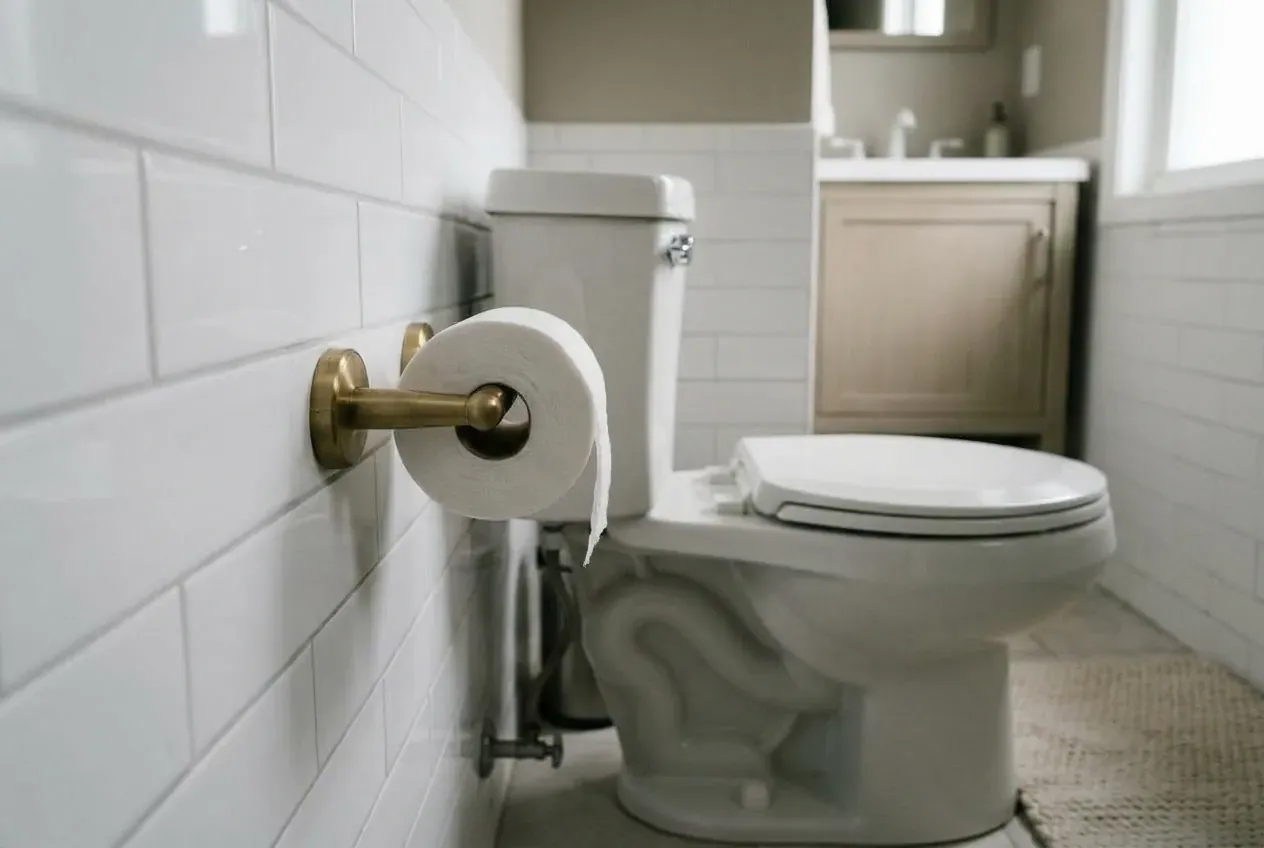 Positioning the roll 8 to 12 in (20 to 30 cm) forward of the bowl front keeps it within an easy elbow bend without bumping your knee.
Side Wall, Vanity Side, or Back Wall: Choosing for a Small Bathroom
Before deciding where to put a toilet paper holder, check your side clearance. Under Section P2705.1 of the 2021 International Residential Code (IRC), a water closet cannot be set closer than 15 in (38 cm) from its centerline to any side wall, partition, or vanity, or closer than 30 in (76 cm) center-to-center to an adjacent fixture. That minimum spacing—covered in our compact toilet and small bathroom clearances guide—determines which surface sits within reach:
- Adjacent side wall: Best choice whenever a wall sits 15 to 18 in (38 to 46 cm) from the toilet centerline. Mount at 26 in (66 cm) high and 8 to 12 in (20 to 30 cm) forward.
- Vanity cabinet side: Ideal when a 30 in (76 cm) vanity sits beside the toilet with no wall on the other side. Check inside the cabinet first so short wood screws miss drawer slides and traps. Pair with smart interior storage from our bathroom cabinet organizer guide.
- Opposite front wall: Works only in a tight 30 to 36 in (76 to 91 cm) water closet where the front wall sits within 24 to 28 in (61 to 71 cm) of the bowl rim.
- Back wall behind tank: Last resort, as twisting behind your shoulder is awkward and often hits the flush handle.
Left or Right Side, and Checking Door and Knee Clearance
With walls on both sides, right-hand placement (while seated) suits most users, but small-bathroom clearances always win over handedness.
Trace the full door swing first. A surface-mounted brass holder projects 3 to 4 in (7.6 to 10 cm), and a mega roll adds up to 1 in (2.5 cm) more. If an in-swinging door passes within 4 in (10 cm) of that wall, switch to the opposite side or install a recessed holder (projecting 1 to 1.5 in / 2.5 to 3.8 cm). Also keep protruding bars off the open walkway side of a 5 x 7 ft (152 x 213 cm) bathroom so you never snag hips walking to the sink, and position nearby hardware like a small bathroom towel rack higher at 48 in (122 cm).
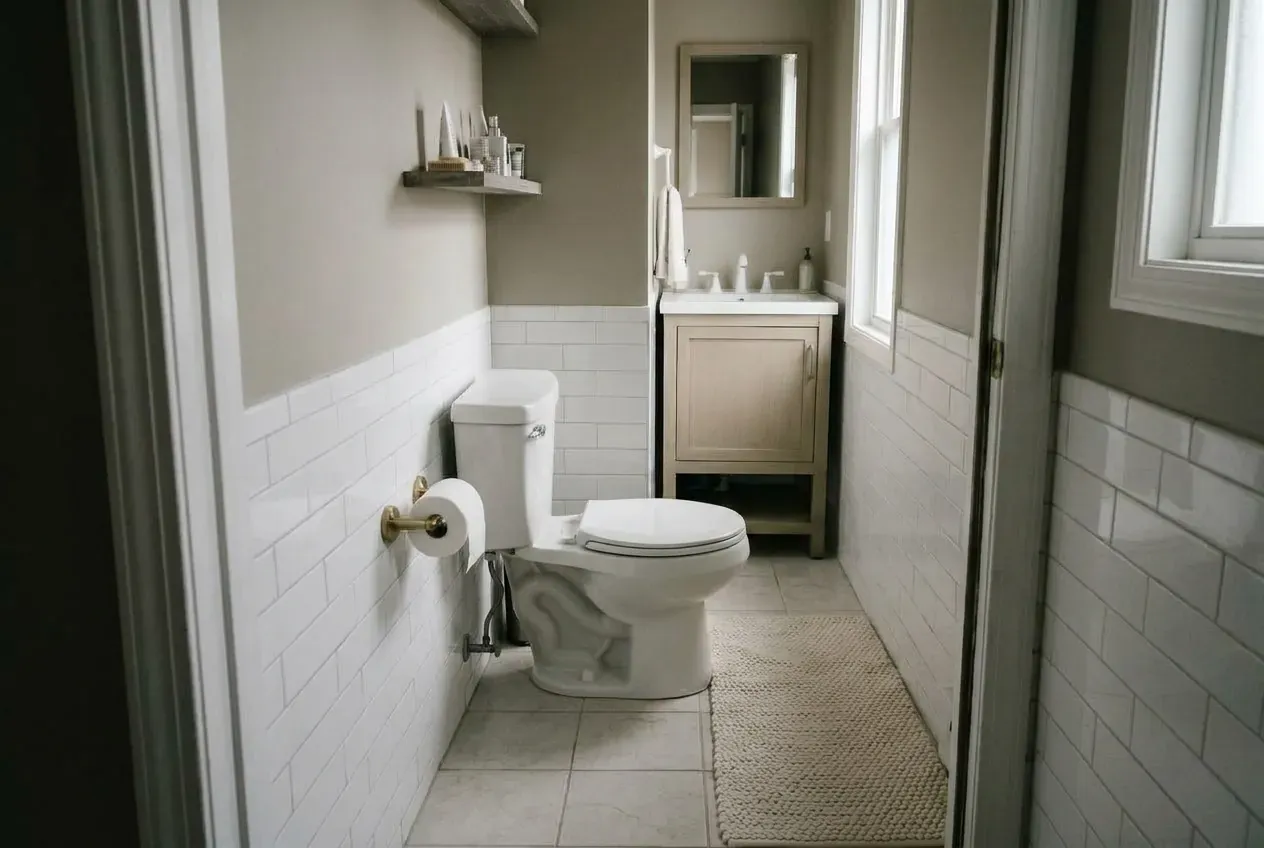 Checking doorway swing and the 15 in (38 cm) minimum side clearance ensures the mounted holder never snags clothing or blocks the path to the 30 in (76 cm) vanity.
No Wall Space: Freestanding, Cabinet-Mounted, and Over-Tank Options
In tight baths and small half baths or powder rooms where the toilet sits between a tub and pedestal sink, use one of three no-wall solutions:
- Weighted freestanding floor stand: Pick a heavy 3 to 4 lb (1.4 to 1.8 kg) base with a slim 6 to 7 in (15 to 18 cm) footprint and a 24 to 26 in (61 to 66 cm) arm height. Vertical reserve spindles store 2 to 3 spare rolls in the same footprint.
- Over-the-cabinet hook: Slips over a nearby vanity door at roughly 24 to 26 in (61 to 66 cm) off the floor with zero screws; check that a 0.1 in (2.5 mm) felt-lined clip lets the door shut cleanly.
- Over-the-tank hook: Keeps the floor clear for mopping, though it sits slightly behind your hip. Check tank-lid fit before pairing with renter-friendly over-the-toilet storage.
Renter-Friendly Mounting Without Drilling
Drilling glazed subway tile in a rental risks cracked tile and lost deposits. A full mega roll weighs under 0.6 lb (0.3 kg), so waterproof adhesive strips or mounting glue rated for 5 to 10 lb (2.3 to 4.5 kg) hold reliably when applied correctly:
- Match the surface: Use adhesives only on smooth glazed ceramic tile, glass, or sealed laminate vanity panels—never on flat painted drywall, rough stone, or across grout joints.
- Degrease thoroughly: Clean the tile with 70 percent isopropyl alcohol and let dry for 10 minutes.
- Cure for 24 hours: Press the backplate firmly for 60 seconds and leave it unloaded for 24 hours before adding a roll.
- Choose a wide base: A 2.5 x 2.5 in (6.4 x 6.4 cm) backplate resists tearing torque far better than a narrow 1.5 in (3.8 cm) rosette.
On painted drywall rentals where drilling is banned, skip wall tape and use a weighted brushed-brass floor stand.
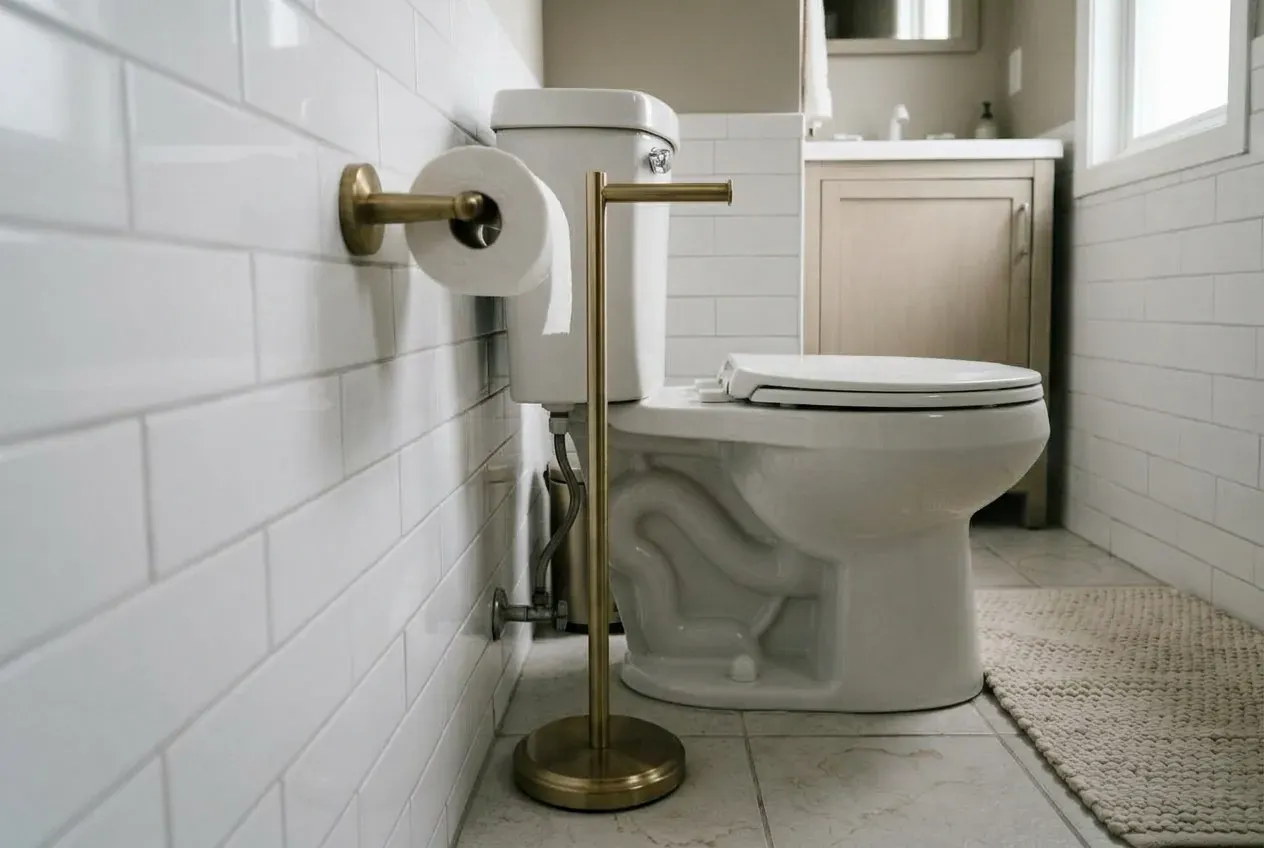 When side walls sit too far away or drilling tile is off-limits, a weighted freestanding stand puts the roll at 24 to 26 in (61 to 66 cm) with zero wall holes.
How to Mark and Mount a Holder Cleanly (Tile vs Drywall)
When drilling is allowed, match fasteners to your wall material:
- Drywall: Check for a stud first. If you miss a stud at 26 in (66 cm) high and 8 to 12 in (20 to 30 cm) forward, install threaded metal drywall anchors or toggle bolts rated for at least 25 lb (11 kg) each rather than basic plastic plugs.
- Subway tile: Apply two layers of painter’s tape over the mark to stop bit skate. Drill slowly (no hammer mode) with a carbide spear bit or diamond hole saw, misting with water to keep the bit cool, then hand-tighten into nylon expansion anchors so you do not crack the glaze.
- Avoid plumbing: Never drill behind the tank near the cold-water supply line without confirming pipe locations first.
Mistakes That Make the Roll Hard to Reach
Avoid four common placement errors in small bathrooms:
- Mounting too low or too far back: Anything near 18 in (46 cm) high or aligned with the tank forces an uncomfortable reach.
- Ignoring mega-roll width: Mega rolls measure 5 to 5.5 in (13 to 14 cm) across; leave at least 3 in (7.6 cm) of clearance from trim or cabinets so fresh rolls spin freely.
- Using closed spring spindles in tight corners: A pivoting-arm or open-post holder makes roll swaps effortless when a wall sits close.
- Placing rolls in splash zones: Stay at least 6 to 8 in (15 to 20 cm) clear of uncurtained tub edges, or add a hooded cover.
Browse more hardware specs and compact layouts in our bathrooms and entryways guide hub.
Curated Color Palette & Key Textures
- Subway White #F4F4F2
- Warm Greige #CFC8BE
- Brushed Brass #B49459
- Dark Grout #4A4743
General references
Dimensions in these guides are typical planning ranges, not legal minimums, and they can differ by jurisdiction. Use the references below as starting points, then confirm local code and your lease before making changes.
FAQ
How high should a toilet paper holder be?
For most residential bathrooms, the NKBA Bathroom Planning Guidelines recommend centering the toilet paper holder 26 in (66 cm) above the finished floor. If you have a taller comfort-height toilet or taller household members, shifting up slightly to 27 or 28 in (69 or 71 cm) keeps the reach natural.
How far from the toilet should the holder be?
Mount the center of the roll 8 to 12 in (20 to 30 cm) in front of the front edge of the toilet bowl, following NKBA residential planning guidelines. In designated accessible toilet rooms under 2010 ADA Standards Section 604.7, the dispenser centerline must sit 7 to 9 in (18 to 23 cm) in front of the water closet.
Where do I put a holder when there is no wall beside the toilet?
When neither side wall sits within 15 to 18 in (38 to 46 cm) of the toilet centerline, mount the holder on the side of an adjacent vanity cabinet or use a weighted freestanding floor stand about 24 to 26 in (61 to 66 cm) tall. Over-the-tank hooks also work in tight powder rooms, though they require twisting your torso to reach.
Does the holder go in front of or beside the toilet?
Always place the holder slightly in front of the bowl's front rim—8 to 12 in (20 to 30 cm) forward—rather than directly beside the seat or back near the tank. Reaching straight sideways or behind your hip forces an awkward shoulder twist and makes tearing sheets one-handed harder.
How high should a toilet paper holder be for kids?
For a children's bathroom at home, 20 to 22 in (51 to 56 cm) to the center is a comfortable guideline. The 2010 ADA Standards (§604.9) set 14 to 19 in (36 to 48 cm) to the dispenser centerline for toilet rooms designed for children, which is a legal requirement for those facilities, not for private homes.
Can I mount a holder without drilling?
Yes, on smooth glazed ceramic or porcelain tile, heavy-duty waterproof adhesive strips or two-part mounting glue can hold a lightweight single-roll bar rated for 5 to 10 lb (2.3 to 4.5 kg) after a 24-hour cure. Avoid adhesives on matte painted drywall, textured stone, or grout seams, where a freestanding stand or vanity-side mount is far more reliable.
Save this idea

Keep reading
Related rooms
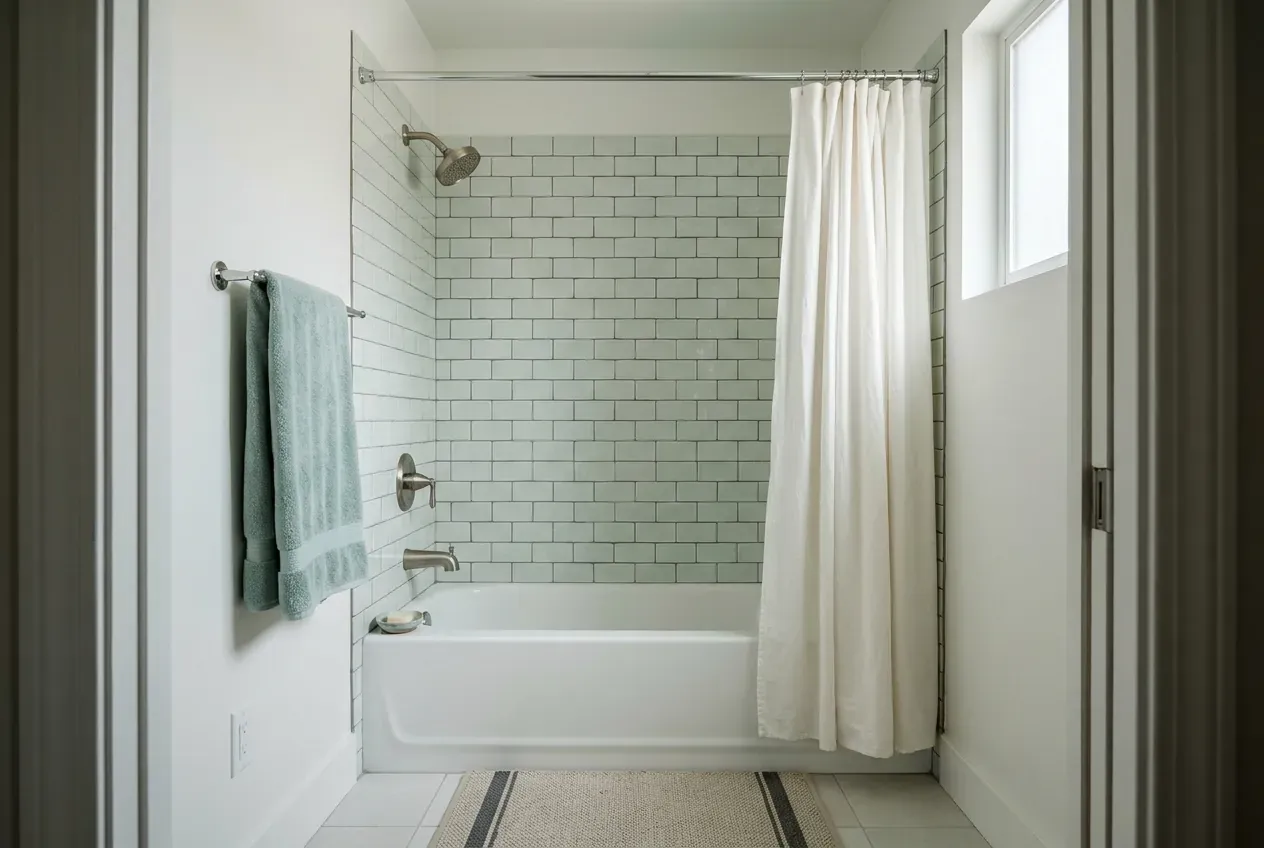
Standard Shower Head Height: 72 to 80 in (183 to 203 cm)
Standard shower head height: mount a fixed head 72 to 80 in (183 to 203 cm) above the floor, 6 in above the tallest user, valve at 38 to 48 in.
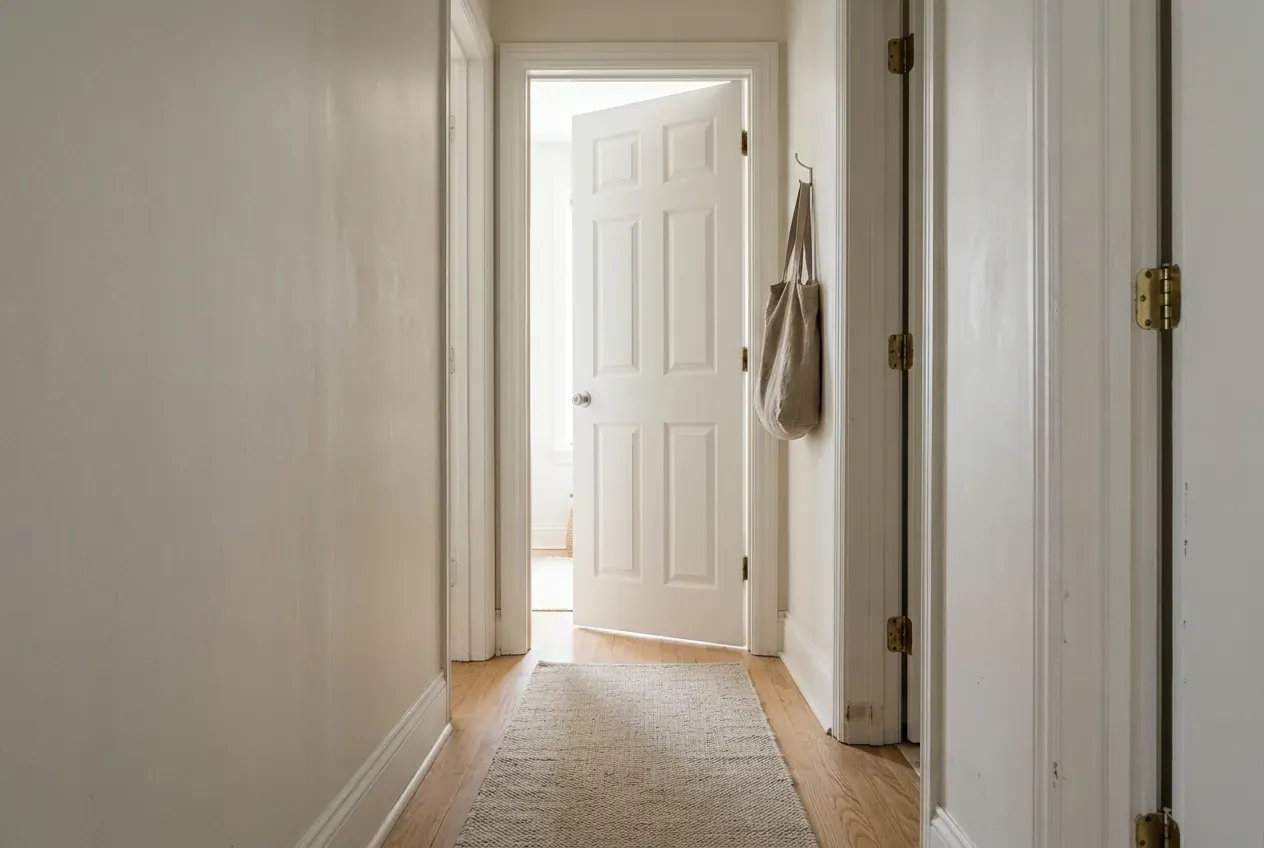
Standard Interior Door Sizes: Widths, Heights, Clearances
Standard interior door sizes: 24 to 36 in (61 to 91 cm) wide and 80 in (203 cm) tall, with clear openings, rough-opening sizes and swing clearance.
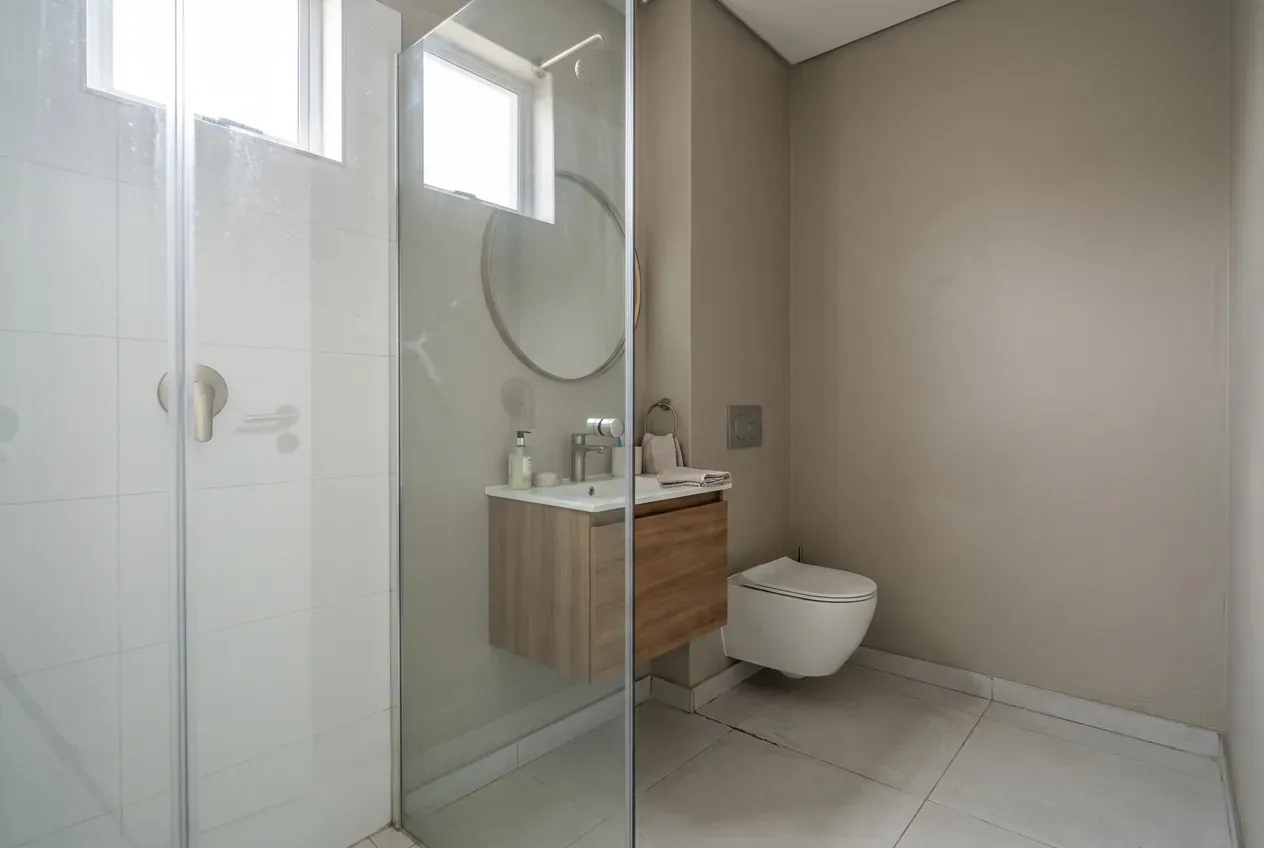
What Is a 3/4 Bathroom? Layouts, Sizes & Code Clearances
What is a 3/4 bathroom? A toilet, sink and shower with no tub, in as little as 5 x 7 ft (152 x 213 cm). Compare quarter, half and full baths.