Small Low Light Indoor Plants for Apartments
Small low light indoor plants for apartments: snake plants, ZZ plants and cast-iron plants that cope on 6 in (15 cm) deep sill ledges without drilling.
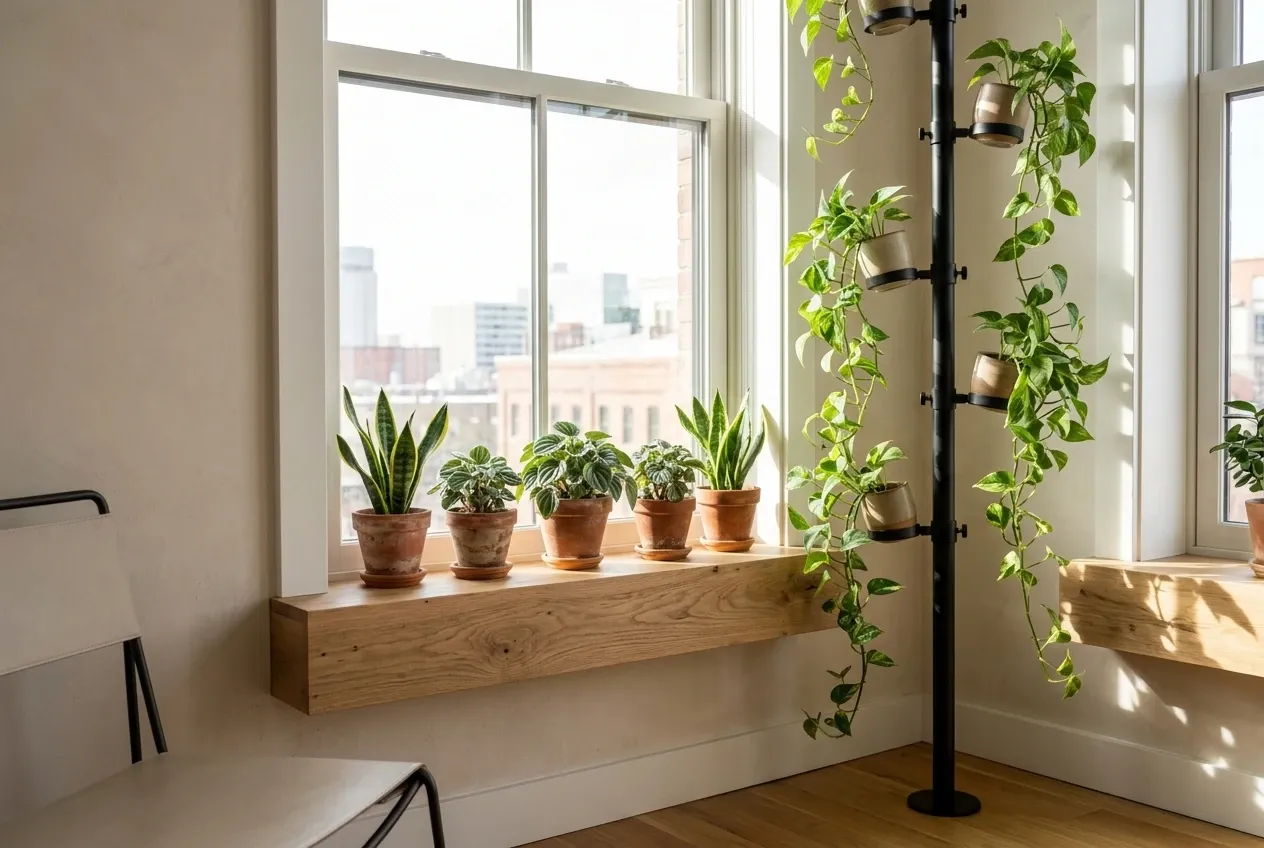
Room specifications
- Room ScaleSmall apartment window zone (about 3 x 5 ft)
- Design StyleOrganic Modern / Botanical Minimalist
- Budget TierBudget ($)
- Palette Swatches4 colors
Start with small low light indoor plants — snake plants, ZZ plants or cast-iron plants — and keep every pot on a ledge at least 6 in (15 cm) deep so it cannot tip. Match the plant to the window it will sit in, and move greenery up onto sills, shelves and a tension pole rather than the floor, where it blocks walkways and leaves rings on rental wood.
Here is how to choose plants by light, how to build a sill or tension-pole station without drilling, and how to keep water off the sill.
Match the plant to the light
Foot-candles (FC) are a light measurement, and you do not need a meter to use them. Treat the numbers below as rough guides from typical plant-care ranges and judge by how bright the spot actually is.
| Plant | Light it tolerates | Window or spot | Pot size |
|---|---|---|---|
| Snake plant | Low to bright, about 50 to 250 FC | North or east window | 4 to 6 in (10 to 15 cm) |
| ZZ plant | Low, about 50 to 150 FC | Interior wall, shelf corner | 5 to 6 in (13 to 15 cm) |
| Peperomia | Medium indirect, about 150 to 400 FC | East or filtered west | About 4 in (10 cm) |
| Golden pothos | Medium to bright, about 100 to 500 FC | Any indirect light | 5 to 6 in (13 to 15 cm) |
Low-light plants such as ZZ and snake plants cope with north-facing rooms that get very little ambient daylight. A floating bookshelf corner is a good spot for a ZZ plant.
In winter, window glass can be much colder than the room. Keep foliage a couple of inches off the glass so leaves are not chilled or scorched, and keep plants away from direct radiator heat.
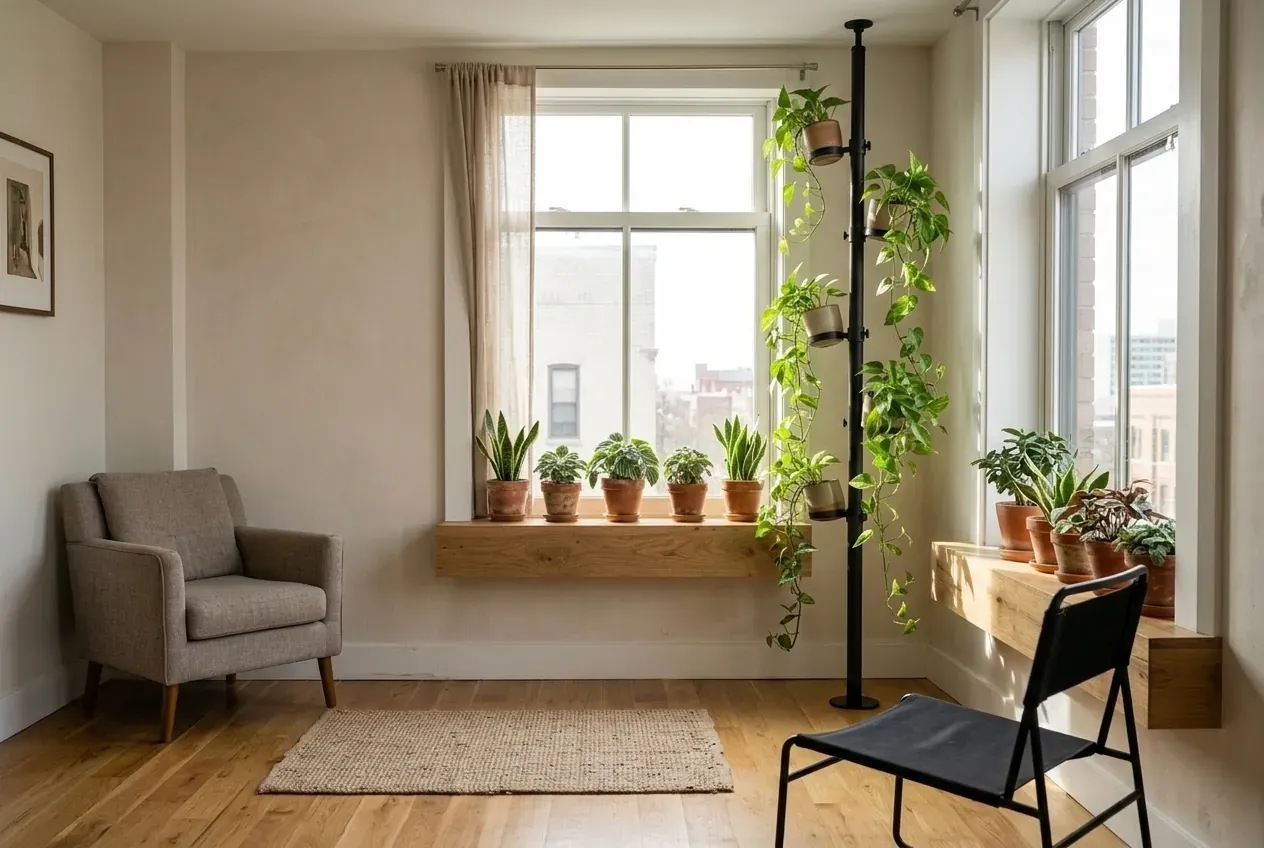 The same room seen from the opposite end, so you can judge the layout from the far side.
Build a station without drilling
Extend a shallow sill
Many older rentals have narrow sills, sometimes only a couple of inches deep. If yours is under about 4 in, clamp a wooden sill extension over the existing trim with under-sill thumb screws to make a safe 6 in ledge. A 6 x 36 in oak extender holds several small succulent pots. Check that the clamp does not mark the paint, and test it with a gentle push before loading it.
Tension pole
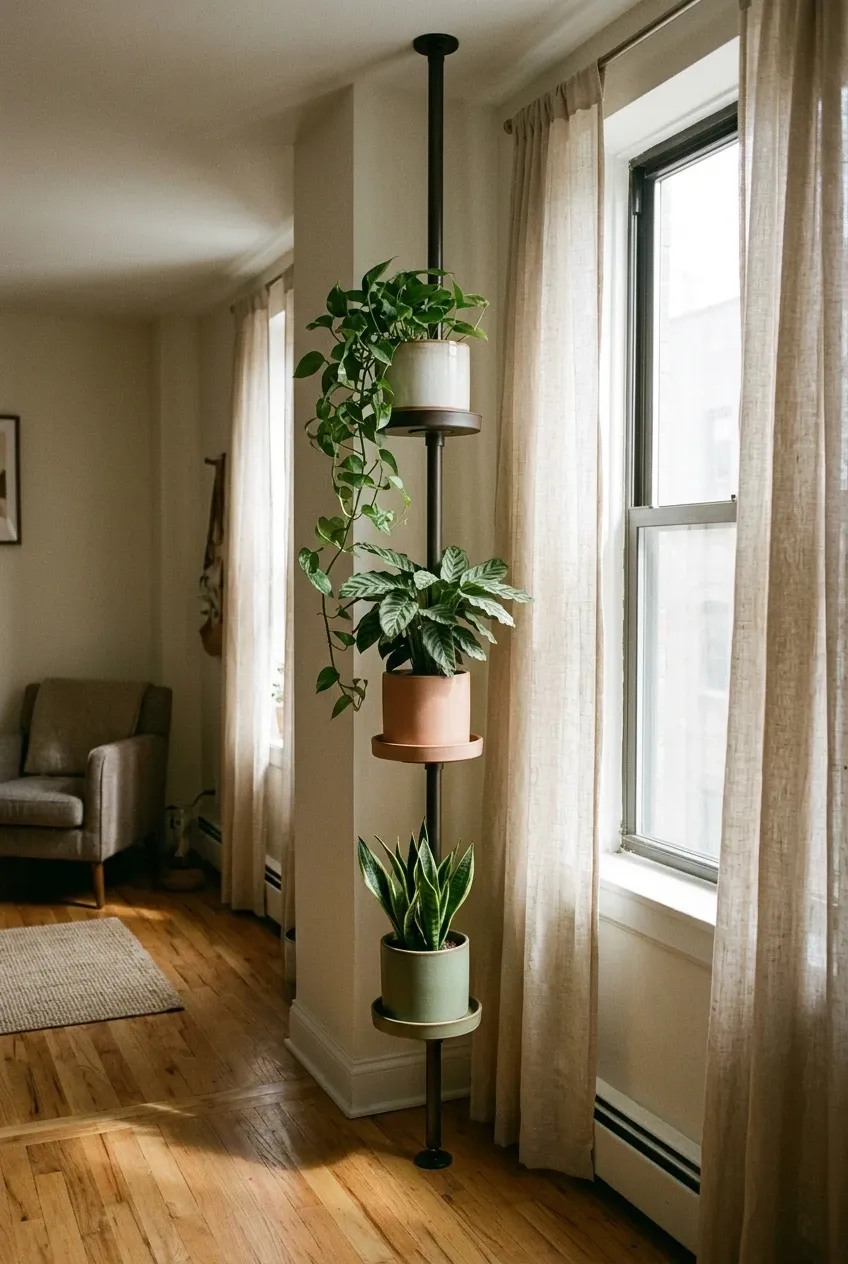
A floor-to-ceiling spring tension pole holds plant trays by compression, so no screws go into the ceiling. That matters in lath-and-plaster or concrete ceilings where hooks are not an option. Tighten the base until the rubber pads grip firmly, then place trays at staggered heights, for example around 36, 54 and 72 in from the floor. Put trailing plants such as pothos at the top where they can hang down without blocking the lower pots. The pole takes only a few inches of floor.
Peg rail
In a bright entry hall, a horizontal wooden peg rail with hanging planters or air-plant holders uses wall space. Make sure the rail is anchored into studs if you use it and your lease allows it.
For balcony planting, the balcony planter guide covers sizes; the same clearance thinking applies on a bistro balcony. Curtains and sills interact, so see drapes vs curtains before you crowd a window.
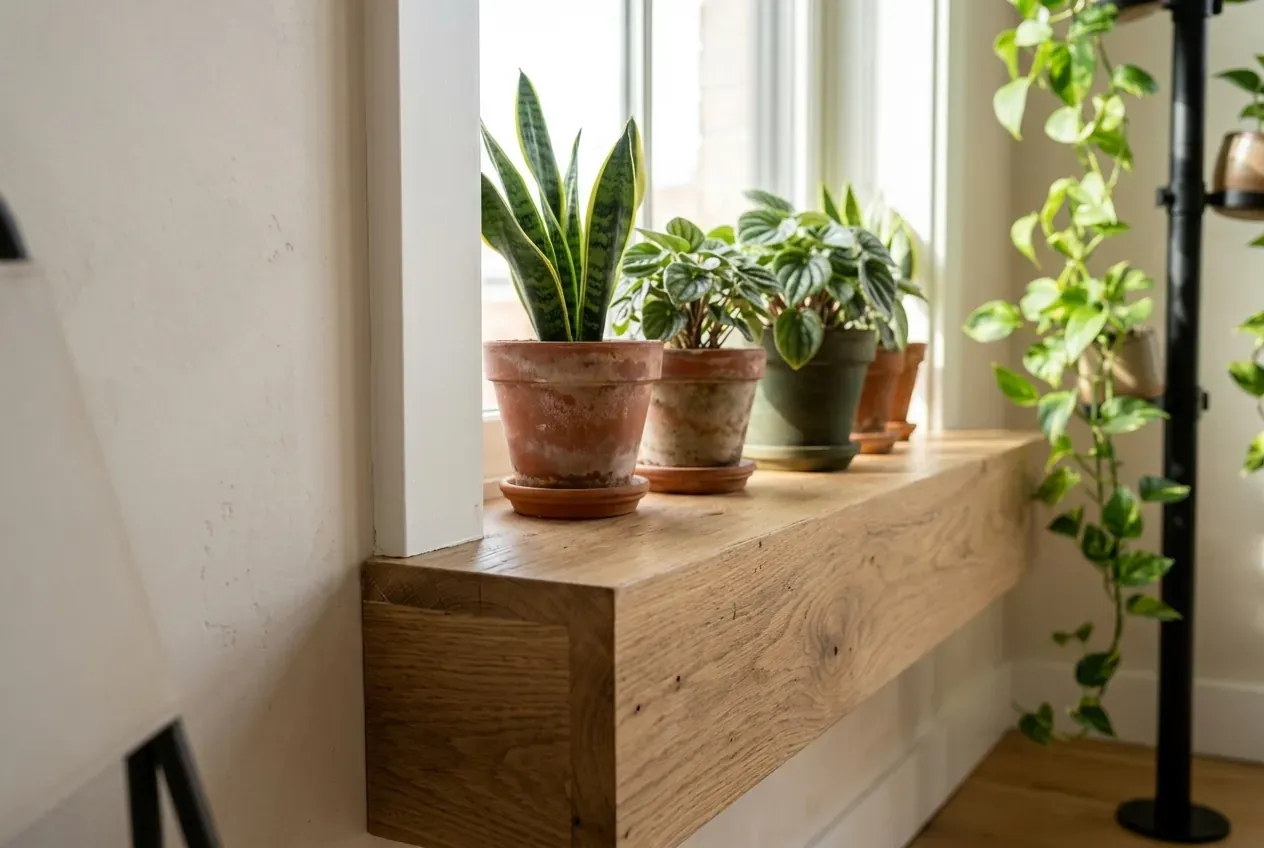 Close up: Maintain a minimum window sill shelf depth of 6 inches (15.2 cm) to securely support small indoor plant pots without tipping hazards.
Water, soil and humidity
- Protect the sill. Unglazed terracotta can sweat moisture through the clay. Put a glazed saucer, silicone coaster or sealed cork pad under every pot to protect painted wood.
- Water from below. Pouring water into the saucer and letting the roots draw it up keeps the soil surface drier, which helps against fungus gnats. Empty the saucer after about twenty minutes.
- Handle dry winter air. Radiators can leave the apartment very dry. A shallow tray of gravel and water under a pot adds some local humidity; keep the pot’s base above the water level so the roots do not sit wet. If you have the opposite problem, the dehumidifier sizing guide is the better read.
- Check pets. Several common houseplants are toxic to cats and dogs. Check each plant against a reliable pet-safety list before it goes on a low ledge.
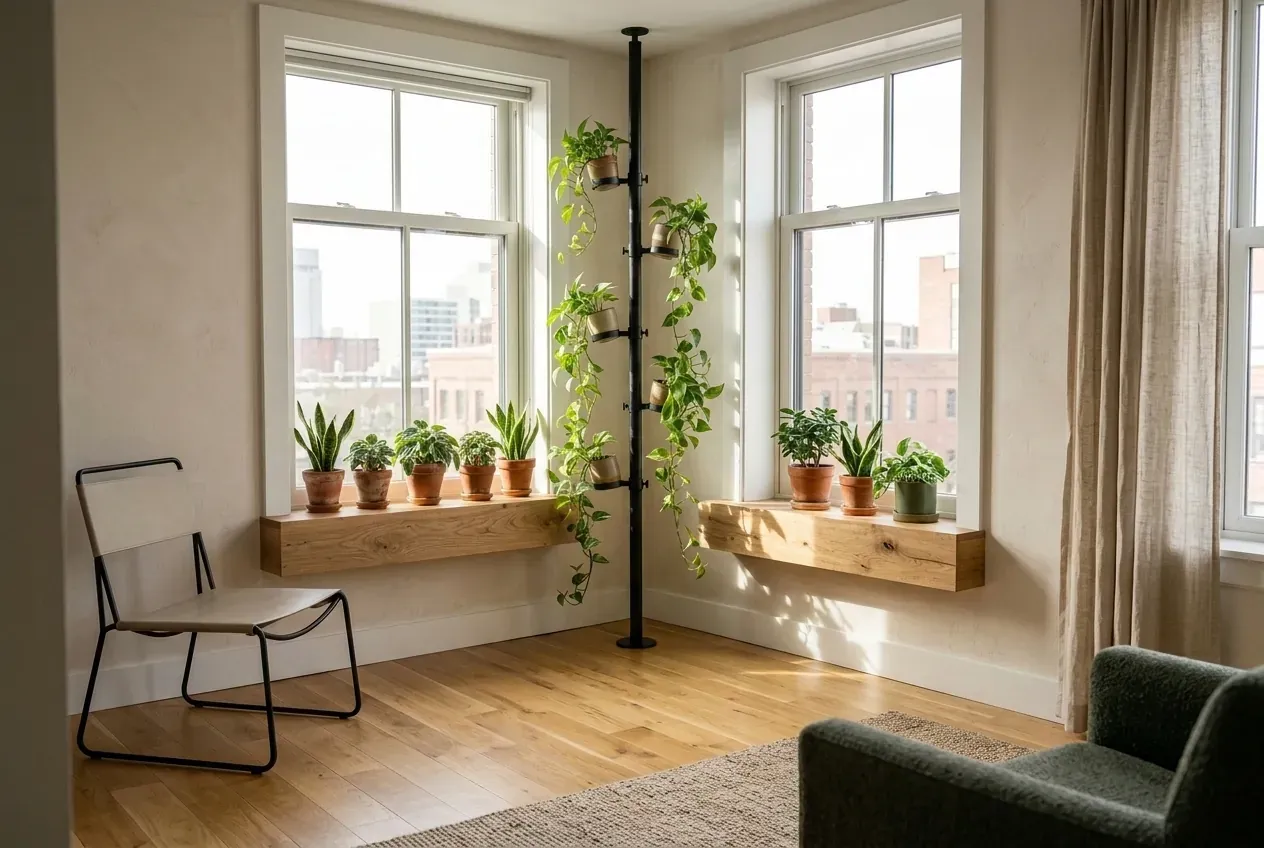 From above and to one side, the full footprint and the walkway read at a glance.
Common mistakes
- Putting a large fiddle-leaf fig in a small apartment where it blocks the walkway or the radiator.
- Leaving a plant against cold glass in winter.
- Using a pot that overhangs a narrow sill.
- Stacking trays too close, so top plants shade the lower ones.
- Setting terracotta directly on painted wood.
Pale walls, natural wood and green foliage keep a plant corner calm; there is no need to match every pot. A pale backdrop also helps you see whether plants are getting enough light.
Before you buy
- Measure the sill depth and find the window orientation.
- Pick plants that suit that light, not just the look.
- Add a ledge extender or tension pole rather than drilling.
- Put a saucer or cork pad under every pot.
- Check pet safety for each plant.
- Leave your walkway and radiator clear.
Curated Color Palette & Key Textures
- Terracotta Clay #B25D43
- Deep Laurel Green #3A4C3A
- Warm Alabaster #F5F2EB
- Cast Iron #28292A
General references
Dimensions in these guides are typical planning ranges, not legal minimums, and they can differ by jurisdiction. Use the references below as starting points, then confirm local code and your lease before making changes.
FAQ
What are the best small indoor plants for low-light rental apartments?
ZZ plants, snake plants, and cast-iron plants thrive in low-light north-facing rooms receiving as little as 50 to 100 foot-candles of ambient daylight.
How do you hang plants in a rental apartment without drilling into ceilings?
Use floor-to-ceiling spring tension plant poles or clamp-on window sill planter brackets with non-marring silicone pads.
How do you protect apartment wood window sills from water stains?
Place glazed ceramic trays or unlacquered cork saucers beneath all terracotta pots to catch drainage runoff and prevent wood rot.
Save this idea

Keep reading
Related rooms
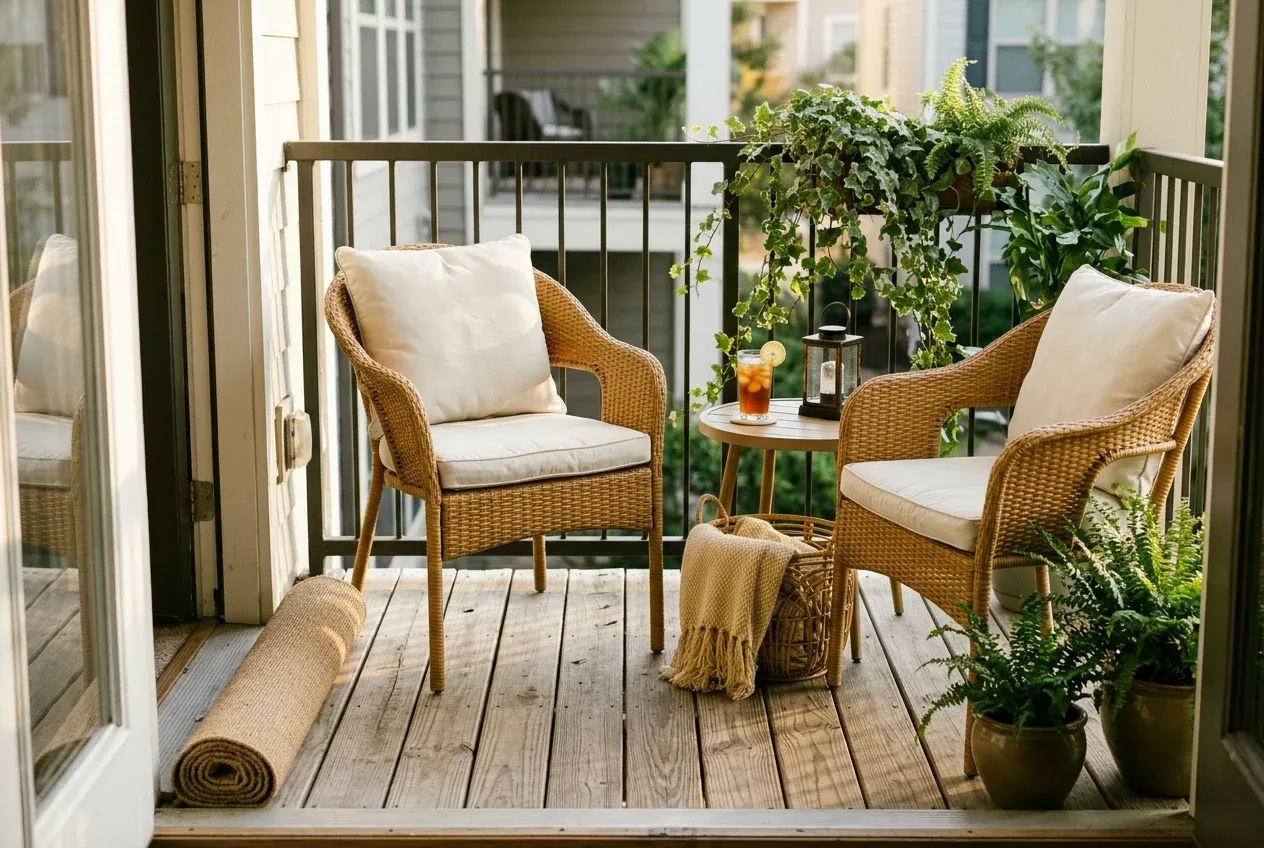
Wicker and Rattan Furniture for a Small Balcony
What wicker furniture is, how it differs from rattan and which version survives a small balcony: weave materials, weather limits and a 4 x 8 ft layout.
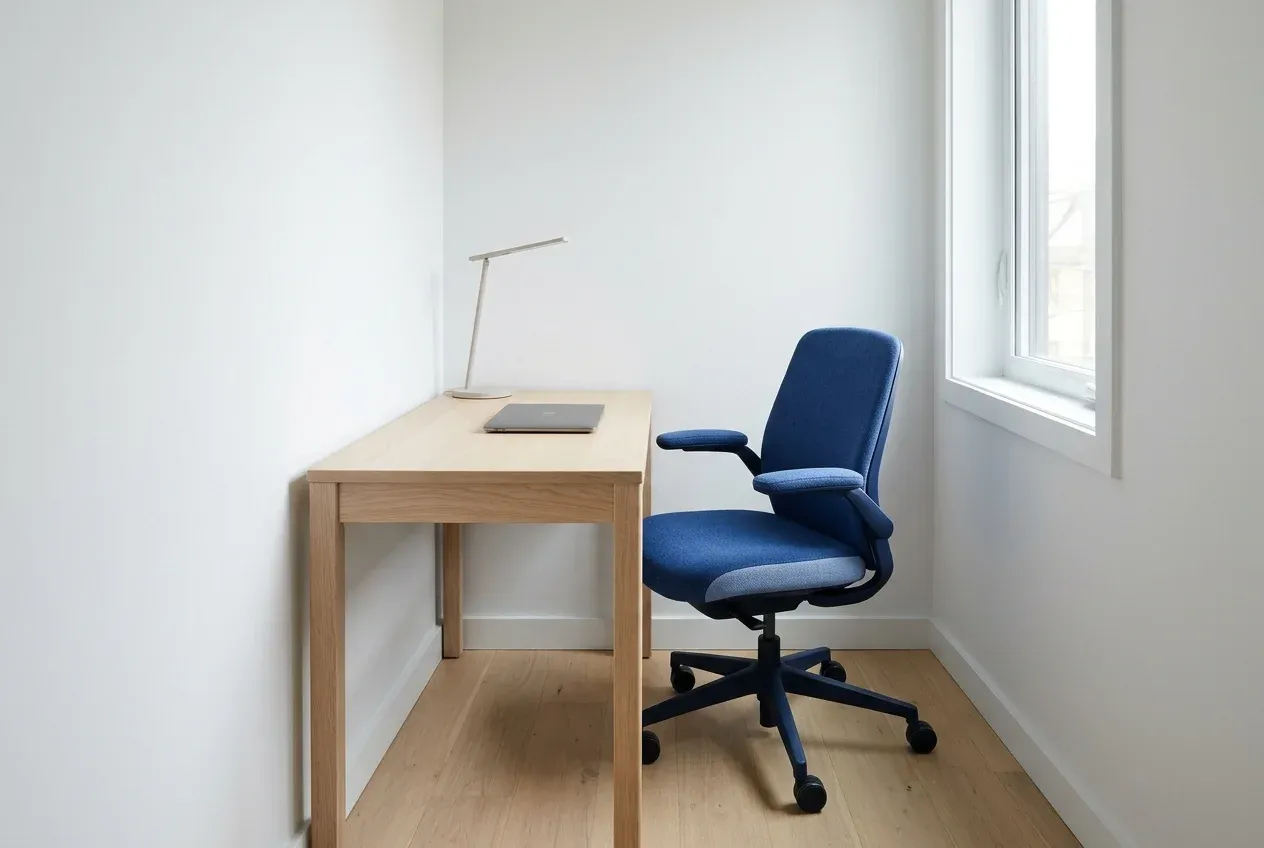
Most Comfortable Office Chair in a Studio Corner
Compact office chair comfort, measured: 16-20 in (41-51 cm) seat height, 2 in (5 cm) of knee room, folding arms, and a fit for 24 in (61 cm) deep desks.
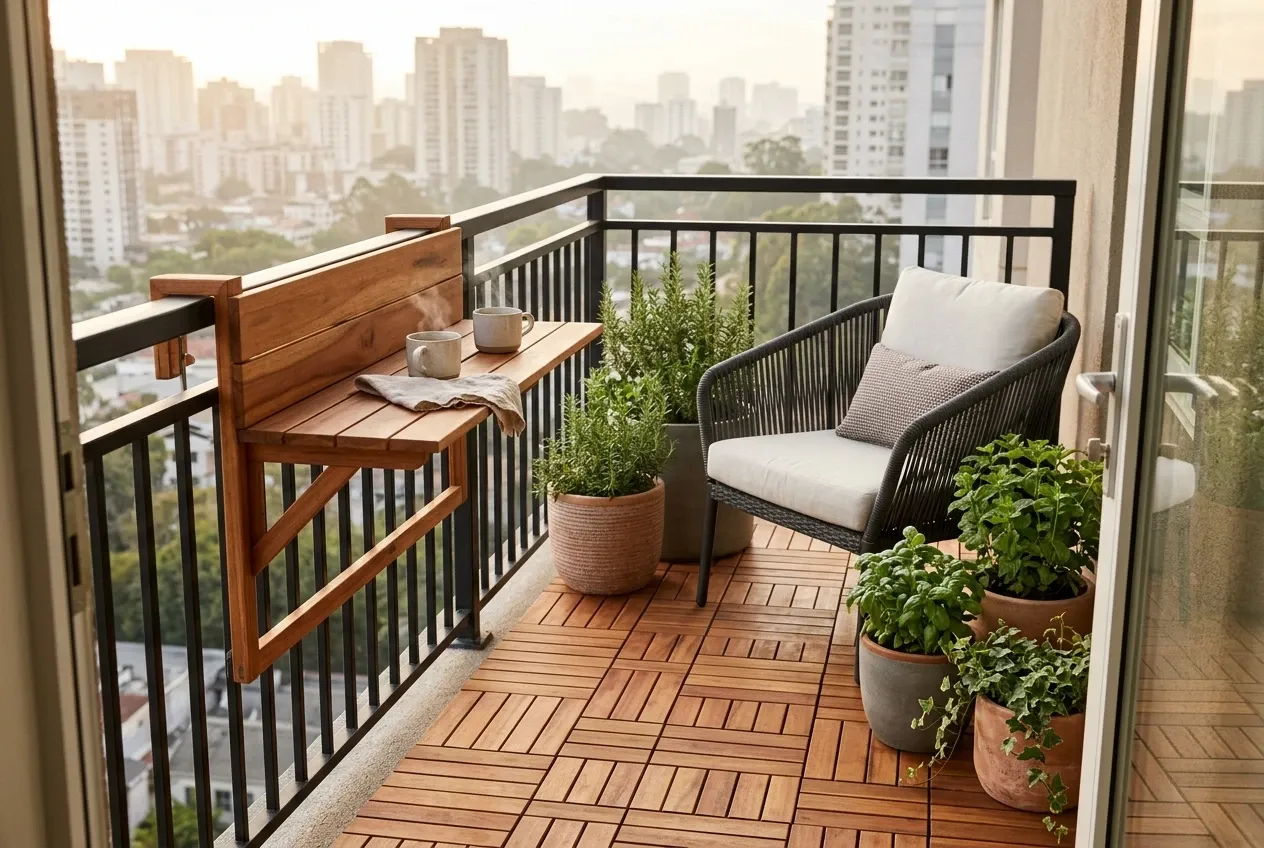
Small Balcony & Workspace Guide
A pillar guide to small balconies and home workspaces: furniture clearances, privacy screens, desk depths, and lighting for compact apartments.