Lighting a Dark North-Facing Living Room
North-facing room lighting: brighten a dark living room with 2700K warm white layering, bounce lighting, high-LRV paint formulas and perimeter glow.
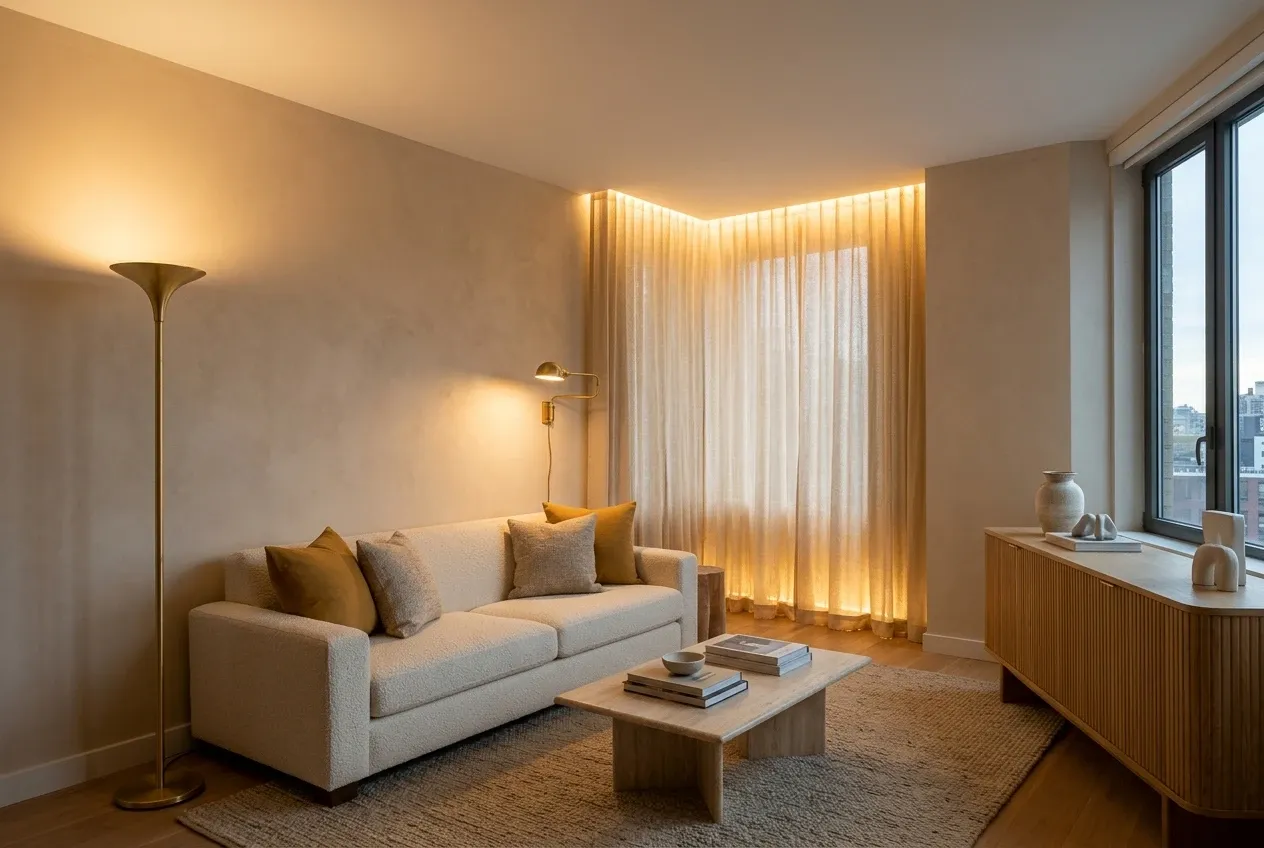
Room specifications
- Room ScaleDark north-facing living room
- Design StyleWarm Hearth / Terracotta Neutrals
- Budget TierMid-Range ($$)
- Palette Swatches6 colors
North-facing living rooms present one of the most frustrating optical paradoxes in residential architecture. Because they receive exclusively indirect, reflected solar exposure, northern windows provide beautifully even, glare-free illumination throughout the day. However, this light carries a severe chromatic consequence: it registers between 6500K and 7500K on the Kelvin scale—a cool, shadowy, blue-gray wash that flattens spatial volume.
When homeowners attempt to fix a dark north-facing room by coating the walls in standard bright gallery white and switching on a central ceiling fixture, the space frequently looks worse: corners turn a dingy, institutional gray, and shadows feel cold and damp.
To transform a dim, north-facing living room into a luminous, deeply inviting sanctuary, you must artificially inject thermal warmth, bounce photons across high-reflectance planes, and distribute low-glare light points across multiple horizontal tiers.
Here is the architectural and photometrics guide to illuminating a north-facing living room.
1. Photometrics & Chromatic Calibration
Understanding color temperature and color rendering is essential before investing in fixtures.
| Metric / Parameter | Recommended Target | Architectural Rationale |
|---|---|---|
| Color Temperature | 2700K (Soft Warm White) | Emits warm amber/red wavelengths that counteract 7000K northern blue light. |
| Color Rendering Index (CRI) | 95+ CRI Minimum | Crucial for rendering wood grains, textiles, and skin tones with authentic vibrancy. |
| Lumens Density | 25–35 lumens per sq ft | Ensures adequate overall light volume across the floor plan without harsh glare. |
| Ceiling Paint LRV | 88 to 92 (Light Reflectance Value) | Maximizes upward bounce efficiency for torchiere and cove lighting. |
| Wall Paint LRV | 78 to 83 LRV | Reflects ambient light while retaining enough warm pigment to avoid graying out. |
The “Daylight Bulb” Fallacy
The most common mistake in dark rooms is installing 5000K “Daylight” LED bulbs. While marketing suggests daylight bulbs simulate bright sunshine, in an enclosed north-facing room they amplify the blue-gray spectral cast, making walls look clinical and stark. Stick strictly to 2700K bulbs to introduce the missing thermal warmth of southern and western sunlight.
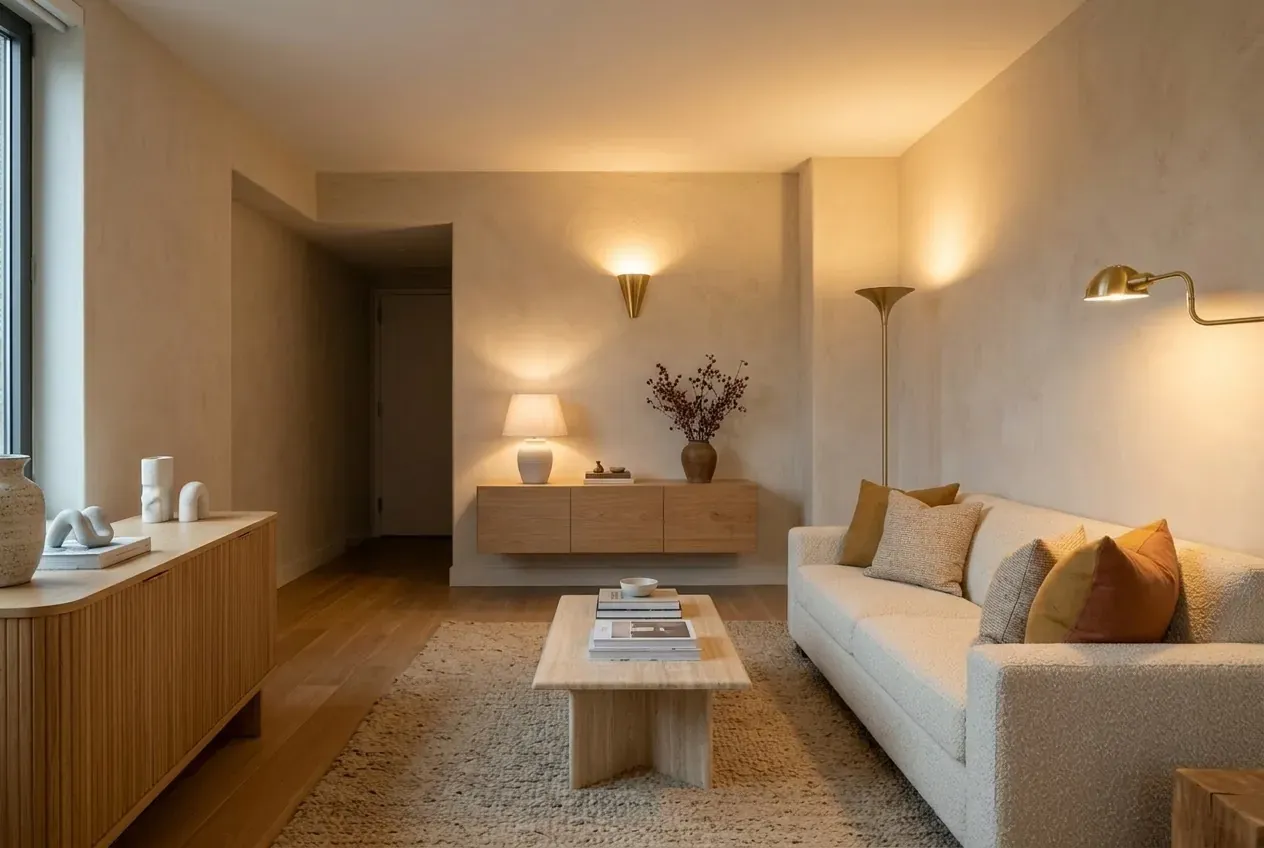 The same room seen from the opposite end, so you can judge the layout from the far side.
2. Four Master Lighting Rules for North-Facing Rooms
Rule 1: The Ceiling Bounce (The Cloud Effect)
A single downlight fixture directs all light toward the floor, leaving the upper perimeter of the room in darkness and making ceilings feel oppressive—a problem that gets worse in a low-ceiling basement apartment, where there is even less vertical room to bounce light.
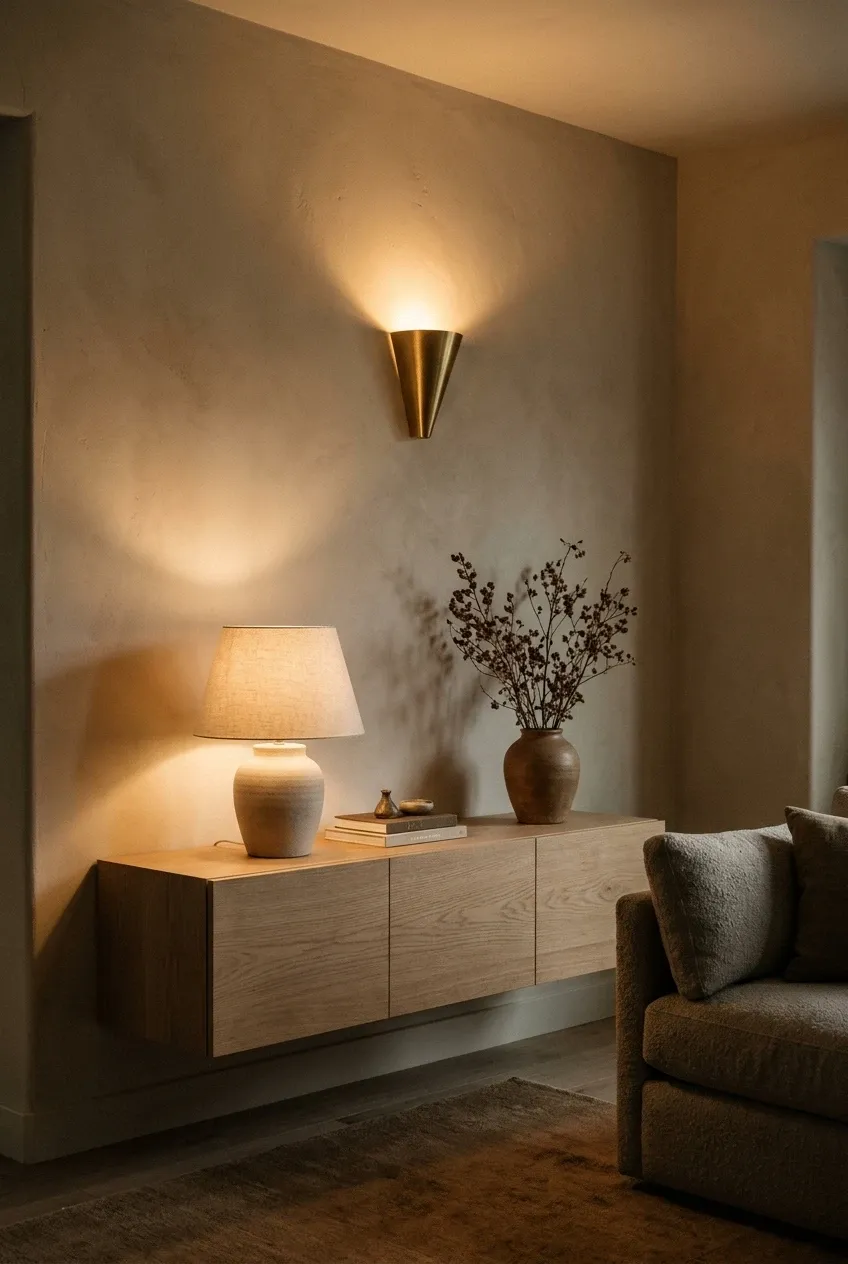
- The Technique: Position an architectural torchiere floor lamp or upward-pointing wall sconces that cast light directly onto a flat white ceiling plane (
#FFFFFF/ LRV 90). - The Optical Result: The entire ceiling acts as an enormous softbox reflector, scattering warm, shadowless ambient illumination downward across the entire seating area.
Rule 2: Wall Grazing on Textured Plaster
Flat drywall absorbs light without character. In low-light rooms, texture creates luminous depth.
- The Technique: Direct low-voltage, high-CRI directional spotlights or low-profile floor uplights 12 to 14 inches (30 to 35 cm) away from a wall finished in warm Roman clay or mineral limewash.
- The Optical Result: Raking light illuminates micro-crevices in the plaster, turning what would be a flat, cold wall into a glowing textured backdrop.
Rule 3: The Faux Window (Backlit Sheer Drapery)
When natural window light is weak and gray:
- The Technique: Hang floor-to-ceiling sheer linen drapery spanning the entire window wall. Install a concealed, continuous 2700K LED strip channel (with a frosted acrylic diffuser) mounted directly behind the ceiling curtain rod.
- The Optical Result: Backlighting the sheer linen fabric mimics bright, golden-hour sunlight pouring through the window, even on overcast winter afternoons.
Rule 4: Eye-Level Perimeter Clusters
Never rely on a solitary center fixture.
- The Technique: Distribute 4 to 6 warm secondary light sources at eye level (between 54 and 66 inches AFF): ceramic table lamps, swing-arm reading sconces, and low credenza accent lights.
- The Optical Result: Multiple overlapping light pools eliminate cold corner shadows and visually push room boundaries outward.
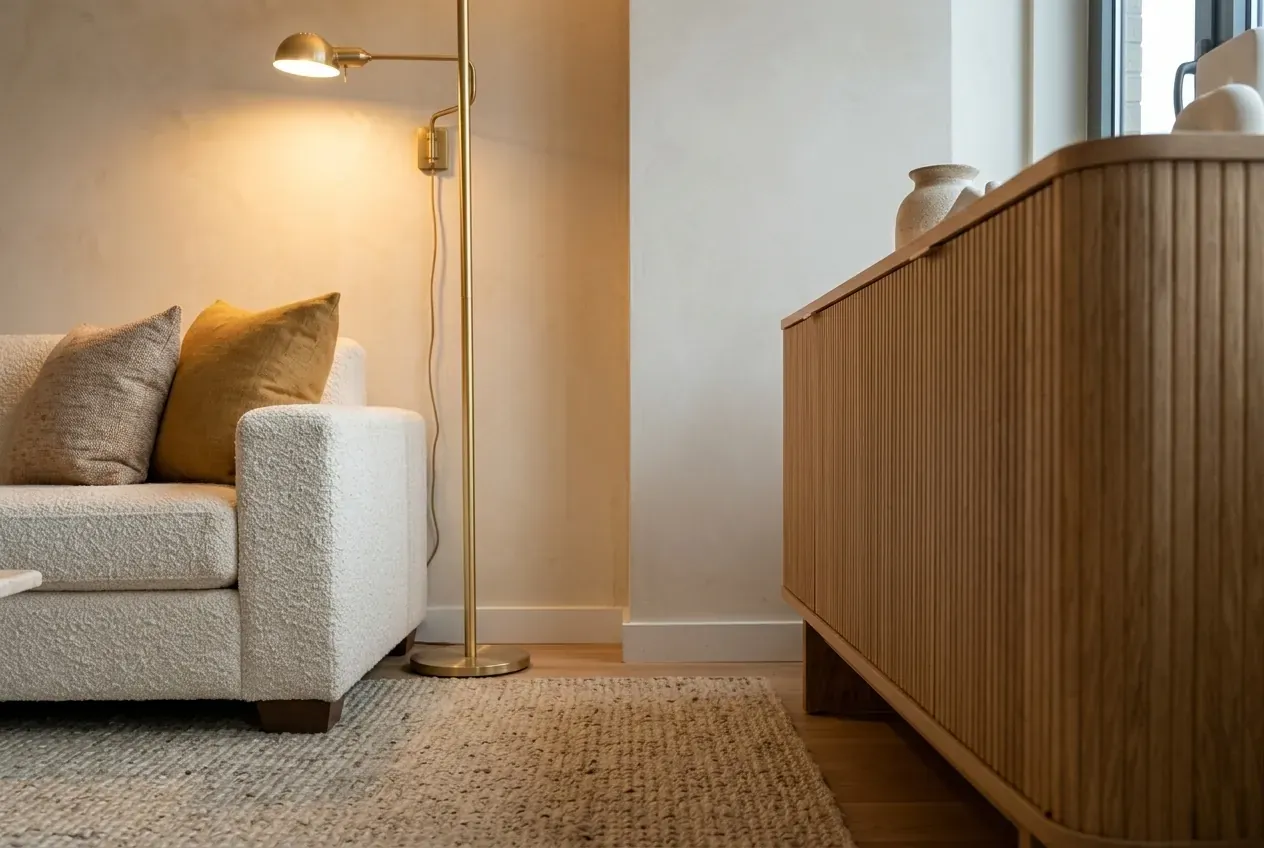 A closer look at the material finishes and the clearances that keep the layout usable.
3. Curated Paint Formulations That Defeat Northern Graying
Standard stark whites lack the warm pigments necessary to resist graying under northern skies. Pair your 2700K lighting with paints formulated with yellow, red, and ochre undertones:
Palette: Luminous Hearth
- Perimeter Drywall Canvas: Alabaster Chalk (
#F5F0E6/ LRV 82) — A rich mineral off-white infused with yellow-beige warmth that glows under warm LEDs. - Ceiling & Trim: Pure Ceiling Matte White (
#FCFAF7/ LRV 90) — Flat finish prevents shiny glare while maximizing ceiling bounce. - Millwork & Timber: Natural Honey White Oak (
#D4B996) — Restores organic warmth to furniture frames. - Textiles & Accents: Golden Ochre Linen (
#C99E66) and Faded Terracotta (#B86B4D). - Metals: Unlacquered Brushed Brass (
#C8A663) — Reflects warm incandescent highlights across the room.
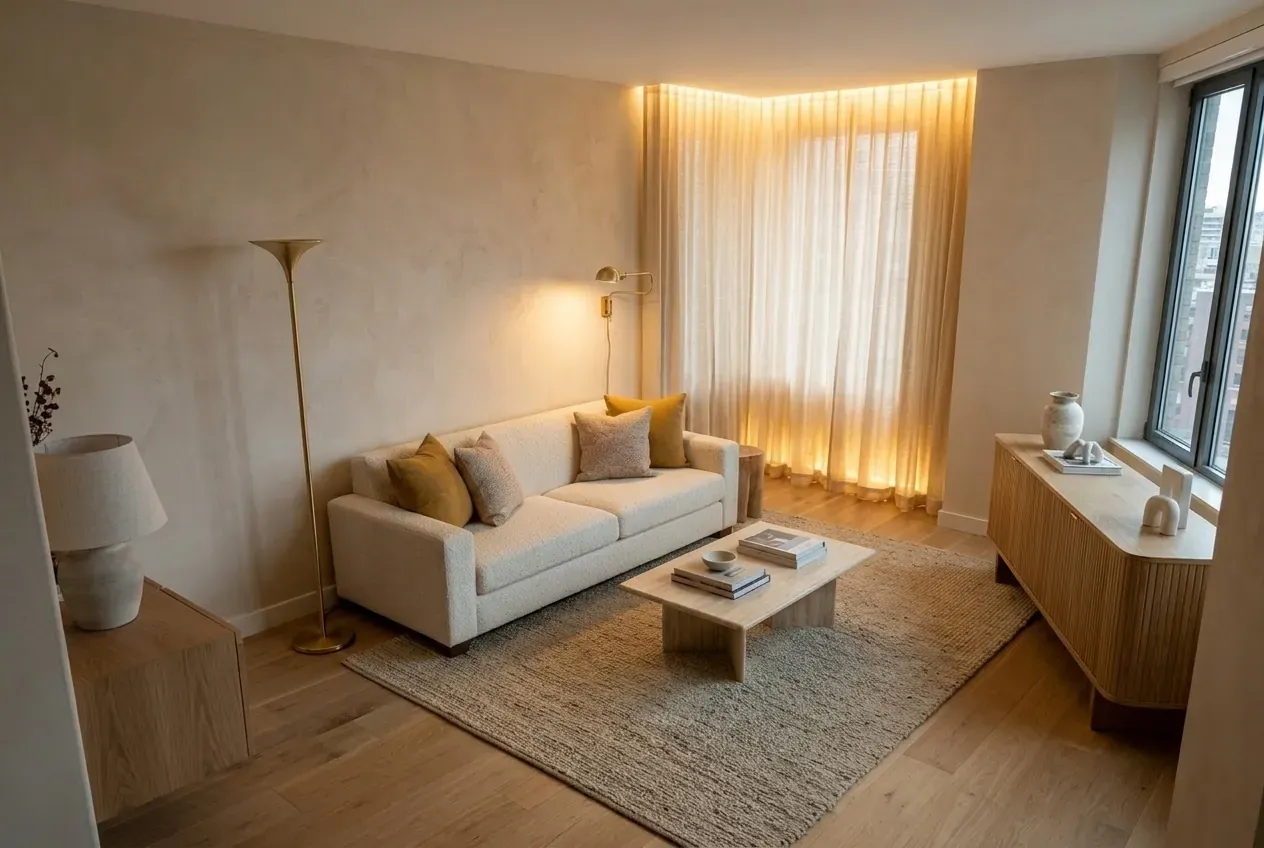 From above and to one side, the full footprint and the walkway read at a glance.
4. Daily Circadian Switching Plan
- Morning & Afternoon: Keep window shears open and turn on perimeter wall grazing to complement ambient daylight.
- Dusk & Evening: Turn off overhead ceiling downlights completely. Rely exclusively on eye-level table lamps, brass wall sconces, and low credenza under-lighting dimmed to 40% to cultivate an intimate, restorative atmosphere.
By deploying 2700K high-CRI LEDs, bouncing light upward across high-LRV ceilings, and choosing warm-pigmented plaster neutrals, a dark north-facing living room transforms into a radiant, cozy retreat.
Curated Color Palette & Key Textures
- Alabaster Chalk #F5F0E6
- Ceiling Matte White #FCFAF7
- Honey White Oak #D4B996
- Golden Ochre Linen #C99E66
- Faded Terracotta #B86B4D
- Brushed Brass #C8A663
General references
Dimensions in these guides are typical planning ranges, not legal minimums, and they can differ by jurisdiction. Use the references below as starting points, then confirm local code and your lease before making changes.
FAQ
What colour temperature is best for a north-facing living room?
Use 2700K soft warm white throughout. North-facing windows deliver cool light between 6500K and 7500K, and 2700K bulbs add the warm amber wavelengths that counteract that blue-gray wash.
Why do daylight bulbs make a north-facing room look worse?
A 5000K daylight bulb amplifies the blue-gray spectral cast that north light already brings, so walls look clinical and stark. This guide recommends sticking strictly to 2700K bulbs with a CRI of 95 or higher instead.
How many lumens per square foot does a dark living room need?
Aim for 25 to 35 lumens per square foot of floor area. That density gives adequate overall light volume across the room without the harsh glare of a single bright ceiling fixture.
What LRV paint works best in a north-facing room?
Choose wall paint at 78 to 83 LRV so it reflects ambient light while keeping enough warm pigment to avoid graying out, and ceiling paint at 88 to 92 LRV to maximise the bounce from torchiere and cove uplighting.
How many light sources does a north-facing living room need?
Distribute 4 to 6 warm secondary sources at eye level, between 54 and 66 inches (137 to 168 cm) above the floor: table lamps, swing-arm reading sconces and low credenza accent lights. The overlapping pools of light eliminate cold corner shadows.
Save this idea

Keep reading
Related rooms
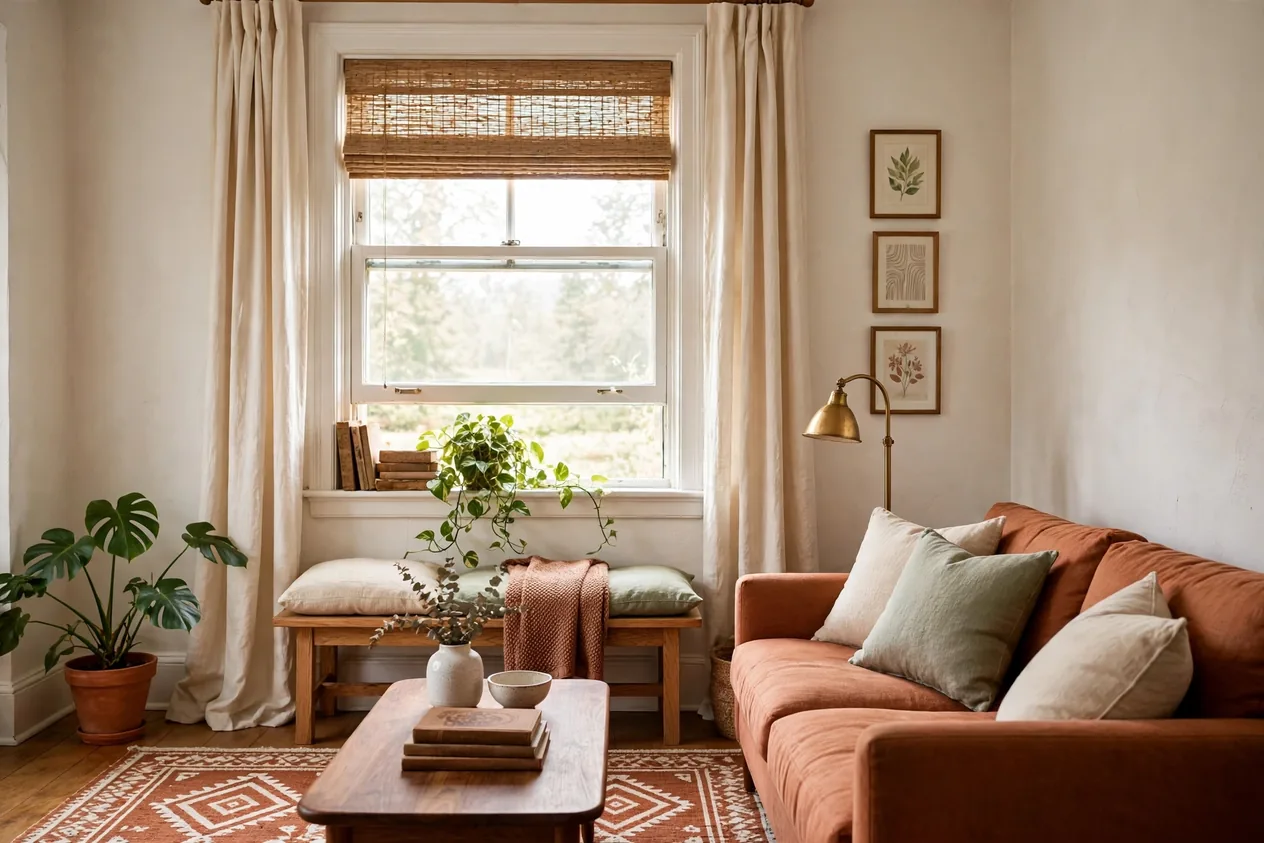
Standard Window Sizes: 24 x 36 to 48 x 72 in Chart
Standard window sizes in inches and cm: most run 24 to 48 in wide by 30 to 72 in high, and a bedroom window needs a 5.7 sq ft clear opening for egress.
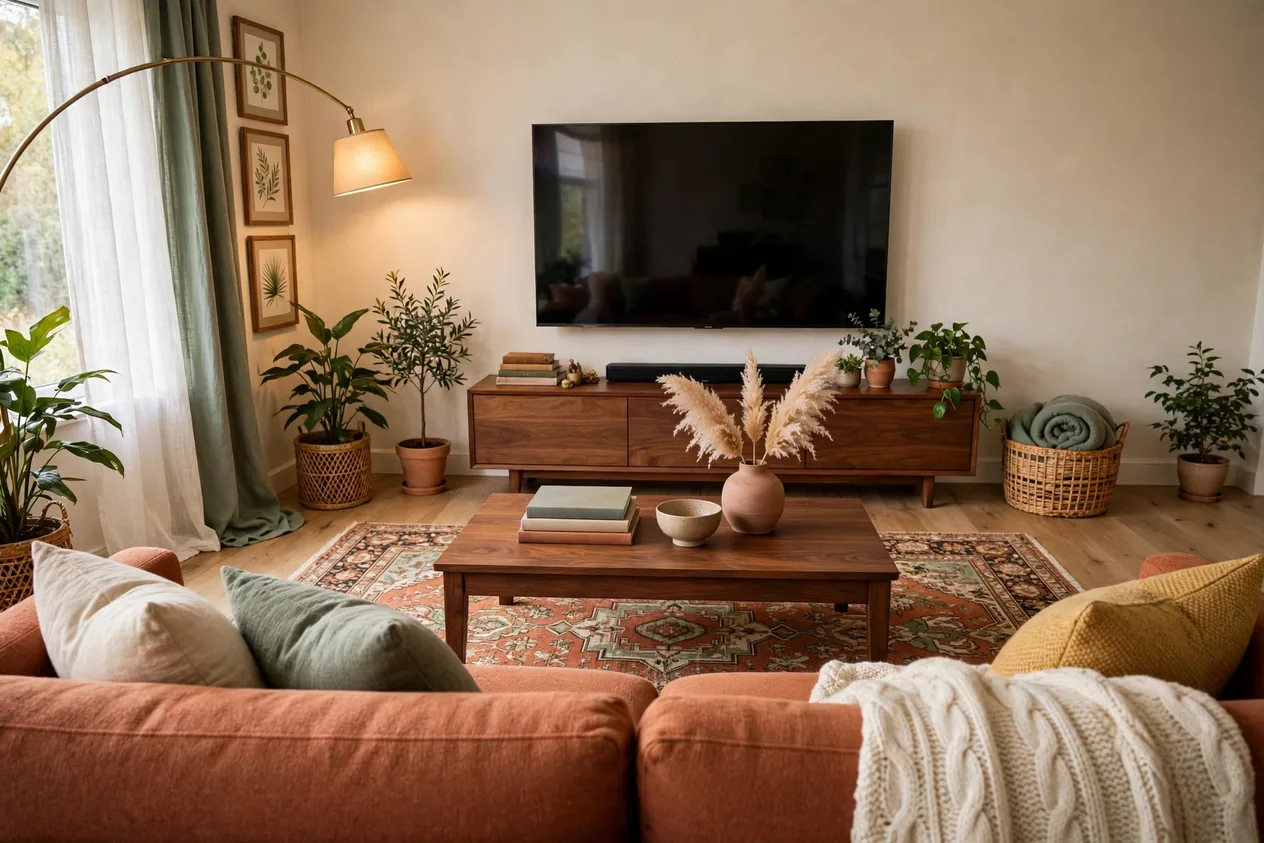
TV Dimensions by Screen Size: 65 in Is 56.7 x 31.9 in
TV dimensions by screen size in inches and cm: a 65 in TV is 56.7 x 31.9 in, a 55 in is 47.9 x 27.0 in, plus the viewing distance and stand width for each.
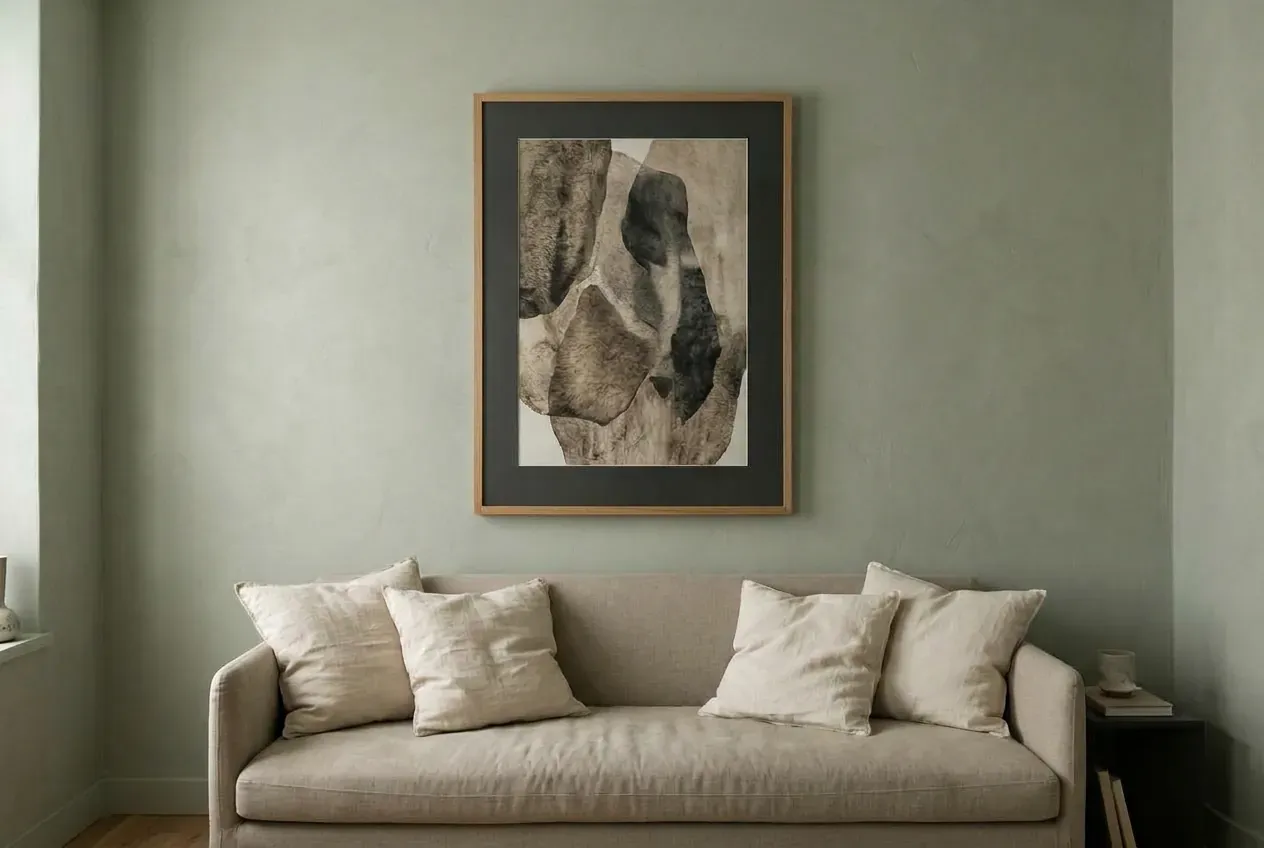
How High to Hang Pictures: 57 in (145 cm) Center
Hang pictures with the center 57 in (145 cm) up, the frame bottom 7 to 10 in (18 to 25 cm) above a sofa, and frames 2 to 3 in (5 to 8 cm) apart.