Color Drenching a Small Room, Plus Color Capping
Color drenching a small room, plus color capping as the lighter option: the two-steps-lighter trim rule, sheen by surface, and sage and olive palettes.
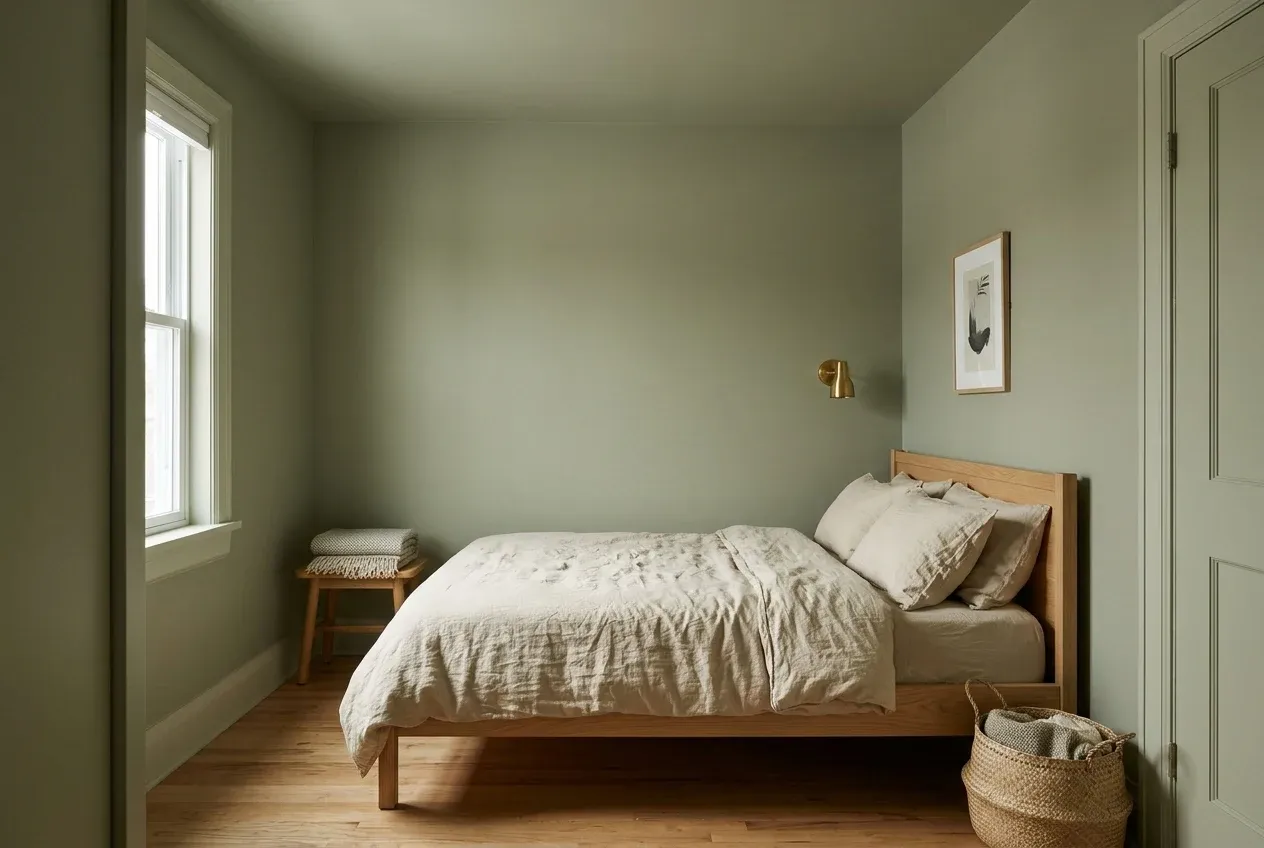
Room specifications
- Room ScaleSmall bedroom (about 9 x 10 ft)
- Design StyleWarm Minimalist
- Budget TierBudget ($)
- Palette Swatches4 colors
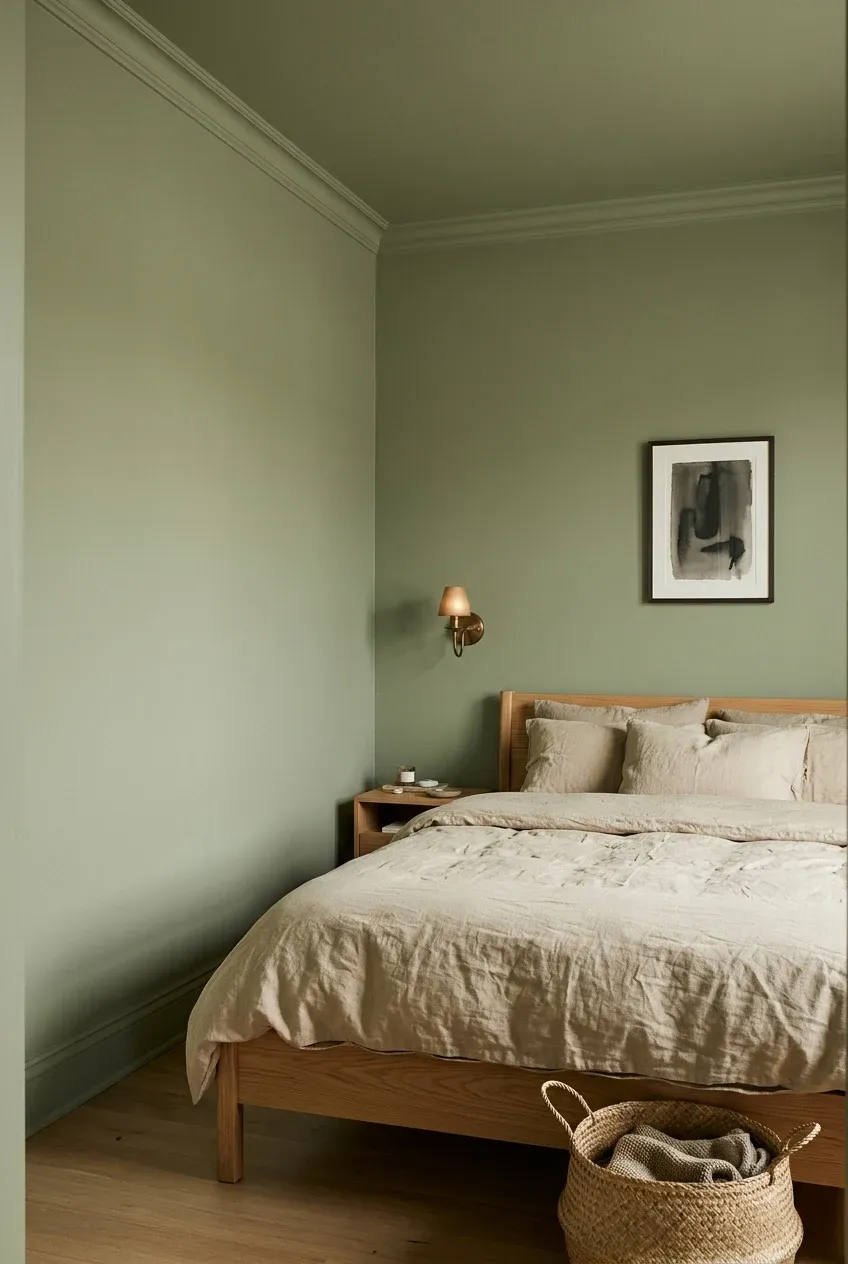
Color drenching a small room means painting the walls, ceiling, baseboards and often the doors in one colour, so no high-contrast white lines show where the room ends. In a bedroom around 9 x 10 feet or a compact bathroom, that usually makes the space feel calmer and less boxy, as long as the room gets decent light.
The usual advice is white walls, bright white trim and a flat white ceiling. In a tiny room, that trim outlines every corner and reminds you exactly how close the walls are. Drenching blurs those edges. It works best with a colour you have already tested for undertone; see warm vs cool colours in small rooms and paint colours for a bedroom. For deeper shades, the moody palettes for small powder rooms show how dark colours behave in tight spaces.
Use different sheens, not different colours
If every surface has the same colour and the same finish, the room looks flat. The depth comes from varying sheen.
| Surface | Finish to ask for | Colour | Why |
|---|---|---|---|
| Ceiling | Dead flat | Wall colour, or a touch lighter | Cuts glare and blurs the ceiling line |
| Walls | Matte or velvet | Your main colour | Hides small patches and soft-focuses sidelight |
| Baseboards and casings | Satin or semi-gloss | Wall colour, about two steps lighter on the same paint strip | Catches light so the mouldings still read |
| Doors | Satin enamel | Same as trim | Easier to wipe, resists fingerprints |
| Radiators and built-ins | Satin enamel for metal or wood | Wall colour | Helps bulky pieces fade into the wall |
If trim is the identical colour and finish as the wall, it can vanish in low evening light. Take the trim about two steps lighter on the same paint strip, so shadow lines stay visible without breaking the one-colour look.
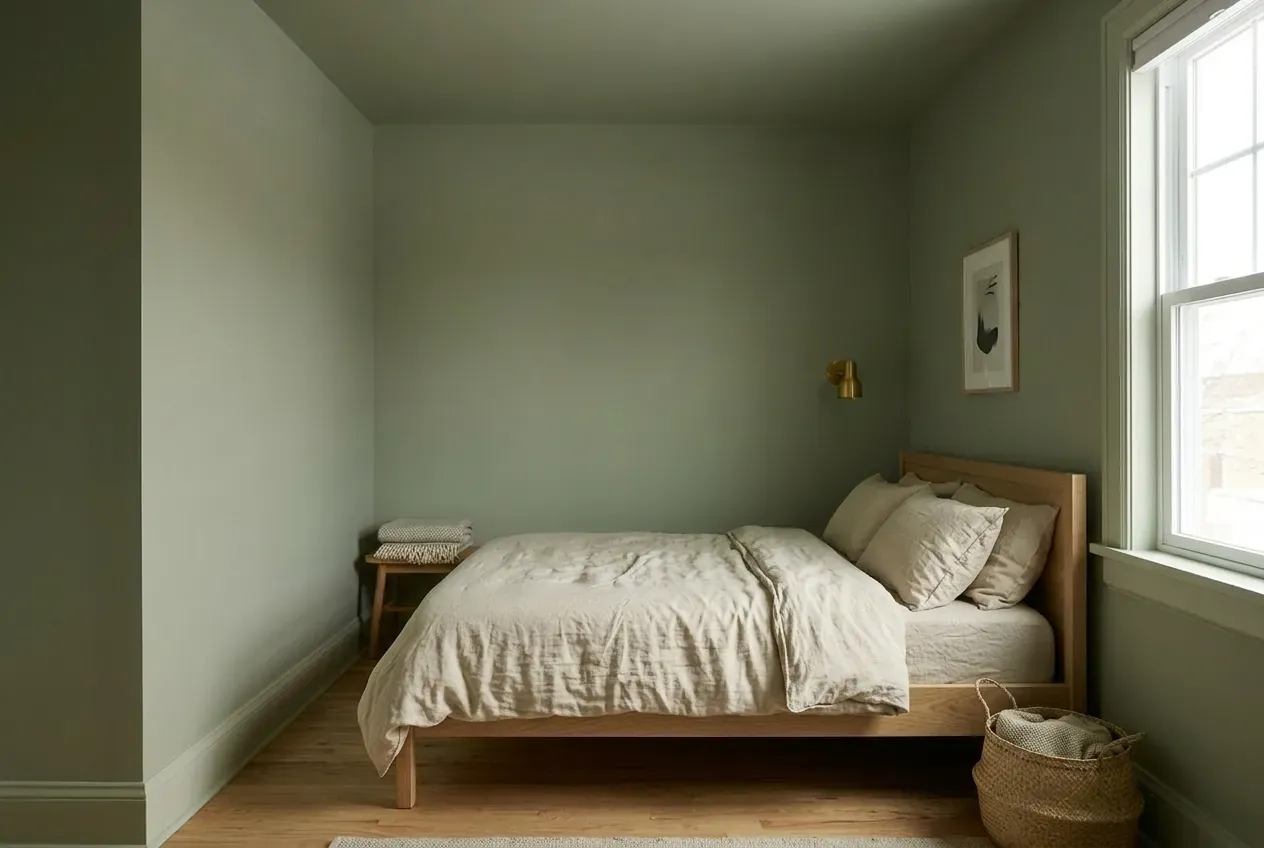 The same room seen from the opposite end, so you can judge the layout from the far side.
Color capping: the lighter successor to drenching
Color capping paints the ceiling and a band of wall below it (the “cap”) in one colour and leaves the rest of the wall a lighter shade. You get the enclosed, wrapped look at the top of the room without putting a dark colour on every surface, so it suits rooms with less daylight and is easier to repaint at move-out.
The one decision is how far the cap drops. We suggest 12 in (30 cm) as a starting point. On an 8 ft (96 in / 244 cm) ceiling that puts the cap line at 84 in (213 cm), about 4 in (10 cm) above a standard 80 in (203 cm) door head, so the two lines stay clearly separate instead of almost lining up.
| Color drenching | Color capping | |
|---|---|---|
| What gets the colour | Walls, ceiling, trim, often doors | Ceiling plus a 12 in (30 cm) band of wall |
| Light needed | Decent daylight, or warm lamps | Works in dimmer rooms |
| Repaint at move-out | Every surface | Ceiling and one band |
| Extra work | None, one colour | One level, taped line at the cap height |
Use a level and a low-tack tape for the cap line, press the edge down, and paint the first coat of the wall colour along the tape so any bleed matches the wall.
Sage and olive palettes for drenching or capping
| Colour | Hex | Depth |
|---|---|---|
| Sage Moss | #9AA58A | Mid-light |
| Muted Tea Green | #7C8673 | Mid-dark |
| Olive Moss | #6B6F4A | Darkest |
Hex values are screen references, not brand paint codes: take them to a paint counter and ask for the closest mixed match, then check the light reflectance value (LRV) printed on the can. For the trim, pick the card two steps lighter on the same paint strip. Sage Moss suits a drench in a small bedroom with a window, Muted Tea Green works for a bedroom or office with warm lamps, and Olive Moss is dark enough that we would cap it or use it in a powder room rather than drench a dim bedroom.
Where drenching works
- Small bedrooms with a window and a warm floor.
- Windowless powder rooms, where a deep colour feels intentional rather than dingy.
- Compact home offices where you want focus.
Where to be careful
- Windowless hallways and low basement ceilings with cold, harsh light. A very dark colour there can turn murky unless you add warm lighting, such as sconces; see low-ceiling basement lighting.
- Rentals. Get written permission before painting over white woodwork, or choose a soft warm neutral that is easy to repaint at move-out.
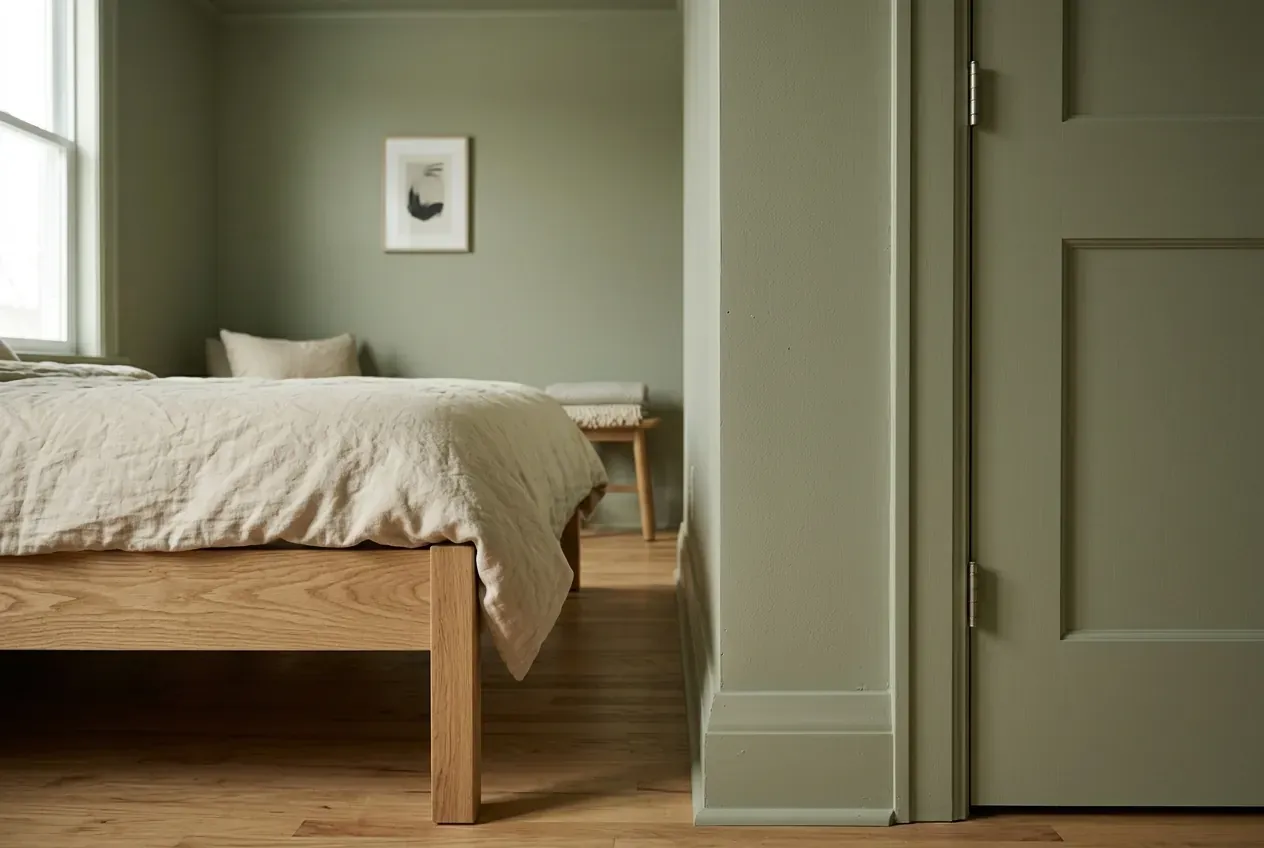 A closer look at the material finishes and the clearances that keep the layout usable.
Colours that suit different rooms
A soft sage in a small bedroom. Pair it with light oak, an oat linen duvet and brass sconces, so wood and textiles contrast with the green. It works well on a low platform bed, which keeps the furniture from fighting the walls. Furnishing a small space helps if the room is part of a studio.
A warm off-white in a strict rental. Painting walls, ceiling and trim in a creamy plaster tone removes builder-white glare and still counts as neutral. See warm oak and alabaster white bedrooms.
A deep charcoal in a small office or powder room. Works with high ceilings or strong daylight, and looks good with warm brass lighting and light shelving.
Keep texture in the room
When the walls, ceiling and doors share one colour, texture and material do the work:
- Slubby linen or bouclé bedding and cushions.
- Unpainted wood floors and furniture frames.
- A few metal accents, such as brass picture frames, that glow against matte walls.
Keep large furniture visually light, as covered in the visual weight guide, so the wrapped colour stays the star.
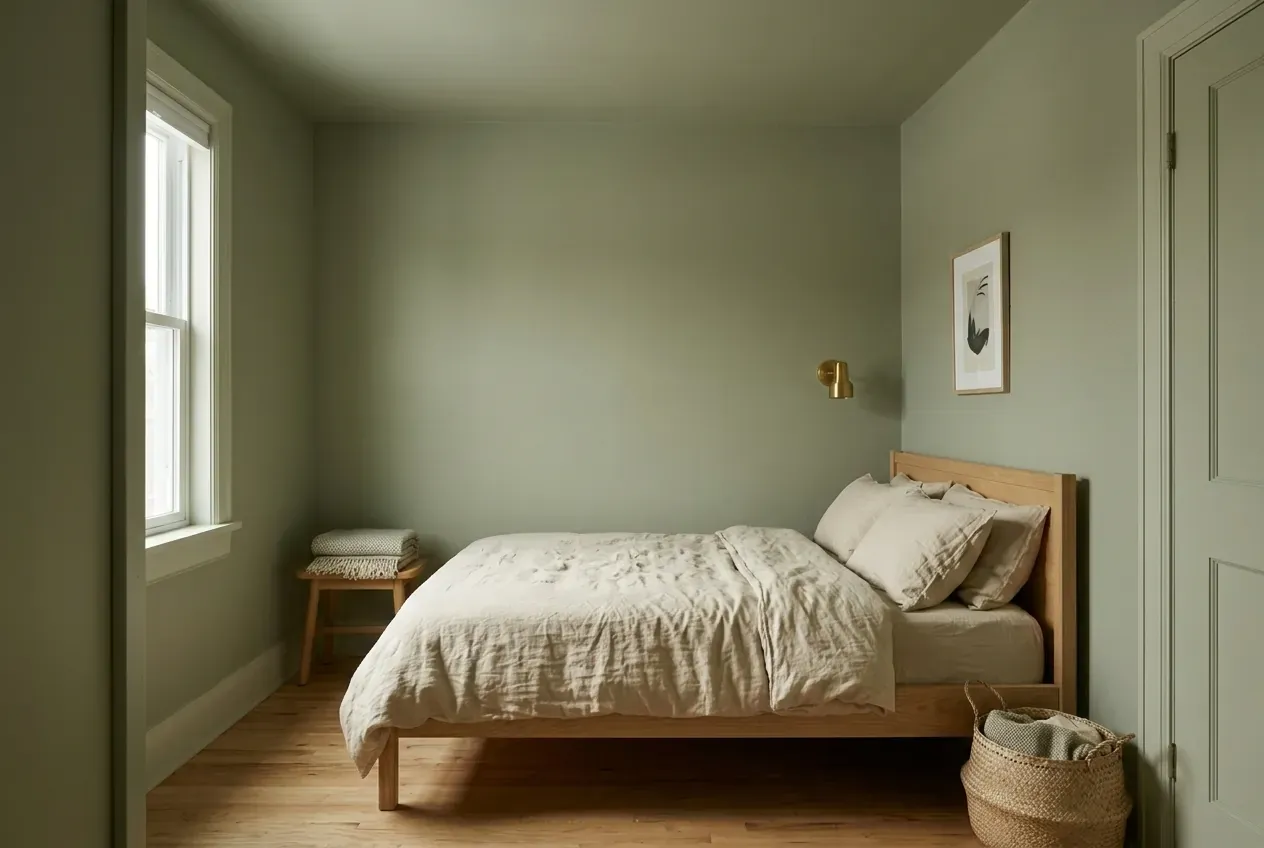 From above and to one side, the full footprint and the walkway read at a glance.
How to paint it
- Sample the colour in several patches and check it in morning and evening light.
- Prep and prime, especially if you are covering white trim.
- Paint the ceiling first, then the walls, then trim and doors last so the cut-in lines stay crisp.
- Protect the floor with canvas drop cloths before cutting in baseboards.
- Leave windows and the floor alone so they give the eye a break.
Before you start
- Decide if the room has enough light for your chosen colour.
- Get permission if you rent.
- Buy flat, matte and satin versions of the same colour.
- Take the trim two steps lighter on the same paint strip.
- Plan to add warm lighting if the room is dim.
Curated Color Palette & Key Textures
- Alabaster Chalk #F5F2EB
- Oat Linen #D9CDB8
- Sage Moss #9AA58A
- Charcoal Ink #2F3135
General references
Dimensions in these guides are typical planning ranges, not legal minimums, and they can differ by jurisdiction. Use the references below as starting points, then confirm local code and your lease before making changes.
FAQ
What is colour drenching?
Color drenching is the technique of painting walls, ceilings, baseboards, window casings, and interior doors in a single unified hue rather than stopping at stark white trim.
Does colour drenching make a small room look smaller?
No—by removing high-contrast white baseboards and ceiling borders, your eye stops registering hard box corners, making compact 9x10 foot rooms feel cohesive and expansive.
Should the ceiling be the same colour as the walls?
Yes, in a color-drenched room the ceiling takes the exact wall hue in a dead-flat finish, while baseboards and doors use a satin sheen about two steps lighter on the same paint strip.
What is color capping?
Painting the ceiling and a band of wall below it in one colour, with the rest of the wall a lighter shade. It keeps the wrapped look at the top of the room without drenching every surface.
How far down should a color cap go?
We suggest 12 in (30 cm) as a starting point. On an 8 ft (96 in) ceiling that puts the cap line at 84 in (213 cm), clear of a standard 80 in (203 cm) door head.
Save this idea

Keep reading
Related rooms
Standard Window Sizes: 24 x 36 to 48 x 72 in Chart
Standard window sizes in inches and cm: most run 24 to 48 in wide by 30 to 72 in high, and a bedroom window needs a 5.7 sq ft clear opening for egress.
TV Dimensions by Screen Size: 65 in Is 56.7 x 31.9 in
TV dimensions by screen size in inches and cm: a 65 in TV is 56.7 x 31.9 in, a 55 in is 47.9 x 27.0 in, plus the viewing distance and stand width for each.
How High to Hang Pictures: 57 in (145 cm) Center
Hang pictures with the center 57 in (145 cm) up, the frame bottom 7 to 10 in (18 to 25 cm) above a sofa, and frames 2 to 3 in (5 to 8 cm) apart.