Renter-Friendly Accent Walls: Temporary Wallpaper vs. Paint
Compare temporary peel-and-stick wallpaper vs paint for rental accent walls. Cost breakdown, drywall damage risks, and clean move-out removal protocols.
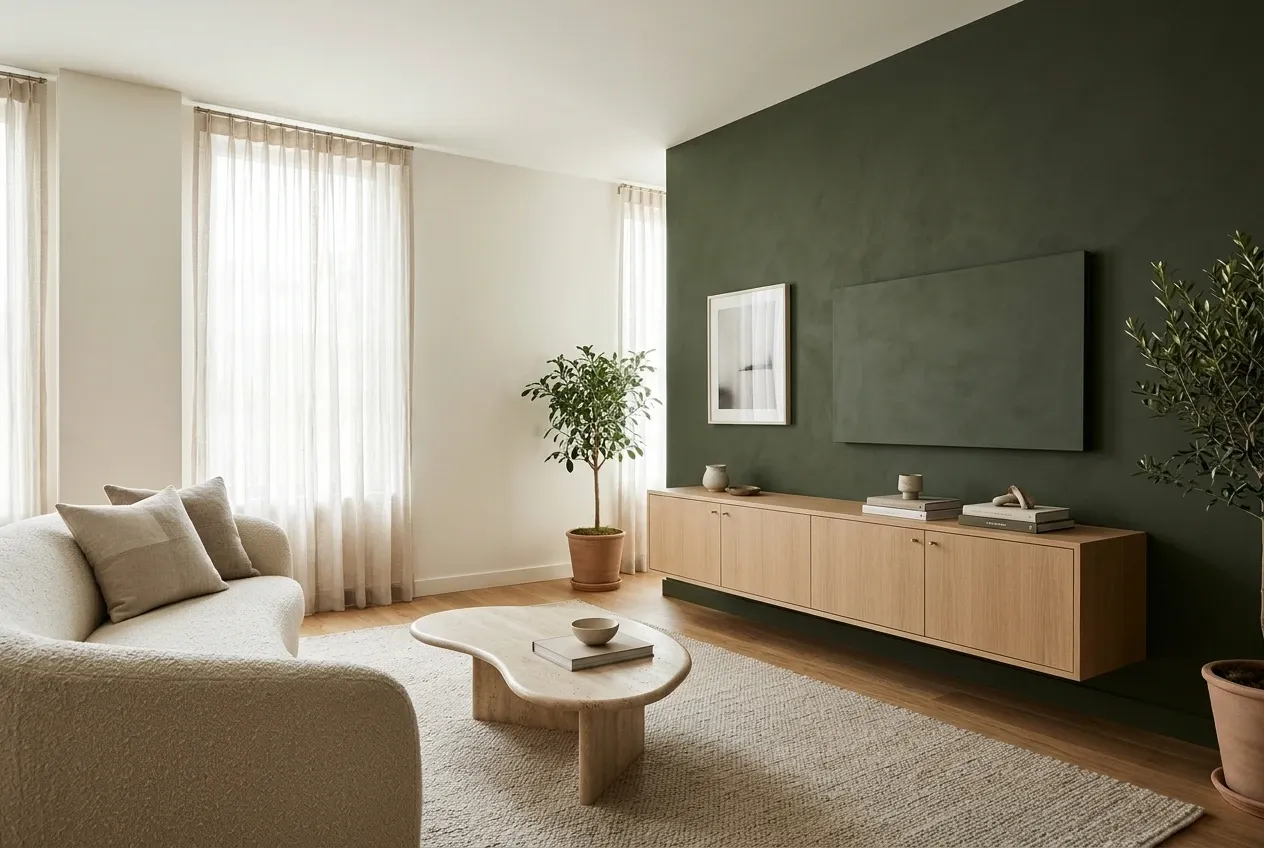
Room specifications
- Room ScaleRental living room (10x8 ft accent wall)
- Design StyleWarm Minimalist / Japandi
- Budget TierBudget ($)
- Palette Swatches4 colors
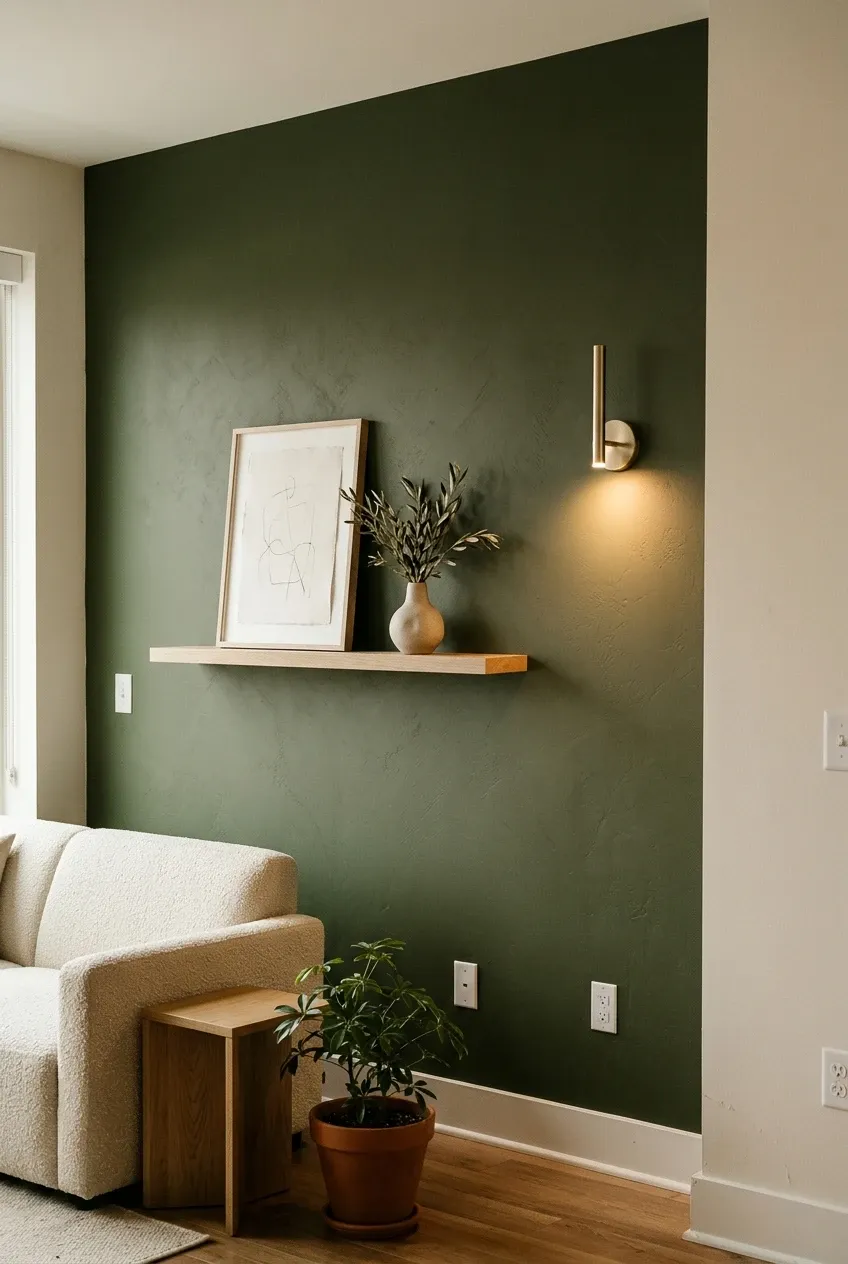
For a rental accent wall, choose peel-and-stick wallpaper if your wall is smooth and you want texture and an easy move-out. Choose paint if the wall is textured, if your budget is tight, or if you plan to stay a couple of years. The deciding factor is almost always the wall surface and your lease, not the look.
Builder-grade off-white walls make a living room feel flat, and one accent wall behind the sofa, the media unit or a mantel gives the room a focal point. The catch for renters is the deposit. Both options are reversible, but they fail in different ways.
Wallpaper versus paint on a 10x8 foot wall
These figures are rough planning ranges for an 80 square foot wall. Prices vary by brand and region, so price your own materials before you decide.
| Factor | Peel-and-stick wallpaper | Interior latex paint |
|---|---|---|
| Material cost | About $145 to $280 | About $45 to $65 |
| Time to install | 3.5 to 5.5 hours (pattern matching) | 2 to 3 hours (two coats and tape) |
| Wall texture | Smooth walls only | Handles orange peel and knockdown |
| Move-out | 20 to 30 minutes of peeling and wiping | 3 to 4 hours of primer and white paint |
| Move-out cost | Close to nothing | Primer and landlord-match paint |
| Main risk | Pulling paint or drywall paper | Poor colour match on the repaint |
Paint costs less up front. Wallpaper costs less at the end. If you may move within a year or two, that reverses the maths.
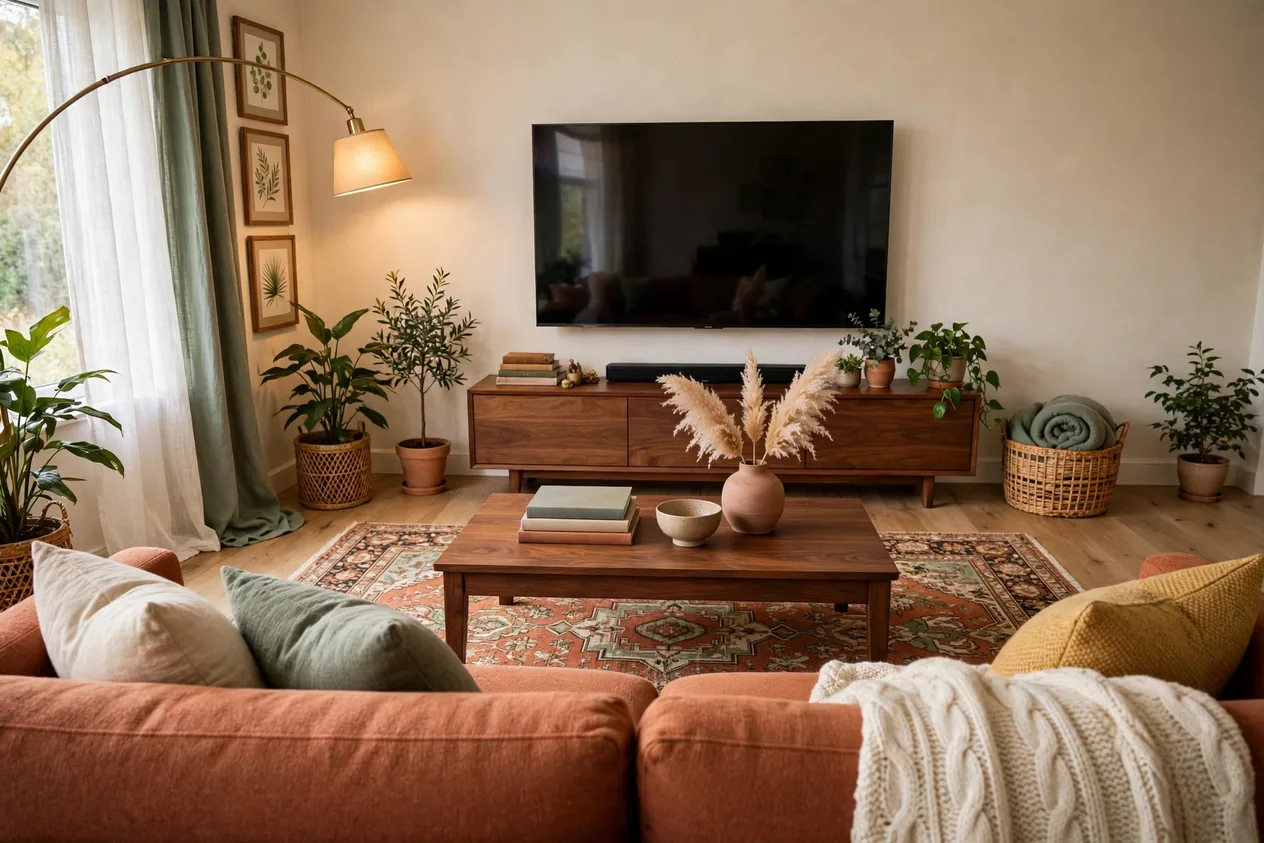
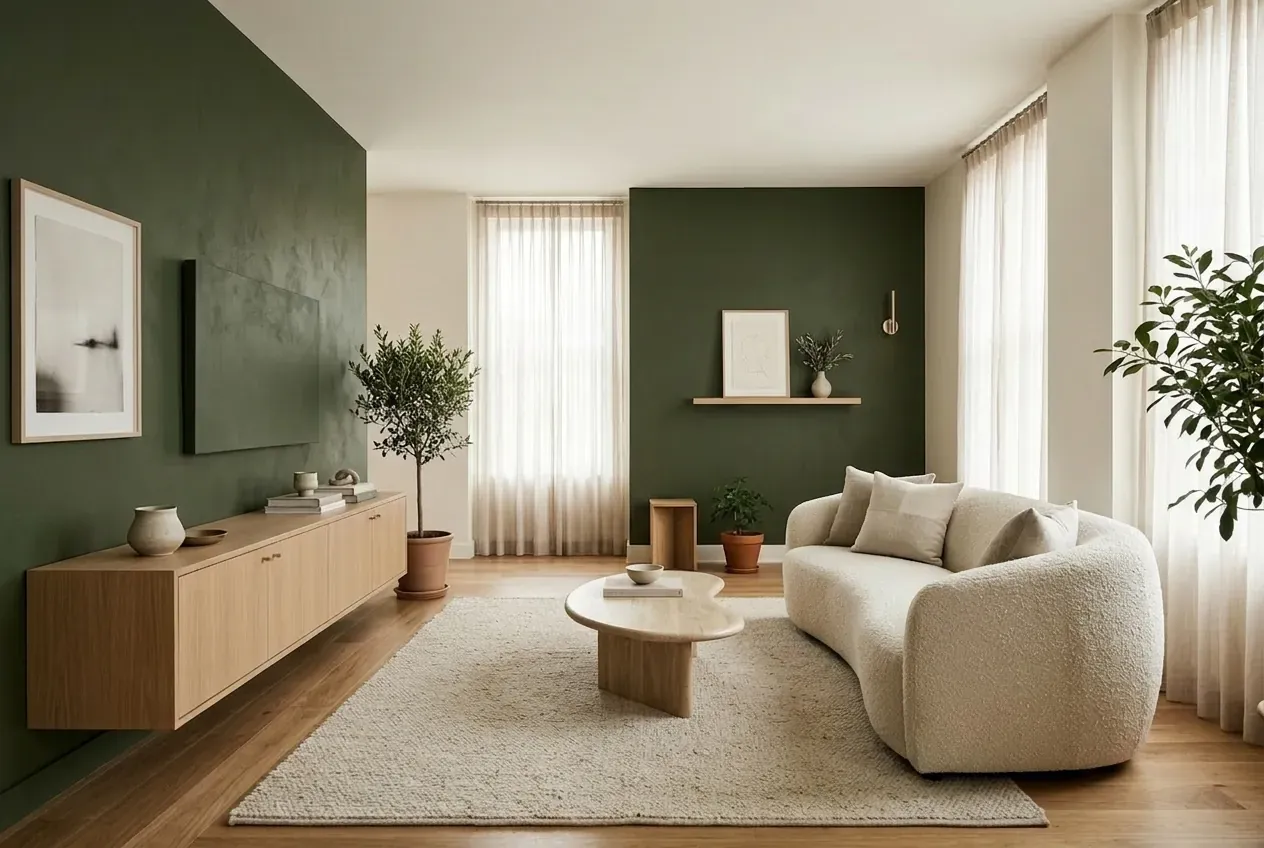 The same room seen from the opposite end, so you can judge the layout from the far side.
Peel-and-stick wallpaper: where it works and where it fails
The paper is a vinyl, polyester or grasscloth-style layer with a low-tack adhesive. It gives a texture that paint cannot, such as woven grasscloth or a large botanical mural, and it adds very little odour compared with a gallon of paint.
Watch for three problems:
- Textured walls. The adhesive needs full contact. On orange peel or knockdown texture, air pockets form behind the paper and seams lift, sometimes within days.
- Fresh paint. If the unit was painted recently, the film may not have cured. Paper stuck to it can pull the paint off on removal. Waiting about 30 days is a common rule of thumb; ask your landlord when the wall was last painted.
- Cheap flat paint. It can lift even when it has cured.
The swatch test
Order a sample and stick it in a hidden spot, such as behind the sofa. Leave it for 72 hours, then peel it back on itself at a sharp angle. If paint comes with it, skip adhesive paper on that wall.
Paint: where it works and where it fails
Paint flows into texture, so it covers walls that paper cannot. One gallon of decent paint usually covers a wall this size with two coats, with a little left for touch-ups. It can also continue onto a baseboard or radiator cover, which is the idea behind colour drenching, and it suits a small, dark room if you pick a matte finish.
The cost comes when you leave. A deep green or terracotta needs a stain-blocking primer and usually two coats of the original white. Before you open a can, get written permission if your lease requires it, and take a small chip of the current paint to a paint counter to get a match. A spot inside a closet or behind an outlet cover works as a source for the chip.
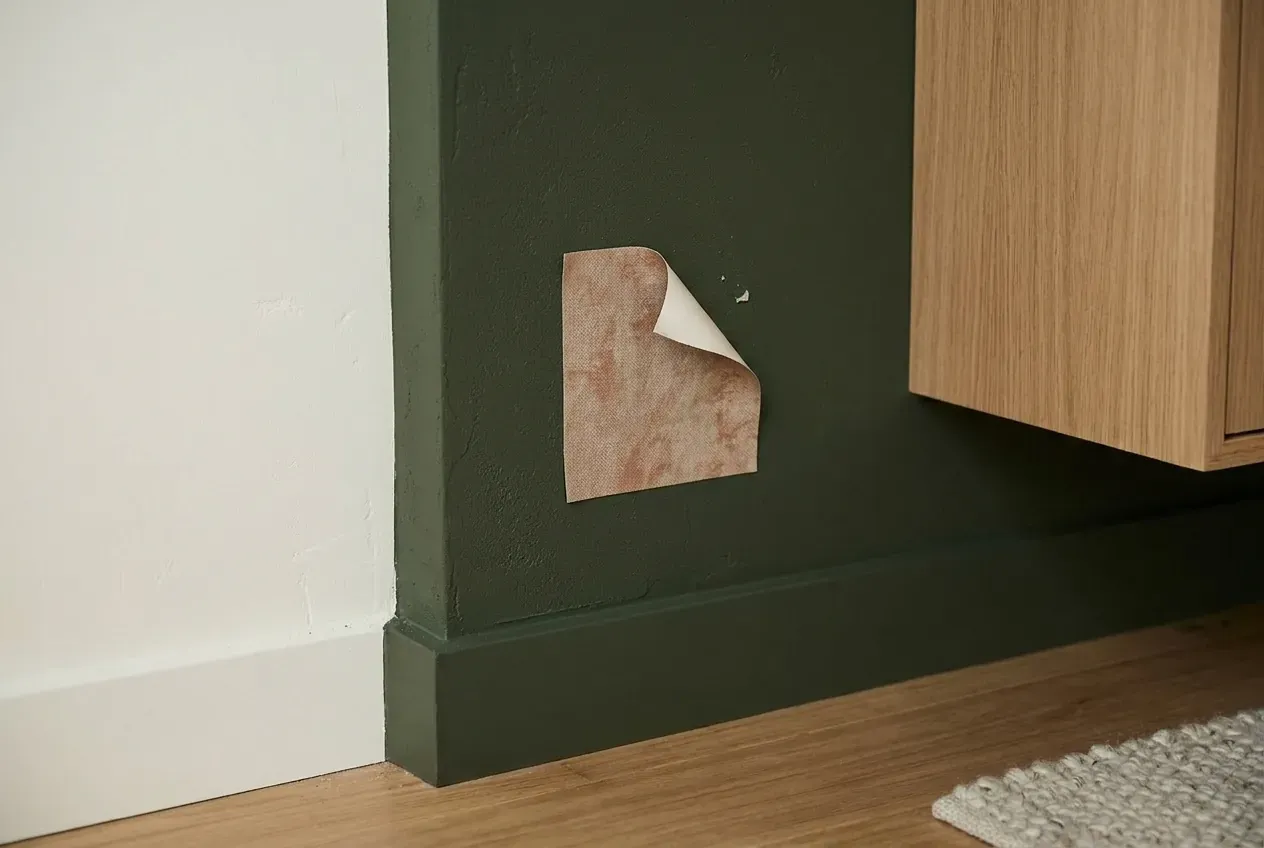 A closer look at the material finishes and the clearances that keep the layout usable.
Colour ideas for a living room accent wall
These work in paper or paint, and they depend on your light.
- A deep, muted green on the accent wall with soft warm white on the others. Dark colours recede, so the wall can look farther away. A wood media unit and brass-toned hardware sit well with it.
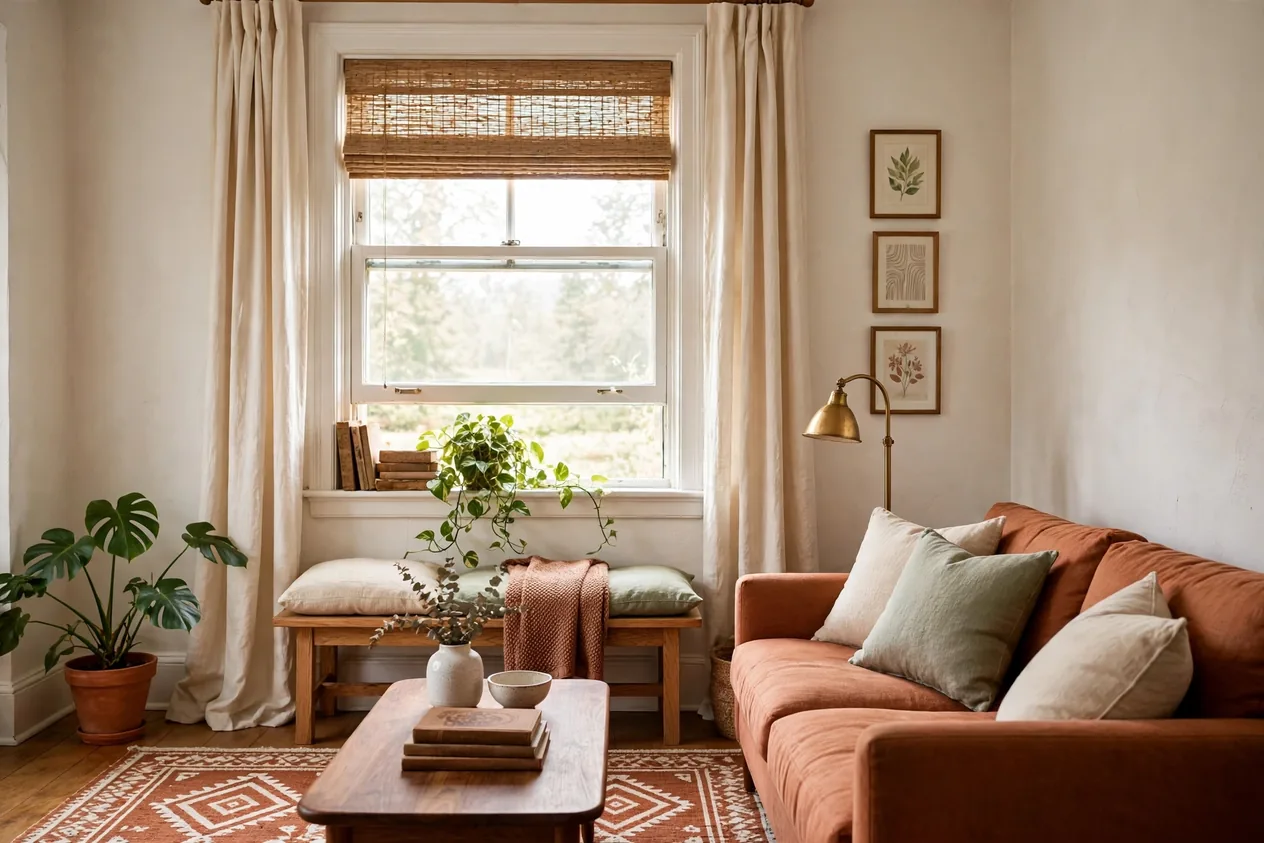
- A warm terracotta with a pale clay-beige on the rest. It adds warmth in a north-facing room, where daylight can feel cold. Natural stone and boucle-textured fabric suit it.
Keep furniture in proportion; see small living room scale rules before adding a bulky piece. A nesting coffee table helps keep the floor light.
Which should you choose?
Choose wallpaper if:
- the wall is smooth,
- you want texture,
- and you may leave within about two years and want a fast, primer-free exit.
Choose paint if:
- the wall has visible texture,
- the budget is under about $75,
- or you will stay long enough that one repaint day is a small cost.
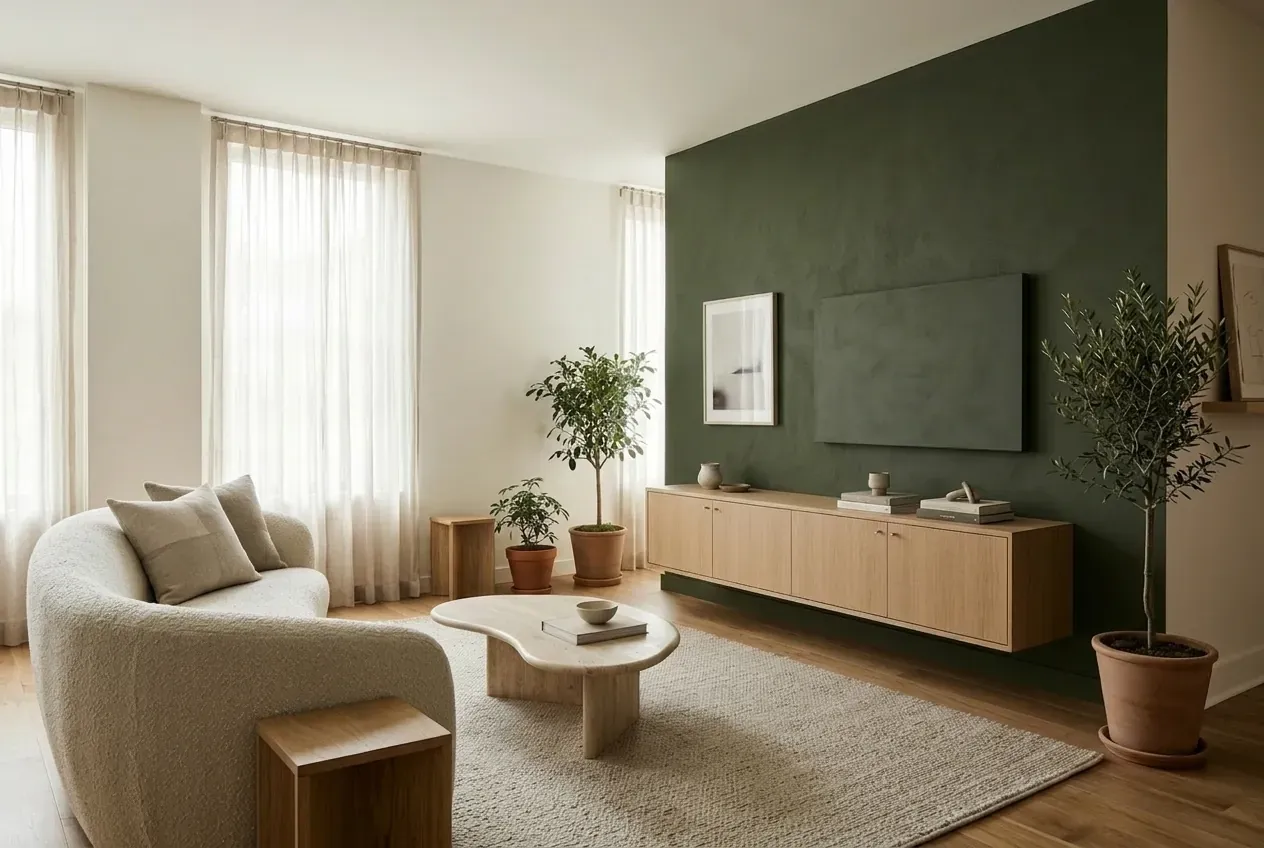 From above and to one side, the full footprint and the walkway read at a glance.
What else counts as renter-friendly?
The honest answer to “will this cost me my deposit?” depends on the wall and the lease more than the product. Use the table as a starting point, and confirm specifics with your landlord in writing.
| Method | Deposit risk | Notes |
|---|---|---|
| Peel-and-stick wallpaper | Low on smooth, cured walls; high on fresh or textured paint | Run the swatch test first |
| Peel-and-stick tile | Low | Prep and removal matter most |
| Removable strips and hooks | Low | Check the weight rating; test one first |
| Tension rods | None | No adhesive or hardware |
| Free-standing shelves | None | Anchor to the wall where possible |
| Small nails | Low to moderate | Fill with spackle and matching paint |
| Wall decals | Low | Can lift cheap flat paint |
| Paint | Moderate | Repaint to the original colour |
Two rules cover most cases. First, cure time matters more than the product’s claims: adhesive on paint under about a month old is risky. Second, test before you commit.
For surface-specific guides, see the peel-and-stick floor tile guide, the stick-on bathroom tile guide, the no-drill curtain rod guide and the wallpaper install walkthrough.
Before you start
- Read your lease for rules on paint and adhesives.
- Ask when the walls were last painted.
- Feel the wall: smooth, or textured?
- Run a 72-hour swatch test in a hidden spot.
- Price both options for your actual wall size.
- If painting, keep a paint chip of the original colour.
- If papering, order a little extra for pattern repeats.
Curated Color Palette & Key Textures
- Deep Olive Spruce #3A453B
- Alabaster Chalk #F5F2EB
- Sun-Baked Earthen Terracotta #B86B4D
- Warm Roman Clay Neutral #EBE5DA
General references
Dimensions in these guides are typical planning ranges, not legal minimums, and they can differ by jurisdiction. Use the references below as starting points, then confirm local code and your lease before making changes.
FAQ
Should renters use peel-and-stick wallpaper or paint for an accent wall?
Choose peel-and-stick wallpaper on smooth Level 4/5 walls if you want texture and a 20-minute move-out. Choose paint on orange-peel or knockdown walls, or if the total budget is under $75.
Will peel-and-stick wallpaper damage rental drywall?
It can if the wall is freshly painted (under 30 days) or heavily textured. Run a 72-hour swatch test first; if the sample flakes paint, do not install adhesive paper.
Are command strips renter friendly?
Yes, on smooth, clean, fully cured paint. Check the strip's weight rating against the item, press for 30 seconds, and wait an hour before loading. Test one strip in an inconspicuous spot first, because cheap flat paint can lift on removal.
Are nails renter friendly?
Small picture-hook nails are usually acceptable and easy to repair with spackle and matching paint at move-out. Avoid many holes or any large anchors, and check your lease, which often caps the number or size of holes allowed.
Save this idea

Keep reading
Related rooms
Standard Window Sizes: 24 x 36 to 48 x 72 in Chart
Standard window sizes in inches and cm: most run 24 to 48 in wide by 30 to 72 in high, and a bedroom window needs a 5.7 sq ft clear opening for egress.
TV Dimensions by Screen Size: 65 in Is 56.7 x 31.9 in
TV dimensions by screen size in inches and cm: a 65 in TV is 56.7 x 31.9 in, a 55 in is 47.9 x 27.0 in, plus the viewing distance and stand width for each.
How High to Hang Pictures: 57 in (145 cm) Center
Hang pictures with the center 57 in (145 cm) up, the frame bottom 7 to 10 in (18 to 25 cm) above a sofa, and frames 2 to 3 in (5 to 8 cm) apart.