Balcony Privacy Screen: Sizes and No-Drill Installs
Balcony privacy screen sizes: 60 to 72 in (152 to 183 cm) tall for full cover, 48 in (122 cm) for compact balconies, plus renter-safe no-drill installs.
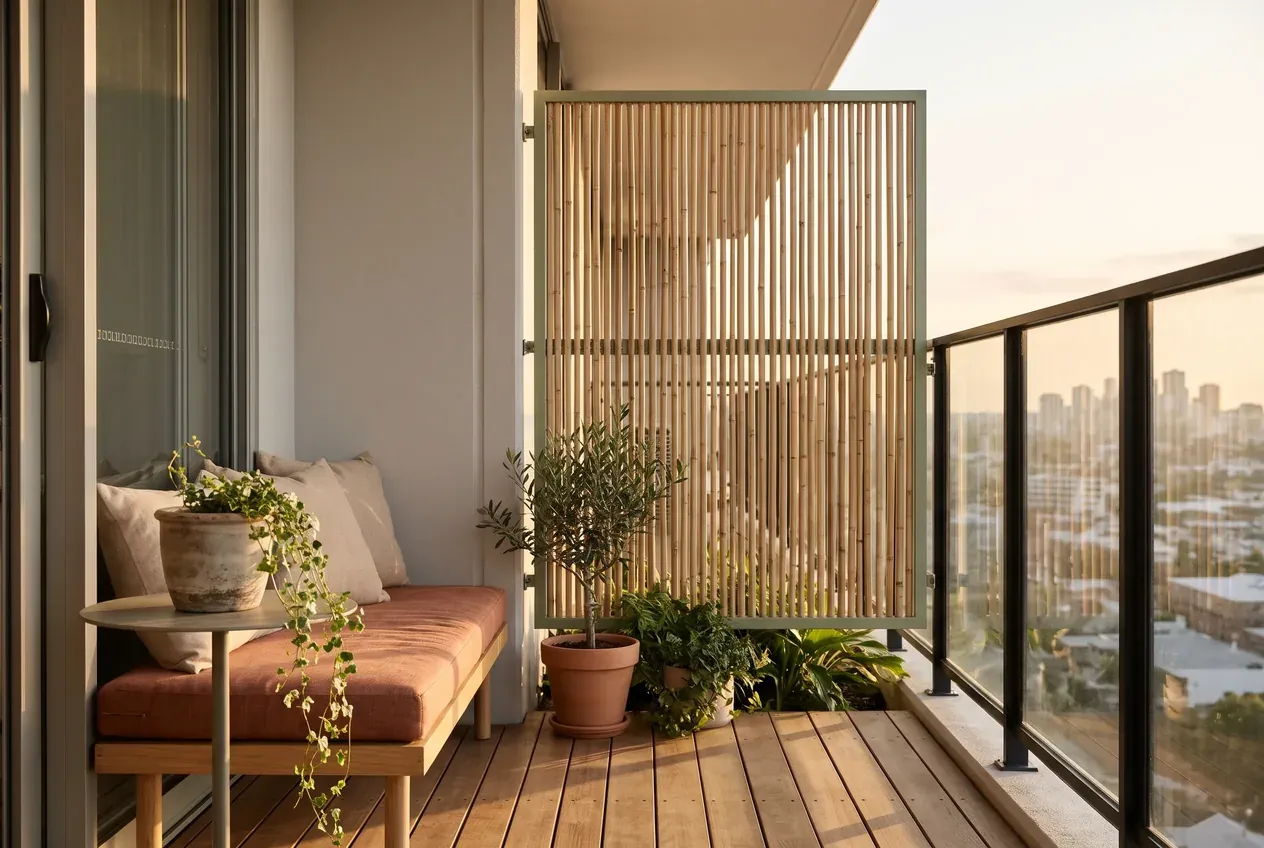
Room specifications
- Room ScaleSmall apartment balcony
- Design StyleWarm Minimalist / Japandi
- Budget TierBudget ($)
- Palette Swatches3 colors
A balcony privacy screen should be 60 to 72 in (152 to 183 cm) tall for full cover, or about 48 in (122 cm) on a compact balcony, with the top 12 in (30 cm) left open for airflow. Mount it with zip ties or a weighted base, never screws.
Small apartment balconies are prime targets for privacy complaints — neighbors, street-facing walls, and the gap between buildings can make even a pleasant corner feel exposed. But a small footprint changes the math: a screen that would be perfect on a large deck can overwhelm a tiny urban balcony if it eats floor space or blocks airflow.
The goal of a small apartment balcony privacy screen is not maximum coverage. It is useful coverage: block the sightlines that matter, keep the space usable for seating, and do it without touching the building.
Here is the measurement-led guide we use to size and install a privacy screen on small balconies.
Every section below uses exact numbers you can apply to a balcony of any width, including the small footprints where coverage gets tight. Small does not mean second-class — it means the screen has to earn its place against real constraints.
1. Realistic Privacy Expectations for Small Balconies
A privacy screen works on a vertical sightline basis. A screen mounted at or near railing height blocks views from standing eye level. Seated positions, second-floor neighbors, and upper-level windows may still peek over the top — which is why the top of the screen should stay open.
On small balconies, aim for 60 to 72 inches (152 to 183 cm) of screen height for full comfort, or about 48 inches (122 cm) for compact setups, leaving the top 12 inches clear for airflow and daylight. These heights include the open top: a 60 in (152 cm) screen is a 48 in (122 cm) solid panel plus 12 in (30 cm) of gap.
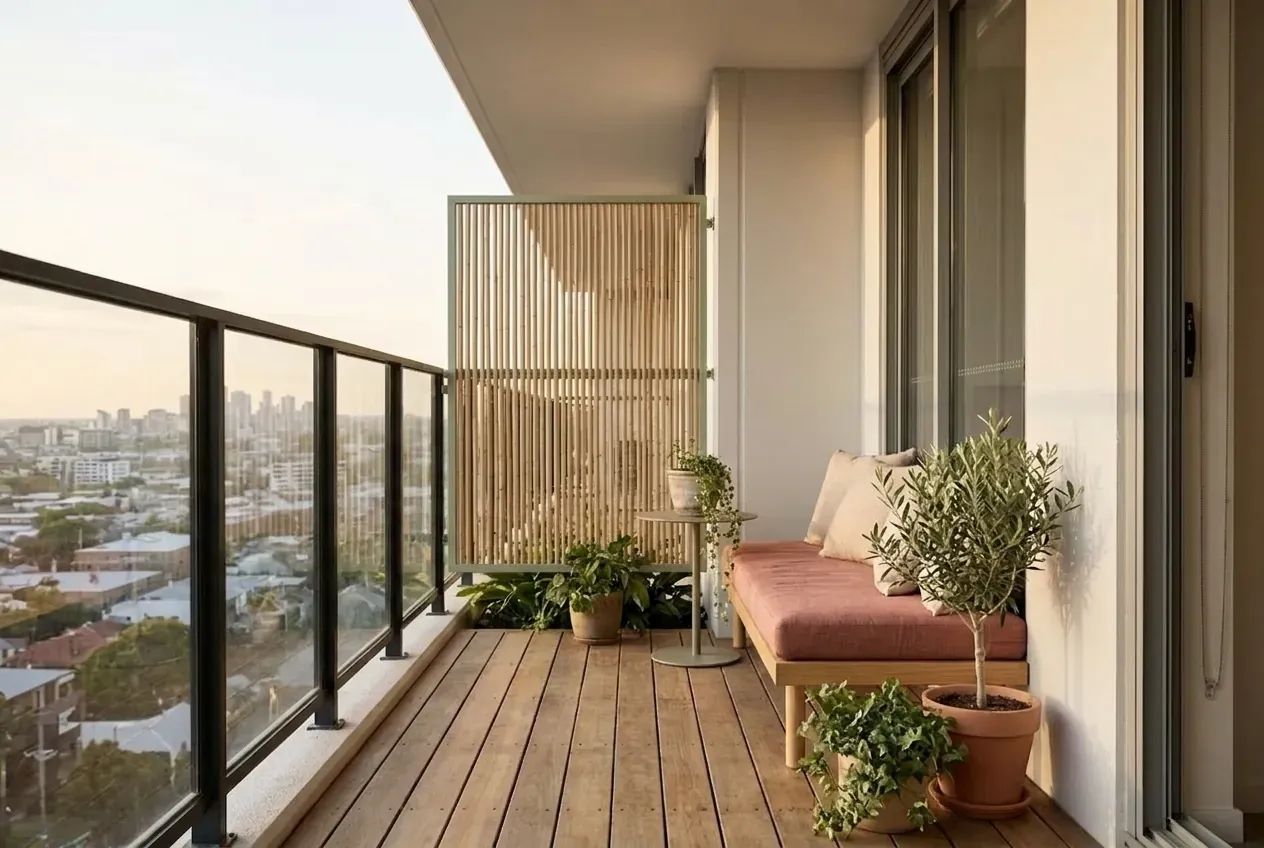 The same room seen from the opposite end, so you can judge the layout from the far side.
2. Sizing the Screen to Your Small Balcony
| Balcony Width | Recommended Coverage | Screen Height | Best Setup |
|---|---|---|---|
| Under 3 ft (91 cm) | Side or corner coverage | 48 in (122 cm) | Freestanding screen or side panel |
| 3 to 6 ft (91 to 183 cm) | Full railing coverage | 48 to 60 in (122 to 152 cm) | Railing mount or freestanding |
| 6 to 8 ft (183 to 244 cm) | Full coverage + partial zone | 60 to 72 in (152 to 183 cm) | Railing mount preferred |
Two sizing methods matter for small spaces:
- Railing-mounted screens (mesh, slat, or outdoor fabric) follow the railing length, so coverage scales automatically with balcony width. Match the screen height to the smaller of your preferred privacy level and your wind exposure.
- Freestanding screens follow floor depth, not railing length. Measure depth before committing — a rigid freestanding screen can consume the entire usable depth of a small balcony.
For example, a balcony under 3 feet wide needs only side or corner coverage at roughly 48 inches tall, while a 5-foot balcony can take full railing coverage at 48 inches. Oversizing is the most common small-balcony mistake: a screen taller than the seating zone adds nothing but visual bulk.
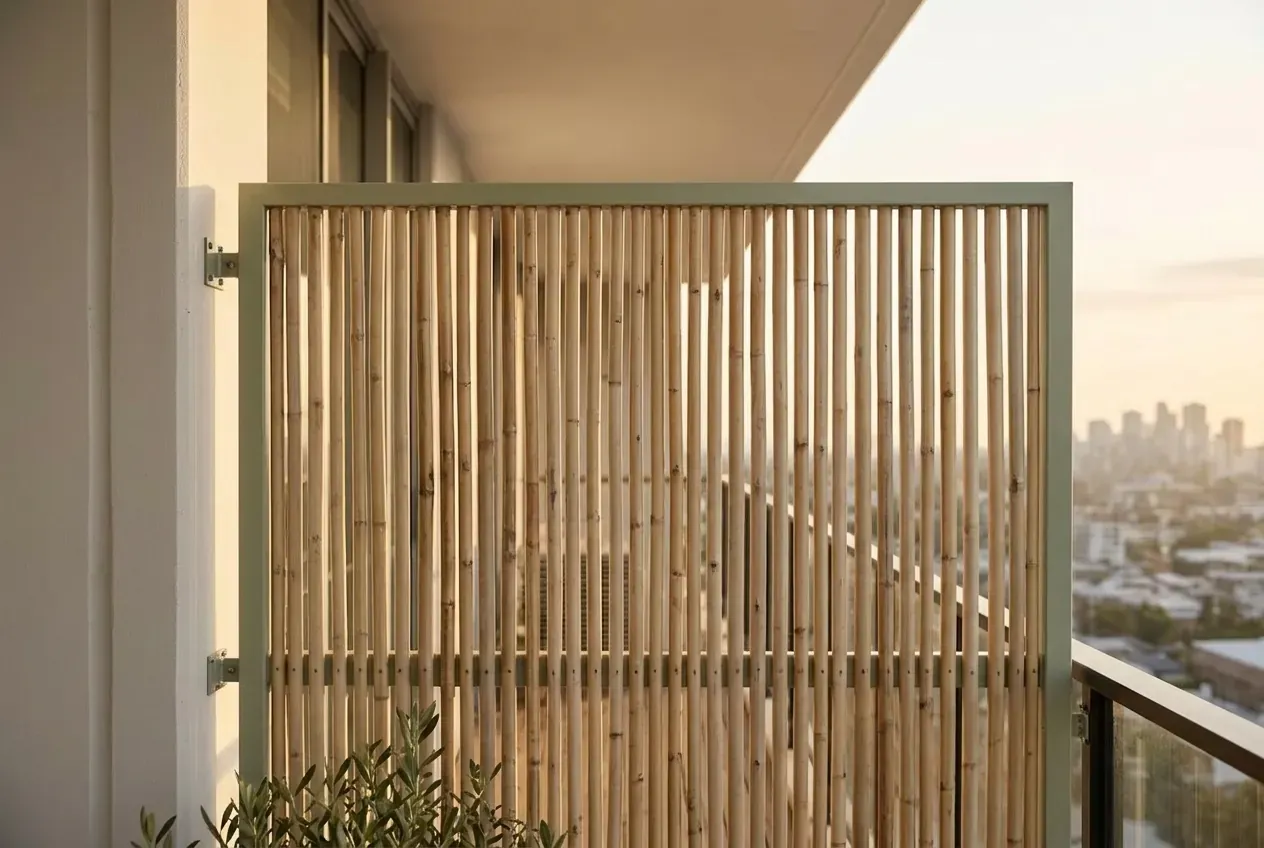 A closer look at the material finishes and the clearances that keep the layout usable.
3. Renter-Friendly Installation Without Drilling
The fastest way to lose a rental is visible drilling. These methods avoid permanent changes entirely.
Freestanding Screens
Place a weighted freestanding screen on a stable base. Heavy rectangular planters or sandbags work well as weights. This is the best option when drilling is off the table and the balcony has enough depth for the screen’s footprint.
Railing-Mounted Screens (Mesh, Slat, Fabric)
- Anchoring: Thread heavy-duty, UV-rated zip ties through the screen and around the railing every 6 to 12 inches (15 to 30 cm), including top, middle, and bottom rails.
- Tension: For fabric screens, use a tension rod or railing-safe hooks. Leave a small slack — the material should not hum like a guitar string when wind hits.
- Safety check: For unusual railings, use cross profiles or attach through horizontal struts instead of forcing fabric through.
What Not to Do
Avoid full-permanent mounting (screws, brackets into floor or wall) and avoid oversized solid panels that leave no airflow gap.
For wind-exposed small balconies, slatted bamboo or perforated screens outperform solid panels, and outdoor fabric works well for full side privacy when it is wind-permeable during gusts.
Match the Mounting Method to Your Rail
Screens fail at the railing, not at the screen, so check the rail type and the weight it can carry before you order. Wet bamboo and fabric get heavier, and some buildings cap screens at the rail line, so read your lease and HOA rules first.
| Rail Type | Mounting Method |
|---|---|
| Metal tube | UV-rated nylon zip ties every 6 to 12 in (15 to 30 cm) |
| Glass panel | Suction cups or clamp brackets made for glass |
| Concrete parapet | Freestanding planter trellis, no wall load |
| Wood | Zip ties, no screws |
Which Screen Material Suits Your Balcony
Privacy is never absolute. Slats and mesh blur the view, while drapes block it but catch more wind, so pick based on which problem is bigger: neighbors looking in or gusts on a high floor.
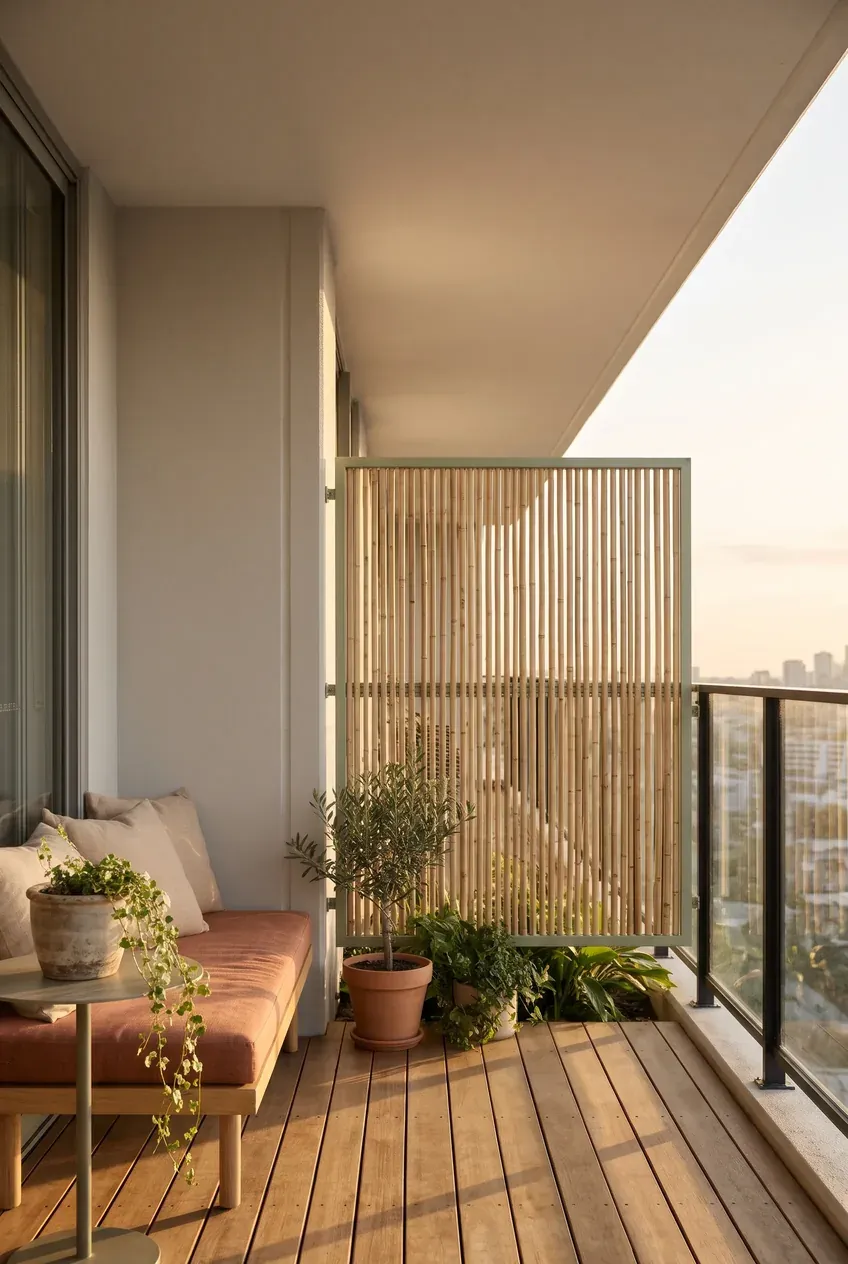
- Bamboo or reed slat roll: wind passes through, attaches with UV-rated cable ties, and gives good privacy though it can be see-through at some angles.
- Woven mesh: wind passes through, attaches with ties or clips, and gives partial privacy depending on the weave.
- Outdoor drapes: hang from a tension rod or hooks and give full privacy, but they catch wind and suit a ground floor or sheltered balcony best.
- Planter trellis with faux or real ivy: wind passes through and it stands on a weighted freestanding base. Privacy is partial and grows denser with real plants.
Mistakes That Cost Renters a Deposit
- Drilling into the facade or concrete without written permission.
- Using thin ties that go brittle in sun. Choose UV-rated ones and replace them each season.
- Hanging a solid panel on a high floor.
- Blocking the balcony door or an escape route with a freestanding screen.
- Ignoring neighbor sightlines from above, which a rail-height screen will not fix.
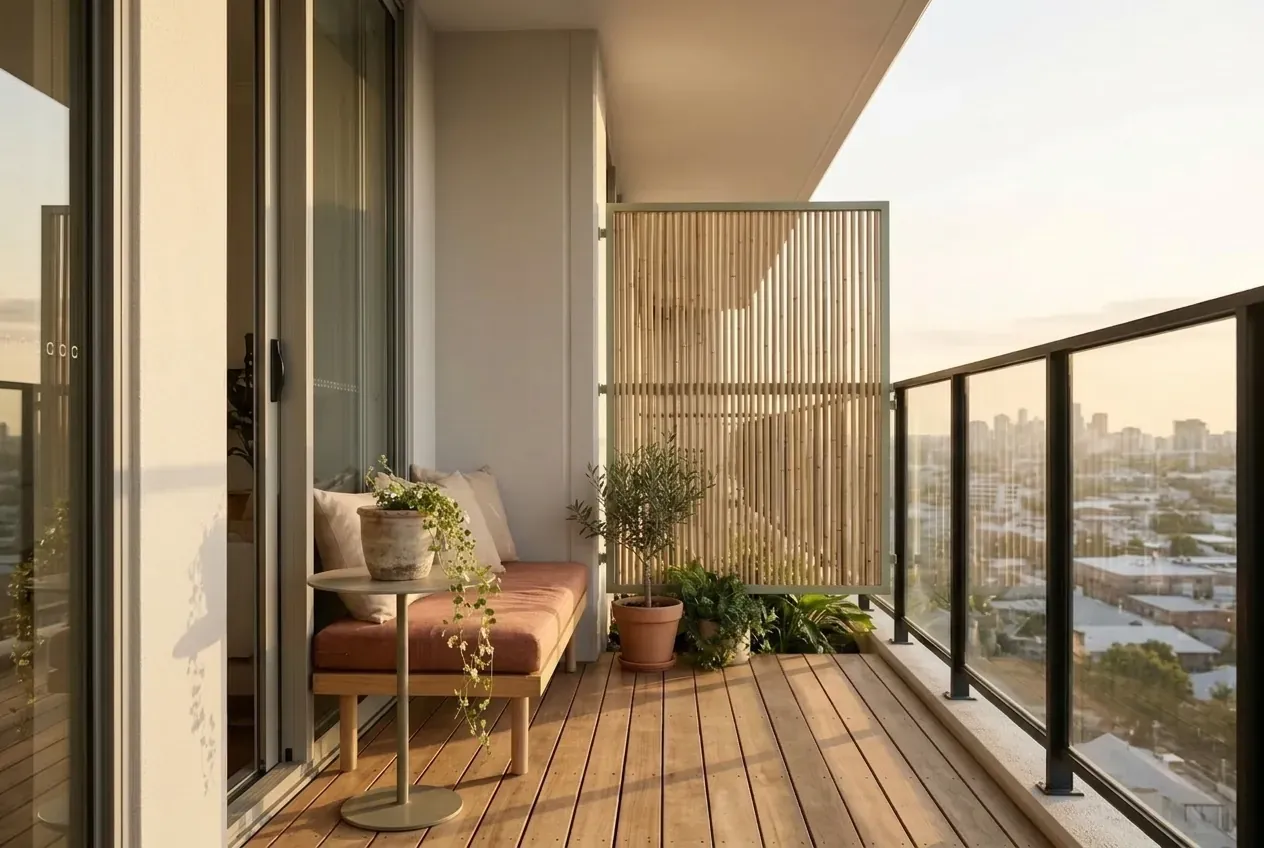 From above and to one side, the full footprint and the walkway read at a glance.
4. Wind Safety for Small Balcony Screens
Small balconies are wind tunnels — gusts accelerate between buildings and around corners.
- Prefer slatted or perforated screens and wind-permeable fabrics over solid panels.
- Keep the top of the screen open (the 12 inches noted above).
- Solid panels act like sails in storms; freestanding screens should use weighted bases or ground stakes.
- Zip-tie along both the top and bottom rails so wind cannot lift an edge, and never tie a solid panel above the rail line on an upper floor.
- When a storm warning comes, take lighter or loose screens down.
5. Sizing Privacy Against Layout
A privacy screen only helps if it sits where people actually are. Place the screen between the seating zone and the neighboring sightline, then keep walkways clear. On balconies under about 60 sq ft, treat the screen footprint as part of the layout — clear circulation paths before adding coverage.
Keep the look quiet once the screen is up. A bamboo screen pairs well with a warm wood bistro set, a rail planter of trailing greenery, and a warm solar light so the balcony works after dark without wiring. Two folding chairs and a small table are enough, because more than that blocks the 24 in (61 cm) path to the door. For furniture plans, see 3 x 6 balcony furniture layouts and balcony bistro clearances. For greenery that adds privacy over time, see the balcony planter guide.
A small apartment balcony privacy screen is a combination of sizing discipline and renter-friendly installation. Get the height right, respect wind, and skip the permanent hardware. Done well, the screen buys real peace of mind without costing the deposit.
Before installing: confirm your landlord rules and building insurance requirements, and verify measurements in your actual space.
Curated Color Palette & Key Textures
- Sage Green #7A8471
- Warm Oak #C89D7C
- Alabaster #F4F0EA
General references
Dimensions in these guides are typical planning ranges, not legal minimums, and they can differ by jurisdiction. Use the references below as starting points, then confirm local code and your lease before making changes.
FAQ
How do I add privacy to a small balcony without drilling into the wall?
Use a freestanding screen weighted on a floor base or plant trays, or mount a mesh or slat screen to the existing railing with heavy-duty UV-rated zip ties. Neither method requires drilling into the wall, floor, or structural elements, and both keep your rental agreement intact.
What screen size should I choose for a narrow balcony?
For balconies under 6 feet wide, a screen around 48 inches tall usually blocks standing eye-level views while leaving the top 12 inches open for airflow and skyline views. For narrower footprints under 3 feet wide, favor side or corner coverage and freestanding placement instead of full-railing coverage. Measure your railing length before buying.
Are balcony privacy screens safe in high winds?
Yes, when sized and anchored correctly. Solid panels can act like sails in gusts, so slatted or perforated screens and wind-permeable fabrics are preferred on exposed upper-floor balconies. Keep the top of the screen open and secure all fasteners along top, middle, and bottom rails.
How do I attach a privacy screen to a glass or concrete balcony rail?
Glass panel rails take suction cups or clamp brackets made for glass. A concrete parapet should hold a freestanding planter trellis instead, so no load or drilling touches the wall. Metal tube and wood rails take UV-rated zip ties without screws.
How much privacy will a balcony screen actually block?
A screen blocks the view from standing eye level upward from neighboring balconies. Seated positions, upper-floor neighbors, and views from above the screen top edge may still be visible, which is why leaving the top portion open matters. For small balconies, treat side or corner coverage as the practical maximum when depth is tight.
Does the screen height include the open top?
Yes. A 60 in (152 cm) screen is a 48 in (122 cm) solid panel plus 12 in (30 cm) of open gap, so the full 72 in (183 cm) version leaves 60 in (152 cm) solid.
Save this idea

Keep reading
Related rooms
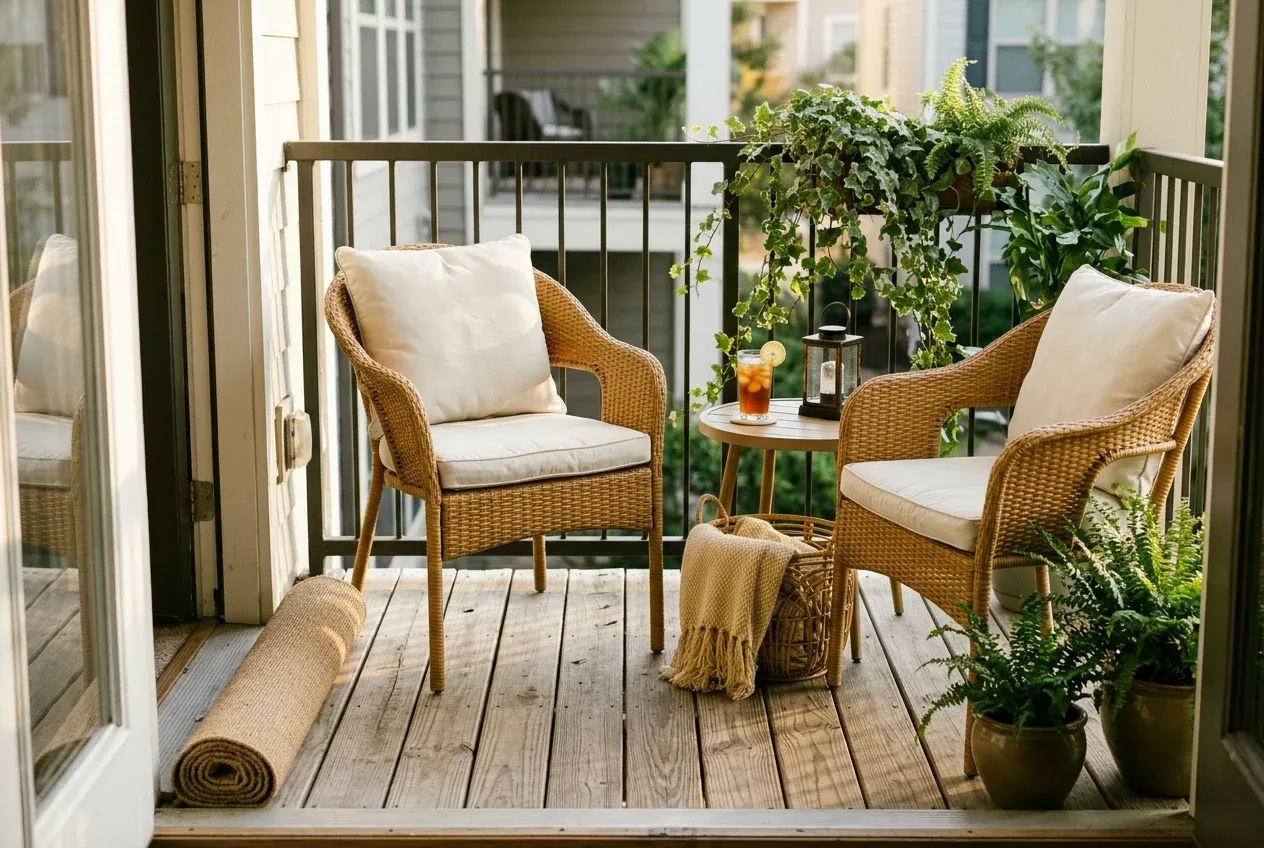
Wicker and Rattan Furniture for a Small Balcony
What wicker furniture is, how it differs from rattan and which version survives a small balcony: weave materials, weather limits and a 4 x 8 ft layout.
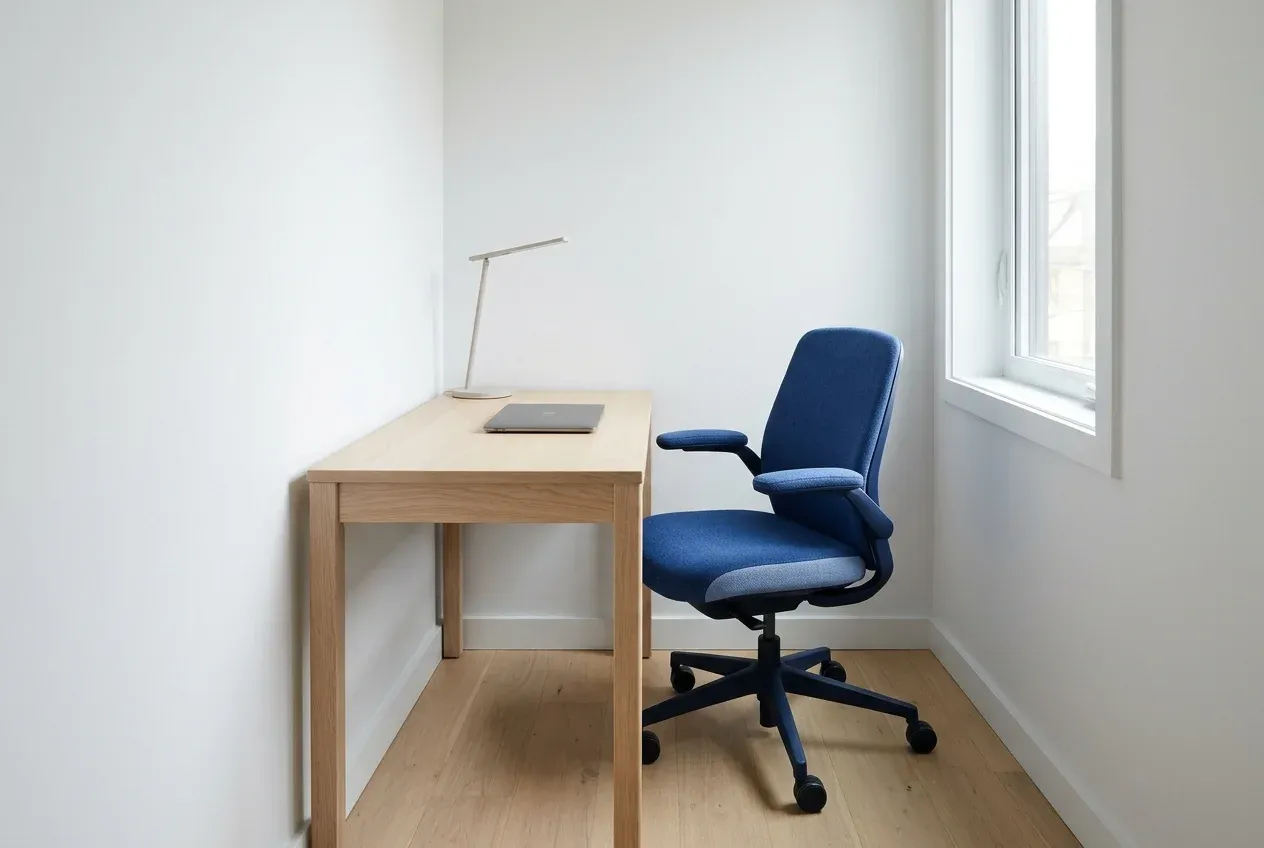
Most Comfortable Office Chair in a Studio Corner
Compact office chair comfort, measured: 16-20 in (41-51 cm) seat height, 2 in (5 cm) of knee room, folding arms, and a fit for 24 in (61 cm) deep desks.
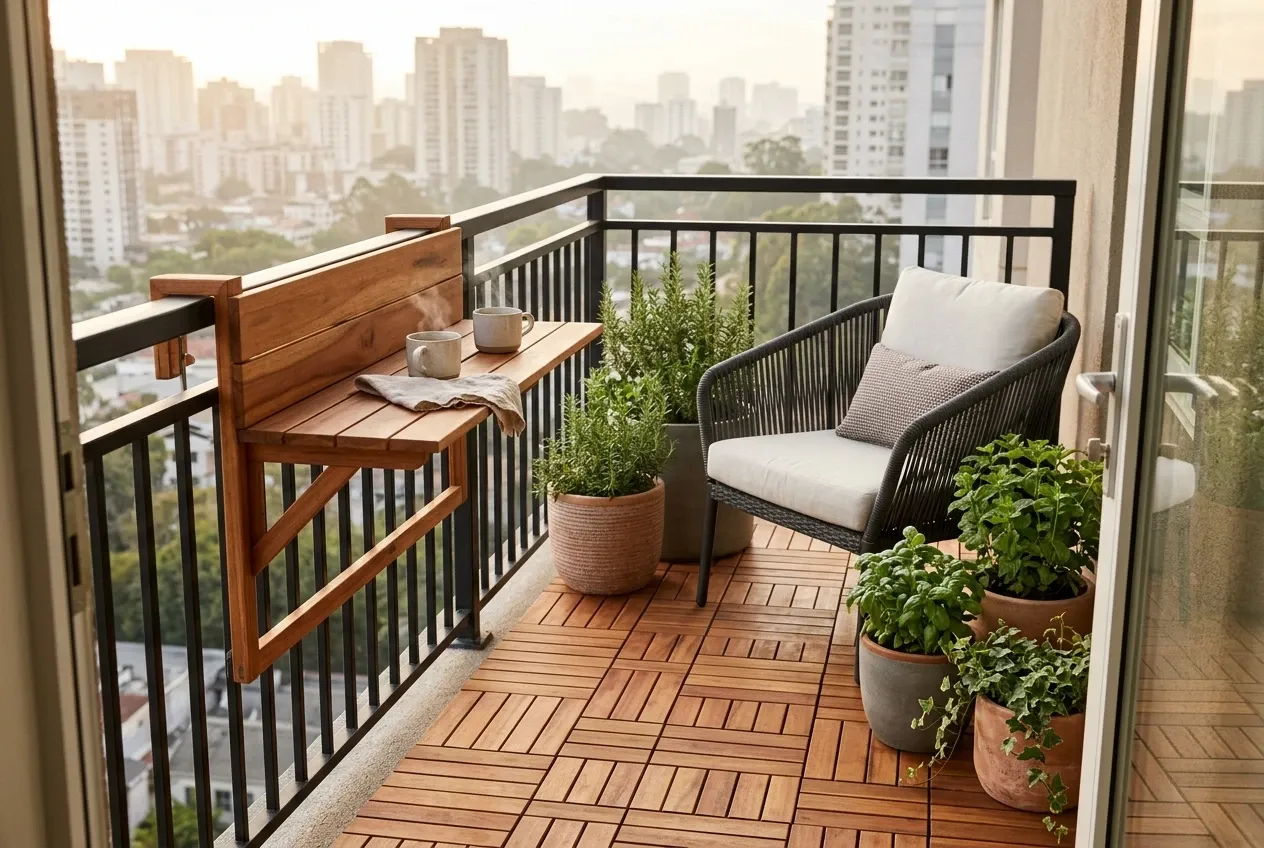
Small Balcony & Workspace Guide
A pillar guide to small balconies and home workspaces: furniture clearances, privacy screens, desk depths, and lighting for compact apartments.