Renter-Friendly Wallpaper for Living Rooms: Install Guide
Peel and stick wallpaper for a rental living room: wall prep, plumb-line hanging, pattern matching, 15 to 20 percent extra for repeats, and clean removal.
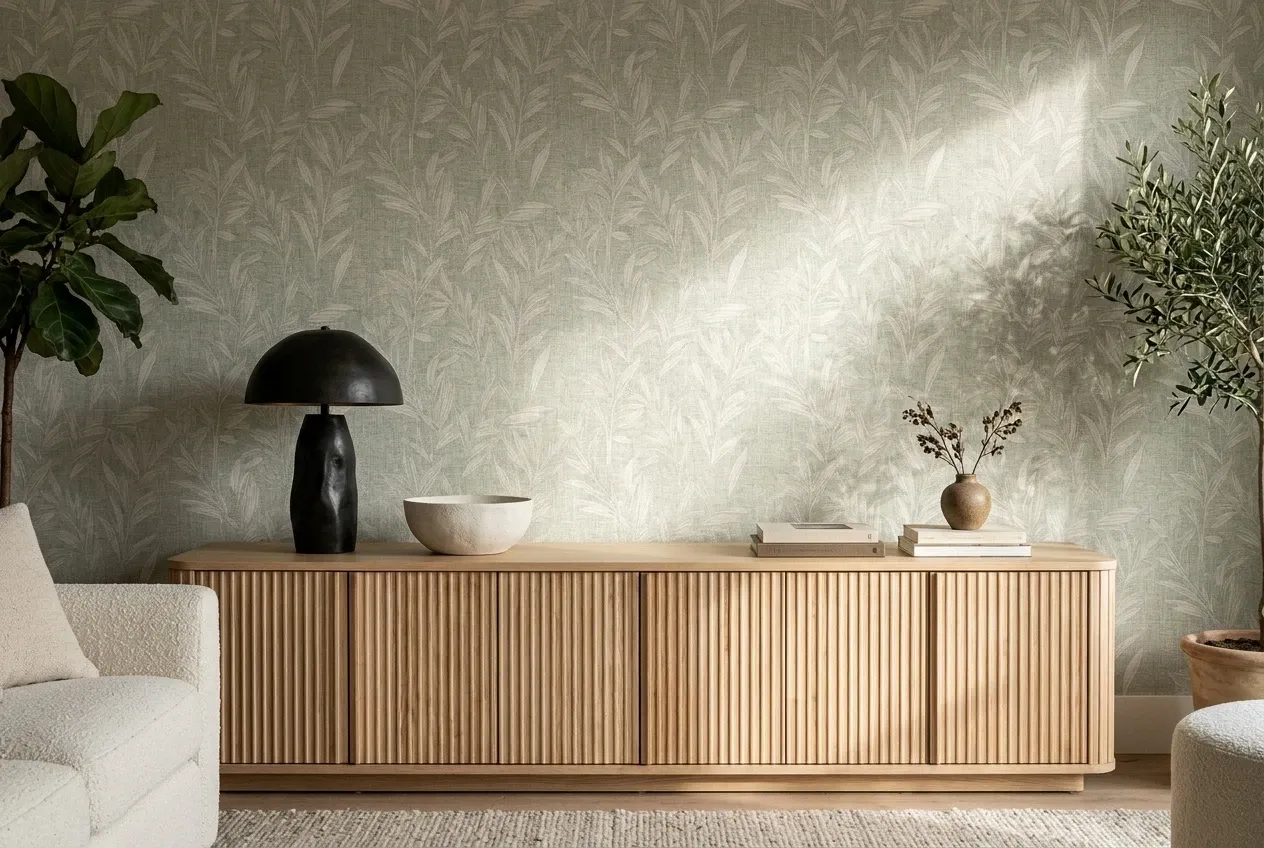
Room specifications
- Room ScaleSmall apartment living room (about 11 x 13 ft)
- Design StyleOrganic Modern / Scandinavian
- Budget TierBudget ($)
- Palette Swatches4 colors
Peel-and-stick wallpaper calculator
Enter the wall, the match type and your roll. It gives the wall area, the extra to allow and how many rolls to buy.
One wall: 40 sq ft (3.7 sq m). With a 15 to 20% allowance for the pattern, order 46 to 48 sq ft (4.3 to 4.5 sq m). A 20.5 in x 16.4 ft roll covers 28 sq ft, so buy 2 rolls. Roll width, length and repeat vary by product: check the label before you order.
The wall laid flat to scale. Each strip is one roll width, so the seams show where the panels meet.
Full-page version: Peel-and-Stick Wallpaper Calculator: Rolls Needed
To install peel-and-stick wallpaper on a rental living room wall, clean the wall, mark a true vertical line with a level, and hang the first panel along that line, not the corner. Peel the backing a little at a time and smooth outward with a squeegee. Trim at the ceiling and baseboard last.
Done well, the paper adds colour and texture without paint and without a deposit fight. The steps below are written for one accent wall in a small living room, such as the wall behind the sofa or a media console. If you are still deciding between paper and paint, read the wallpaper versus paint comparison first.
Check the wall before you buy
Peel-and-stick paper works on a clean, smooth, fully cured painted wall. It struggles on three things:
- Fresh paint. Wait about 30 days after painting, or ask your landlord when the wall was last painted. Paper on uncured paint can pull the film off later.
- Heavy texture. Light orange peel can work with a thicker woven paper. Heavy knockdown leaves air pockets and lifting seams.
- Dirty or greasy walls. Dust and cooking oil stop the adhesive from gripping.
Test a sample in a hidden spot for 72 hours and peel it back before ordering the whole wall.
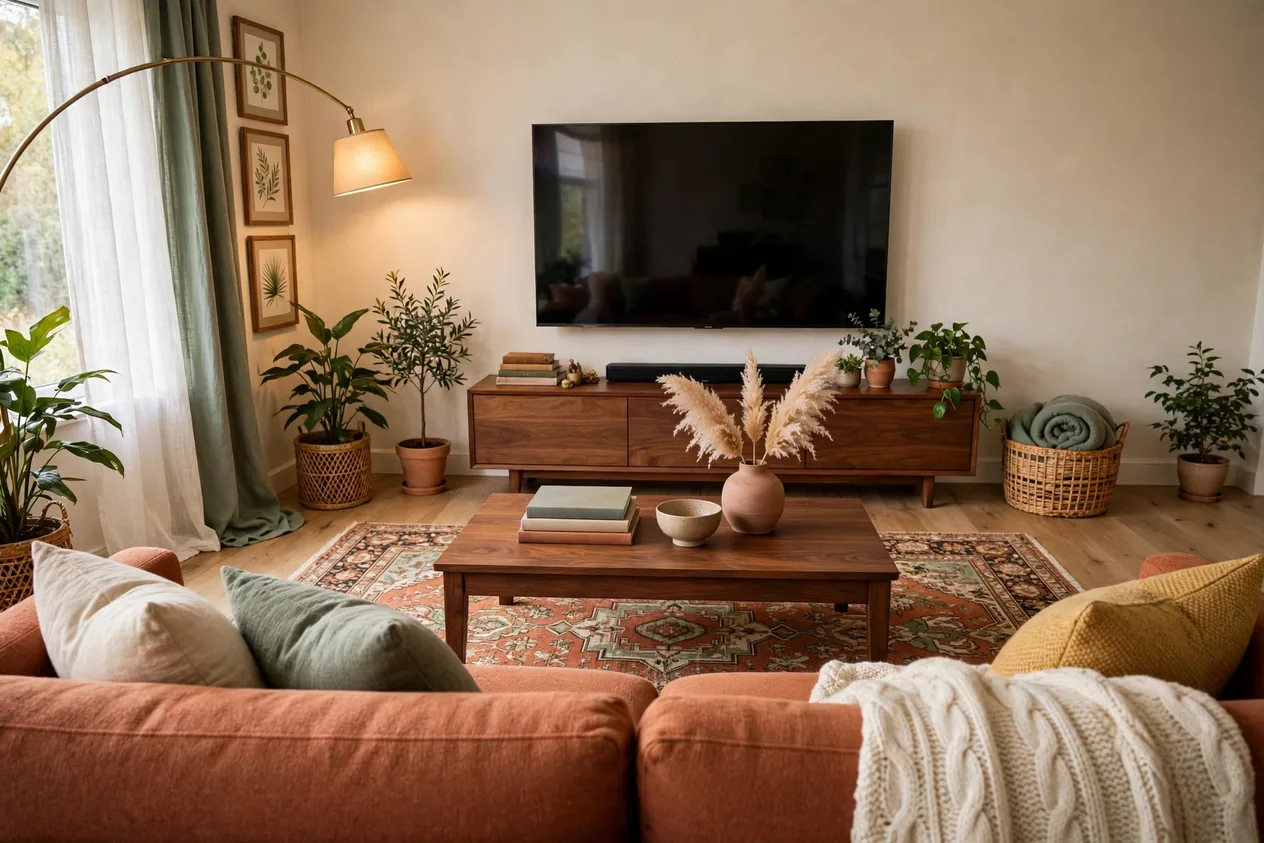
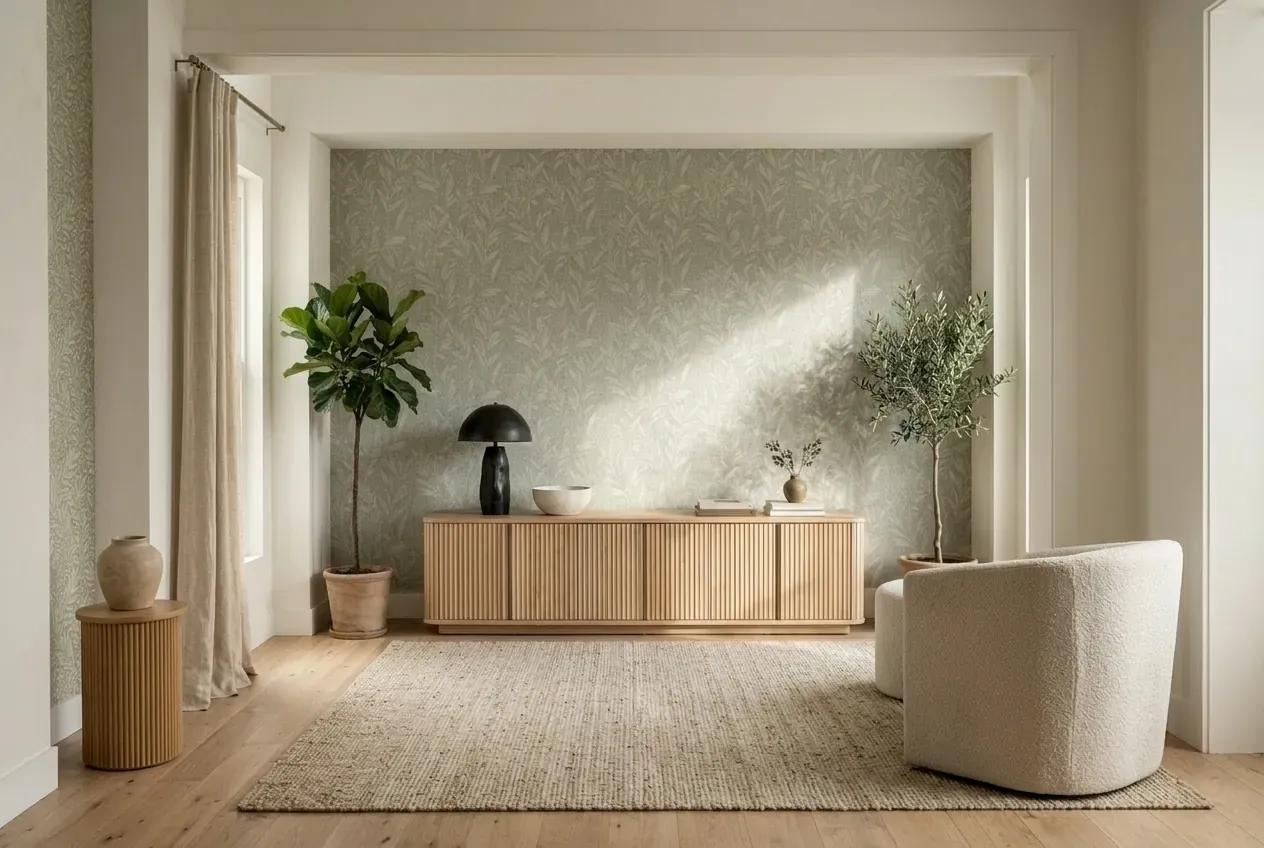 The same room seen from the opposite end, so you can judge the layout from the far side.
Choosing the material
| Material | Best for | Watch out for |
|---|---|---|
| Woven polyester fabric | Wall behind the sofa; tolerates light texture | Cost |
| Smooth matte vinyl | Dining nook; wipeable | Needs a smooth wall |
| Self-adhesive grasscloth | Reading corner | Flat walls only; wipe dry, not wet |
| Paper-backed vinyl | Low-traffic hallways | Tears if stretched |
Product quality varies, so read the maker’s instructions about surfaces and removal before you buy.
Step-by-step install
- Clean the wall. Wipe with water and a little isopropyl alcohol to remove dust and oil, then let it dry fully.
- Mark a plumb line. Apartment corners are rarely square. Measure out the width of your first panel, minus a small overlap, and draw a vertical line with a level. Align the first panel to that line, not the corner.
- Peel a little backing. Remove 12 to 18 inches of the backing, press the top into place and smooth downward with a felt-edge squeegee, working from the centre outward. Pulling the whole backing at once causes static and sticking.
- Match the pattern. Butt each new panel against the last one. Do not overlap, and do not stretch the paper to force a seam. Stretched paper shrinks back and leaves a gap.
- Trim the edges. Leave a couple of inches of excess at the ceiling and baseboard, press a broad drywall knife into the joint and cut with a fresh blade. Change the blade often, because a dull one tears the paper.
- Work around outlets. Turn off the power, remove the cover, cut an X in the paper, trim and put the cover back.
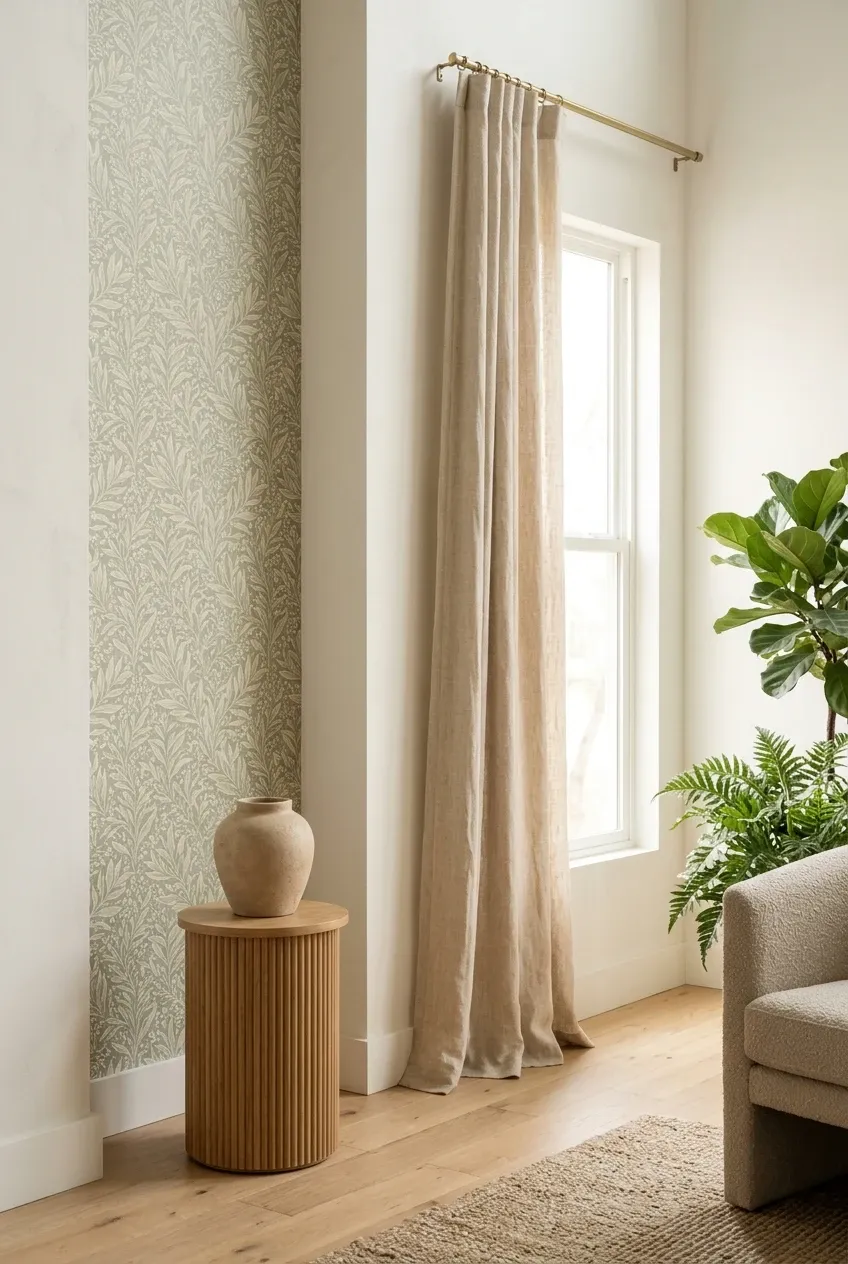
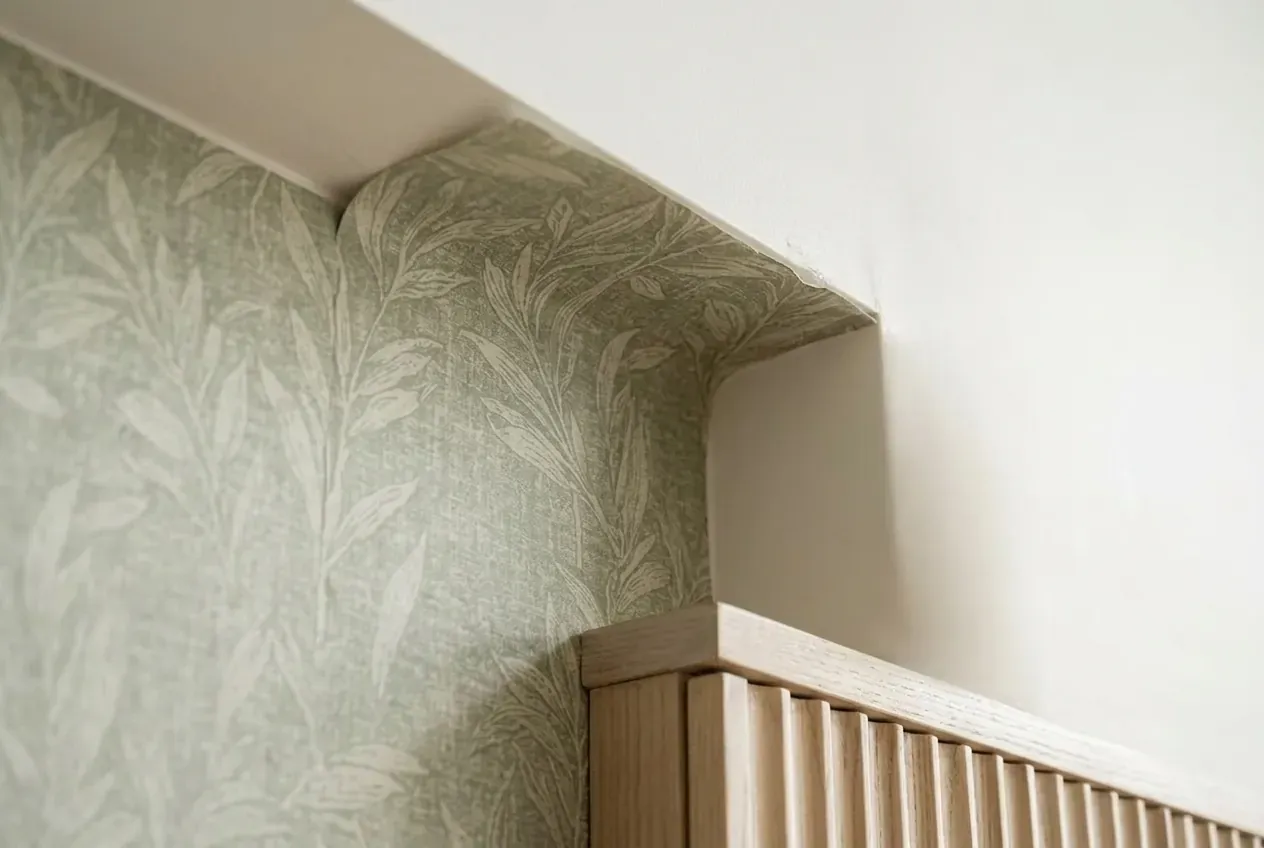 Close up: Allow a 2-inch (5.1 cm) overlap at the ceiling and baseboard before trimming with a fresh razor blade for seamless edges.
Where to use it
- Behind a low media console. The paper frames the unit. Choose a subtle pattern so the console and screen do not compete with it.
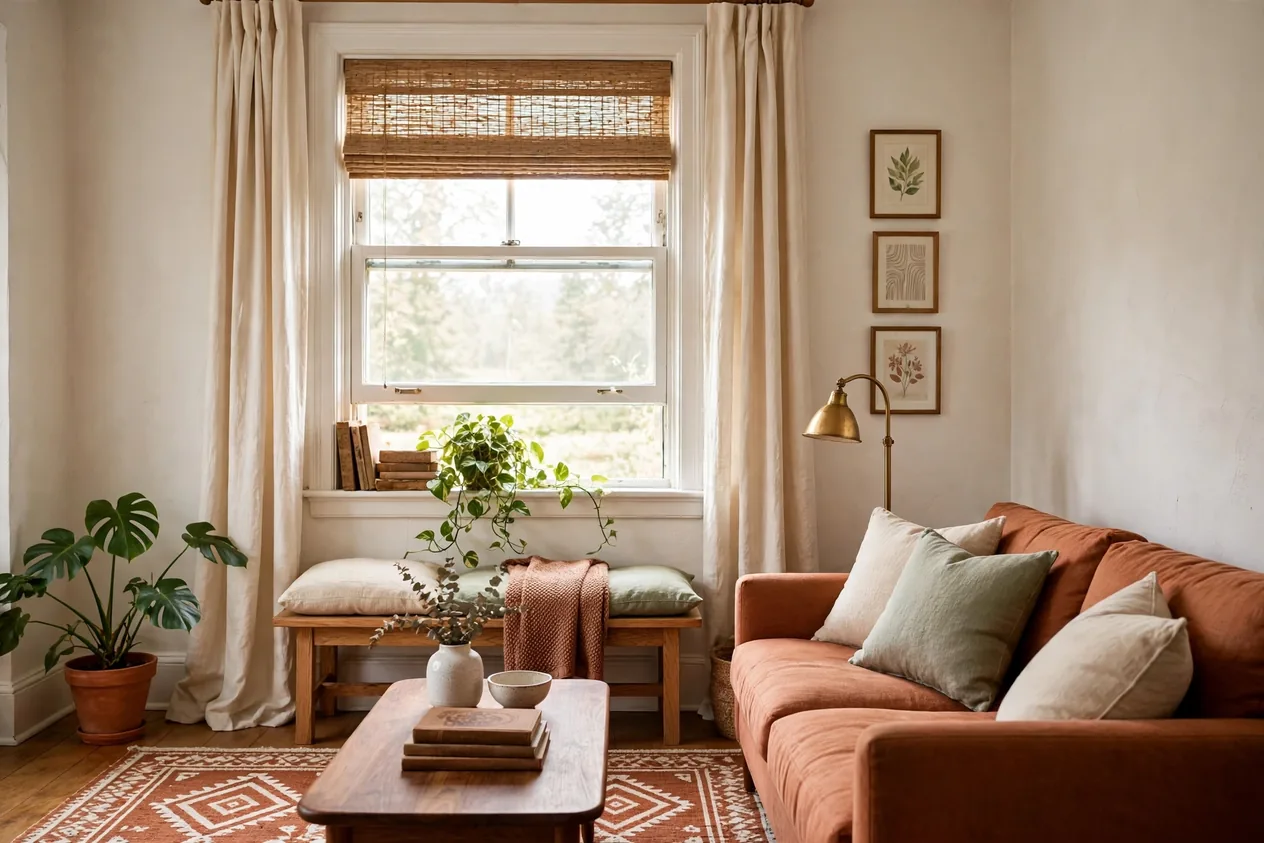
- Inside a window reveal. It can draw attention to the window and works where curtains are not an option. Hang curtain rods high and wide so they clear the pattern.
- A shaped panel behind a console or bed. A cut-out arch or rectangle can serve as a graphic headboard or a backdrop for a small console table.
A dining nook is another good spot, particularly with a wipeable vinyl.
Common mistakes
- Starting from the corner instead of a plumb line.
- Removing all the backing at once.
- Using a dull blade.
- Pulling the paper to hide a bad seam.
- Skipping the sample test.
- Forgetting that cured paint is a requirement, not a suggestion.
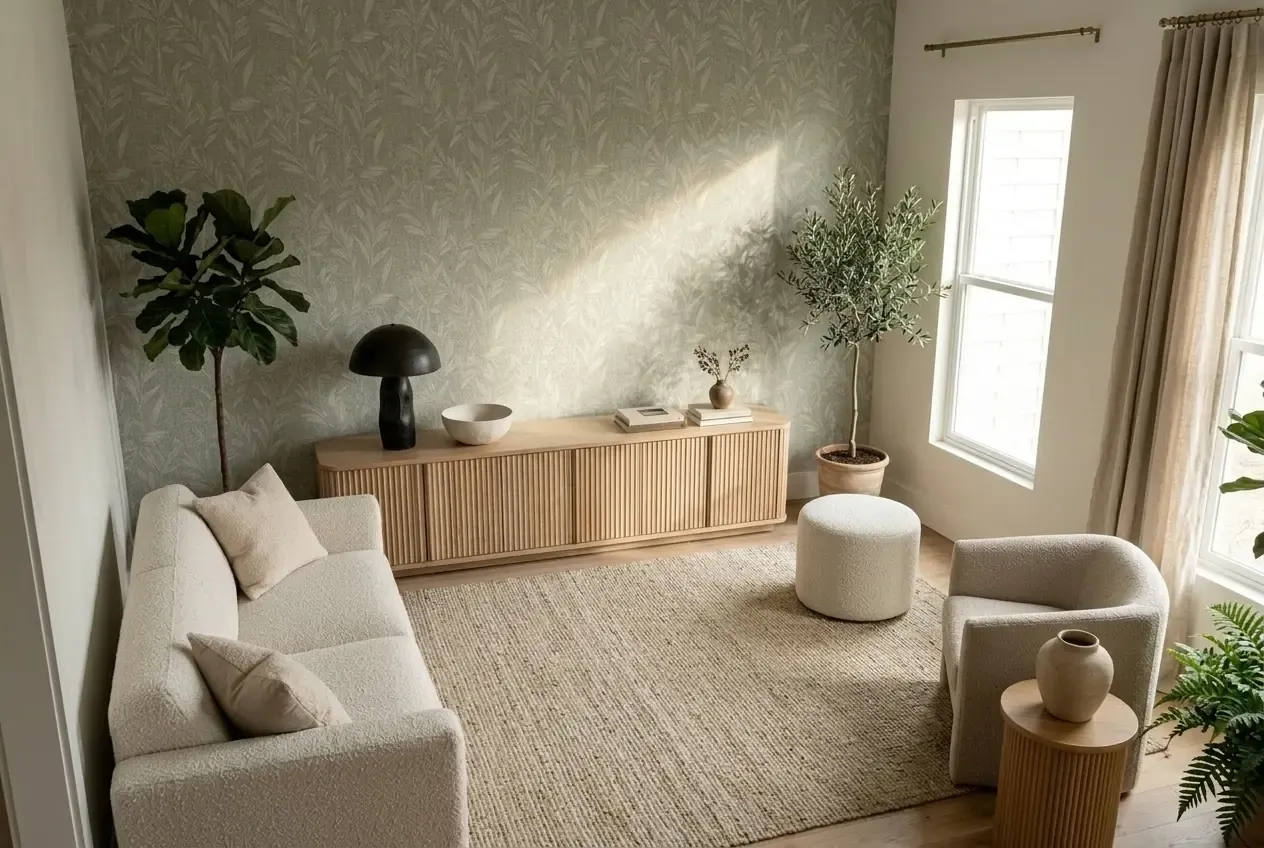 From above and to one side, the full footprint and the walkway read at a glance.
Colour and pattern
Soft sage botanical linework on an off-white ground, with fluted-ash wood and dark bronze accents, suits a small living room because the pattern stays quiet. Light, warm colours bounce daylight around, and a darker pattern reads best in a bigger or brighter space. A dark paper works, but see the dark moody wallpaper guide for how it behaves in a small room.
How much to order
Order a bit extra for pattern repeats and trimming; 15 to 20 percent is a common allowance. Check the roll width and repeat on the product page and measure the wall height and width yourself.
Before you start
- Confirm the paint has cured.
- Test a sample for 72 hours.
- Gather a level, squeegee, drywall knife and spare blades.
- Mark the plumb line.
- Order extra for the repeat.
- Keep spare panels for move-out repairs.
Curated Color Palette & Key Textures
- Fluted Ash #D1C5B4
- Muted Sage #8B9B88
- Bone White #F2EFE9
- Matte Bronze #3C352E
General references
Dimensions in these guides are typical planning ranges, not legal minimums, and they can differ by jurisdiction. Use the references below as starting points, then confirm local code and your lease before making changes.
FAQ
Does renter-friendly peel and stick wallpaper damage apartment walls?
High-quality woven polyester peel-and-stick wallpaper removes cleanly without peeling paint if walls were primed with satin or semi-gloss paint.
Can you hang peel and stick wallpaper over textured rental walls?
Light orange peel texture works with thicker woven wallpapers, but heavy knockdown textures cause air bubbles and require skim coating or hardboard panels.
How much extra wallpaper should you order for pattern matching?
Order 15 to 20 percent extra square footage to account for pattern repeat drops, ceiling trim margins, and panel alignment.
Save this idea

Keep reading
Related rooms
Standard Window Sizes: 24 x 36 to 48 x 72 in Chart
Standard window sizes in inches and cm: most run 24 to 48 in wide by 30 to 72 in high, and a bedroom window needs a 5.7 sq ft clear opening for egress.
TV Dimensions by Screen Size: 65 in Is 56.7 x 31.9 in
TV dimensions by screen size in inches and cm: a 65 in TV is 56.7 x 31.9 in, a 55 in is 47.9 x 27.0 in, plus the viewing distance and stand width for each.
How High to Hang Pictures: 57 in (145 cm) Center
Hang pictures with the center 57 in (145 cm) up, the frame bottom 7 to 10 in (18 to 25 cm) above a sofa, and frames 2 to 3 in (5 to 8 cm) apart.