Corner Media Console Sizing & Angle Rules
Corner TV stand sizes for small rooms: 42 to 48 in front width, a 28 in (71 cm) swivel radius, 45-degree footprints and screen sizing that fits.
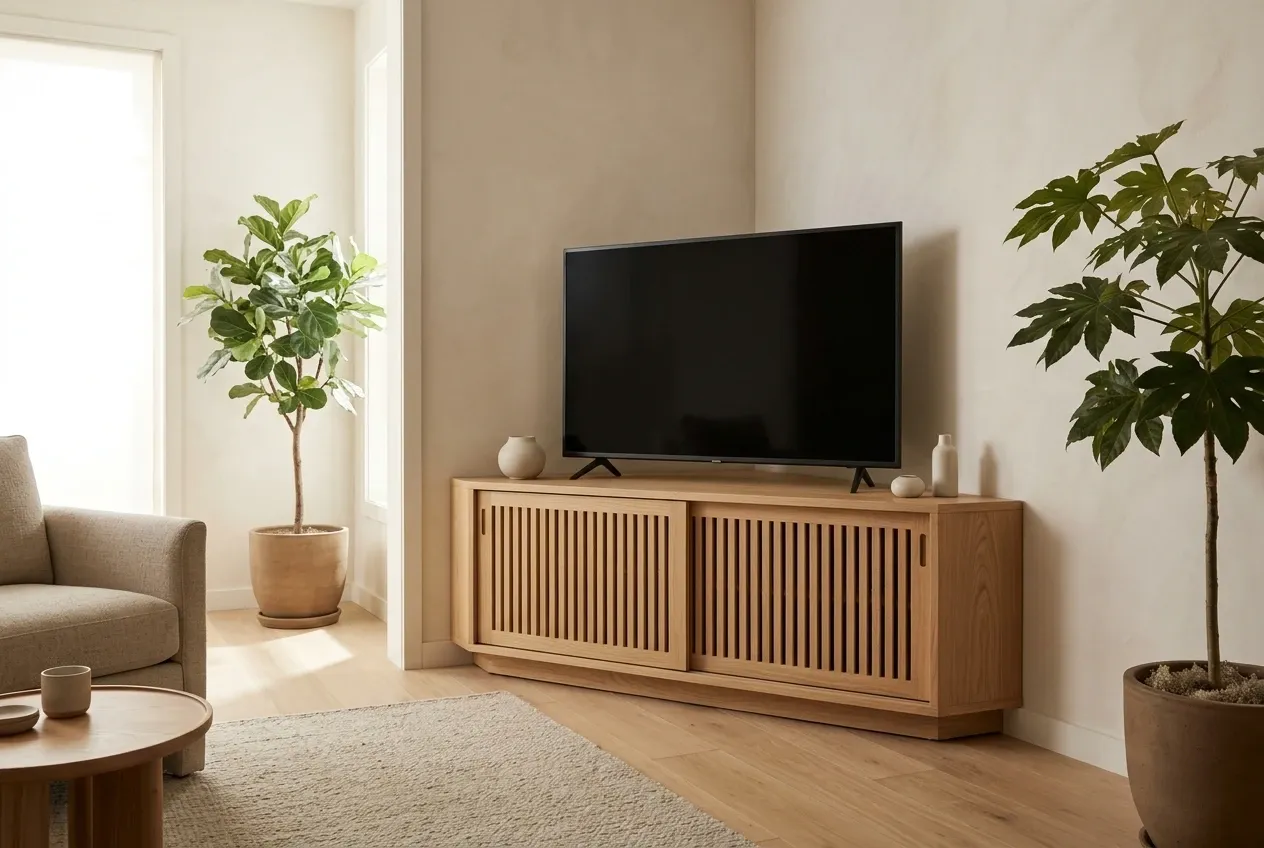
Room specifications
- Room ScaleSmall apartment living room (about 11 x 12 ft)
- Design StyleWarm Minimalist / Classic Japandi
- Budget TierMid-Range ($$)
- Palette Swatches4 colors
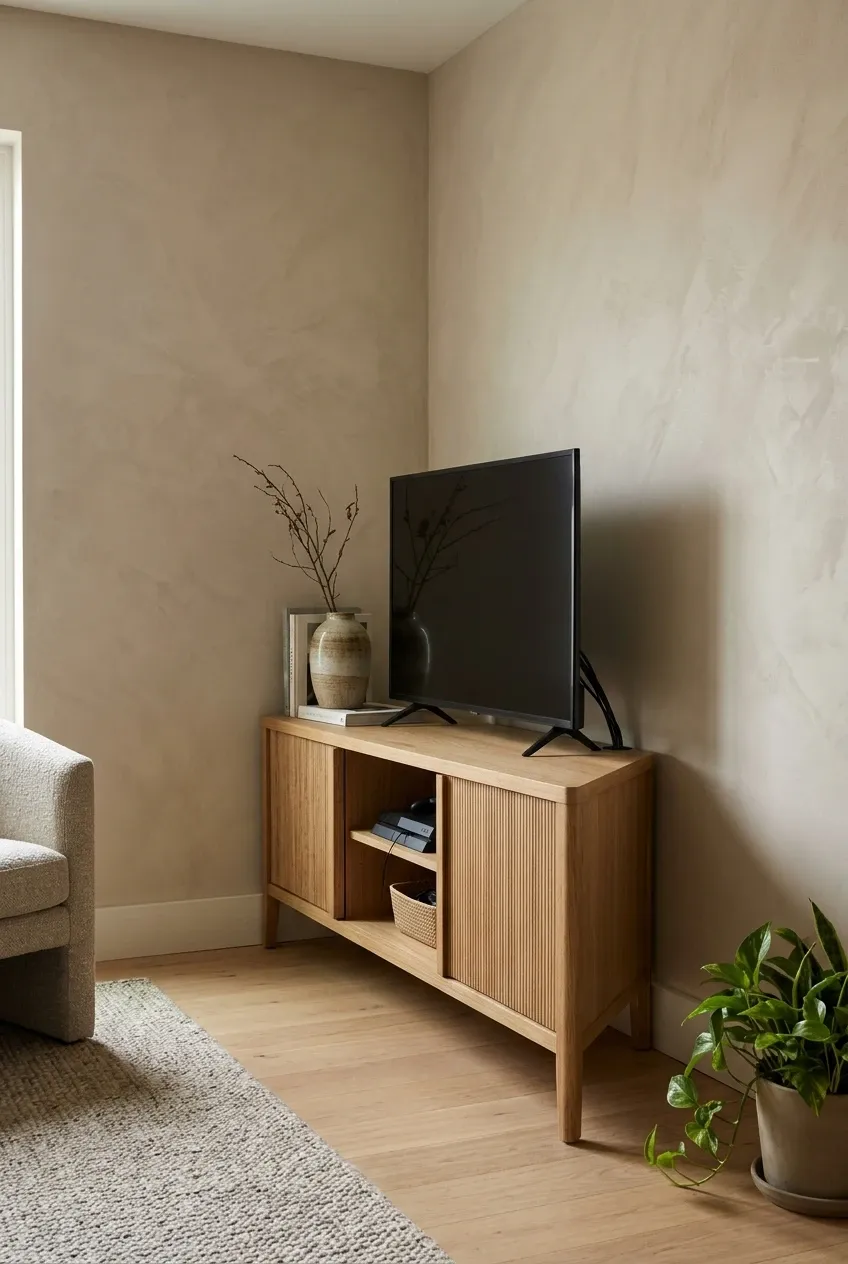
A corner media console set at 45 degrees works in a small living room when it has about 32 to 38 inches of wall on each side of the corner, a 43 to 50 inch TV, and a 28 inch clear radius for the screen to swing. Done well, it turns a dead corner into the entertainment spot and keeps the walls free for the path.
In compact, squarish rooms, windows, radiators and doors interrupt most walls, so a TV on a flat wall often ends up blocking a walkway. Angling a media console into the corner uses space you would not otherwise use. The catch is the triangular gap behind the cabinet, which wastes floor if the unit is the wrong shape.
Corner measurements to check first
| What to measure | Minimum | Target in a small room | Notes |
|---|---|---|---|
| Wall run from the corner | 30 in (76 cm) | 34 to 38 in (86 to 96 cm) | Room for a 43 to 50 in TV without clipping the corner |
| Width across the front diagonal | 36 in (91 cm) | 42 to 48 in (106 to 122 cm) | Stable base for TV feet or a stand |
| Console to seating | 60 in (152 cm) | 72 to 84 in (183 to 213 cm) | Rough guide; follow the TV maker’s viewing advice |
| Swing radius | 24 in (61 cm) | 28 in (71 cm) | For tilting toward a dining nook without hitting a wall |
| Passage beside it | 28 in (71 cm) | 32 in (81 cm) | Keeps a nearby door or hallway open |
Choose a unit with clipped or angled back corners so it sits flush into the 90 degree junction. A square-backed cabinet pushed into a corner leaves a gap and loses depth. For seating that works with an angled screen, see the small sectional layout guide.
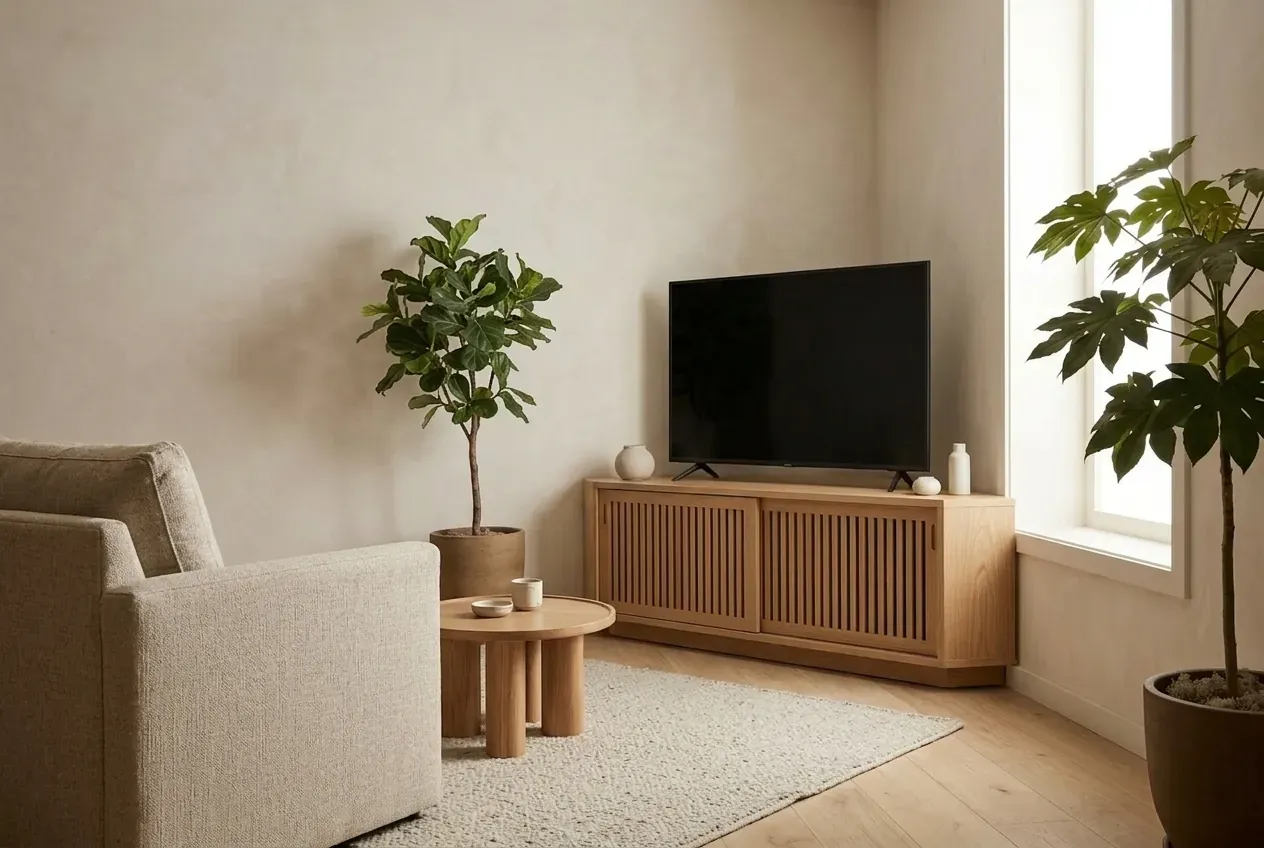 The same room seen from the opposite end, so you can judge the layout from the far side.
Corner layouts by room type
Symmetrical, 11 x 11 ft room. Put a 42 in wide corner credenza squarely in the corner opposite the entry door. Mount the 43 in screen on an articulating arm just above the console and angle it toward a low sofa on the opposite long wall.
Low console under 8 ft ceilings. A low unit around 18 inches high keeps sightlines open. Above the TV, two shallow triangular floating shelves in the corner can hold trailing plants and a few ceramics and draw the eye up. Fix shelves to studs and follow the shelf maker’s load limits.
Studio divider. In an open studio, a corner console between sleeping and living zones works with a full-motion mount, so the TV can face the sofa by day and the bed at night. Check the mount’s rated TV weight and wall requirements before you buy.
Cables, heat and sound behind the cabinet
- Use the triangle. The hollow behind the cabinet is the place for a surge-protected power strip. Keep it off the floor with a bracket and keep it accessible.
- Bundle the cords. Group power, coax and HDMI into a fabric sleeve and drop it down behind one leg to the outlet.
- Let it breathe. Game consoles, streaming boxes and receivers produce heat. Choose a cabinet with open or vented back panels, and do not pack equipment into a closed cavity. A turntable and amp need the same airflow; see the record player cabinet guide.
- Tame boom. Corners tend to boost low-frequency sound. A soft basket of wool throws or a thick rug can reduce boominess, though it will not match proper acoustic treatment.
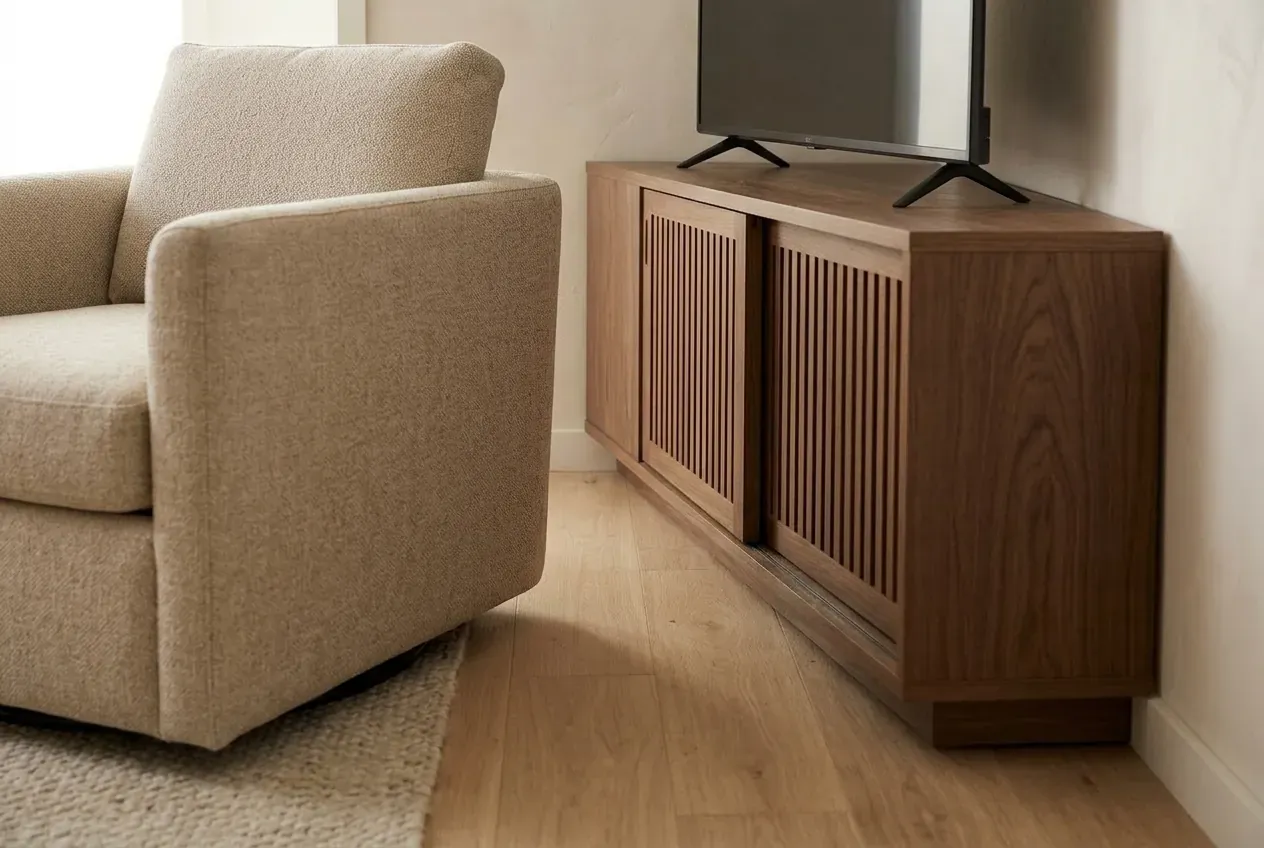 Close up: Maintain a 28 inch (71 cm) swivel radius and keep console depth under 18 inches (46 cm) along the diagonal wall.
Balance the angle
An angled unit looks lopsided if nothing answers it. Hang a tall vertical mirror or a slim plant ledge on the opposite wall to counter it. A warm low-wattage LED behind the TV softens contrast and can help reduce eye strain in the evening.
Finish and colour
Walnut or a warm wood reads well against pale walls, and a birch or oat textile on the sofa keeps the corner light. Matte black hardware and a dark lamp give a small anchor. Avoid shiny black finishes beside a screen, as they show reflections.
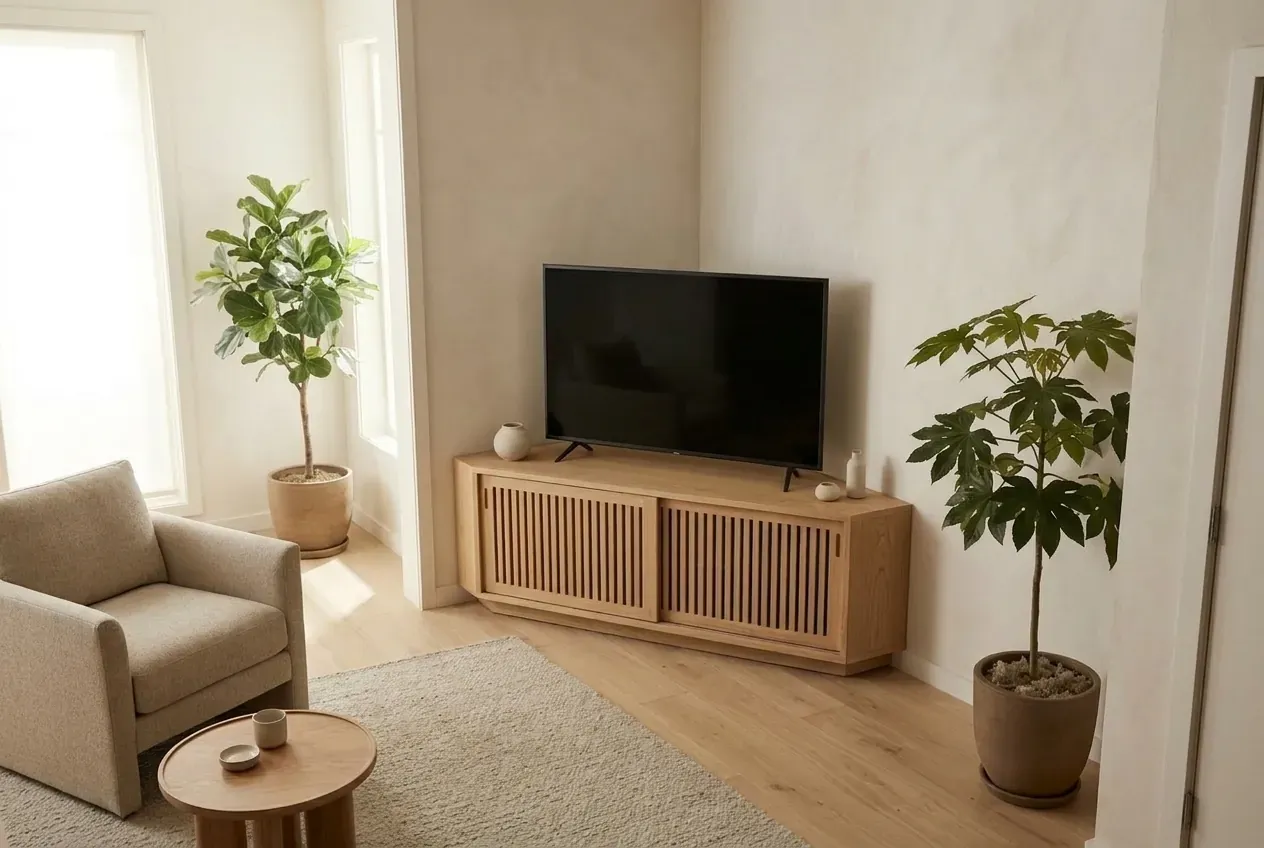 From above and to one side, the full footprint and the walkway read at a glance.
Common mistakes
- Buying a square cabinet and losing depth to the corner.
- Choosing a TV wider than the front diagonal.
- Sitting closer than the TV maker recommends.
- Blocking a door or radiator with the swing arc.
- Hiding hot equipment in a sealed cabinet.
Before you buy
- Measure the wall run both ways from the corner.
- Check the front diagonal width and the cabinet’s back angle.
- Confirm the TV’s size and the mount’s weight rating.
- Tape the diagonal and the 28 inch swing radius on the floor.
- Keep a 32 inch passage beside it.
- Plan the cable route and vents before you load it.
Curated Color Palette & Key Textures
- Alabaster #F5F2EB
- Warm Walnut #5C4A3A
- Sanded Birch #E2D7C3
- Cast Iron #1F1E1D
General references
Dimensions in these guides are typical planning ranges, not legal minimums, and they can differ by jurisdiction. Use the references below as starting points, then confirm local code and your lease before making changes.
FAQ
What size TV fits on a 45-degree corner media console?
A 43 to 50-inch TV fits comfortably on a corner console; screen edges should never overhang the front diagonal edge of the furniture by more than 1 inch.
How much wall space does a corner TV console require?
A standard apartment corner console requires 32 to 38 inches of continuous wall space extending symmetrically outward from the 90-degree corner apex.
How do you manage cables behind an angled corner TV unit?
Utilize the natural triangular cavity behind the console to install a surge protector and wrap power cords with a zippered braided fabric sleeve.
Save this idea

Keep reading
Related rooms
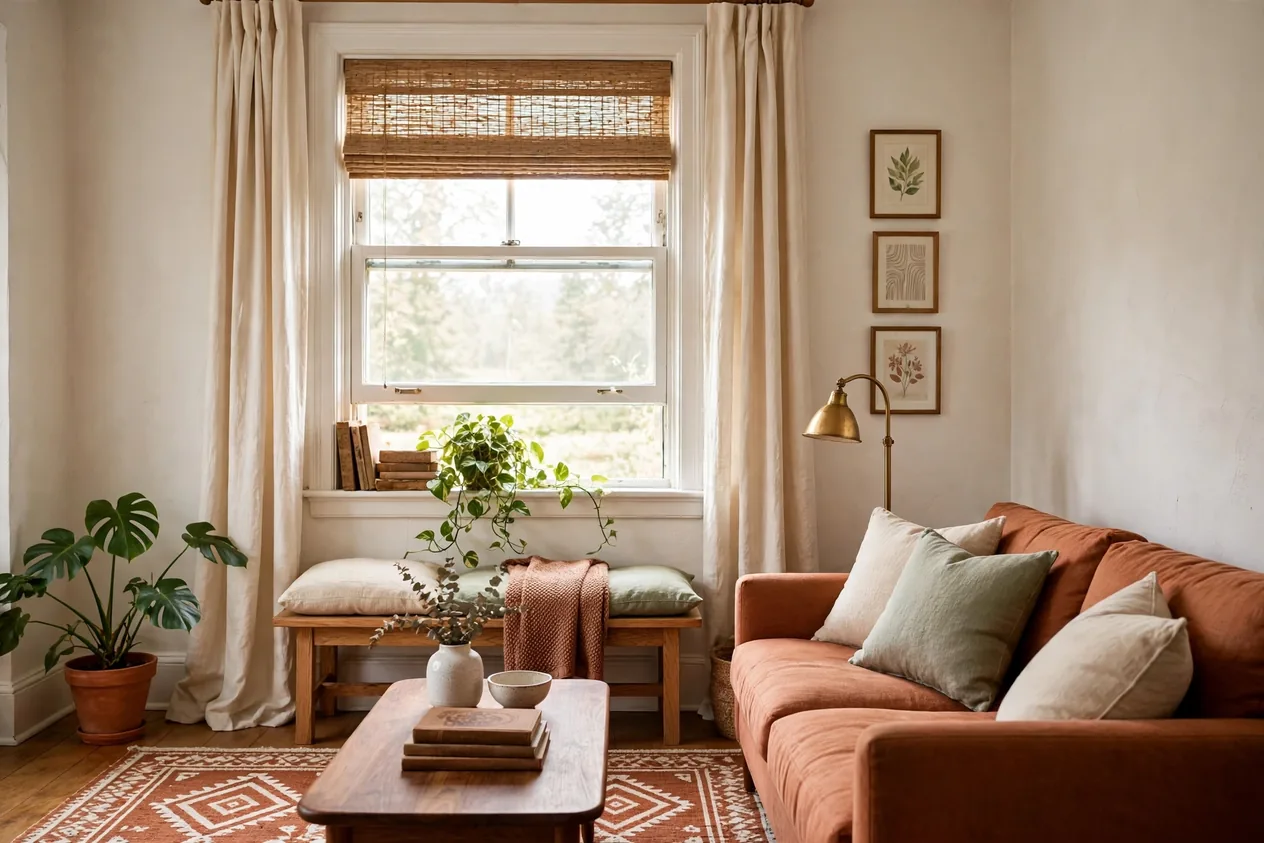
Standard Window Sizes: 24 x 36 to 48 x 72 in Chart
Standard window sizes in inches and cm: most run 24 to 48 in wide by 30 to 72 in high, and a bedroom window needs a 5.7 sq ft clear opening for egress.
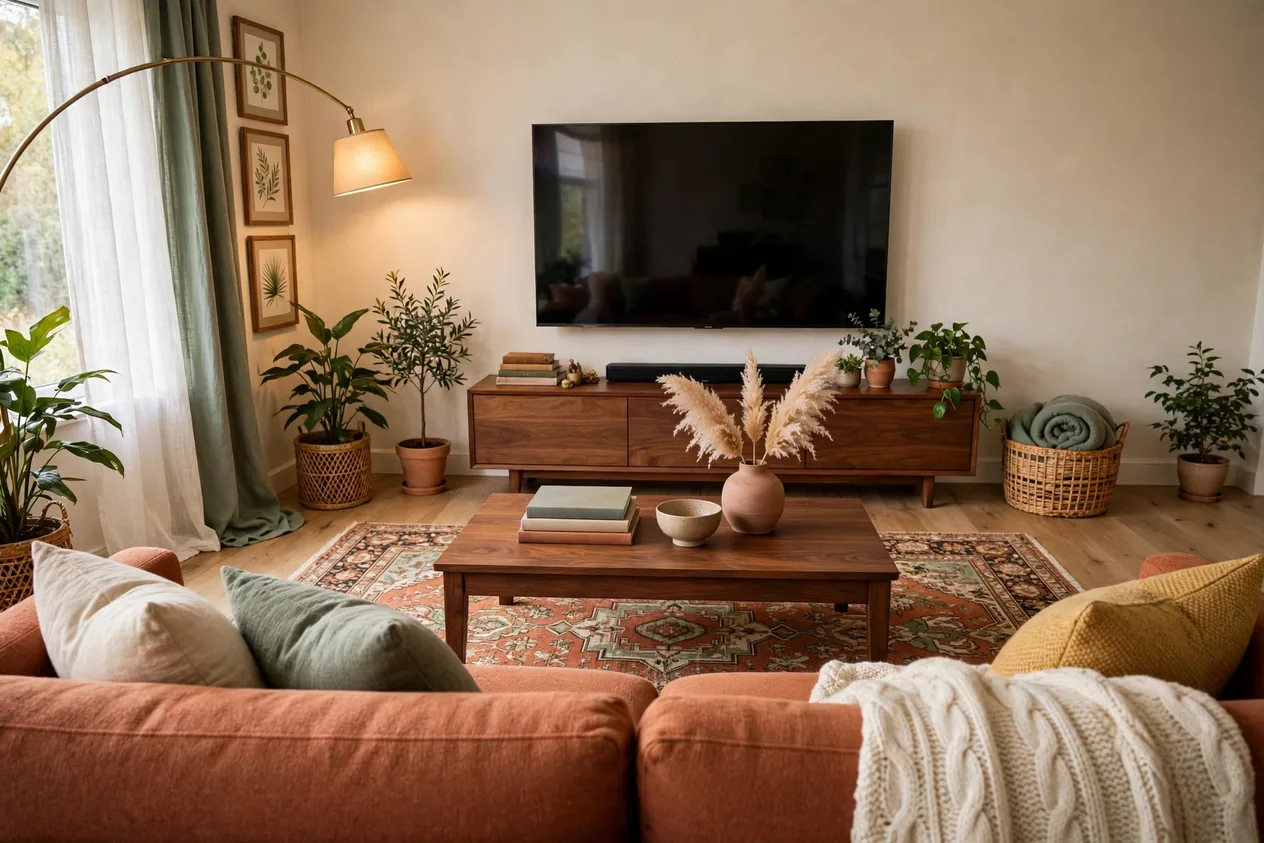
TV Dimensions by Screen Size: 65 in Is 56.7 x 31.9 in
TV dimensions by screen size in inches and cm: a 65 in TV is 56.7 x 31.9 in, a 55 in is 47.9 x 27.0 in, plus the viewing distance and stand width for each.
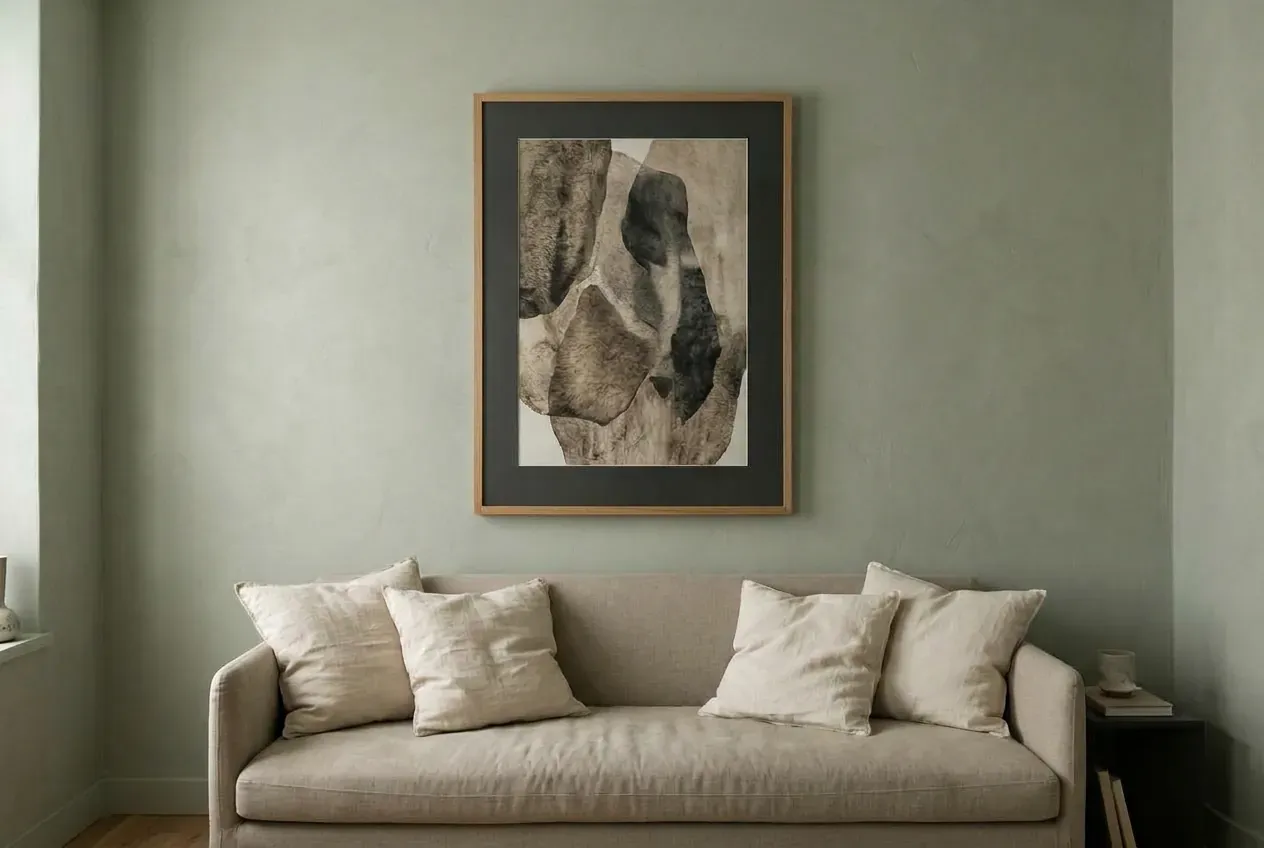
How High to Hang Pictures: 57 in (145 cm) Center
Hang pictures with the center 57 in (145 cm) up, the frame bottom 7 to 10 in (18 to 25 cm) above a sofa, and frames 2 to 3 in (5 to 8 cm) apart.