Calculator
Peel-and-Stick Wallpaper Calculator: Rolls Needed
Peel-and-stick wallpaper calculator: enter the wall, pattern match and your roll size to get the area, the extra to allow and how many rolls to buy.
Peel-and-stick wallpaper calculator
Enter the wall, the match type and your roll. It gives the wall area, the extra to allow and how many rolls to buy.
One wall: 40 sq ft (3.7 sq m). With a 15 to 20% allowance for the pattern, order 46 to 48 sq ft (4.3 to 4.5 sq m). A 20.5 in x 16.4 ft roll covers 28 sq ft, so buy 2 rolls. Roll width, length and repeat vary by product: check the label before you order.
The wall laid flat to scale. Each strip is one roll width, so the seams show where the panels meet.
What the calculator works out
Enter the room, choose one wall or all four, pick the pattern match, and type in the roll size from the product label. The calculator returns the wall area, the extra to order for the pattern, and the number of rolls to buy, in square feet and square metres.
With the starting values (a 5 x 7 ft (1.5 x 2.1 m) bathroom, one 8 ft (2.4 m) high wall, a straight-match pattern) the wall is 40 sq ft (3.7 sq m). A 15 to 20% allowance brings that to 46 to 48 sq ft (4.3 to 4.5 sq m), which is 2 rolls of 28 sq ft.
Where the roll size comes from
The guides do not give a standard roll length, so the calculator asks for it. The starting 20.5 in (52 cm) roll width follows the guides, which mark the first panel edge 20.5 in from the corner. The starting 16.4 ft (5 m) length is chosen so a roll covers about 28 sq ft (2.6 sq m), the roll in the bathroom wallpaper guide that will not cover a 40 sq ft wall. Replace both with the figures on your product page: roll width, roll length and repeat all vary.
How much extra to order
Pattern repeat is the vertical distance before the design repeats, and it decides how much you throw away. The calculator uses the guide’s allowances:
- No repeat or free match: about 10% extra.
- Straight match, 12 to 24 in (30 to 61 cm) repeat: about 15 to 20% extra.
- Drop match: about 20 to 25% extra, because every second drop is offset.
These are rules of thumb, so check the maker’s guidance. Grass cloth is different: add roughly 10% and buy every roll from one batch.
Areas and the cut-outs
One wall is its width times its height. Four walls are the perimeter times the height, less doors and windows. The calculator uses the same area model as the paint calculator, which counts a door as 18 sq ft (1.7 sq m) and a window as 15 sq ft (1.4 sq m). In a small bedroom the kids’ wallpaper guide says to subtract only large windows, so adjust the count to match your room.
FAQ
How much extra wallpaper should you order for pattern matching?
Order 15 to 20% extra square footage for a straight-match pattern to account for pattern repeat drops, edge trimming and seam alignment. With no repeat or a free match about 10% is enough, and a drop match needs about 20 to 25%.
How much wallpaper do you need for a small bathroom accent wall?
A single accent wall in a 5 x 7 ft (1.5 x 2.1 m) bathroom measures 40 to 60 sq ft (3.7 to 5.6 sq m). Add 15 to 20% for pattern repeat, which brings a 40 sq ft wall to roughly 48 sq ft.
How much does one roll of peel-and-stick wallpaper cover?
It depends on the product, and the guides do not set a standard. The bathroom guide uses a roll of around 28 sq ft as its example, which will not cover a 40 sq ft wall. Read the width and length on the label and enter them in the calculator.
How much wallpaper do I need for all four walls?
A full wrap in a small bathroom is about 140 to 180 sq ft (13 to 17 sq m) before the pattern allowance. The calculator subtracts doors and windows when you choose all four walls.
How much extra should I order for grass cloth?
Add roughly 10% extra and buy all rolls together from the same dye batch, because the weave varies between batches and a replacement roll ordered later can show a shade shift at the seam.
Guides that use these numbers
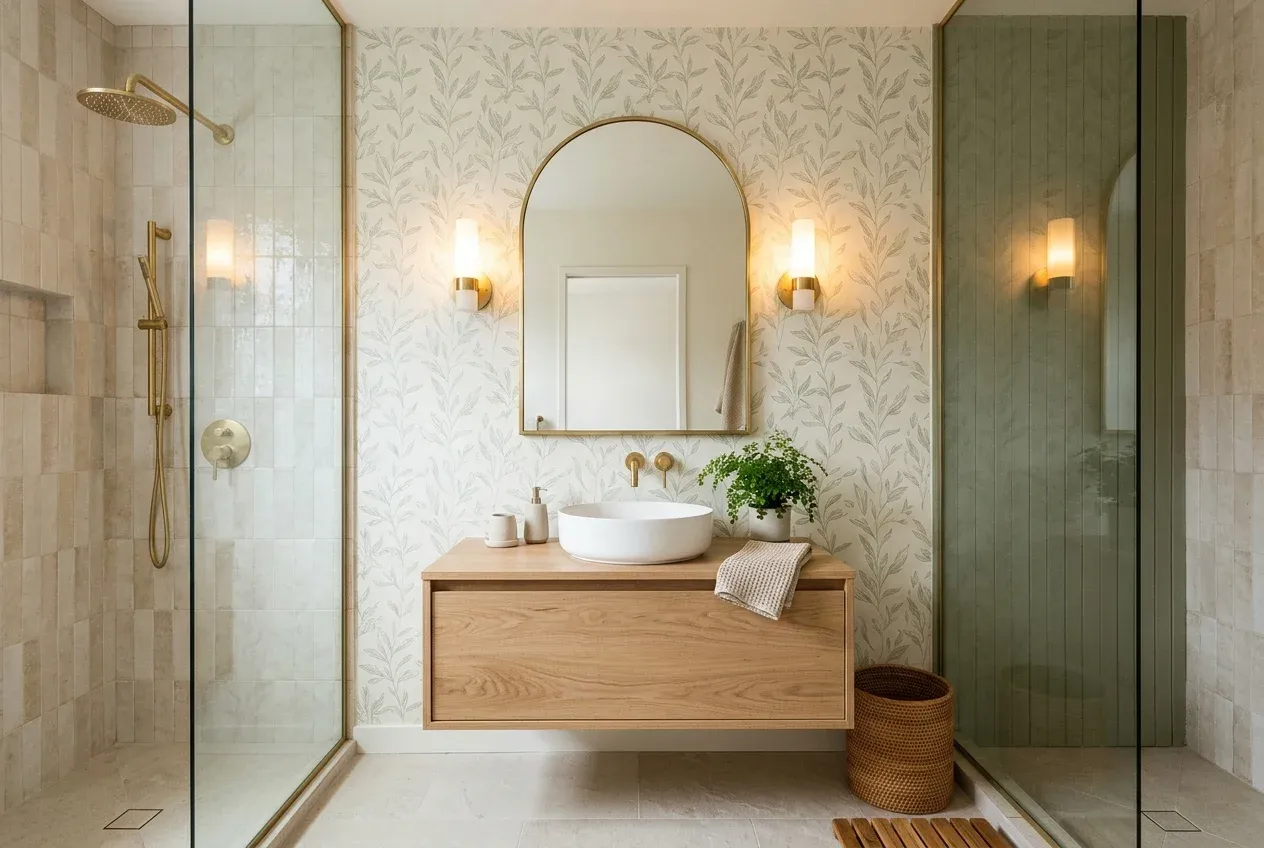
Renter-Friendly Bathroom Wallpaper: Moisture & Sizing Guide
Install renter-friendly bathroom wallpaper without peeling. Humidity prep, pattern repeat math, moisture ventilation, and damage-free move-out removal.
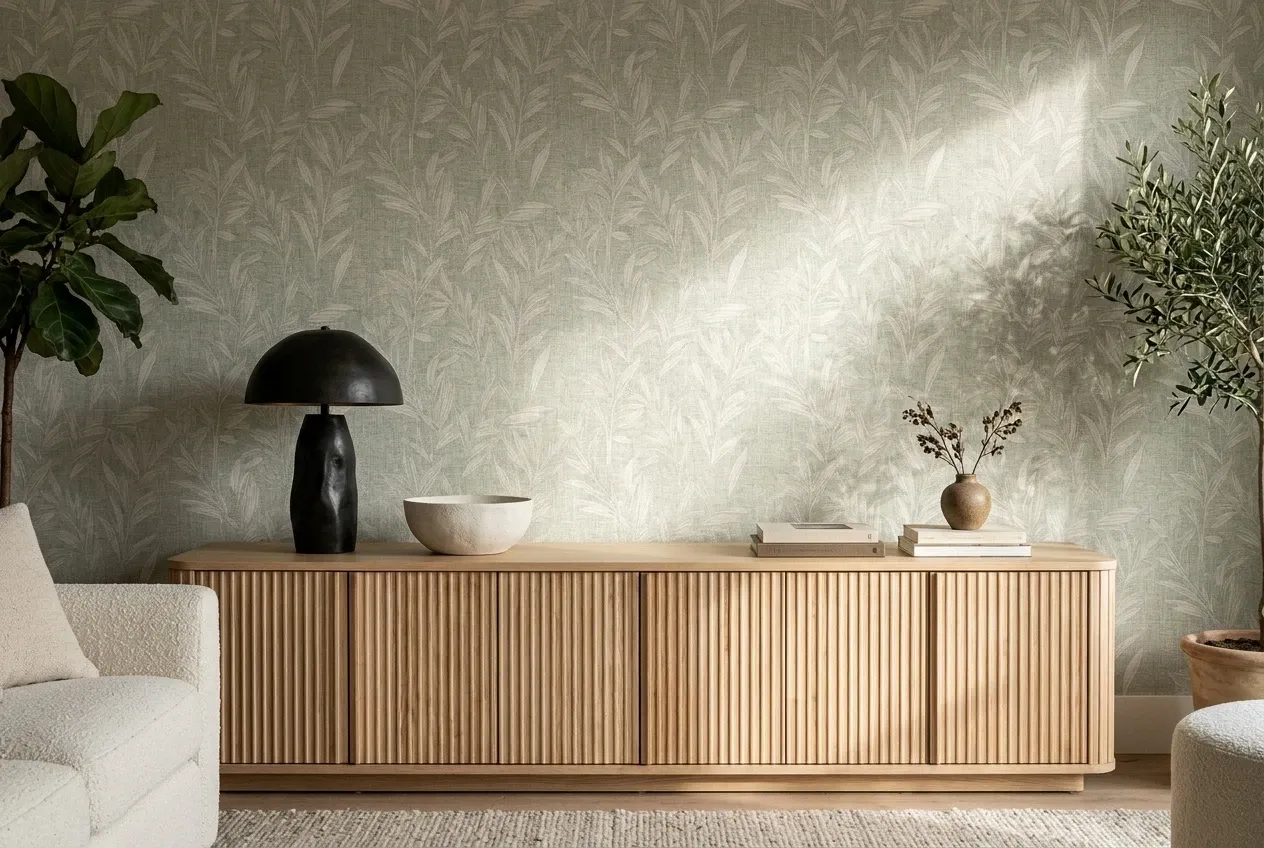
Renter-Friendly Wallpaper for Living Rooms: Install Guide
Peel and stick wallpaper for a rental living room: wall prep, plumb-line hanging, pattern matching, 15 to 20 percent extra for repeats, and clean removal.
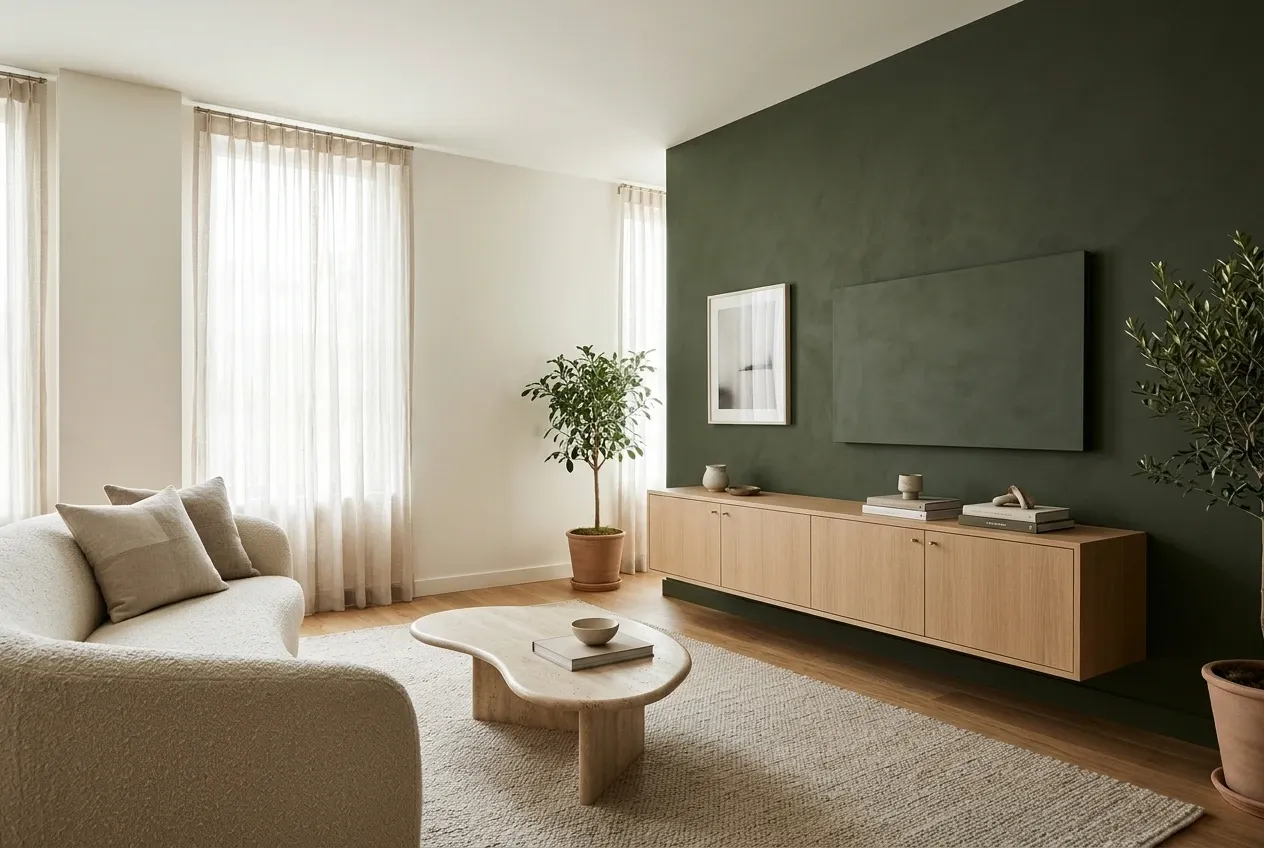
Renter-Friendly Accent Walls: Temporary Wallpaper vs. Paint
Compare temporary peel-and-stick wallpaper vs paint for rental accent walls. Cost breakdown, drywall damage risks, and clean move-out removal protocols.
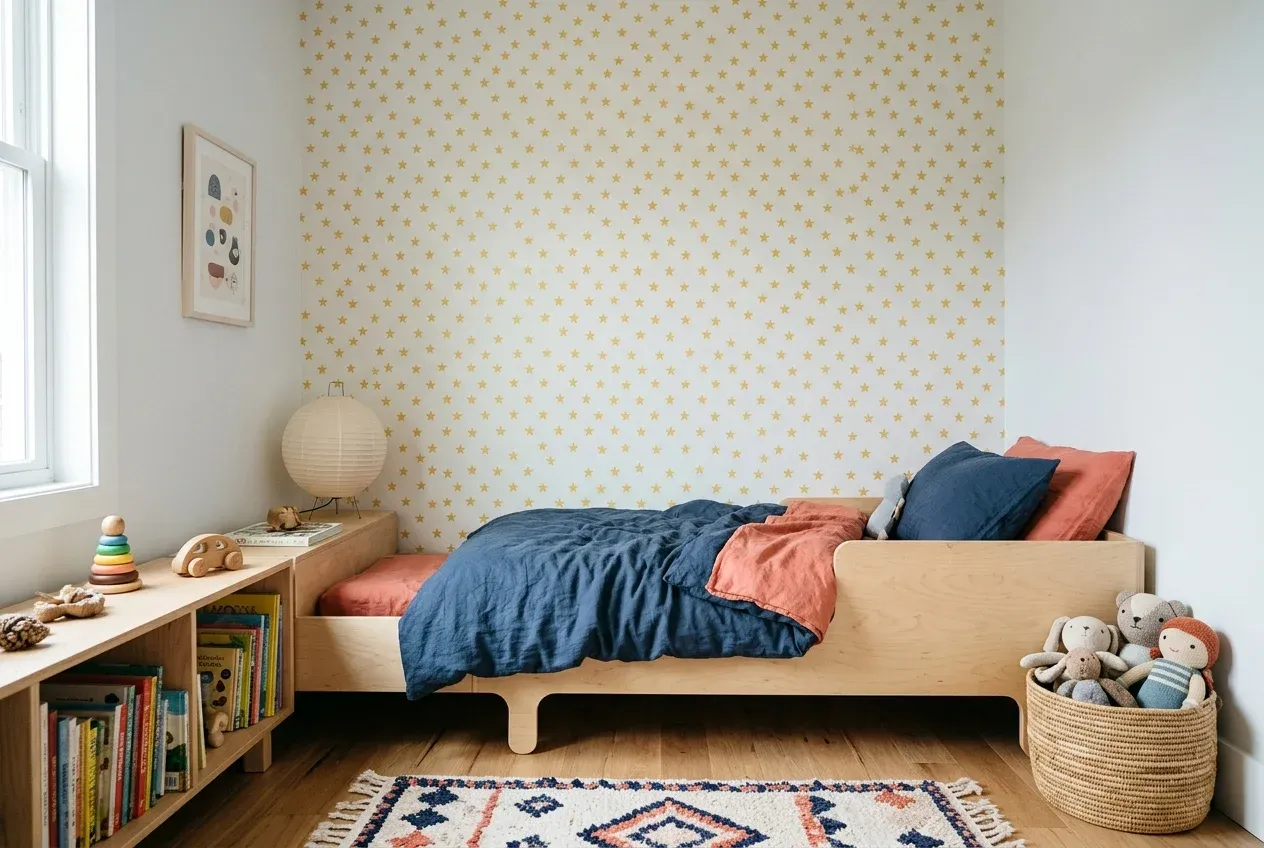
Wallpaper for a Small Kids' Room: Pattern and Scale
Wallpaper for a small kids' room: how to pick pattern scale, which wall to paper, wipe-clean finishes and a renter-safe way to remove it later.
Dark Moody Wallpaper: Small Room Styling Guide
Style dark moody black wallpaper in small rooms without shrinking the space. Chiaroscuro lighting, warm brass contrasts, and peel-and-stick renter rules.
Grass Cloth Wallpaper in Small Rooms and Rentals
Removable grasscloth wallpaper for renters: the peel-and-stick look for small rooms, how the natural weave hides seams, on a 9 ft (2.7 m) wall.
More tools
- Curtain Size Calculator: Rod, Length and Fullness Curtain size calculator: enter your window, rod and fabric to get rod height, panel length, rod width, fullness and panel count in inches and cm.
- Room Measurement Worksheet: Printable Measure Sheet Printable room measurement worksheet: record the room, windows, doors, bed, counter and wall once, then use each number in the calculators.
- Rug Size Calculator: Rug Size Under a Bed Rug size calculator: pick your bed and a standard rug to see how many inches show at each side and past the foot, with the long edge across the bed.
- Clearance Cheat Sheet: Printable One-Page Guide Printable one-page clearance cheat sheet: stool heights, aisles, walkways, rug rules and door swing in inches and cm, each linked to its guide.
- Vanity Clearance Calculator: Floor and Counter Space Vanity clearance calculator: enter the room depth and a 30 or 42 in vanity to see clear floor in front, counter each side and the gap to the toilet.
- Bar Stool Height Calculator: Seat Height by Counter Bar stool height calculator: enter your counter, bar or table height to get the seat height range, with a check on the stool you are considering.
- All tools and calculators