How High to Hang Curtain Rods: 4 to 6 in Above the Frame
How high to hang curtain rods: 4 to 6 in (10 to 15 cm) above the window frame, 4 to 10 in past each side. Ceiling-line and no-drill options too.

Room specifications
- Room ScaleSmall apartment bedroom (about 10 x 11 ft)
- Design StyleWarm Minimalist / Japandi
- Budget TierBudget ($)
- Palette Swatches4 colors
Mount the rod 4 to 6 in (10 to 15 cm) above the window frame, extend it 4 to 10 in past each side, and choose a mount that suits your lease. If you can drill, use brackets with anchors or studs. If you cannot, use an inside-mount tension rod or an adhesive or clip-on bracket, and stay well inside its printed weight rating.
Hanging a curtain flush against the frame is one of the most common small-apartment mistakes. The folded fabric covers a third of the glass, blocks daylight and makes an 8 ft ceiling feel lower. A higher, wider rod makes the window look bigger and keeps the sightlines open. It also helps if the bed sits below the glass; see the bed under a window layout.
Where the rod goes
| Dimension | Minimum | Better target |
|---|---|---|
| Above the window trim | 4 in (10 cm) | 6 to 8 in (15 to 20 cm), or halfway to the ceiling |
| Below the ceiling | 2 in (5 cm) | 2 to 3 in (5 to 8 cm) |
| Past the frame, each side | 3 to 4 in (8 to 10 cm) | 6 to 10 in (15 to 25 cm) |
| Hem above the floor | Touching | About 1/2 in (1.3 cm) |
| Centre support | Over 60 in (152 cm) wide | Every 48 to 60 in |
These assume standard drywall installs. Allow for fabric shrinking before you hem custom panels. For panel widths and lengths to match the rod, use the standard curtain sizes chart.
The wider extension has a simple reason. Parked curtains need room to stack. Divide the total fabric width by 3 to estimate how much wall the open curtain covers. Panels spanning 80 in need about 13 in of clear wall each side to avoid covering glass. A rod extending 6 to 10 in beyond the casing, plus panels that overlap the wall, keeps the window clear.
For the idea of covering most of the sky with fabric, how much you stack back also affects light. See the blackout curtain guide for fullness and overlap, and the curtain colour guide for tone.
 The same room seen from the opposite end, so you can judge the layout from the far side.
Which mount for which window
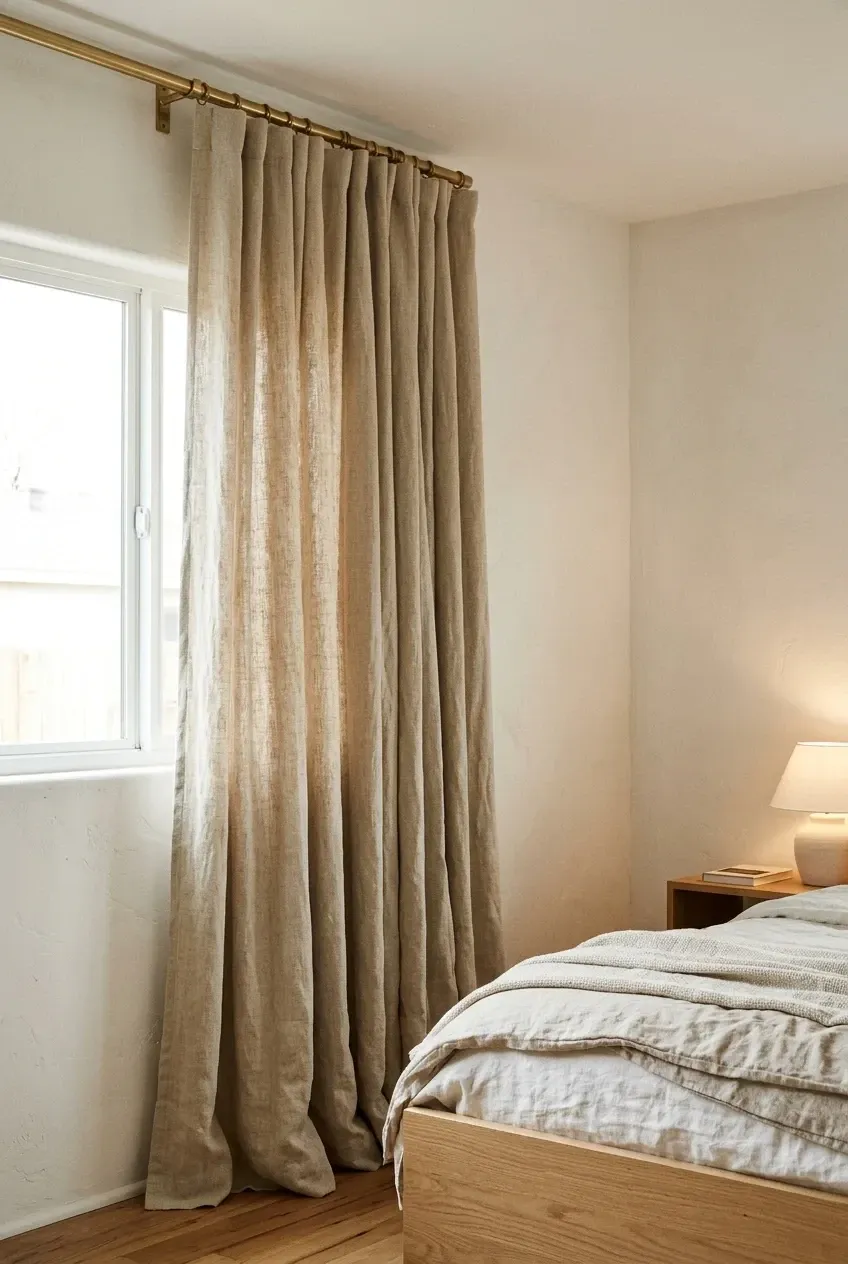
Outside mount, ceiling-line. Best for a bedroom with 8 ft ceilings and a small low window. A slim 1 in rod about 2 to 3 in below the ceiling, extending 8 in each side, with panels hovering about half an inch above the floor. It visually lifts the window.
Inside mount with a tension rod. Best for deep window recesses with no wall space. A spring tension rod fits inside the jamb, with lightweight sheer or café curtains.
Over-trim clamp or clip bracket. Best for renters who cannot make holes. Steel brackets lock onto the top lip of wooden casing. This needs sturdy wooden trim.
Hanging a rod without drilling
For the full sizing and weight guide, see our no-drill curtain rods size guide for renters.
No-drill hardware still has a physical limit, and curtain fabric is heavier than it looks. A single lined blackout panel can weigh a few pounds, so weigh your panels on a kitchen scale before you hang anything.
| Rod type | Where it mounts | Typical use | Caution |
|---|---|---|---|
| Spring tension rod | Inside the jamb | Sheers and linen | Slips if the frame is oily; check the maker’s rating |
| Heavy-duty twist rod | Inside the jamb | Medium liners and cotton drapes | Needs a flat jamb of about 1.5 in |
| Adhesive bracket | Drywall above the frame | Outside mounts | Weakens with heat and humidity |
| Clip-on frame bracket | Top lip of trim | Outside mounts without glue | Needs sturdy wooden trim |
The numbers printed on the pack are the rule. Keep the load well below them (a margin of around a quarter is a sensible habit) because adhesive and tension holds weaken with heat and time.
Steps for a no-drill rod
- Clean the surface. Wipe the jamb or the wall above the frame with isopropyl alcohol and let it dry. Oil, dust and cooking film are the main reason rods slip.
- Inside mount. Extend the rod 1 to 2 in (2.5 to 5 cm) wider than the opening, seat both rubber ends against the jamb, and hold each end for about 10 seconds. Set it 1 in back from the front of the frame so fabric clears the glass.
- Outside mount. Mark 4 in above the trim at both ends, and extend the rod 3 to 6 in past the frame.
- Level it. Use a spirit level, or measure from the ceiling at both ends. A rod a quarter inch out of level shows once heavy panels hang.
- Cure, then test. Press adhesive brackets firmly and let them cure for the maker’s stated time before hanging fabric. Pull a tension rod gently downward before loading it.
Apply adhesive only to smooth, well-primed paint. Over flaking paint it takes the paint with it. At move-out, warm the bracket with a hair dryer and pull slowly, parallel to the wall.
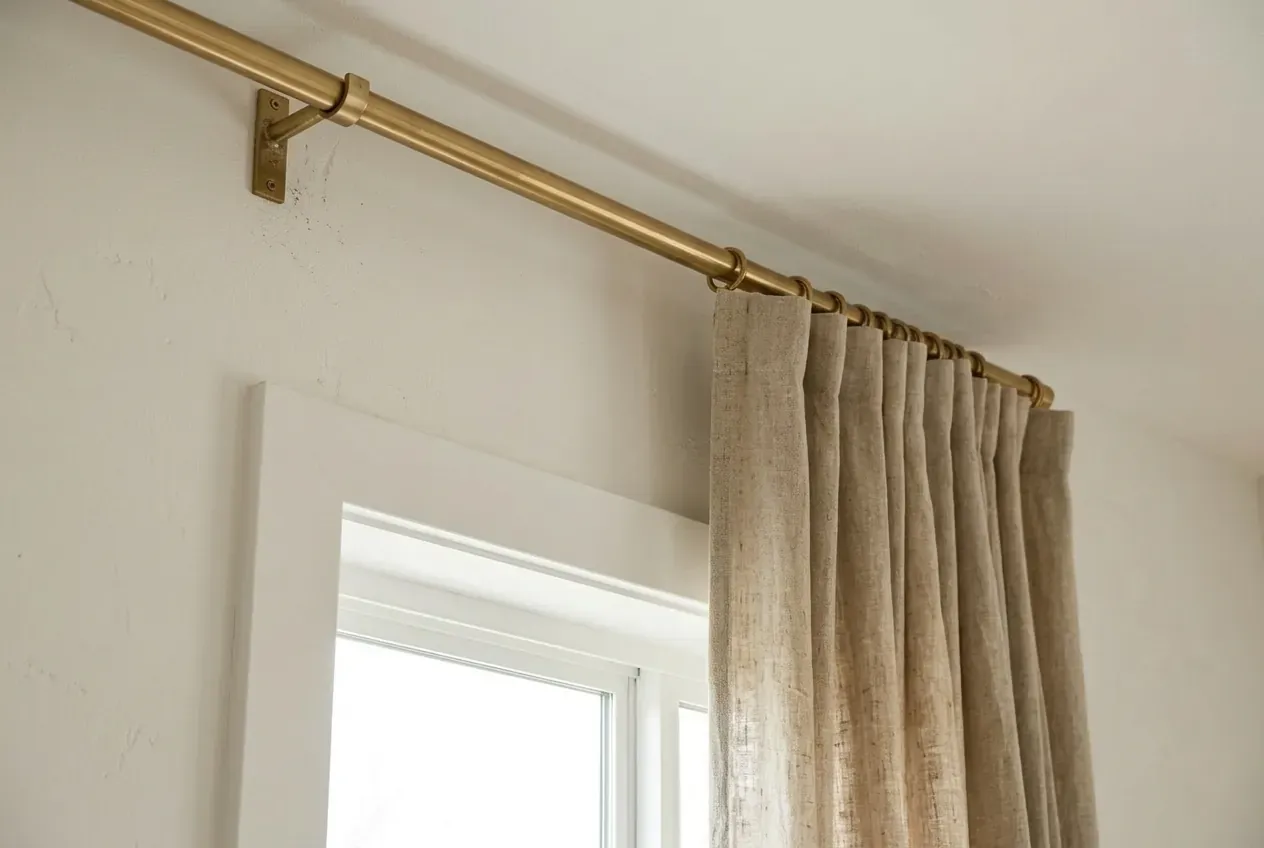 Close up: Mount curtain rods 4 to 6 in (10.2-15.2 cm) above the window frame to maximize perceived ceiling height.
If you can drill
On hollow drywall, use metal toggle bolts rather than plastic cone anchors, and choose a bolt whose printed capacity exceeds the rod plus curtain weight. Better still, find a stud. Mark bracket baselines with a pencil and level, and add a centre bracket on spans over 60 in so the rod does not sag.
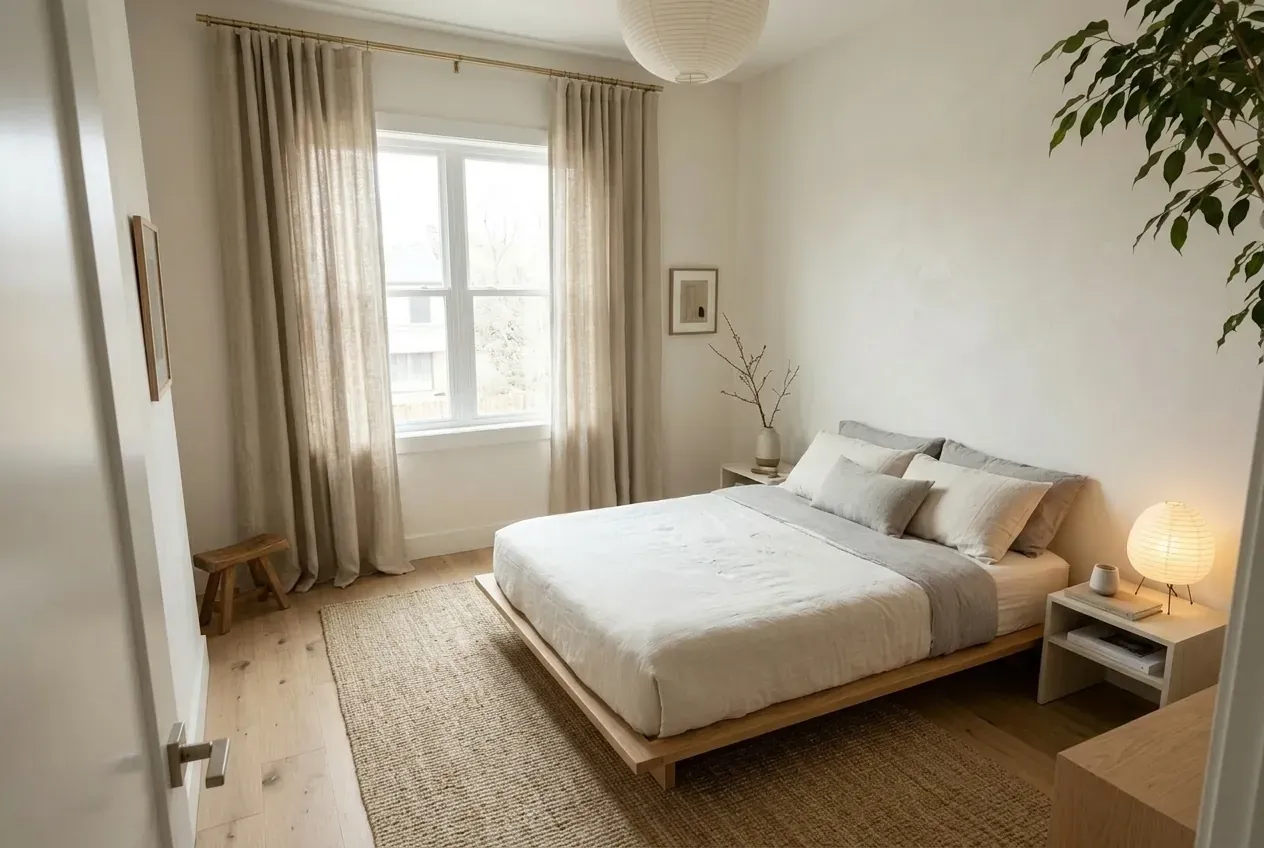 From above and to one side, the full footprint and the walkway read at a glance.
Heat and safety
- Never let fabric touch an electric baseboard heater or steam radiator. Keep curtains clear of heat sources and follow the heater’s manual.
- Keep cords from continuous-loop blinds out of reach of children and pets, secured with safety clips.
- Check your lease before adding any hardware.
For a full-height glass wall, the floor-to-ceiling windows guide covers ceiling-fixed tracks, and the Japandi bedroom palettes give colour ideas for linen drapes.
Before you buy or drill
- Measure the window width including trim, and the distance to the ceiling.
- Decide whether you may drill.
- Weigh your panels and check them against the rod or bracket rating.
- Mark the rod height 4 to 6 in above the trim and the sides 6 to 10 in out.
- Check for radiators and heaters under the window.
- Level the rod and test it before the fabric goes on.
Curated Color Palette & Key Textures
- Alabaster Chalk #F5F2EB
- Oat Linen #D9CDB8
- Warm Brass #B8935A
- Charcoal Ink #2F3135
General references
Dimensions in these guides are typical planning ranges, not legal minimums, and they can differ by jurisdiction. Use the references below as starting points, then confirm local code and your lease before making changes.
FAQ
How high above a window should you hang a curtain rod?
Mount the curtain rod 4 to 6 inches (10.2 to 15.2 cm) above the top of the window trim, or halfway between the casing and ceiling, to draw the eye upward.
How far should curtain rods extend past the sides of a window?
Extend an outside-mount rod 4 to 10 inches (10 to 25 cm) beyond the frame on each side so open curtains clear the glass. An inside-mount tension rod must match the opening width, extended 1 to 2 inches (2.5 to 5 cm) to grip the jamb.
How do you install curtain rods in a rental apartment without drilling?
Clean the surface with isopropyl alcohol, then use a spring tension rod inside the jamb, or an adhesive or clip-on bracket above the trim. Check the printed rating on the product and keep the curtain well inside it, since adhesive and tension holds weaken with heat and time.
Do adhesive curtain rod brackets damage rental paint?
They are generally fine on smooth, well-primed painted drywall if removed slowly with a hair dryer, but they can pull paint off flaking or poorly primed walls.
How do you stop a tension rod from slipping?
Wipe the jamb clean and dry, extend the rod slightly wider than the opening so both rubber ends press firmly, and keep the curtain weight well under the rod's rating.
Should curtain rods be hung near the ceiling?
Yes, when the ceiling is about 8 ft (244 cm). A slim rod 2 to 3 in (5 to 8 cm) below the ceiling, extending 8 in each side, visually lifts the window, with panels about half an inch above the floor.
Save this idea

Keep reading
Related rooms

Bunk Bed Dimensions: 5 Sizes, Clearances & Safety Gaps
A twin bunk is 77 x 41 in (196 x 104 cm) and about 62 in tall: all 5 standard sizes, the 5 in guardrail rule, deck spacing and the ceiling check.

Standard Bed Sizes: Queen 60 x 80 in (152 x 203 cm)
Standard bed sizes in inches and cm: a double (full) is 54 x 75 in, a queen 60 x 80, a king 76 x 80, a California king 72 x 84, plus the room each needs.
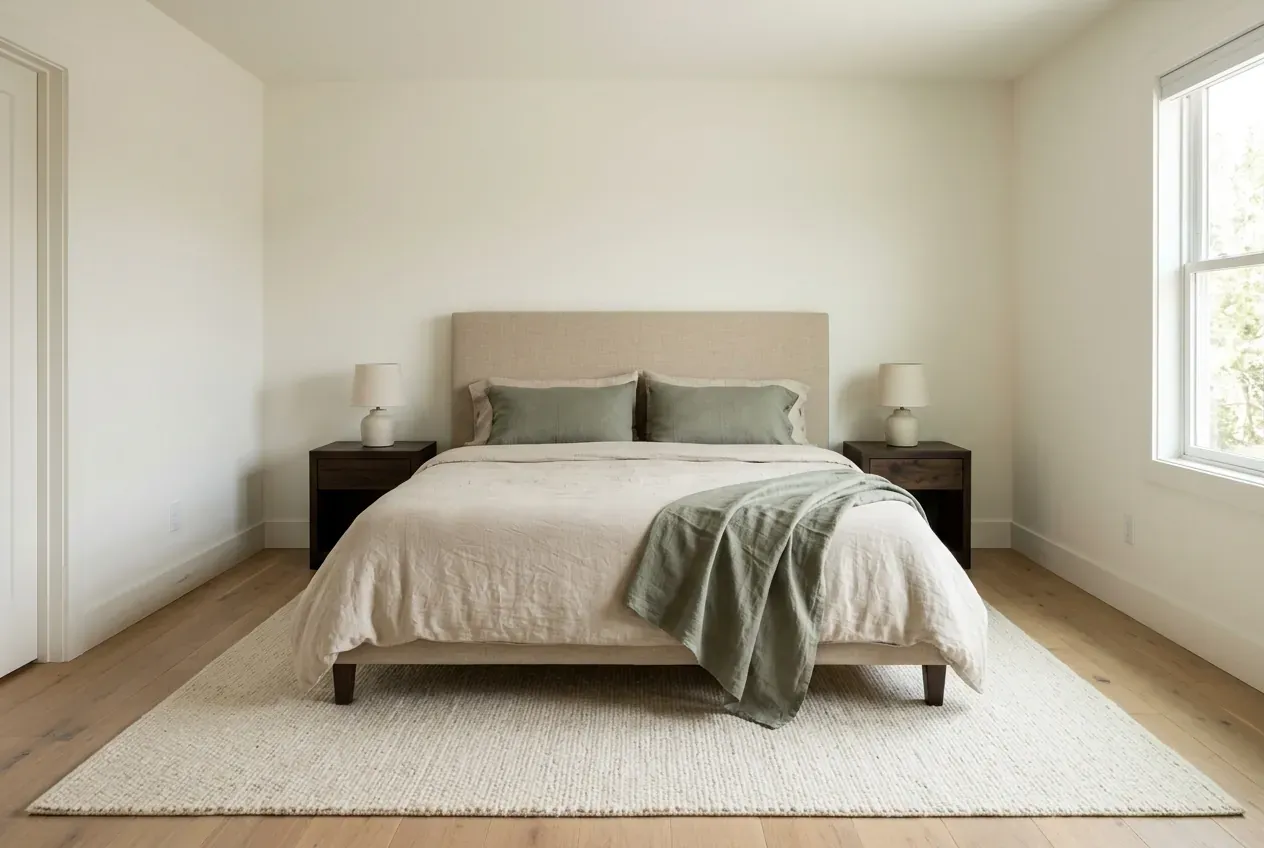
Rug Size for a King Bed: 8x10 Shows 22 in Each Side
Rug size for a king bed: an 8x10 ft rug shows 22 in (56 cm) each side and 43 in past the foot; a 9x12 shows 34 in. See the maths, a chart and a calculator.