How to Choose Curtain Color for a Small Window
How to choose curtain color for a small window: the low-contrast rule, how wall and floor tone decide the shade, and the fabric weight that keeps it soft.
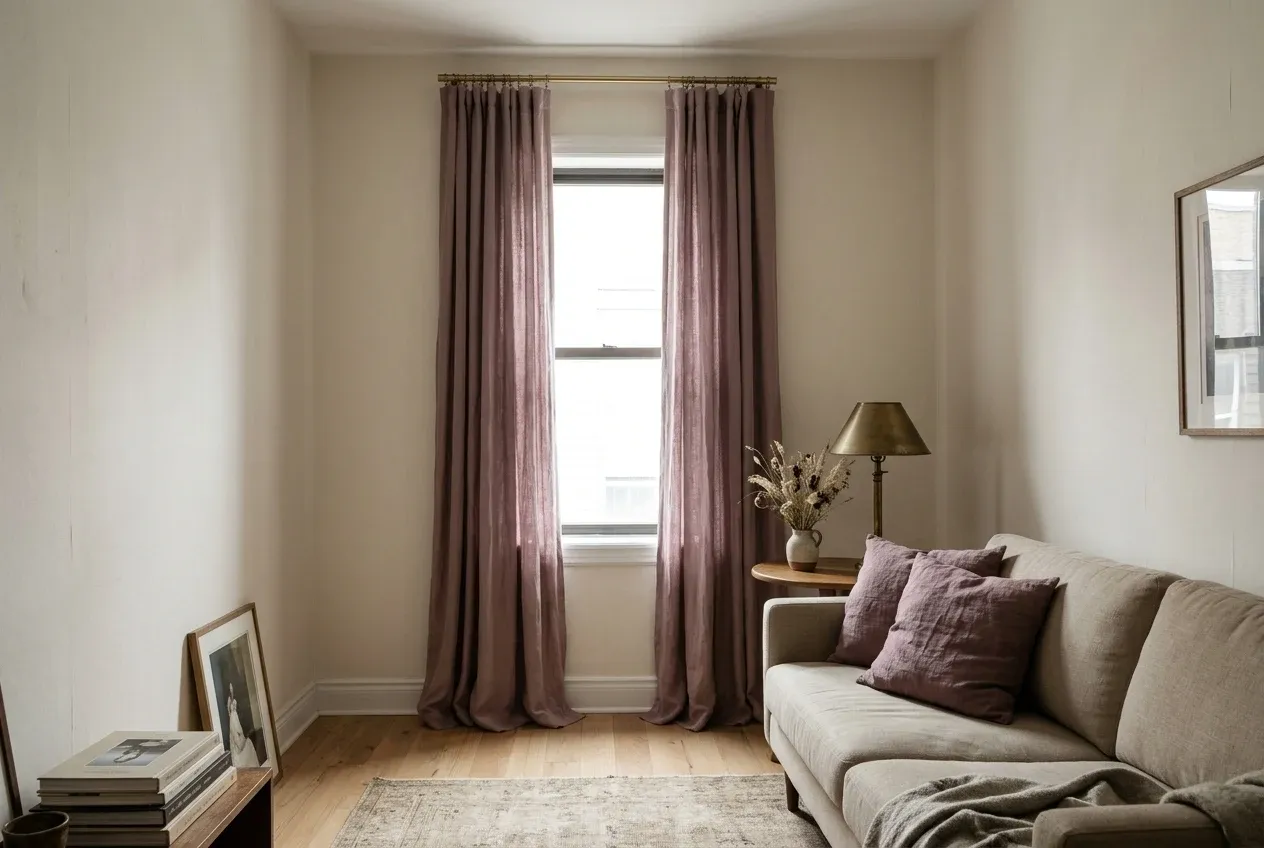
Room specifications
- Room ScaleSmall living room (about 10 x 12 ft) with one narrow window
- Design StyleMoody Romantic / Soft Eclectic
- Budget TierBudget ($)
- Palette Swatches4 colors
For a small window, choose a curtain colour within one or two shades of the wall. That blends the panel into the room, lets the window read taller and calmer, and avoids chopping the wall into blocks. Save strong colour for cushions or a lamp, not for the curtain.
Curtain colour here is a contrast problem more than a taste problem. In a 10 x 12 ft living room with one narrow window, the fabric covers nearly as much wall as a piece of furniture. Standing across the room, your eye sees the change between wall paint and fabric first, so the relationship between the two matters most. For wall colour itself, see the paint colour guide.
Pairing the curtain with the wall
- Match or nearly match. A curtain within one shade of an ivory wall blends into the perimeter and removes the hard stop at the window casing.
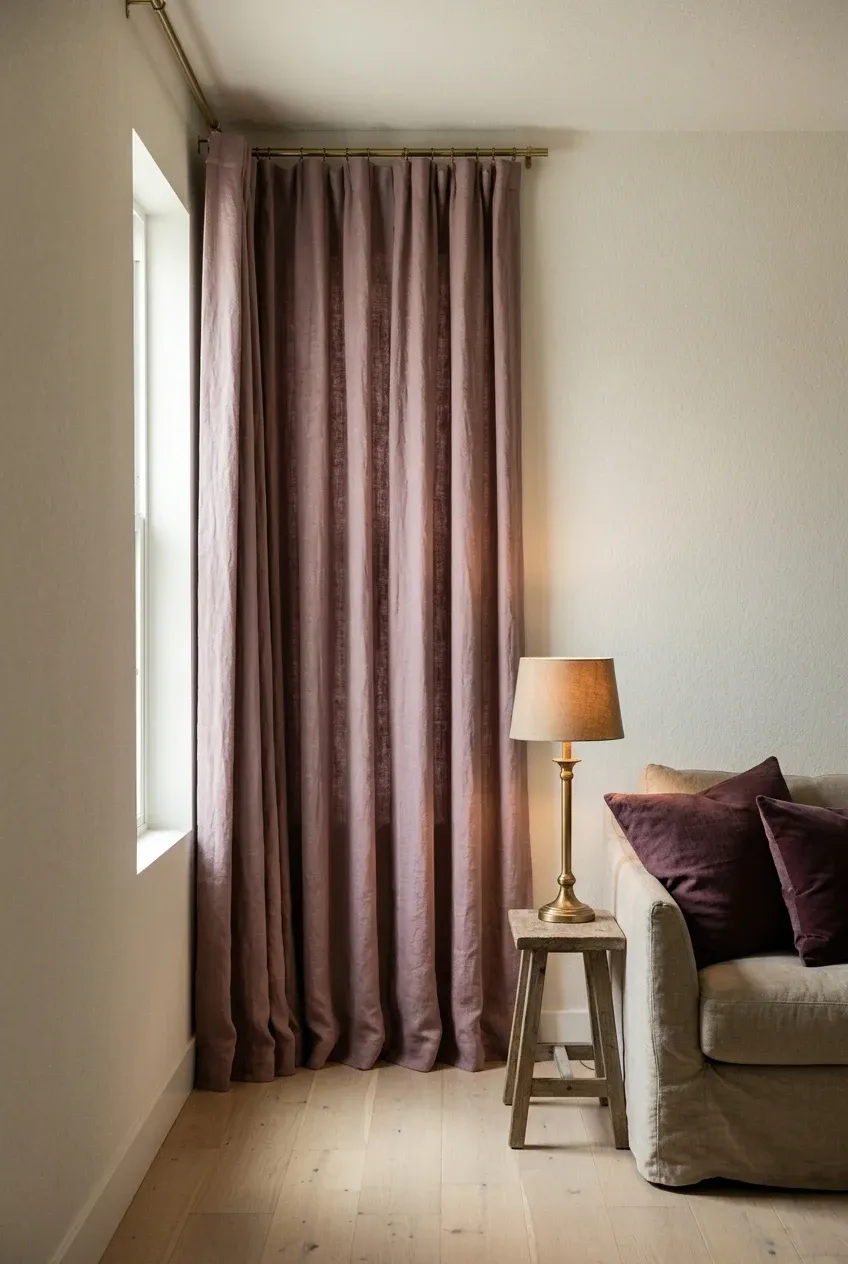
- Step one or two tones deeper. Moving from ivory toward a dusty plum or a warm clay adds depth without a harsh edge.
- Go for contrast on purpose. A deep plum against a pale wall turns the window into the focal point. It works best when you repeat the dark tone on at least two sofa cushions or a throw, so it does not look random.
If you rent and cannot repaint, a curtain that nearly matches the wall is the cheapest way to make a window feel part of the room. Once you have the colour, the standard curtain sizes chart helps you size the panel.
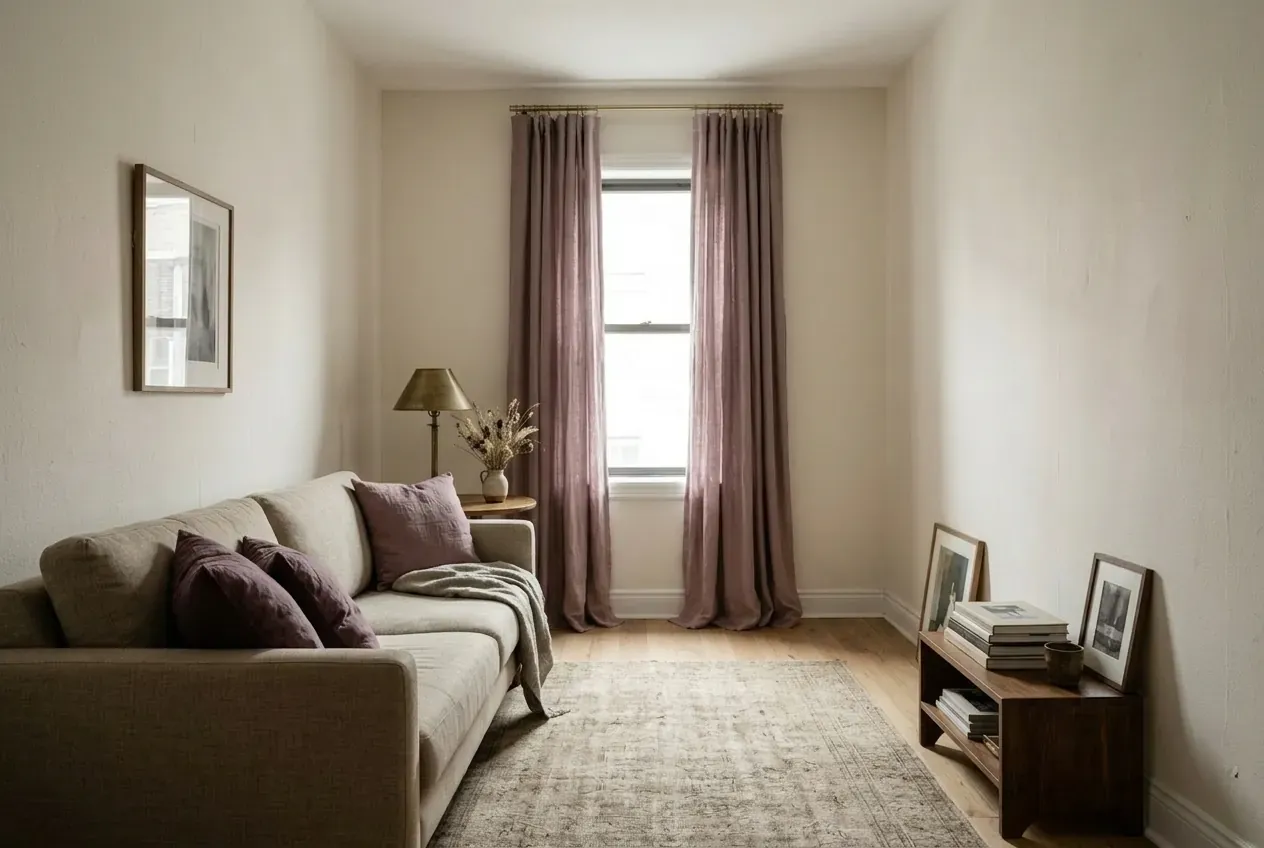 The same room seen from the opposite end, so you can judge the layout from the far side.
Why strong contrast backfires on a narrow window
Dark charcoal panels beside bright white trim draw two vertical exclamation marks either side of a small window and make the wall look narrower. Keep the main panel within two tonal steps of the wall, and put your sharpest accent in a small, movable object, such as an antique gold lamp base or a slim brass rod, where it adds warmth without cutting the wall.
If you want deeper colour, pair soft dusty plum panels with one dark plum cushion on the sofa facing the window. Echo the curtain colour at least twice around the room, perhaps once on a cushion and once in a ceramic vessel or book spine, so the window feels tied to the seating rather than floating.
Fabric weight changes how colour looks
A swatch on a paint card behaves differently once light passes through cloth.
- Sheer linen or voile lets daylight through the weave and lightens the colour, softening shadows in a tight corner.
- Unlined cotton or linen blend holds its colour in indirect light and still glows at the edges.
- Lined blackout panels block light and keep a deep colour rich, even in afternoon sun. For light control, see the blackout curtains guide.
| Wall tone | Curtain tone to try | Result |
|---|---|---|
| Warm white | Oat or cream, one shade deeper | Soft frame |
| Cool grey | Blue-grey or mist | Calm and even |
| Deep accent wall | Match the wall exactly | Window fades into the wall |
| Dark room | Light warm panel | Bounces daylight |
| Pale rental wall | White sheer plus a lined panel | Layered light control |
Lightweight linen stacks into a slim bundle beside the glass, while lined blackout fabric needs more wall beside the window, so allow extra rod length if you choose it. Roughly 8 to 10 inches per side is a common starting point; compare against the product’s fullness.
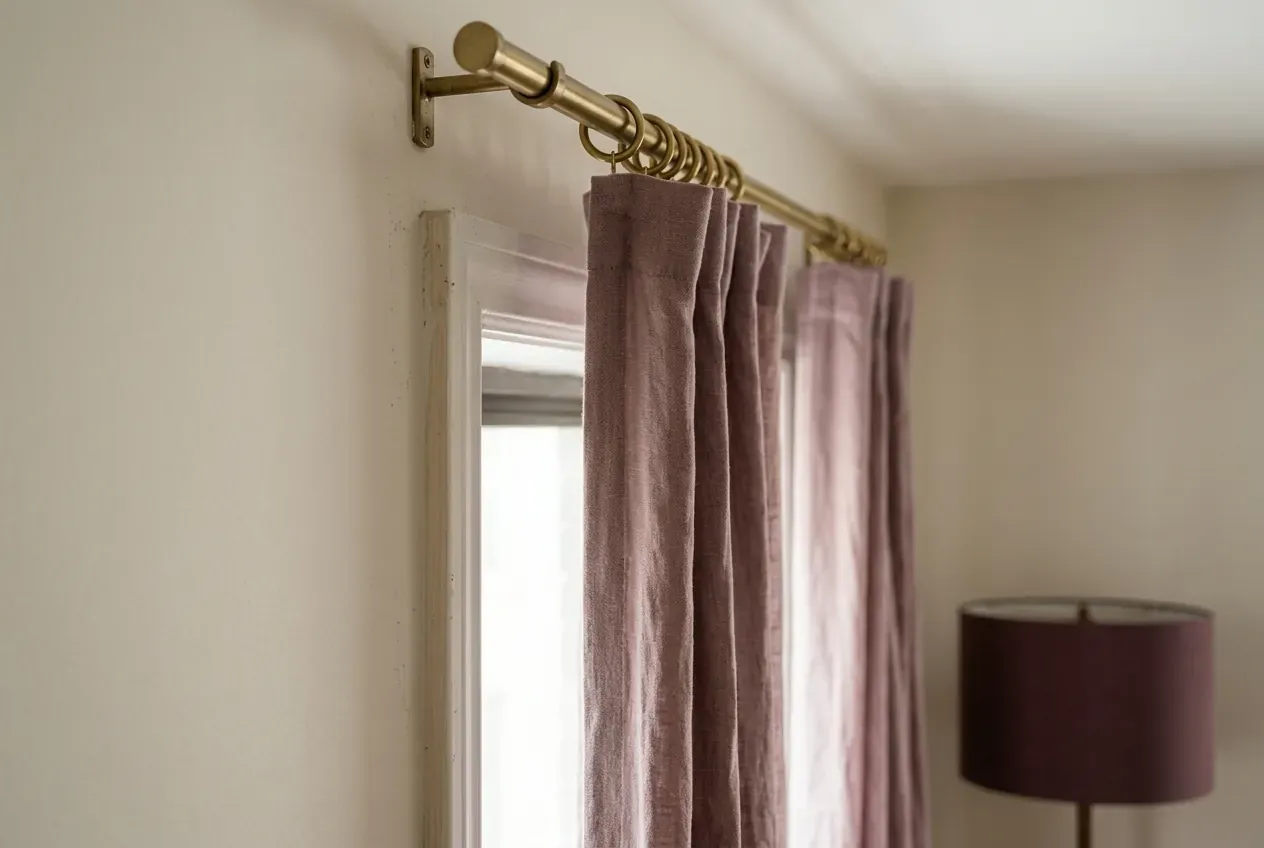 Close up: Hang curtains from 4 in (10 cm) above the frame to the floor so the panel adds height, not width, to a narrow window.
Hanging height affects the colour too
A good shade looks awkward if the hem stops at the sill. Short panels cut the wall at eye level and make any colour look stunted. Hang the rod about 4 inches above the trim, or about 2 inches below the ceiling if the trim sits high, extend it 6 to 8 inches past the casing on each side, and let the hem just clear the floor. Fabric then stacks on the wall rather than covering glass, so even a 30 inch window keeps its daylight.
For measurements, see the curtain rod height and spacing guide, or the no-drill rod guide if you cannot drill. If your window is short, the short curtains guide explains when to stop at the sill.
Test before you commit
- Order a fabric swatch, or hold a sample against the wall.
- Look at it in morning light, midday and with lamps on in the evening.
- Hang it for a day if the retailer allows returns.
- Walk to the doorway and check whether the window looks bigger or smaller.
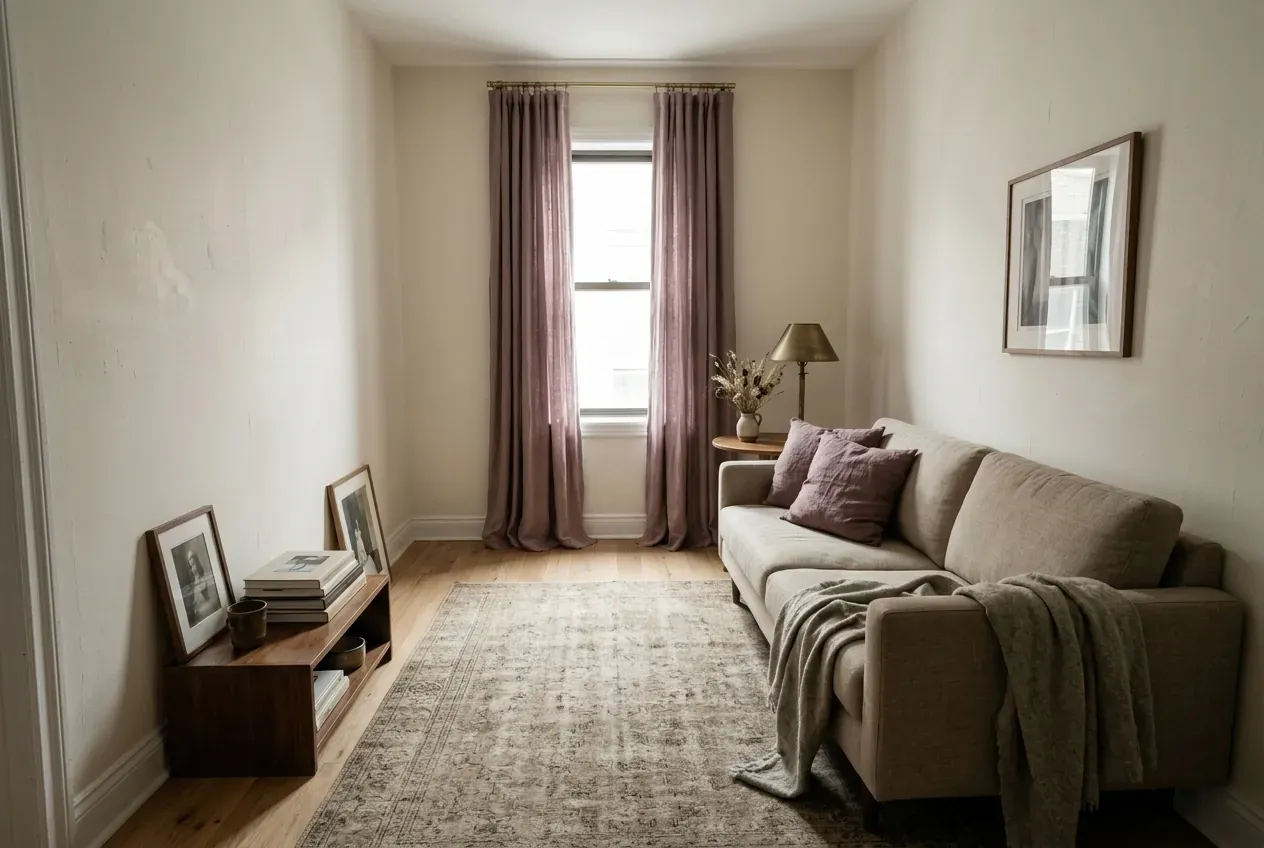 From above and to one side, the full footprint and the walkway read at a glance.
Common mistakes
- Choosing a dark panel next to bright white trim.
- Hanging the rod at the top of the casing, so the window looks short.
- Ordering panels too narrow, so the colour looks pale and flat.
- Forgetting the colour changes behind the sheer layer.
Before you buy
- Name your wall colour and compare swatches against it.
- Stay within two shades unless you want a focal point.
- Repeat the curtain colour in two other places.
- Choose fabric weight for the light you need.
- Hang the rod high and wide, with a floor-length hem.
- Check the colour in morning and evening light.
Curated Color Palette & Key Textures
- Ivory Paper #F3EFE8
- Dusty Plum #C9A7B0
- Deep Plum #6E4A5C
- Antique Gold #B98A5E
General references
Dimensions in these guides are typical planning ranges, not legal minimums, and they can differ by jurisdiction. Use the references below as starting points, then confirm local code and your lease before making changes.
FAQ
How do I choose curtain color for a small room?
Start with your wall color and stay within one to two shades of it for the main panel. Soft, muted tones like dusty plum or warm ivory expand the wall visually, while a single darker cushion ties the room together.
Should curtains match the wall color?
Matching the wall color is the safest way to make a small room feel wider, though stepping one or two shades warmer or dustier adds depth without breaking up the wall plane.
What color curtains make a room look bigger?
Light-to-medium low-contrast shades that sit close to your wall value—paired with a rod hung 4 in (10 cm) above the frame and floor-length hems—make both the window and ceiling feel noticeably taller.
Save this idea

Keep reading
Related rooms
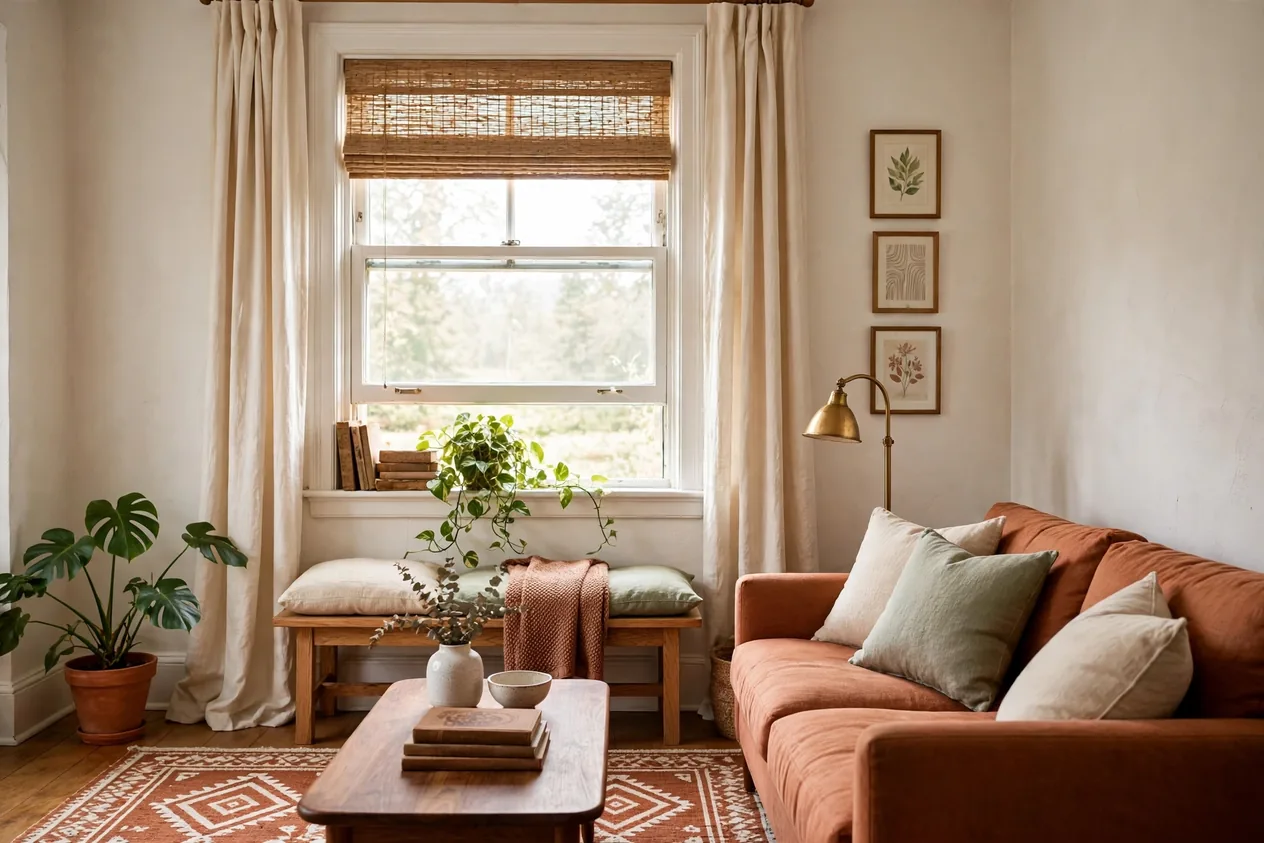
Standard Window Sizes: 24 x 36 to 48 x 72 in Chart
Standard window sizes in inches and cm: most run 24 to 48 in wide by 30 to 72 in high, and a bedroom window needs a 5.7 sq ft clear opening for egress.
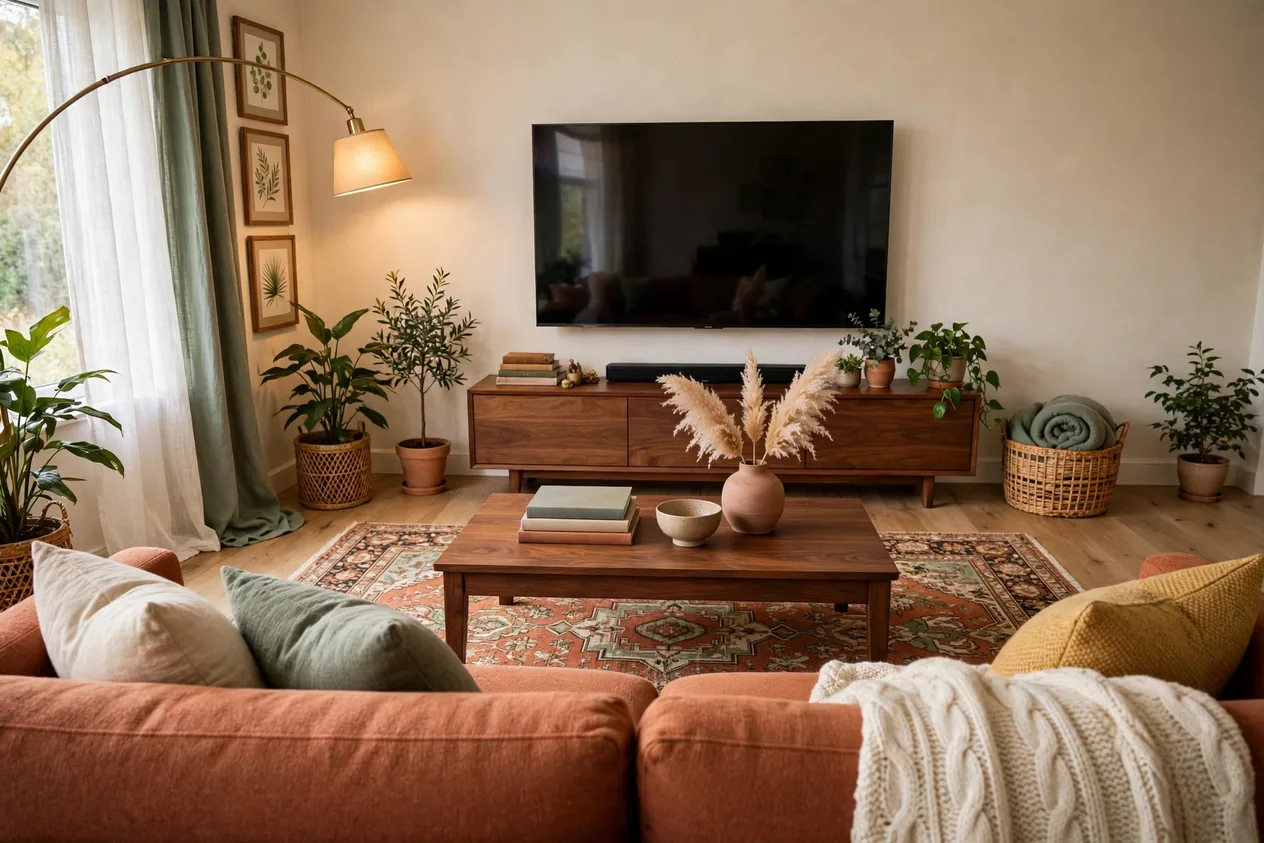
TV Dimensions by Screen Size: 65 in Is 56.7 x 31.9 in
TV dimensions by screen size in inches and cm: a 65 in TV is 56.7 x 31.9 in, a 55 in is 47.9 x 27.0 in, plus the viewing distance and stand width for each.
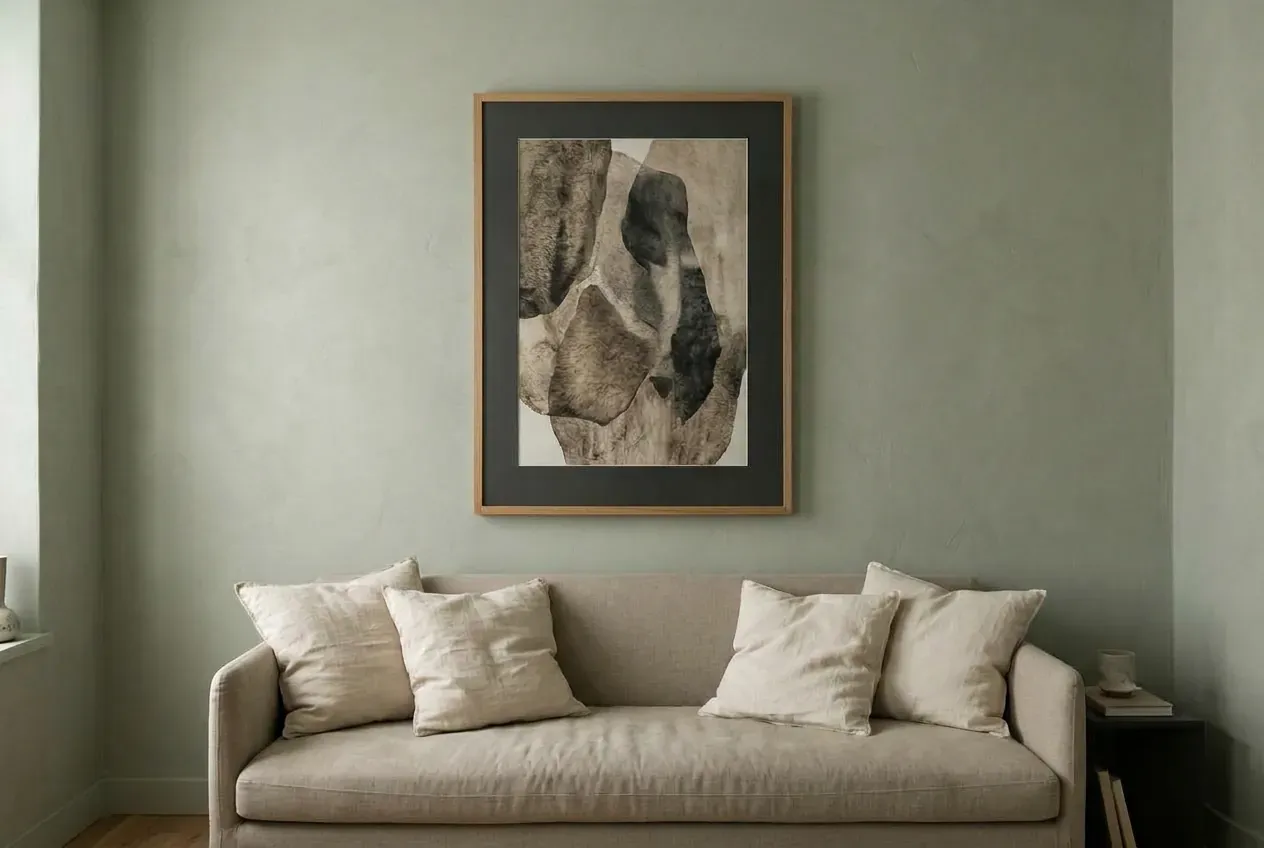
How High to Hang Pictures: 57 in (145 cm) Center
Hang pictures with the center 57 in (145 cm) up, the frame bottom 7 to 10 in (18 to 25 cm) above a sofa, and frames 2 to 3 in (5 to 8 cm) apart.