Drapes for a Living Room Under 150 Sq Ft
Curtains for a small living room: rod height, stack-back and lining decide the fit — hang 4 in (10 cm) above the frame and mind the floor gap.
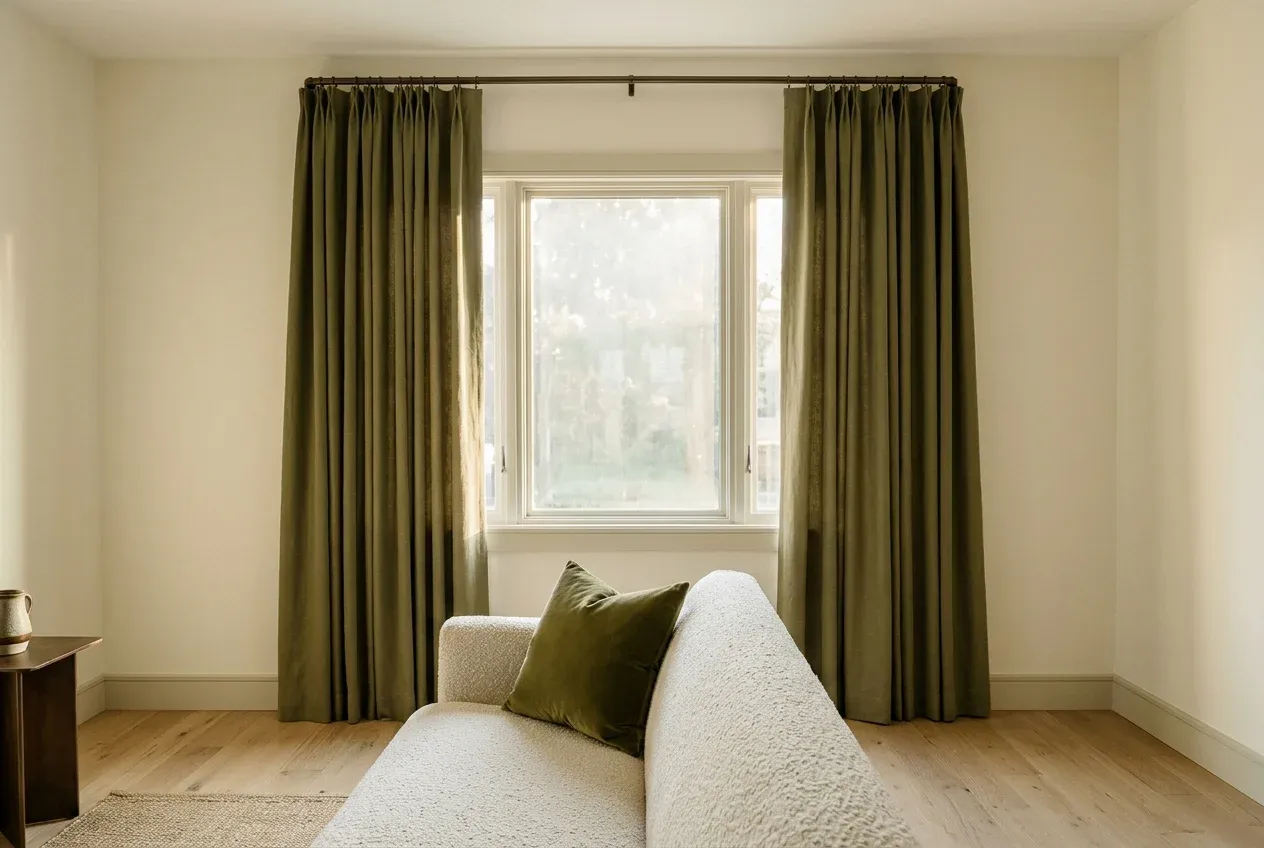
Room specifications
- Room ScaleSmall living room (about 10 x 12 ft) with one window and a sofa wall
- Design StyleSoft Tailored Neutral
- Budget TierMid-Range ($$)
- Palette Swatches4 colors
In a living room under 150 sq ft (14 sq m), hang the rod about 4 in (10 cm) above the window frame, or about 2 in (5 cm) below the ceiling line if that is closer. It adds more perceived height than any paint colour. A rod fixed straight onto the top casing cuts the wall across the middle and makes an 8 ft (244 cm) ceiling feel lower.
Raising the rod lets the fabric fall in unbroken vertical lines, so even a single 48 in (122 cm) window can look like a feature. If you are still deciding between heavy lined panels and lightweight sheers, read the drapes vs curtains comparison before ordering hardware. Then check panel widths and lengths against the standard curtain sizes chart.
Measurements for a 10 x 12 ft window wall
- Rod height: at least 4 in (10 cm) above the top casing, or 2 in (5 cm) below crown moulding.
- Rod projection: about 3.5 to 4 in (9 to 10 cm) off the wall, so pleated headers move freely.
- Extension past the frame: about 8 in (20 cm) on each side.
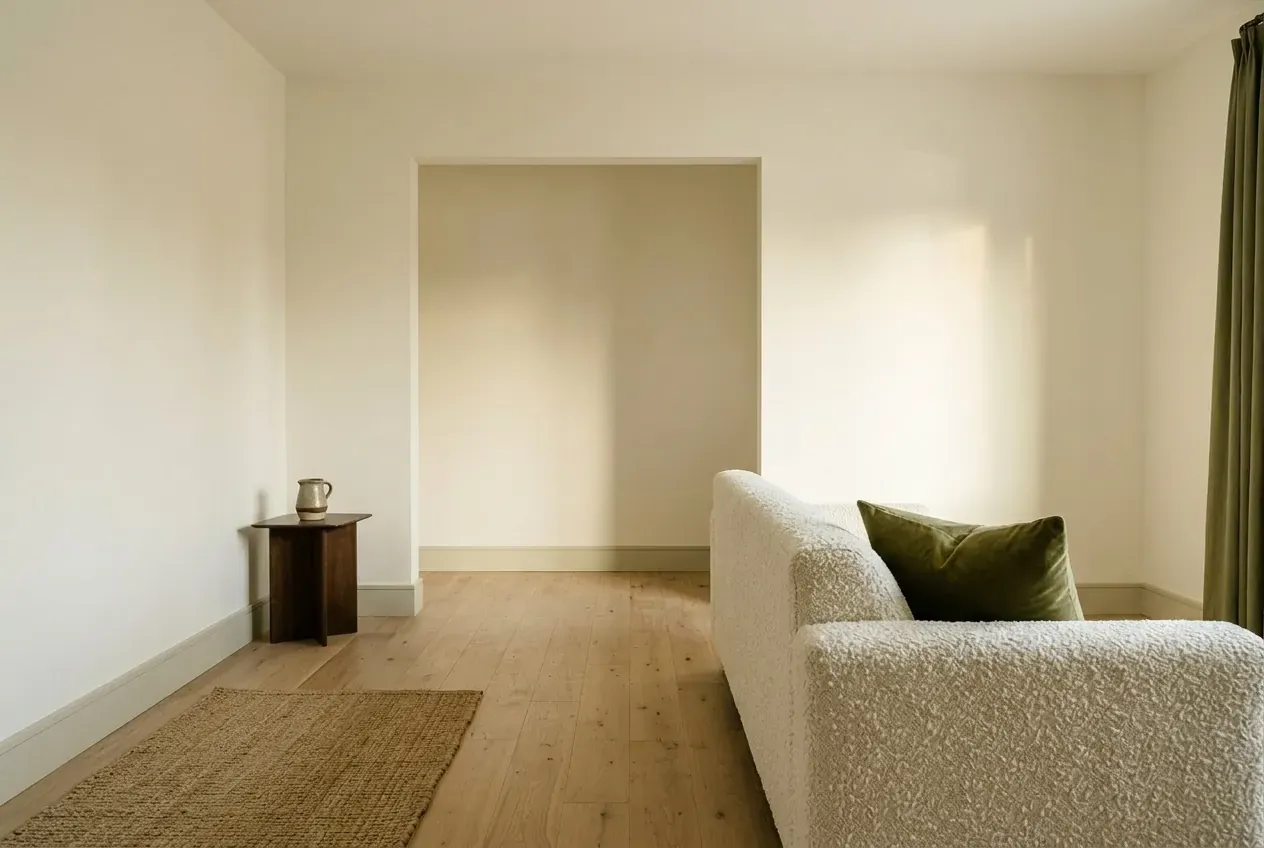 The same room seen from the opposite end, so you can judge the layout from the far side.
Why the rod should extend past the window
Stack-back is the width a drape takes up when pulled open. If the rod stops flush with the trim, the open panels typically cover 12 to 16 in (30 to 41 cm) of glass and cut daylight in a compact room. Extending the rod by 8 in on each side moves the bulk of the fabric onto the wall.
For a 48 in window, that means a rod about 64 in (163 cm) long. Fix the brackets into studs or use rated hollow-wall anchors; the curtain rod installation guide has bracket spacing. If you rent and cannot drill, see no-drill rods.
Lined or unlined?
| Fabric | Daytime look | Night privacy and warmth |
|---|---|---|
| Lined cotton or linen blend | Crisp, structured column | Blocks street glare and holds in some warmth |
| Unlined sheer | Airy, soft glow | Little privacy once lamps are on |
Unless you have floor-to-ceiling windows facing a private courtyard, a lined panel usually hangs straighter and hides evening glare. A sheer layer behind it can give you daytime softness.
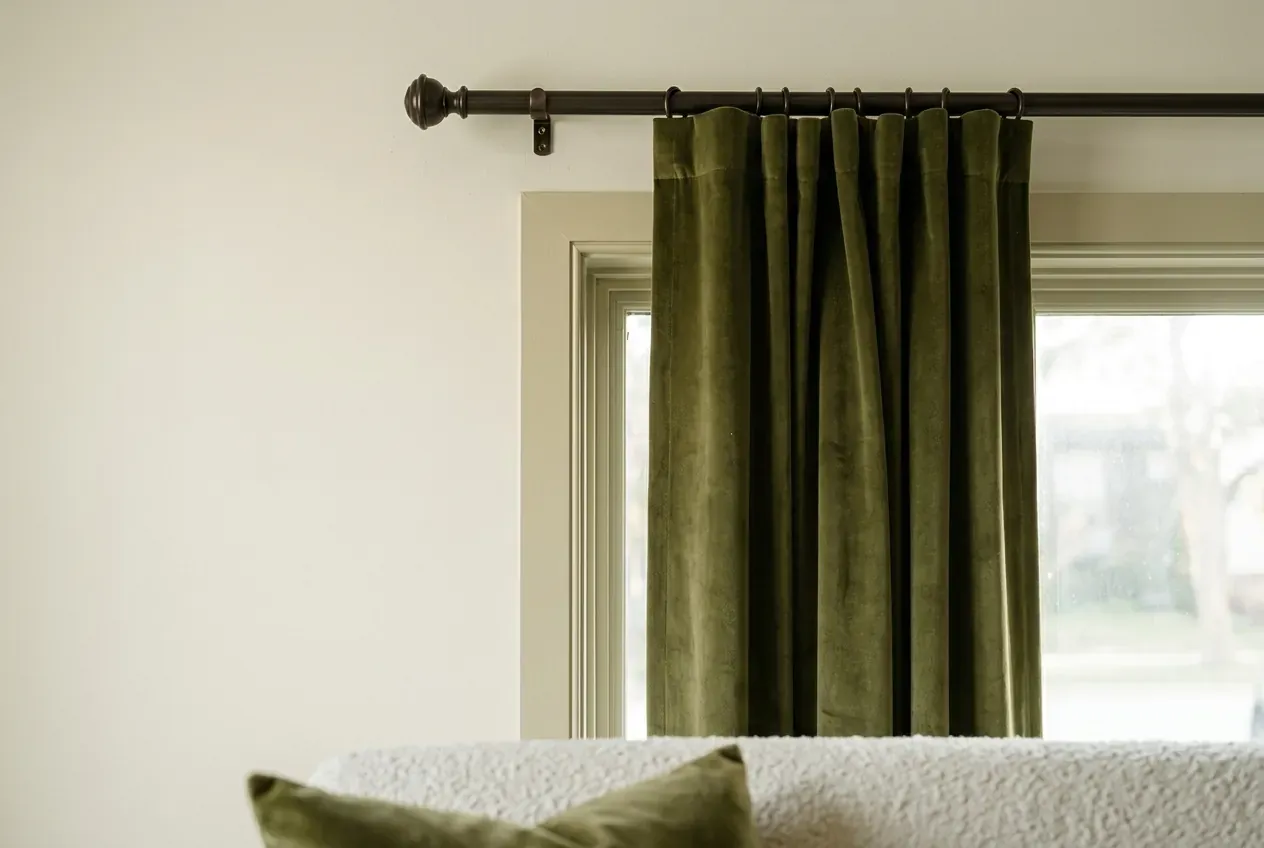 Close up: Hang the rod 4 in (10 cm) above the frame and 8 in (20 cm) wider than the glass on each side, so the open panels stack over wall, not window.
Where the hem should land
In a tight living room, stop the hem either about 0.25 in (6 mm) off the floor, the “kiss”, or about 1 in (2.5 cm) above it, the “float”. Puddling 4 to 6 in of extra fabric traps pet hair, blocks the vacuum and catches on sofa legs near the window. A clean gap lets the panel swing freely.
Common mistakes
- Panels too narrow. Two 50 in (127 cm) panels on a 64 in rod look stretched flat when closed. Aim for roughly 120 to 130 in (305 to 330 cm) of total fabric width.
- Covering a radiator or baseboard heater. If heat sits beneath the window, stop the hem above the unit or choose sill length, and follow the heater maker’s clearance guidance.
- Chunky finials near a corner. When a window sits within about 6 in (15 cm) of a side wall, swap decorative finials for flush end caps.
- Wrinkles from shipping. Steam the panels while they hang so the creases drop out.
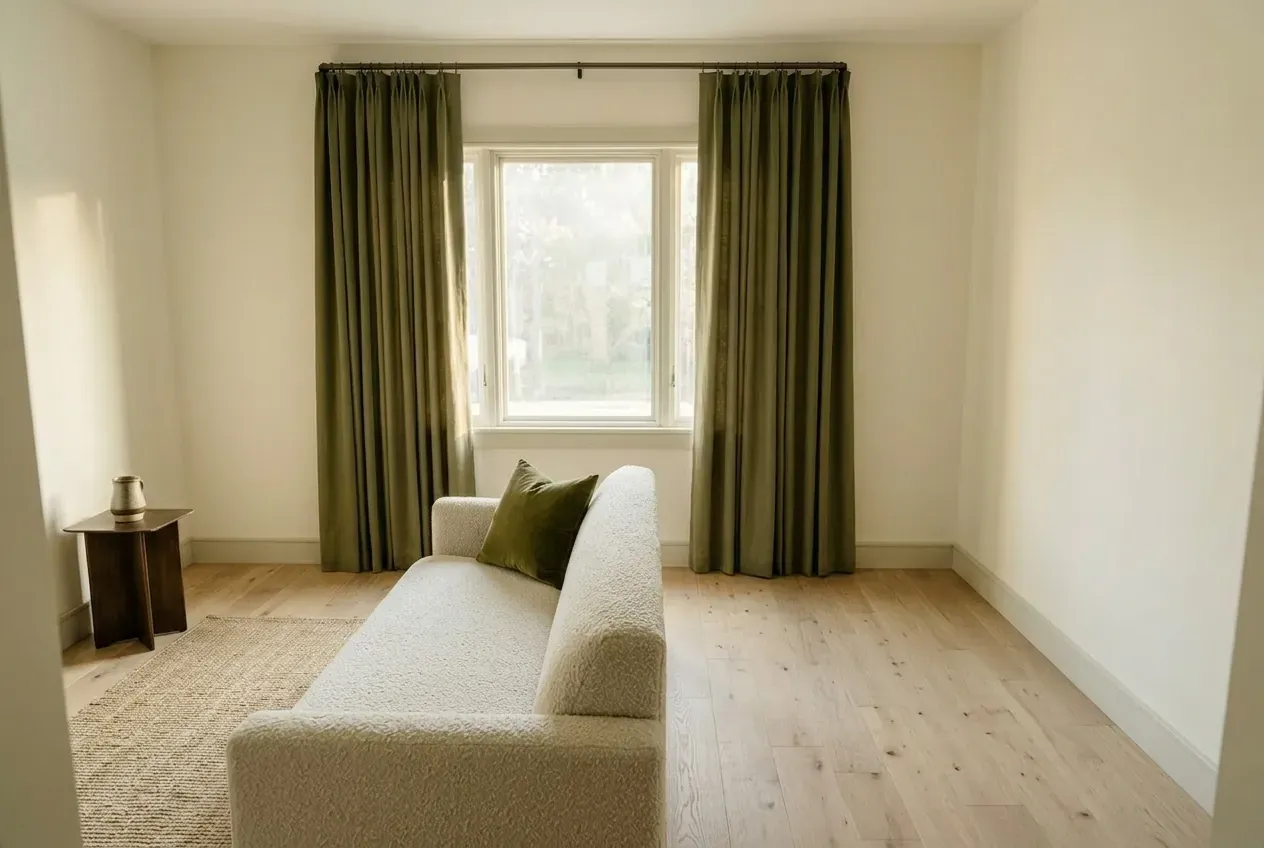 From above and to one side, the full footprint and the walkway read at a glance.
Two windows on one wall
If two windows sit less than about 16 in (41 cm) apart, use one continuous rod across both, stack the outer panels on the side walls, and hang a shared centre panel between them. The single line makes the wall look wider and calmer. For shorter windows, the short curtains guide shows other options.
Colour and rod finish
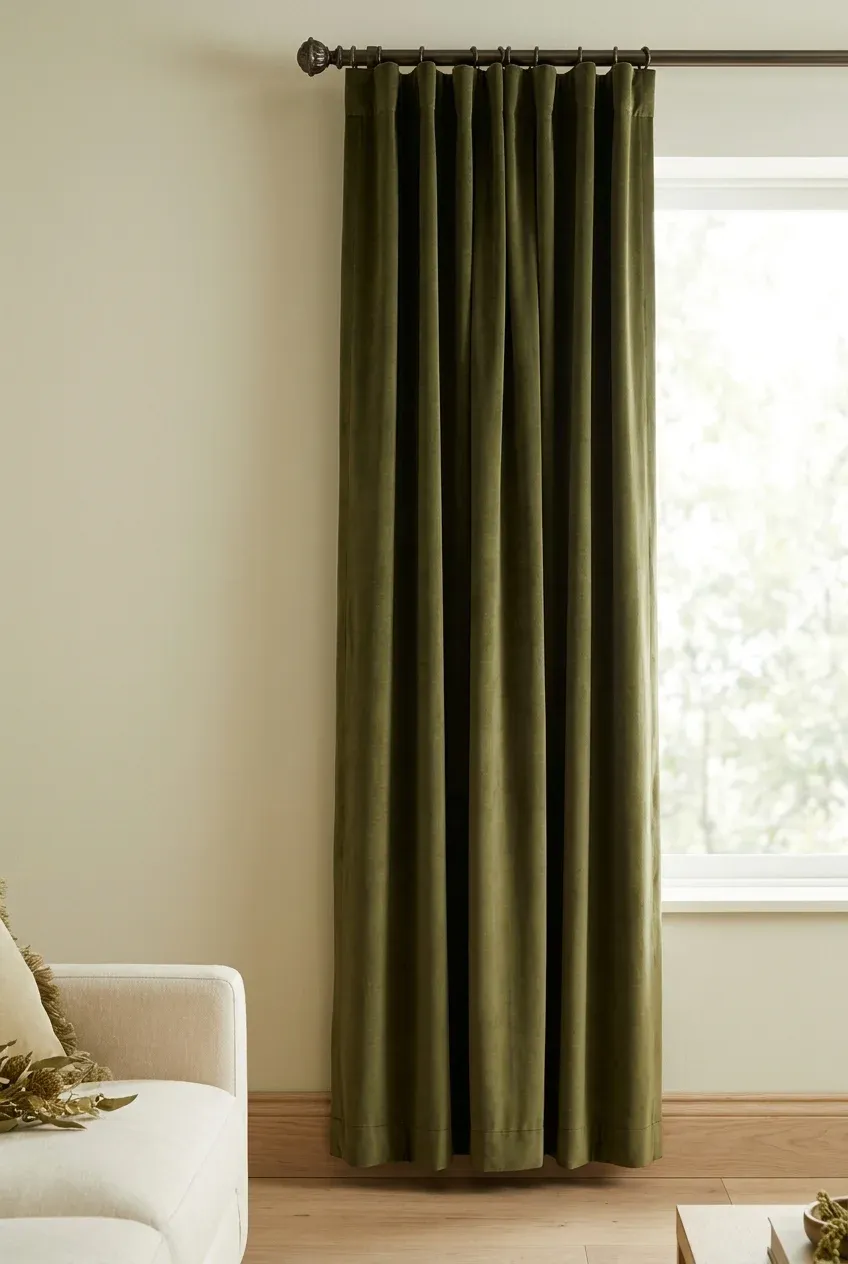
An olive or other muted velvet gives depth but also visual weight, so keep the rod slim, around 0.75 to 1 in (2 to 2.5 cm) in diameter, and match the ring finish to a nearby floor lamp or coffee table hardware. If you want a lighter look, choose a colour close to the wall. The curtain colour guide goes through the choices.
Before you order
- Measure the window and the wall above it.
- Plan the rod about 4 in above the frame and 8 in wider on each side.
- Buy fabric roughly 2.5 times the rod width.
- Decide the hem height, a kiss or a 1 in float.
- Choose lining for privacy and glare.
- Check for radiators and wall studs before you drill.
Curated Color Palette & Key Textures
- Olive Paper #F4F2E6
- Dried Olive #BDBC8C
- Olive Velvet #6F7042
- Deep Olive #2E2F1C
General references
Dimensions in these guides are typical planning ranges, not legal minimums, and they can differ by jurisdiction. Use the references below as starting points, then confirm local code and your lease before making changes.
FAQ
How high should drapes hang in a small living room?
4 in (10 cm) above the window frame, or just under the ceiling if the gap is smaller - height is the one change that makes a low room read taller.
How wide should the rod be for a small window?
8 in (20 cm) past the glass on each side, so the panels stack onto the wall when open and the window is not narrowed by fabric.
Should drapes touch the floor?
A 1 in (2.5 cm) gap or a 0.25 in (6 mm) kiss. Anything longer puddles, collects dust and gets kicked in a small room.
Save this idea

Keep reading
Related rooms
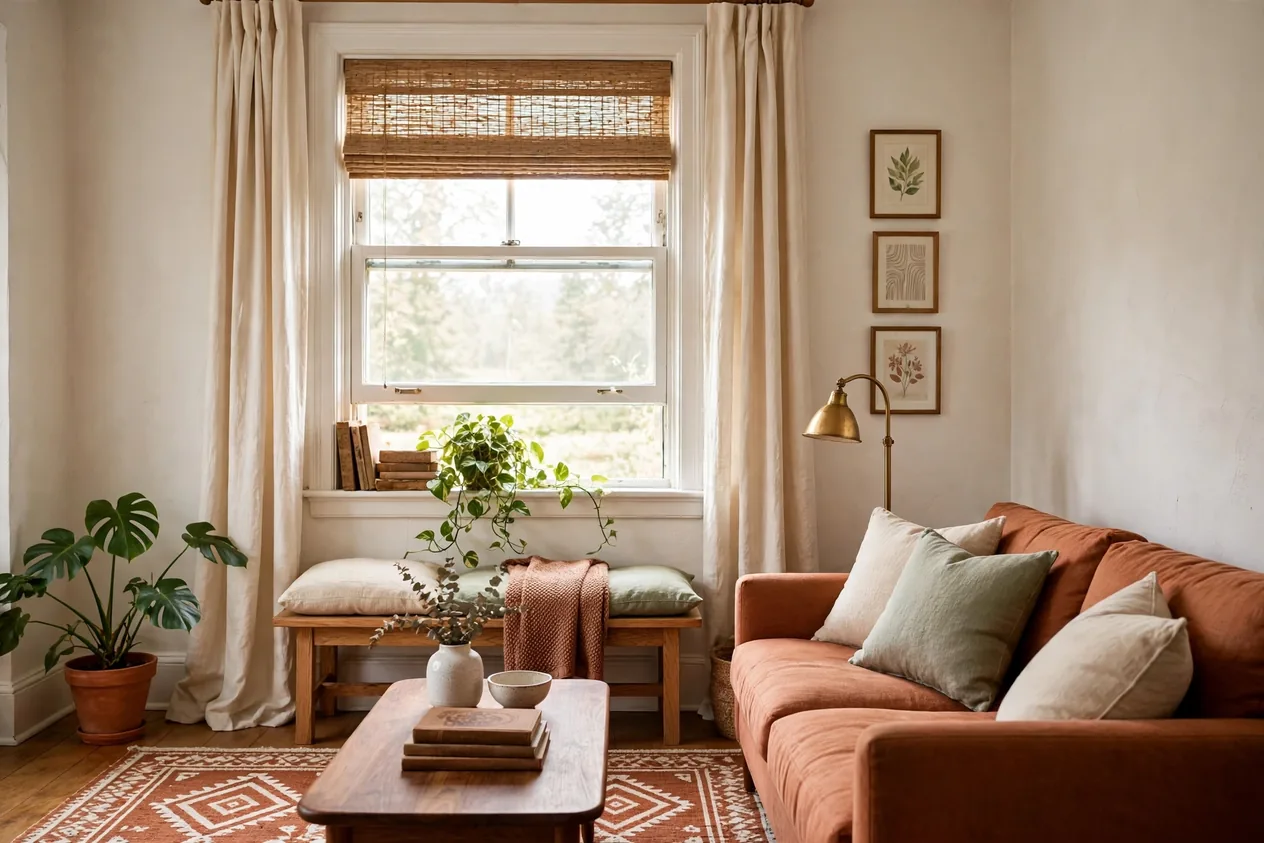
Standard Window Sizes: 24 x 36 to 48 x 72 in Chart
Standard window sizes in inches and cm: most run 24 to 48 in wide by 30 to 72 in high, and a bedroom window needs a 5.7 sq ft clear opening for egress.
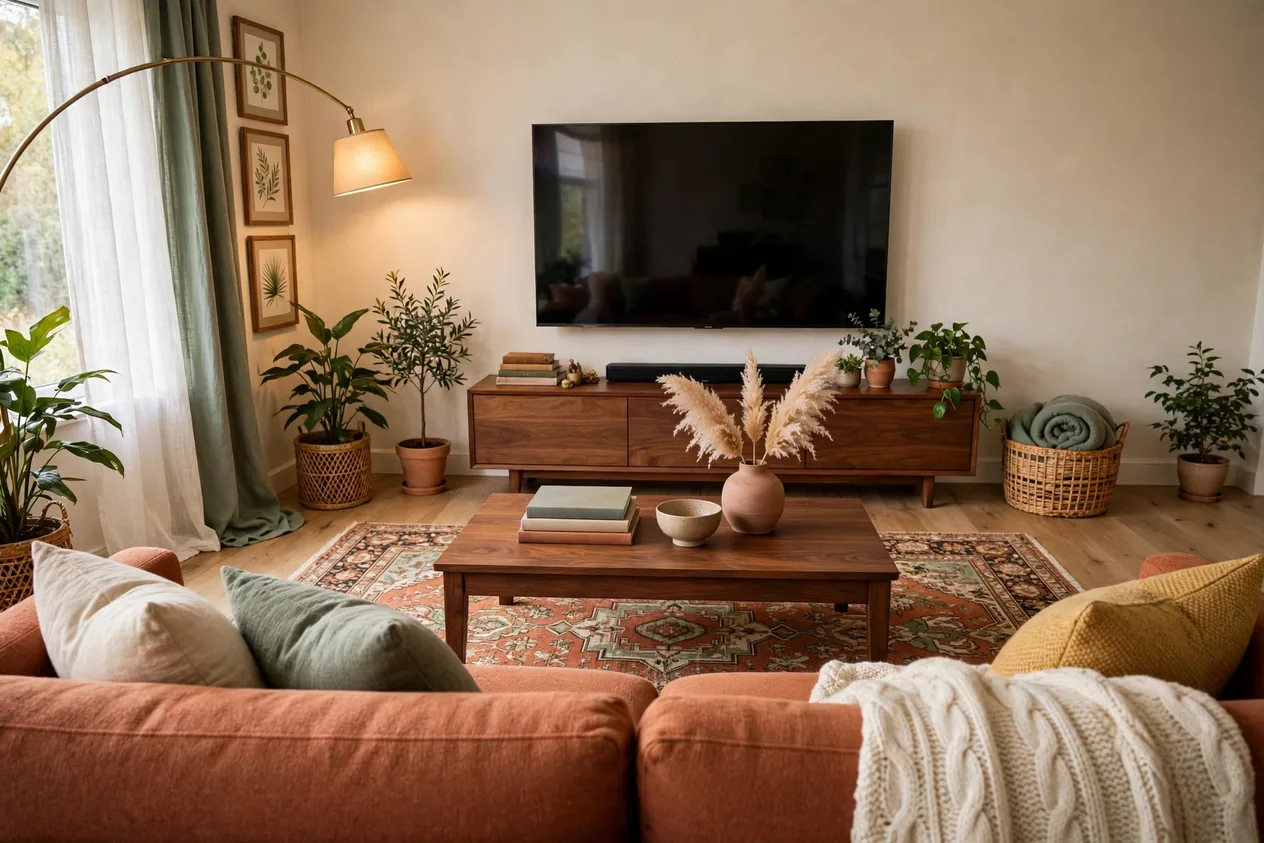
TV Dimensions by Screen Size: 65 in Is 56.7 x 31.9 in
TV dimensions by screen size in inches and cm: a 65 in TV is 56.7 x 31.9 in, a 55 in is 47.9 x 27.0 in, plus the viewing distance and stand width for each.

How High to Hang Pictures: 57 in (145 cm) Center
Hang pictures with the center 57 in (145 cm) up, the frame bottom 7 to 10 in (18 to 25 cm) above a sofa, and frames 2 to 3 in (5 to 8 cm) apart.