White Bookshelf Styling for a Small Space
White bookshelf styling for small rooms: shelves 12 to 14 in (30 to 36 cm) deep, 24 in (61 cm) of floor in front, and contrast so it never looks flat.
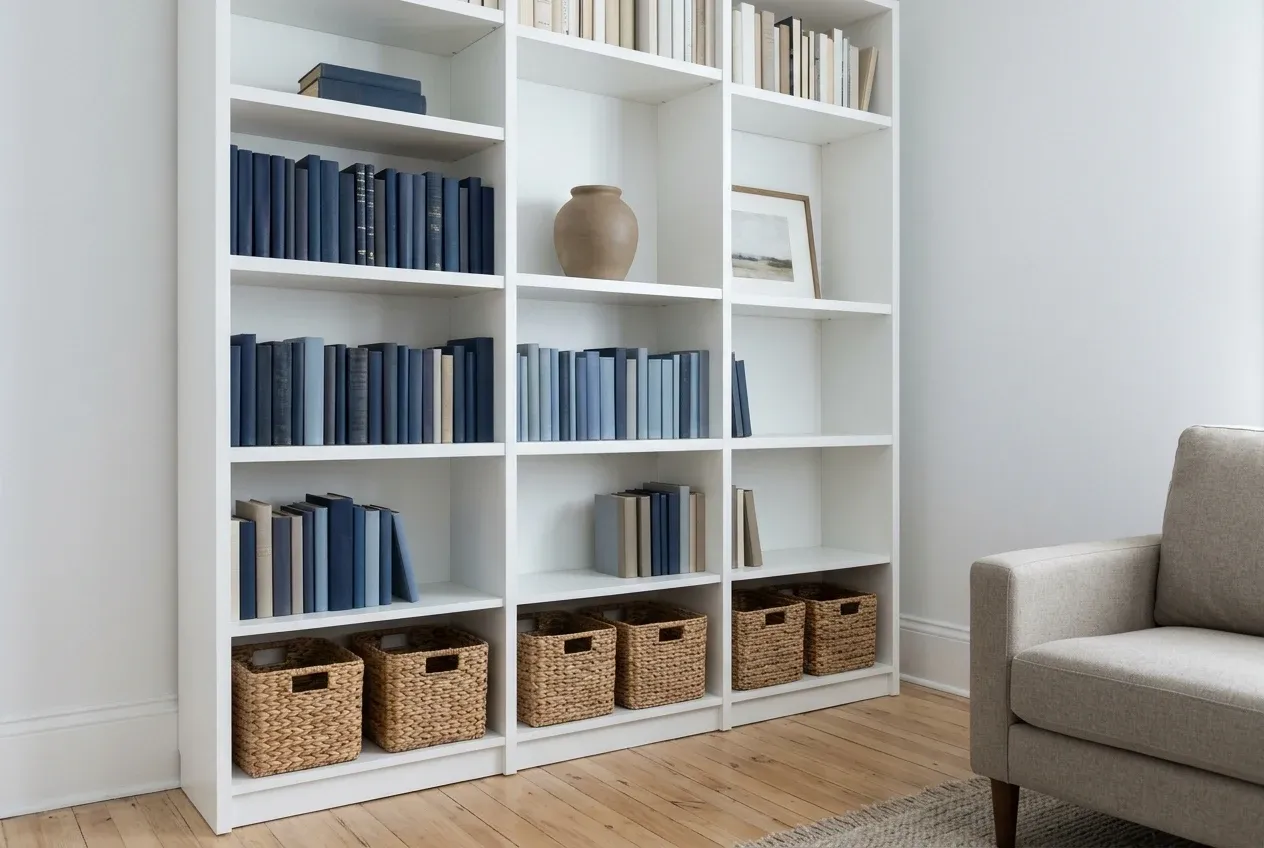
Room specifications
- Room ScaleSmall living room (about 10 x 12 ft) with an 8 ft wall
- Design StyleGallery Minimalist / Cool Neutral
- Budget TierMid-Range ($$)
- Palette Swatches4 colors
A white bookshelf suits a small room when it matches the wall closely enough to read as built-in, is about 12 to 14 inches deep, and leaves 24 inches of clear floor in front. White blends into pale walls and reflects light, so a floor-to-ceiling unit feels lighter than the same case in dark wood. The styling job is then to keep it from looking flat.
In a 10 x 12 ft living room, a tall dark bookcase can shrink the room before a single book goes on it. A white one solves that heaviness while still giving you floor-to-ceiling storage.
Why white works, and when to choose something else
Treat the bookcase as architecture. Match it to the wall colour so the frame disappears, then style the shelves, not the frame. Hold a white paint chip next to the finish in daylight; staying within one tonal step keeps the unit looking like millwork. Choose white over oak or black when the bookcase spans more than about 4 feet (122 cm) of wall or sits beside a narrow window.
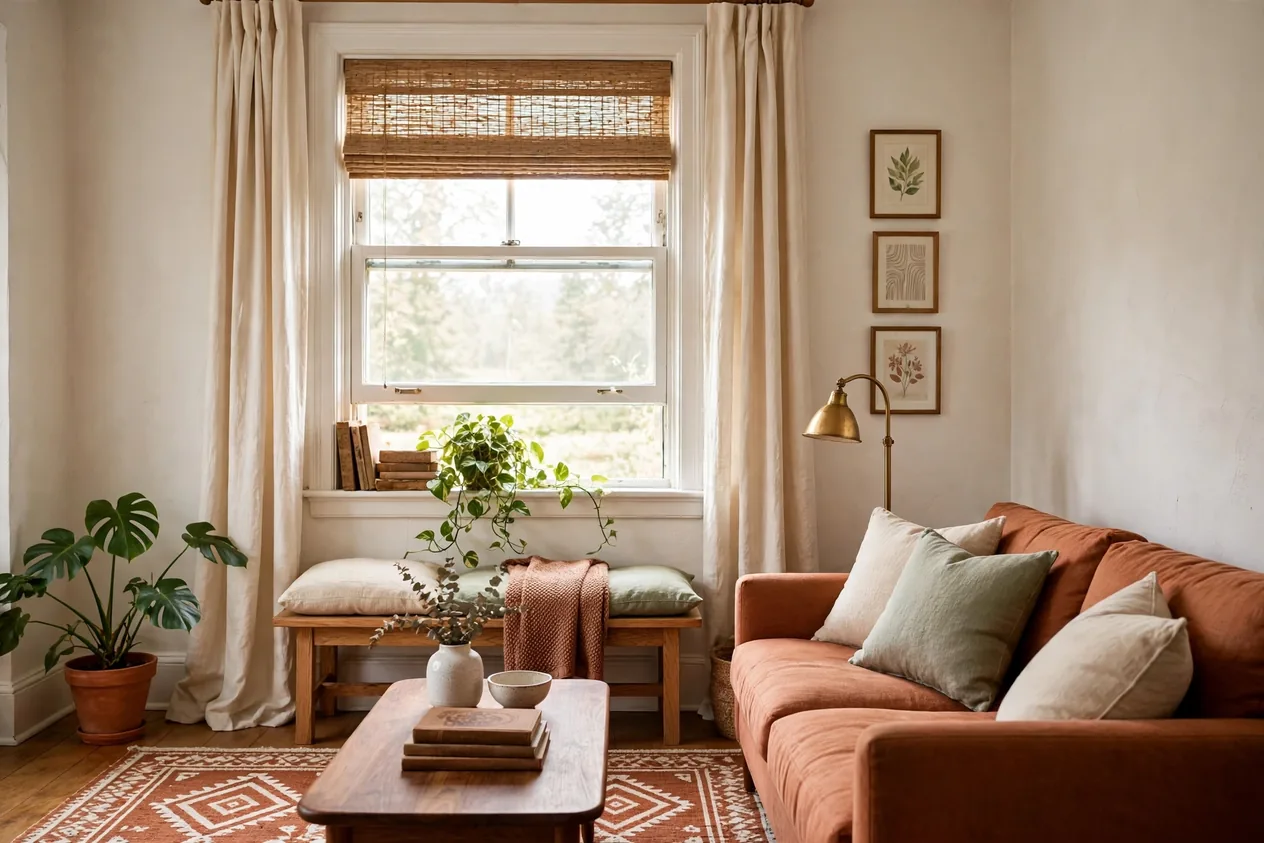
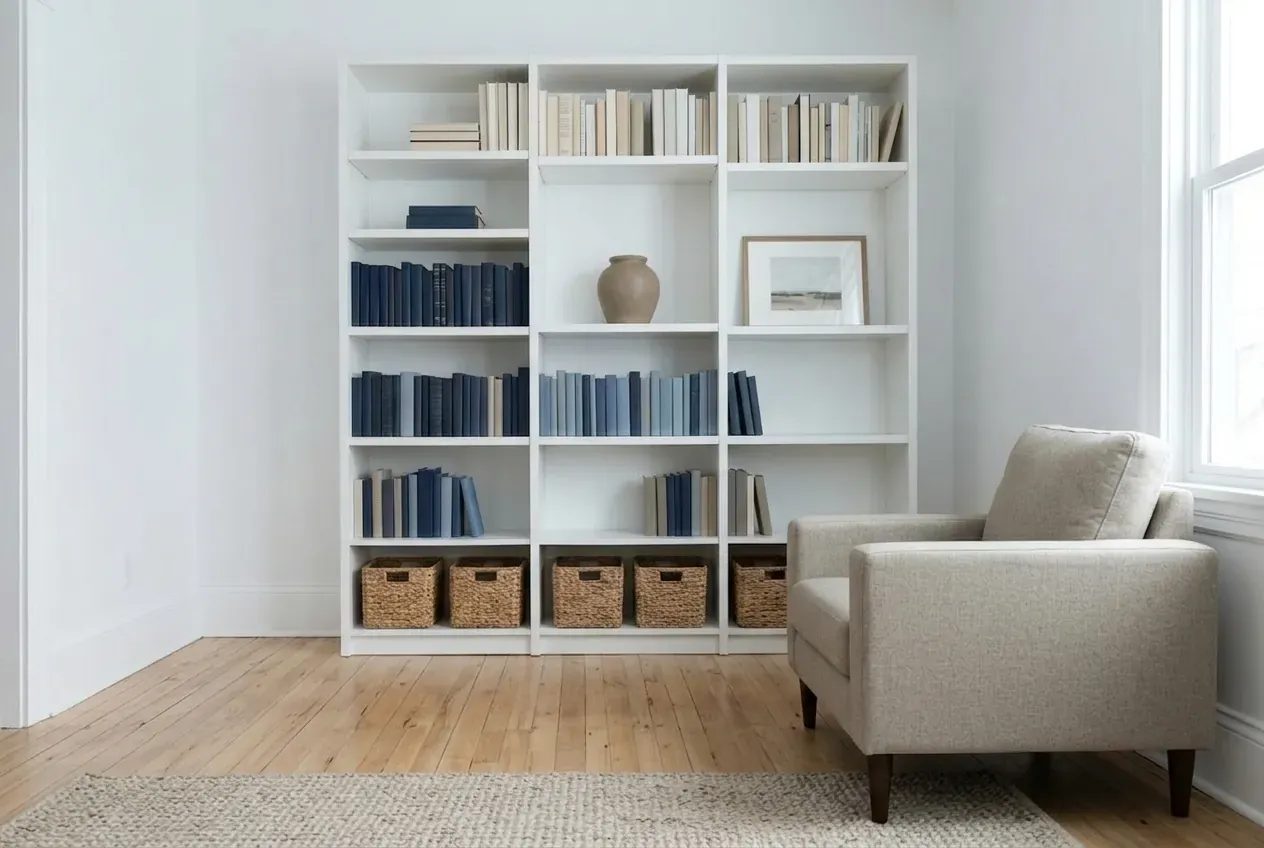 The same room seen from the opposite end, so you can judge the layout from the far side.
Numbers to lock in first
| Spec | Guideline | Why |
|---|---|---|
| Shelf depth | 12 to 14 in (30 to 36 cm) | Holds hardcovers and media boxes |
| Height | Within 2 to 4 in (5 to 10 cm) of the ceiling | Draws the eye up |
| Front clearance | 24 in (61 cm) | Doors, drawers and reading chairs still move |
| Shelf span | Within the maker’s rating | Particleboard sags when overloaded |
| Heavy items | Below about 36 in (91 cm) | Lowers the centre of gravity |
If shelf depth is the problem in your room, the space-saving bookcase guide covers shallower options.
Anchor it to the wall
The U.S. Consumer Product Safety Commission’s Anchor It campaign advises fastening TVs and tall furniture such as bookcases to the wall to prevent tip-overs. Use the hardware that comes with the unit, ideally into a stud. In a rental, ask your landlord before drilling; small anchor holes are often allowed and easier to patch than a toppled bookcase. Adhesive straps are weaker than a screwed anchor, so do not rely on them for a heavy, fully loaded case. Load the heaviest books and storage bins on the bottom two shelves.
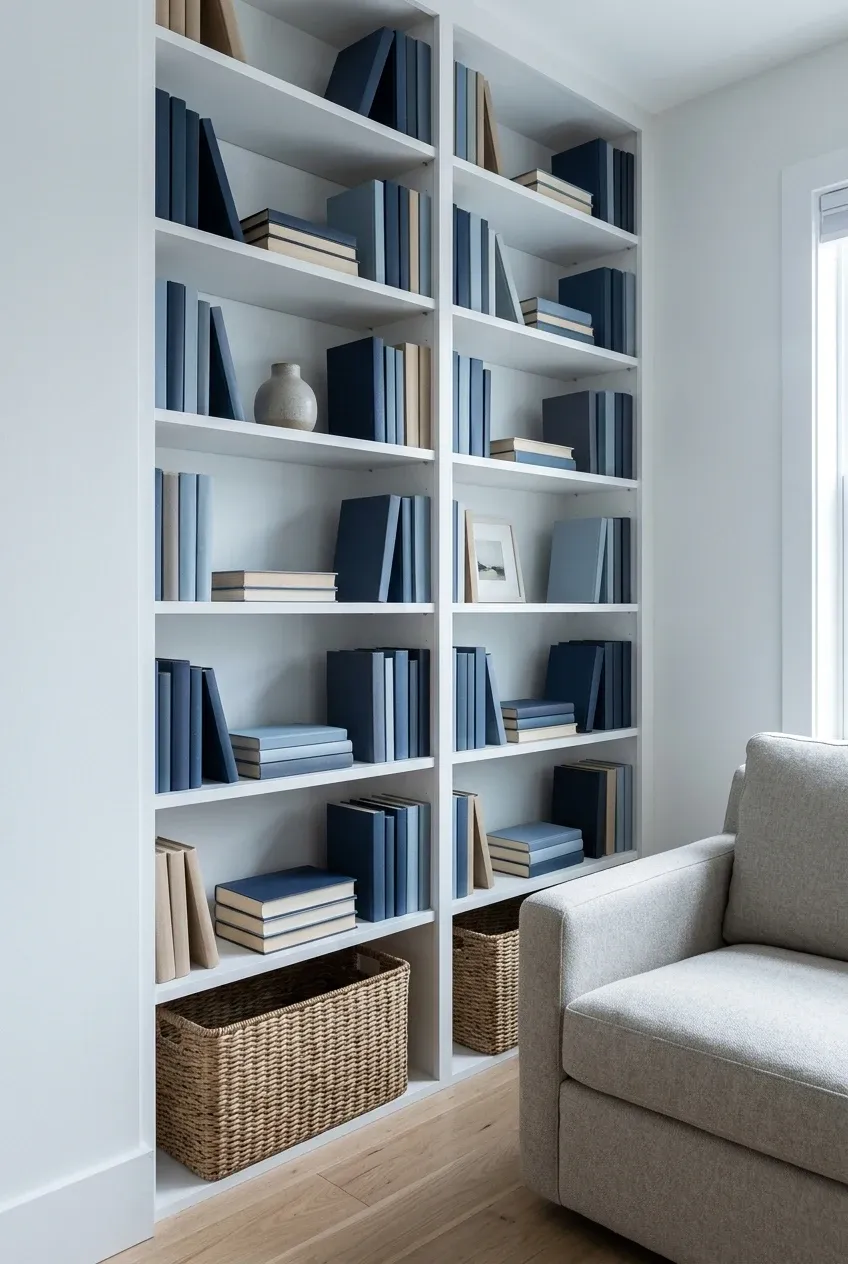
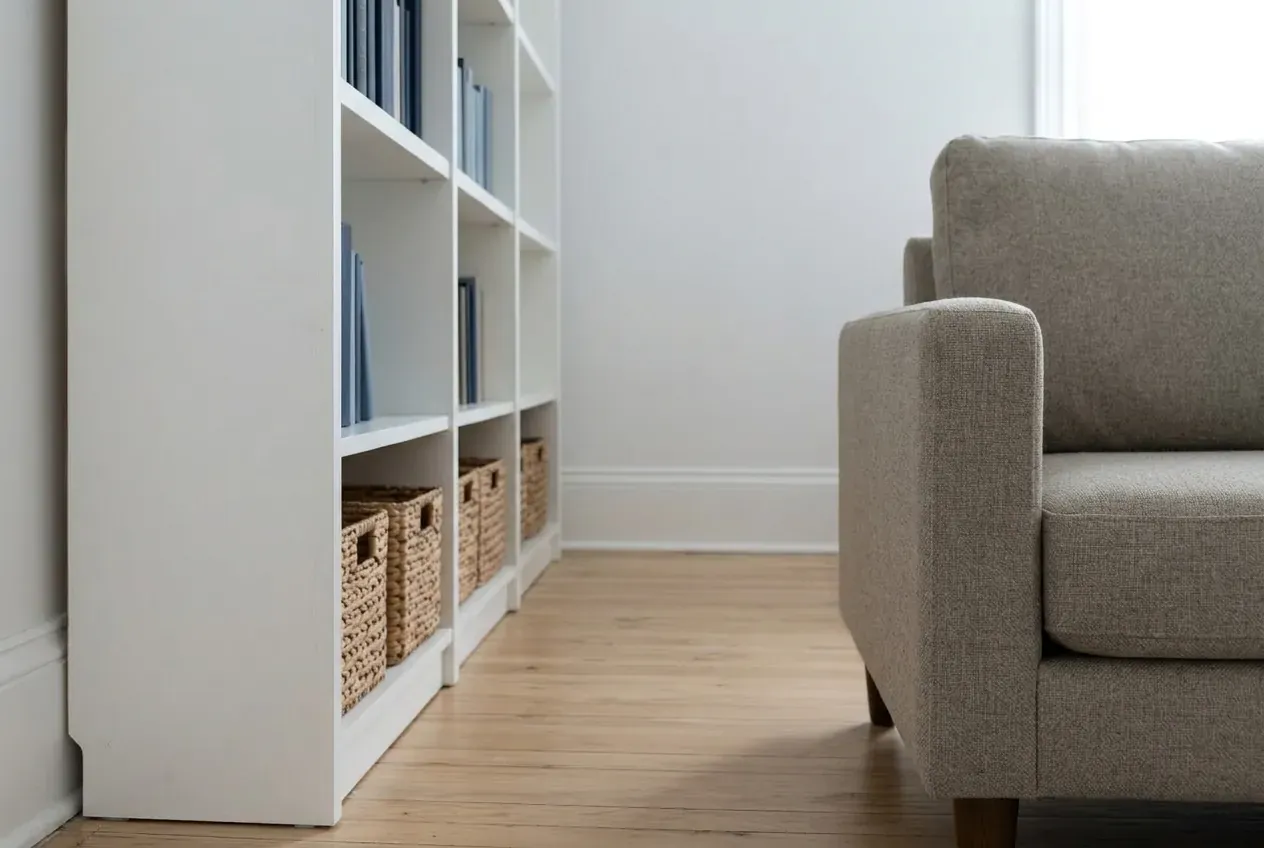 Close up: Keep a white bookshelf 12 to 14 in (30 to 36 cm) deep and leave 24 in (61 cm) of clear floor in front so a door or drawer still opens.
Keep white from looking flat
All-white shelves filled with pale objects wash out. Try this instead:
- Leave about a third of each shelf empty, so negative space frames your favourite objects.
- Use dark books or ceramics for contrast. Navy and slate blue spines work well against white.
- Add warm texture with woven baskets on the bottom row and a bit of oak or oat colour to keep it from feeling clinical.
- Group things in odd numbers and vary heights, with a few books stacked sideways.
On a 30 inch shelf, leave at least 10 inches of the white back panel visible between groups. For shelf-by-shelf layout ideas, read the bookshelf styling rules and, for a wall-mounted alternative, floating bookshelves.
If the shelf also holds a TV
Check the shelf’s weight rating, and add a centre upright on any long span, since thin particleboard sags under a concentrated load. Keep the screen’s centre near eye level when seated (around 42 inches off the floor is a common target), run the cord down a paintable adhesive channel behind the back panel, and tuck a router and remotes into matching baskets on the lower shelves. A top-heavy load is the main tipping risk, so anchoring matters even more here.
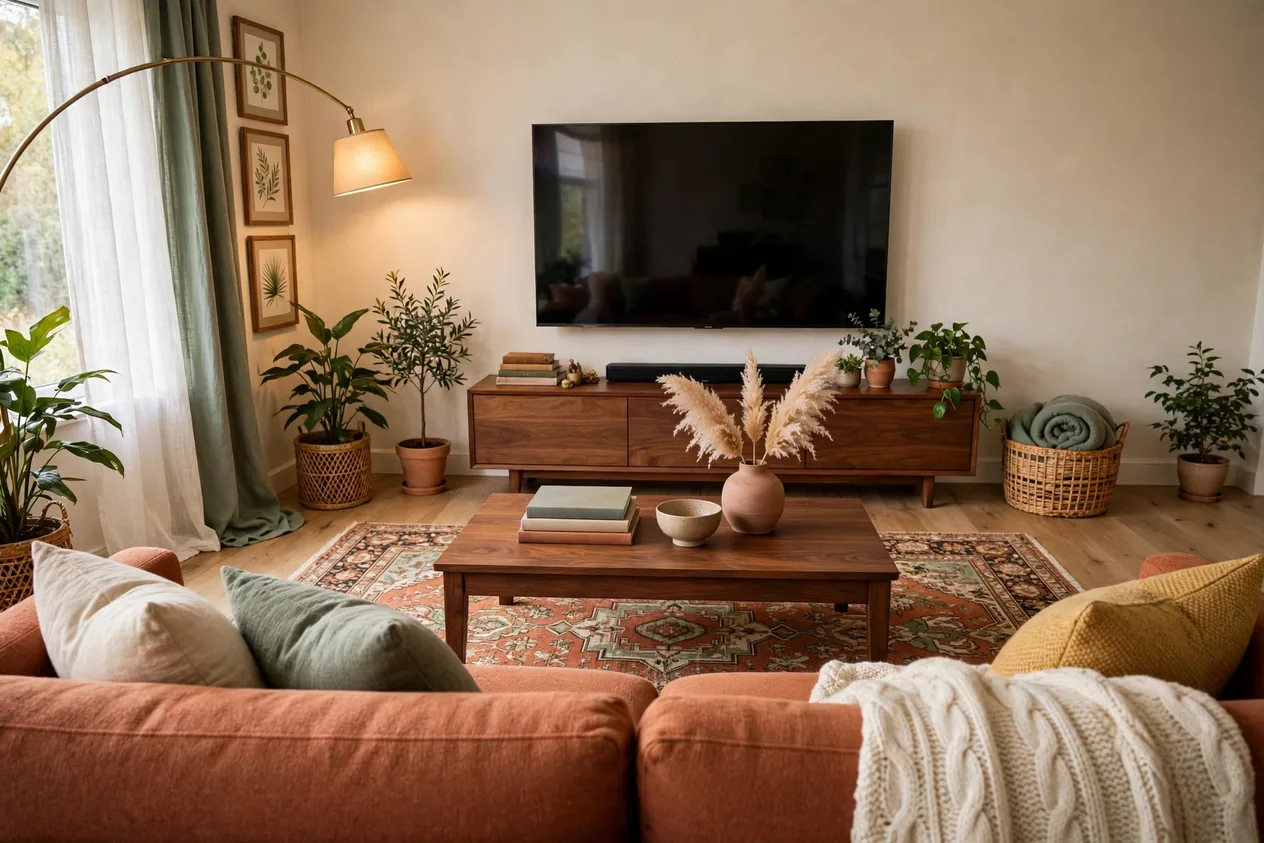
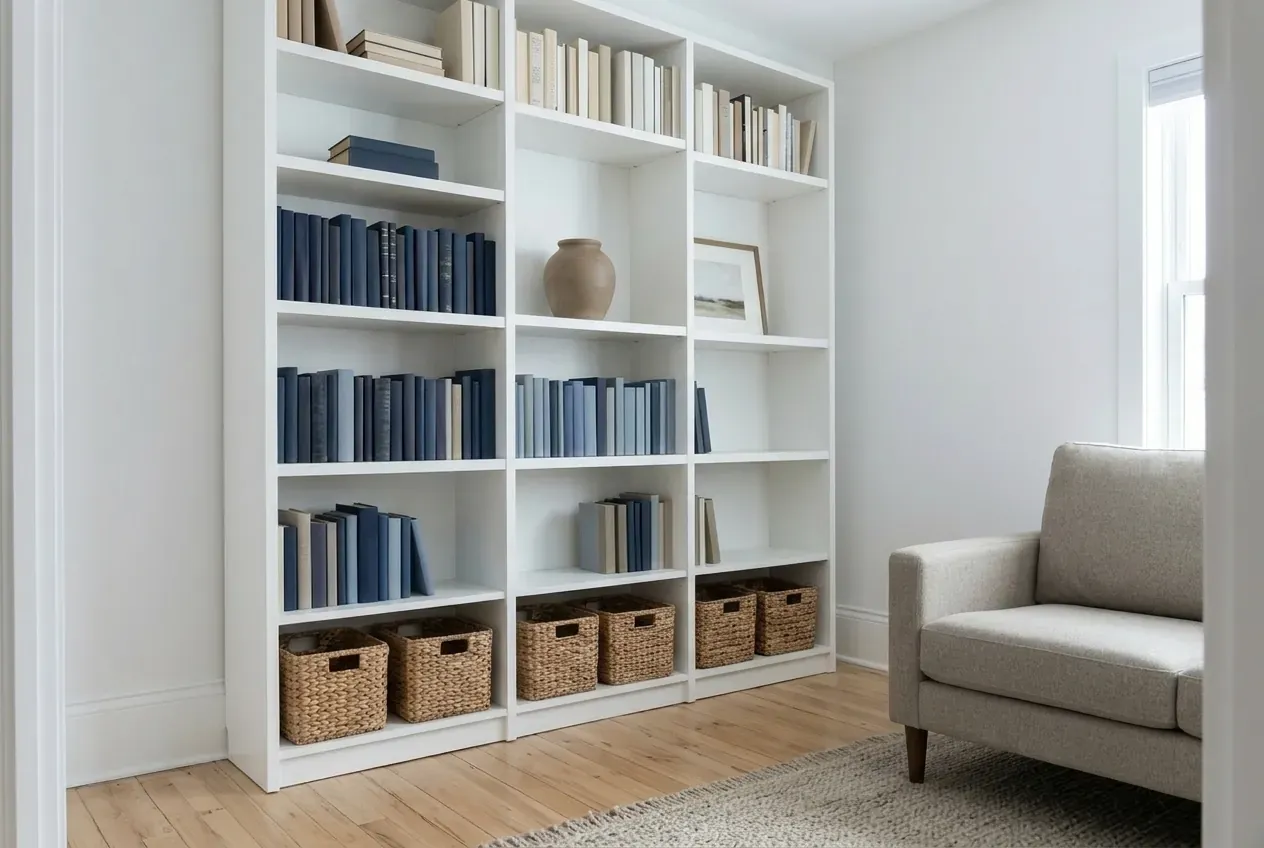 From above and to one side, the full footprint and the walkway read at a glance.
Common mistakes
- Putting heavy art books on the top shelves.
- Filling every shelf edge to edge.
- Choosing a white finish that clashes with a warm wall.
- Skipping the wall anchor because it “feels solid”.
Before you buy
- Match the finish against your wall in daylight.
- Check depth is 12 to 14 inches and 24 inches is free in front.
- Check the shelf span rating and where heavy items will go.
- Plan the wall anchor and ask about drilling.
- Plan the dark and warm accents for the shelves before you fill them.
Curated Color Palette & Key Textures
- Paper White #EEF1F5
- Slate Blue #9AB0C9
- Navy Ink #2E3F5C
- Oat Grey #C9B79A
General references
Dimensions in these guides are typical planning ranges, not legal minimums, and they can differ by jurisdiction. Use the references below as starting points, then confirm local code and your lease before making changes.
FAQ
Is a white bookshelf good for a small room?
Yes—a white unit blends into pale walls and reflects light, making floor-to-ceiling storage feel much lighter than dark wood.
How deep should a bookshelf be?
Keep it 12 to 14 in (30 to 36 cm) deep for books and baskets, with 24 in (61 cm) of clear walkway in front.
How do I style a white bookshelf so it isn't boring?
Leave one-third of every shelf open, group dark navy or slate book spines for contrast, and ground the bottom row with woven baskets.
Save this idea

Keep reading
Related rooms
Standard Window Sizes: 24 x 36 to 48 x 72 in Chart
Standard window sizes in inches and cm: most run 24 to 48 in wide by 30 to 72 in high, and a bedroom window needs a 5.7 sq ft clear opening for egress.
TV Dimensions by Screen Size: 65 in Is 56.7 x 31.9 in
TV dimensions by screen size in inches and cm: a 65 in TV is 56.7 x 31.9 in, a 55 in is 47.9 x 27.0 in, plus the viewing distance and stand width for each.
How High to Hang Pictures: 57 in (145 cm) Center
Hang pictures with the center 57 in (145 cm) up, the frame bottom 7 to 10 in (18 to 25 cm) above a sofa, and frames 2 to 3 in (5 to 8 cm) apart.