Vintage Desk Dimensions for a Small Workspace
Vintage desk dimensions for small spaces: most writing desks run 18 to 20 in (46 to 51 cm) deep and 36 to 44 in wide, plus kneehole fit checks.
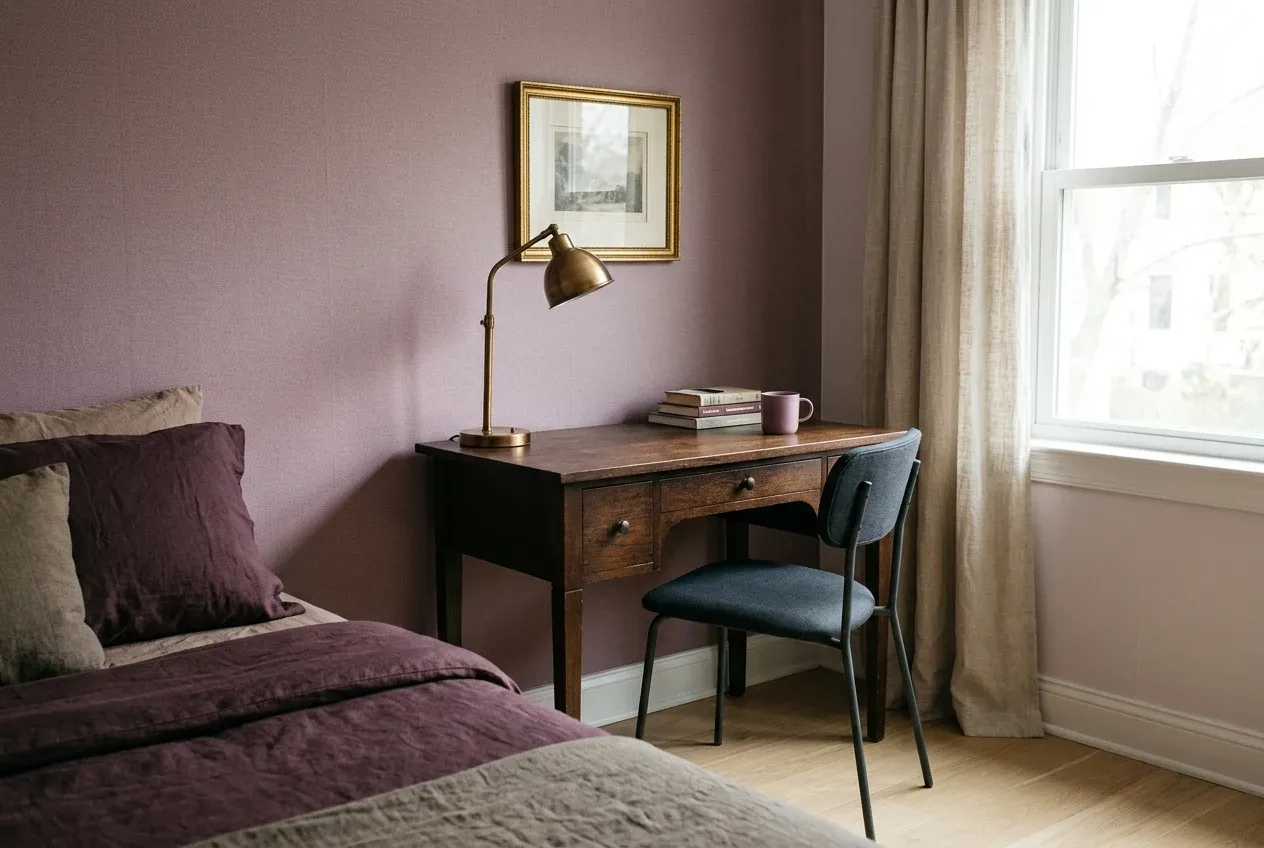
Room specifications
- Room ScaleSmall bedroom (about 10 x 10 ft) with one free wall
- Design StylePlum Vintage / Modern Curator
- Budget TierBudget ($)
- Palette Swatches4 colors
A vintage writing desk suits a small room because most are only 18 to 20 in (46 to 51 cm) deep, against 24 to 30 in (61 to 76 cm) for a modern computer desk. Typical sizes are 36 to 44 in (91 to 112 cm) wide and 29 to 30 in (74 to 76 cm) tall. Before you buy, check that the kneehole is at least 24 in (61 cm) wide and 25 in (64 cm) high so a modern chair can fit under it.
An older desk also brings character that a flat-pack top does not, and its slim proportions were built for smaller rooms. These notes cover what to measure at a sale or in a shop, how to make it usable for a laptop, and how to protect a rental floor.
How it compares with other desks
| Desk type | Width | Depth | Height |
|---|---|---|---|
| Vintage writing desk | 36 to 44 in (91 to 112 cm) | 18 to 20 in (46 to 51 cm) | 29 to 30 in (74 to 76 cm) |
| Modern computer desk | 40 to 48 in (102 to 122 cm) | 24 to 30 in (61 to 76 cm) | 29 to 30 in (74 to 76 cm) |
| Folding desk | 24 to 32 in (61 to 81 cm) folded | 18 to 20 in (46 to 51 cm) | 29 to 30 in (74 to 76 cm) |
That shallow depth leaves roughly 4 to 10 in (10 to 25 cm) more floor than a modern computer desk. At around 19 in deep, a vintage writing desk projects little farther than a standard bookshelf, which helps keep a 30 in (76 cm) path around the bed in a 10 x 10 ft bedroom. A 14 in laptop and a notebook fit on the top comfortably. Other shallow options are in folding desk clearances and the desk in a living room guide.
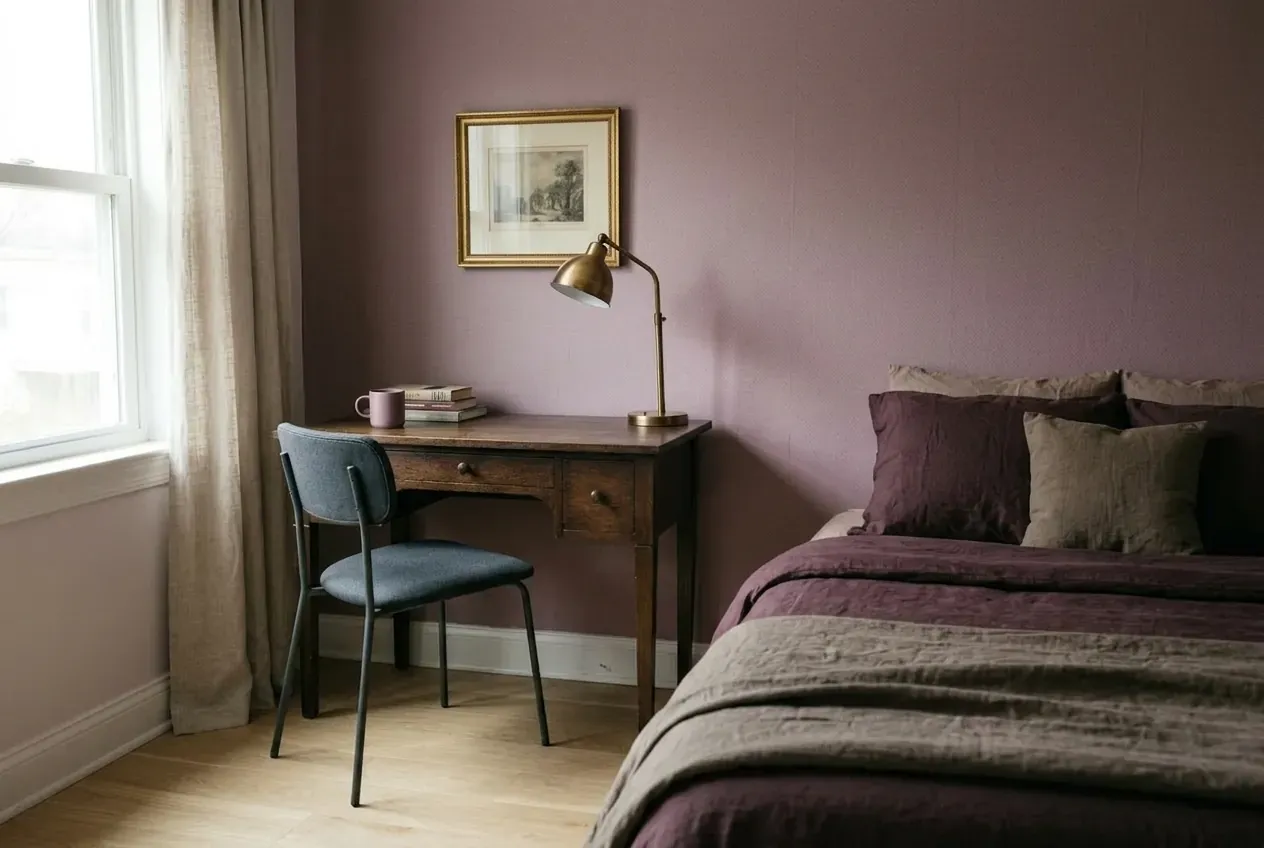 The same room seen from the opposite end, so you can judge the layout from the far side.
What to measure before buying secondhand
Bring a tape measure. Older furniture sometimes misses modern ergonomic numbers.
- Kneehole width: at least 24 in (61 cm) between the inner legs or pedestals, so a modern chair slides in.
- Kneehole height: at least 25 in (64 cm) from the floor to the underside of the center drawer apron. Anything under 24 in forces you to lower your chair too far for comfortable typing.
- Center drawer depth: around 2.5 to 3 in (6 to 8 cm) thick leaves room for a laptop inside without dropping the apron into your lap.
- Overall depth: no more than 20 in if the room is tight.
Skip heavy double-pedestal desks in a small room. Four slim tapered legs let light pass underneath and keep the corner airy. If you need two surfaces rather than one, look at the small L-shaped desk guide.
Check the condition, not only the style
- Push down on the top and rock the desk to find loose joints or wobble.
- Pull every drawer fully out; sticky or broken runners are a common problem.
- Look for signs of woodworm or damp, and smell the drawers.
- Check for veneer lifting or deep water rings that cannot be treated.
- Ask what the finish is before you clean it.
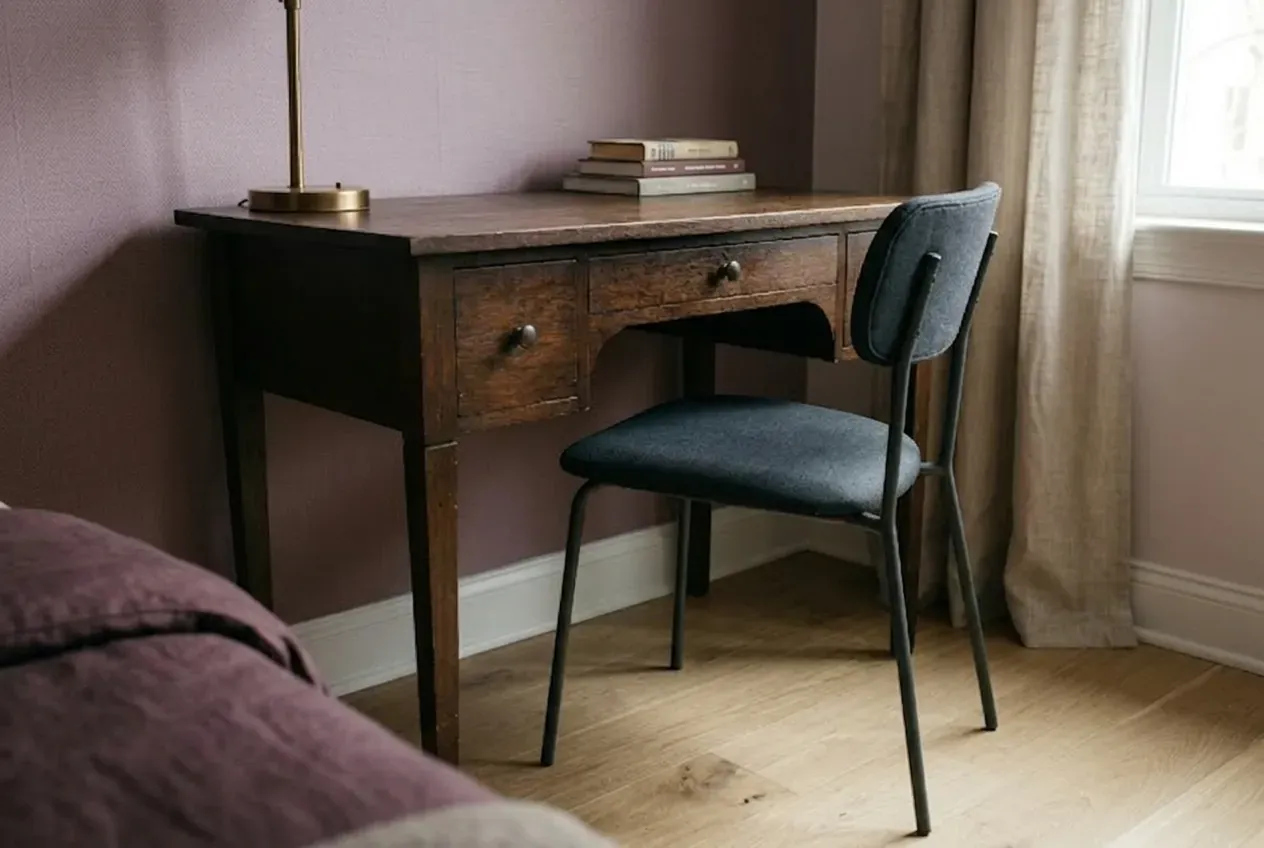 Close up: Choose a vintage writing desk no deeper than 20 in (51 cm) with a kneehole at least 24 in (61 cm) wide and 25 in (64 cm) high to seat a modern chair.
Restoring just enough
You do not need to strip a desk to use it. Skip stripping the original patina unless the finish is flaking. Wipe the wood with mild soap and water, rub a thin coat of paste wax on sticky drawer runners, and tighten loose leg brackets with reversible wood screws so the desk feels solid for daily work. If you are unsure about a valuable piece, ask a restorer before you do anything irreversible.
Using an antique desk in a rental
- Casters. If the desk still has original brass or metal casters, rest each wheel inside a rubber-and-felt furniture cup so it never rolls or dents softer flooring.
- Feet. Stick thick felt pads under bare legs.
- Weight. Old solid wood can be very heavy. Check the stairs, the floor and the landlord’s rules before you move it in.
- Cables. Most vintage desks have no cable holes. Use an under-desk clip tray and a laptop with a short charger cord, or a small notch at the rear edge that does not weaken the piece.
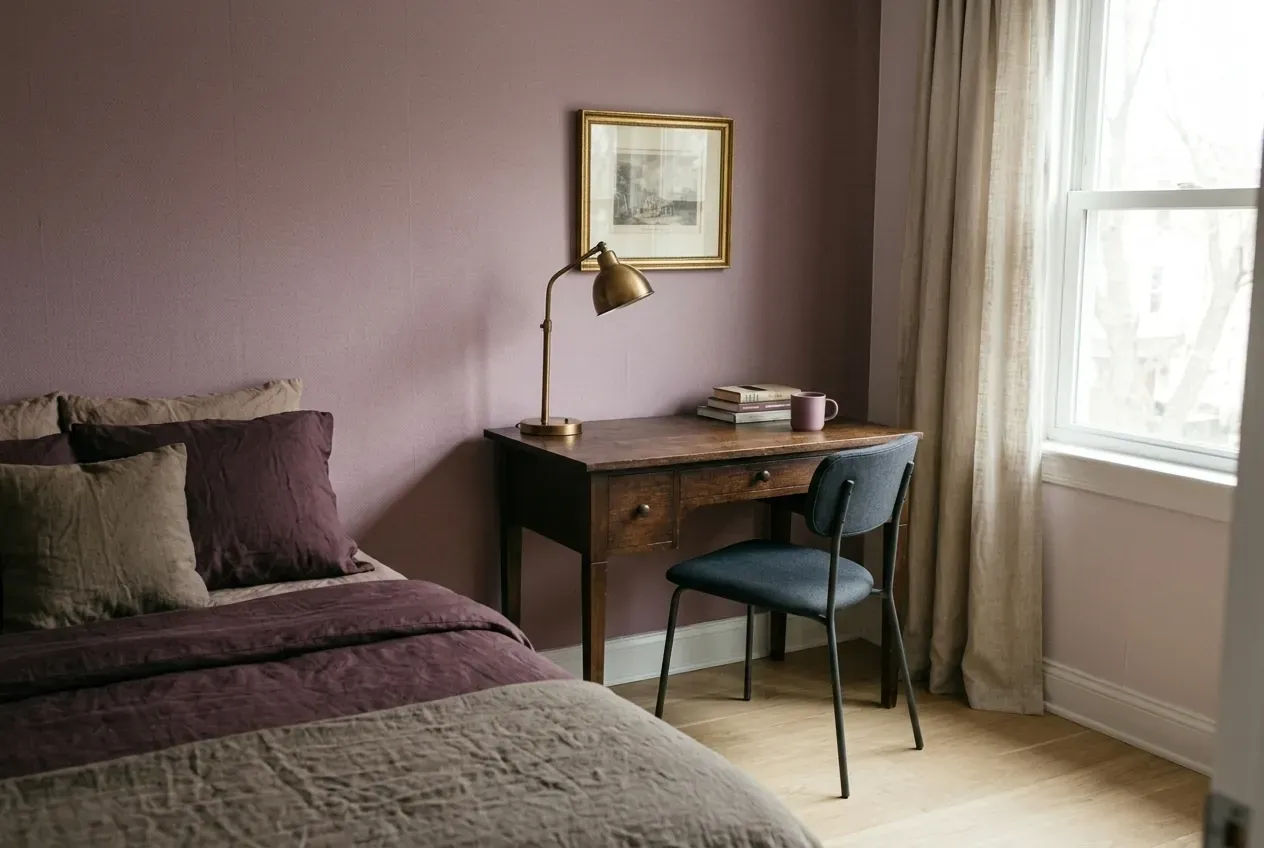 From above and to one side, the full footprint and the walkway read at a glance.
Mixing old wood with a modern room
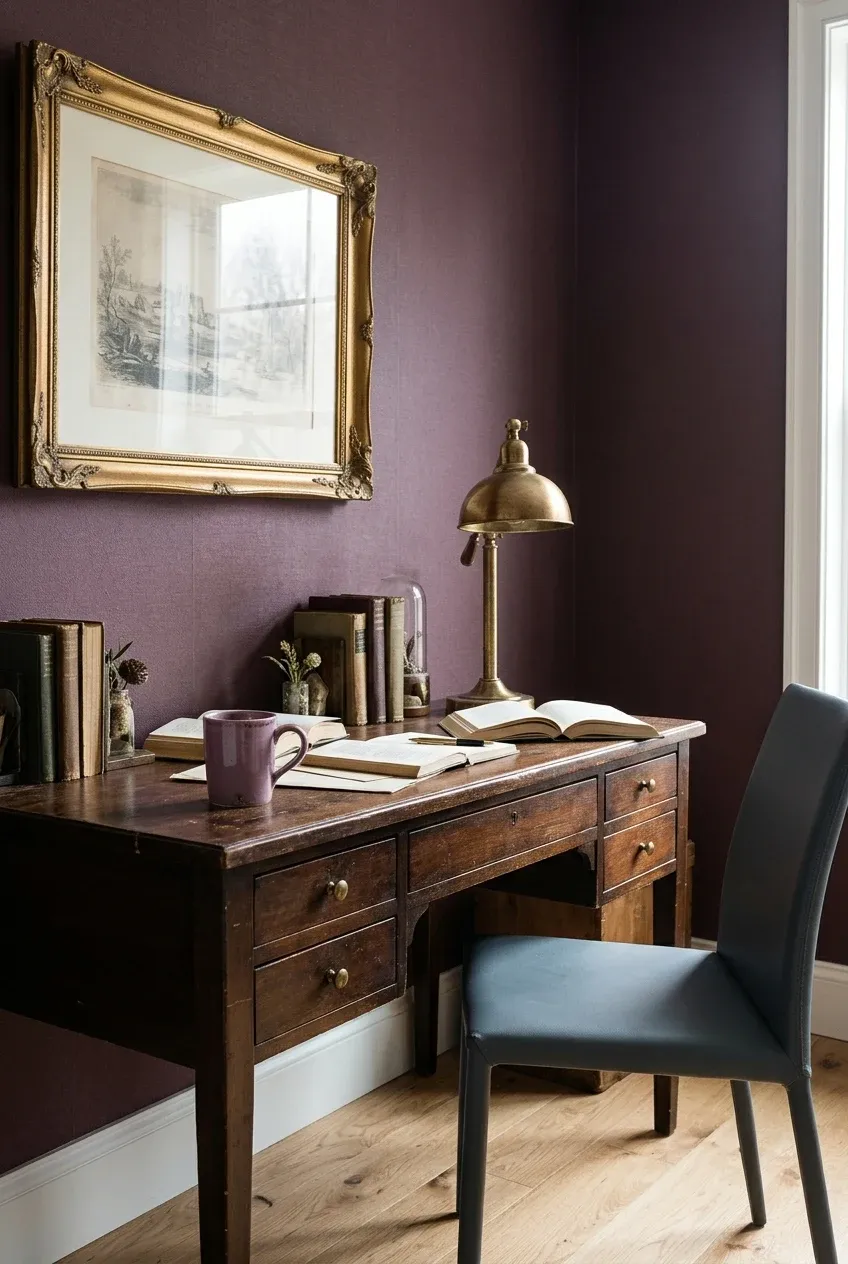
To stop a dark wood desk looking heavy in a white-walled apartment, pair it with a few crisp modern pieces: a clean-lined task chair, a slim brass or black lamp, and one framed print above. A matte modern chair against dark walnut or mahogany makes the desk read as a deliberate focal piece rather than a hand-me-down. A deeper wall color, such as a muted plum, suits an older desk if your lease allows painting; otherwise keep the walls neutral and let the desk carry the character.
For wider workspace ideas, see small bedroom corner desk guide and small balcony and workspace guide.
Before you buy
- Measure the kneehole: 24 in wide and 25 in high at the least.
- Confirm depth is 20 in or less for a tight room.
- Test the drawers and joints.
- Plan felt pads or cups for feet and casters.
- Check the weight against stairs and flooring.
- Choose a modern chair that tucks fully under.
Curated Color Palette & Key Textures
- Plum Paper #F1EAEF
- Dusty Plum #B98CA6
- Deep Plum #5C3A4D
- Antique Gold #C9A24B
General references
Dimensions in these guides are typical planning ranges, not legal minimums, and they can differ by jurisdiction. Use the references below as starting points, then confirm local code and your lease before making changes.
FAQ
How big is a vintage writing desk?
Most vintage writing desks are 36 to 44 in (91 to 112 cm) wide, 18 to 20 in (46 to 51 cm) deep, and 29 to 30 in (74 to 76 cm) tall.
Can I use an antique desk in a rental?
Yes—just add thick felt pads under the legs or remove old metal casters, and check that the kneehole is at least 24 in (61 cm) wide by 25 in (64 cm) high.
How do I mix a vintage desk with modern furniture?
Contrast the warm old wood with a sleek modern chair, a simple brass task lamp, and a calm wall palette so the room feels curated.
Save this idea

Keep reading
Related rooms
Wicker and Rattan Furniture for a Small Balcony
What wicker furniture is, how it differs from rattan and which version survives a small balcony: weave materials, weather limits and a 4 x 8 ft layout.
Most Comfortable Office Chair in a Studio Corner
Compact office chair comfort, measured: 16-20 in (41-51 cm) seat height, 2 in (5 cm) of knee room, folding arms, and a fit for 24 in (61 cm) deep desks.
Small Balcony & Workspace Guide
A pillar guide to small balconies and home workspaces: furniture clearances, privacy screens, desk depths, and lighting for compact apartments.