Curved Shower Curtain Rods: Small Bathroom Clearances
Gain up to 9 in of elbow room in a small bathroom with a curved shower curtain rod. Tub apron clearances, tension vs no-drill mounts, and liner lengths.
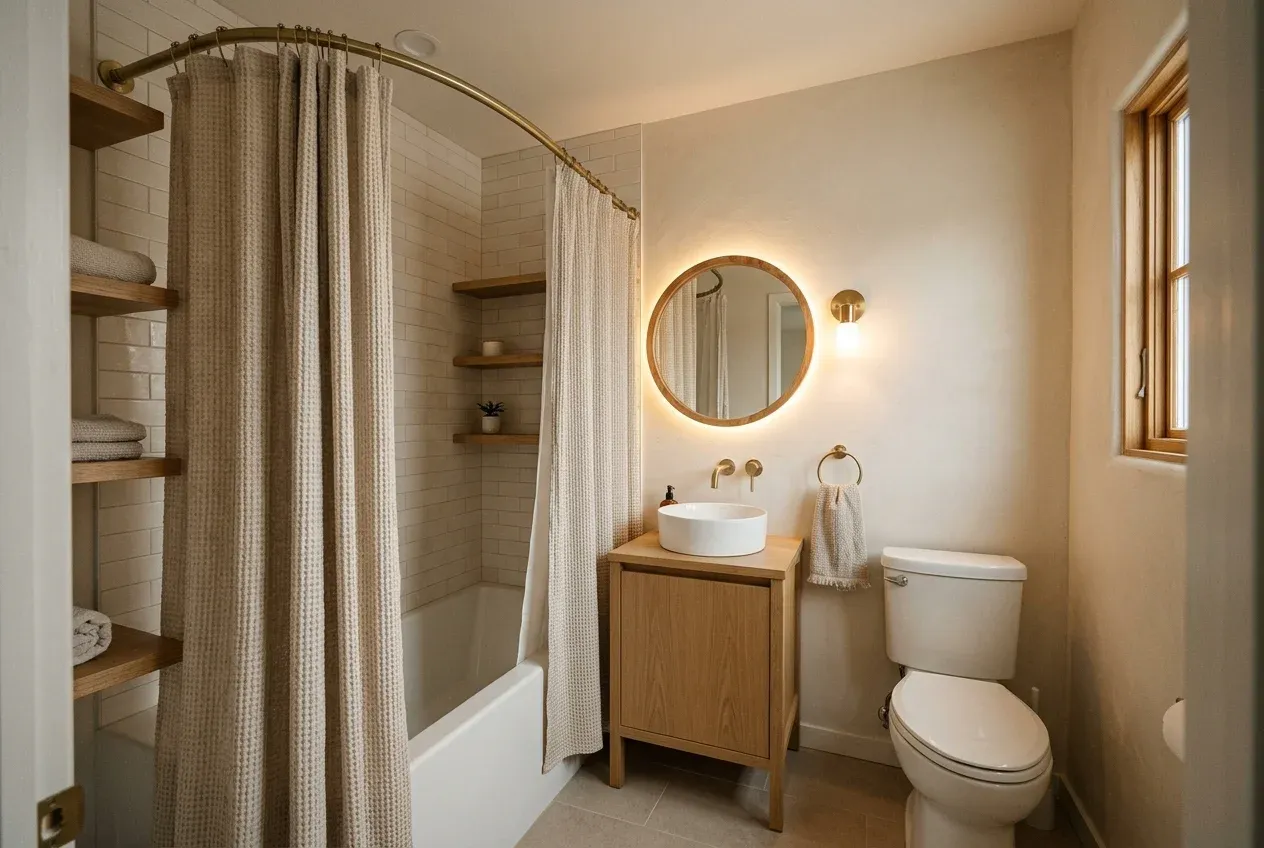
Room specifications
- Room ScaleSmall bathroom (about 5 x 7 ft)
- Design StyleWarm Minimalist / Japandi
- Budget TierBudget ($)
- Palette Swatches4 colors
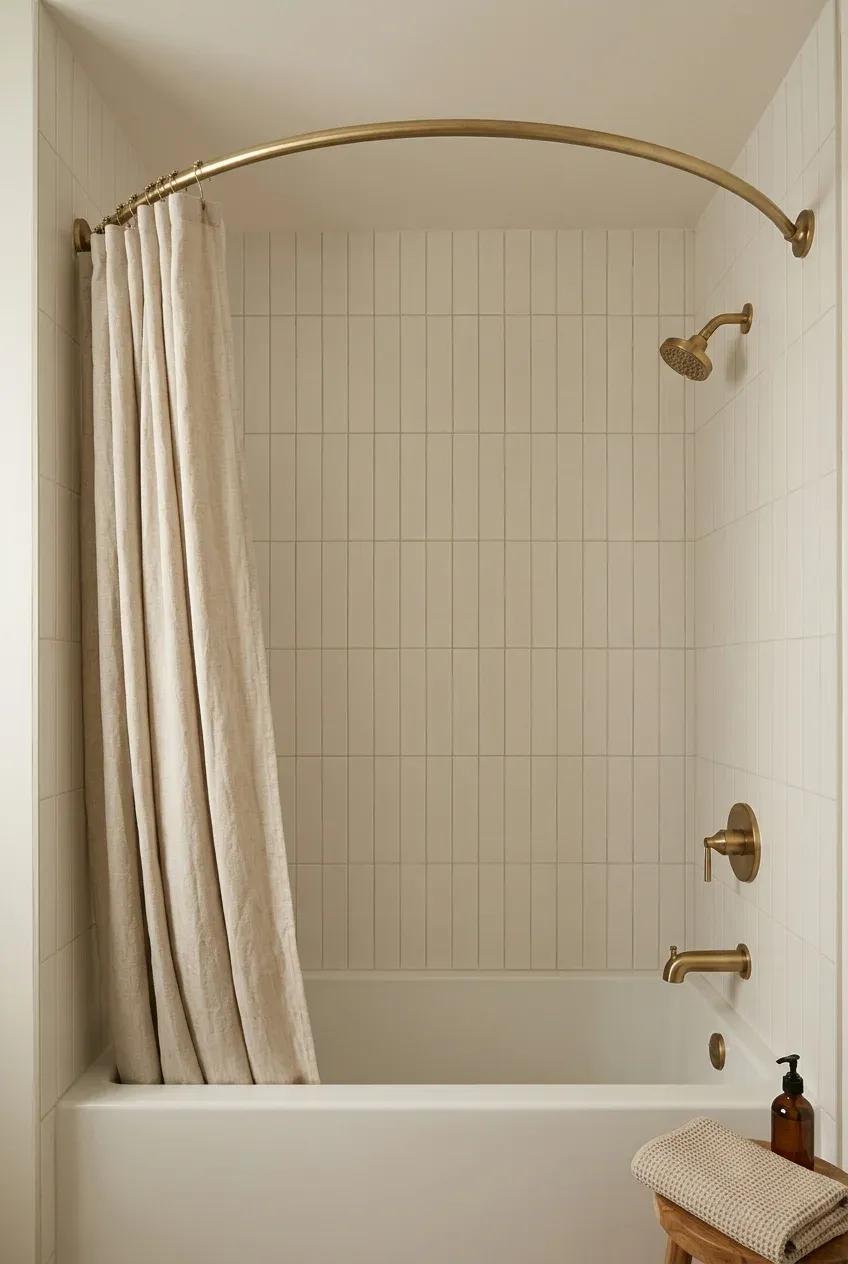
A curved shower curtain rod bows outward at the centre, which adds roughly 6 to 9 in (15 to 23 cm) of elbow and shoulder room inside a tub compared with a straight rod. In a 5 x 7 ft apartment bathroom with a 60 in alcove tub, that is often the cheapest change that makes showering feel less cramped, and a tension model installs without drilling.
The reason it helps: a straight curtain hangs in a flat plane, so the liner billows inward and sticks to you. A curve pushes the fabric away from your body and gives you more room at shoulder height.
What measurements matter
| Feature | Minimum | Target | Why |
|---|---|---|---|
| Mounting height | 74 in (188 cm) | 75 to 77 in (191 to 196 cm) | A standard 72 in curtain hangs 1 to 2 in off the floor |
| Bracket inset from tub rim | 2 in (5 cm) | 3 in (7.6 cm) | Keeps the liner inside the tub |
| Centre arch | 5 in (13 cm) | 6 to 9 in (15 to 23 cm) | Extra room without hitting the toilet or vanity |
| Walkway outside the curve | 24 in (61 cm) | 28 to 30 in (71 to 76 cm) | The bowed curtain does not brush someone at the sink |
These numbers assume a standard 60 in alcove tub (see the soaking tub sizes guide). Before buying, check where the curve will swing in relation to the toilet tank and any vanity door.
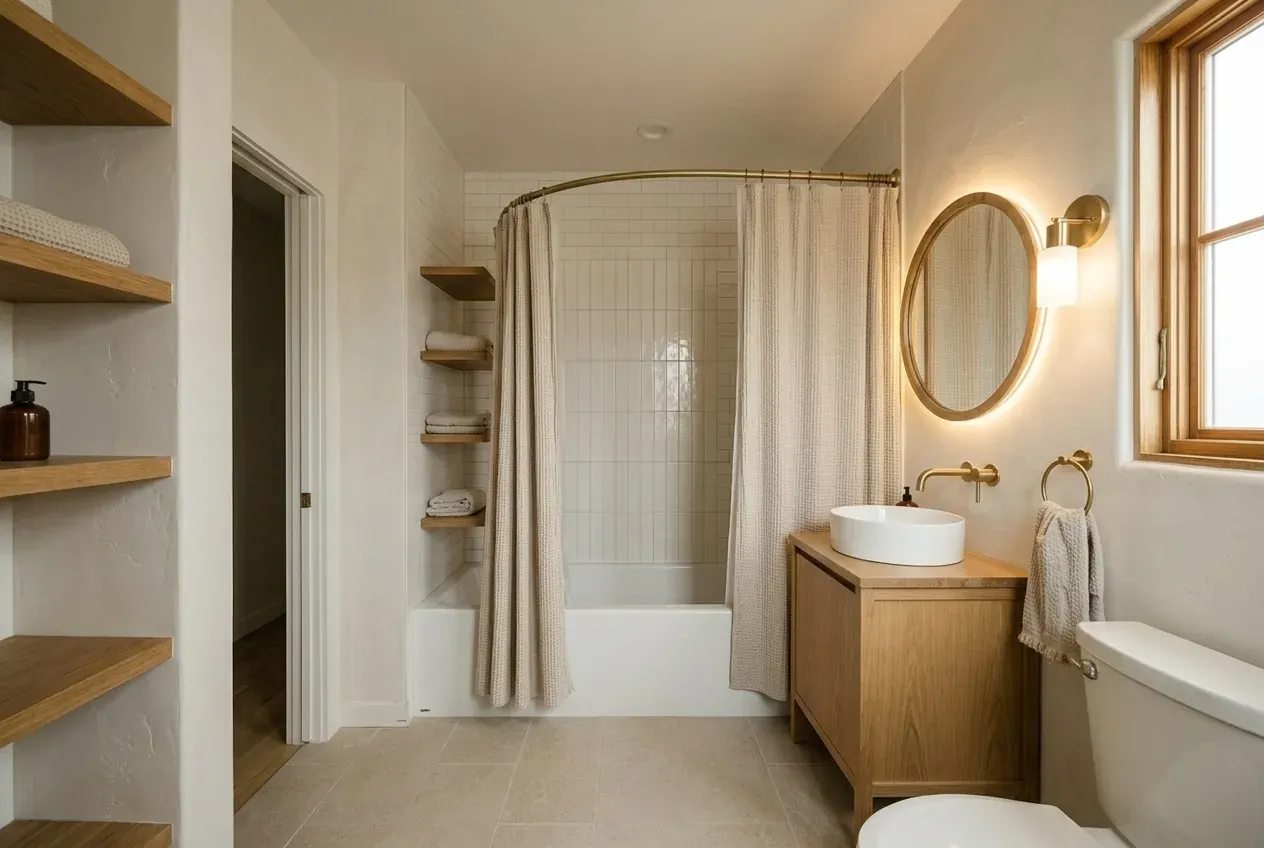 The same room seen from the opposite end, so you can judge the layout from the far side.
Which type of curved shower curtain rod should you choose?
Tension curved rod. Best for renters with smooth tile walls. It grips the walls with ribbed end pads and needs no screws. Spring tension can weaken if the pads slip, so keep the load light and check it holds firm every few weeks. Wipe the tile and the pads clean before installing so the pads get grip.
Fixed rod with swivel brackets. Best if you are allowed to mount into grout lines or drywall. It does not slip and can carry a heavier fabric curtain. If you mount into drywall above the tile, use hollow-wall anchors rated for more than the weight of the rod and curtain. Do not rely on friction on painted drywall, because steam softens paint.
Double curved rod. Two bars: the inner holds the waterproof liner, the outer holds the decorative curtain and can double as a drying rail. It takes more width, so only use it where the walls allow.
If you only need a straight rod that does not drill, the no-drill curtain rod guide covers more options.
How to install a tension curved rod
- Mark 75 to 77 in (191 to 196 cm) on both walls.
- Clean the tile at each mark with a dry cloth.
- Set the bracket or pad so the rod sits about 3 in (7.6 cm) inward from the outer tub rim.
- Twist or extend the sections until the pads press firmly.
- Hang the liner inside the tub and the fabric curtain outside.
- Pull the curtain closed and check the hem sits inside the tub.
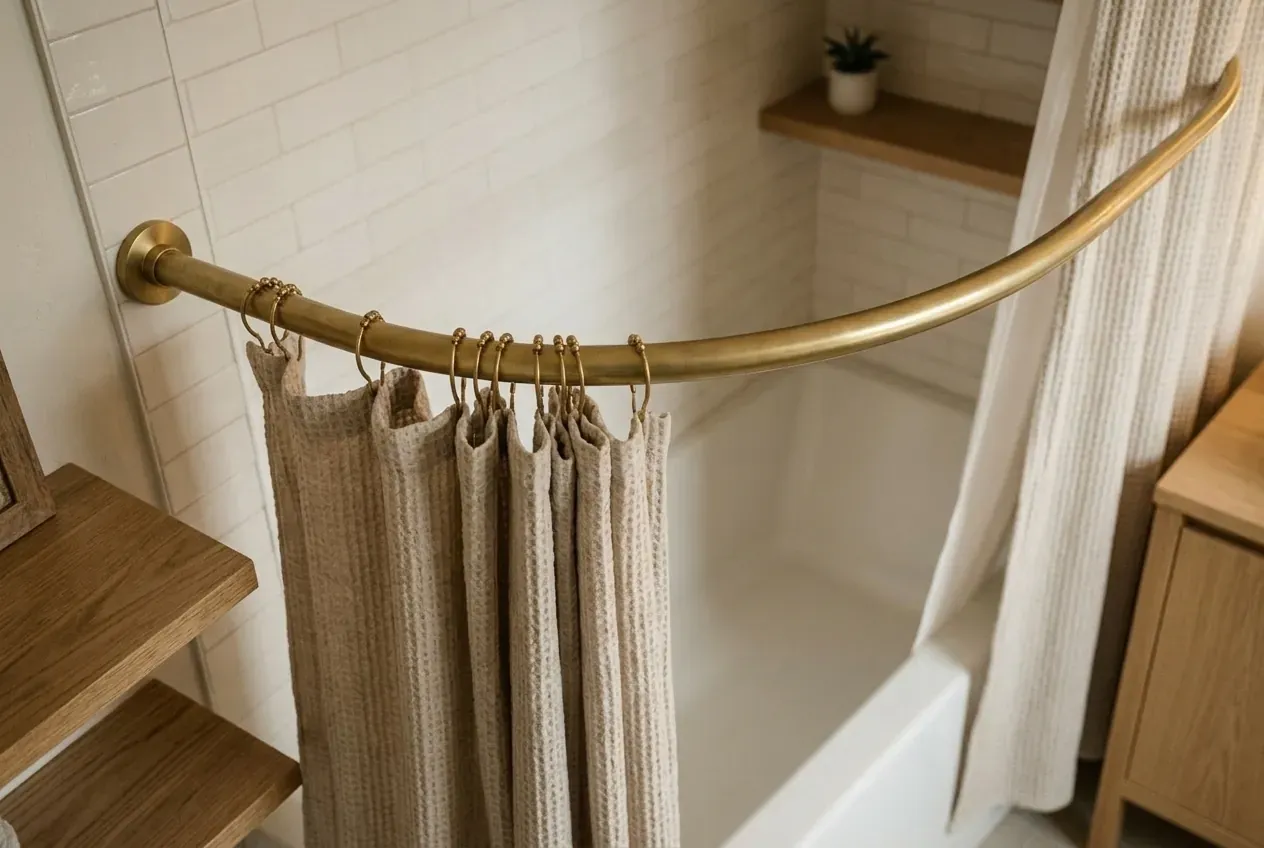 Close up: Mount a curved shower curtain rod 3 in (7.6 cm) inward from the tub outer rim to stop floor puddles.
Common mistakes
- Mounting the brackets flush with the outside tub edge, so the hem drips onto the floor. Keep that 3 in inset.
- Using a thin liner without weight. Choose a liner with magnets or a weighted hem that sticks to a cast iron or enamelled steel tub, which stops it blowing inward.
- Choosing a very heavy curtain on a tension rod.
- Forgetting the curve before choosing a vanity or toilet position.
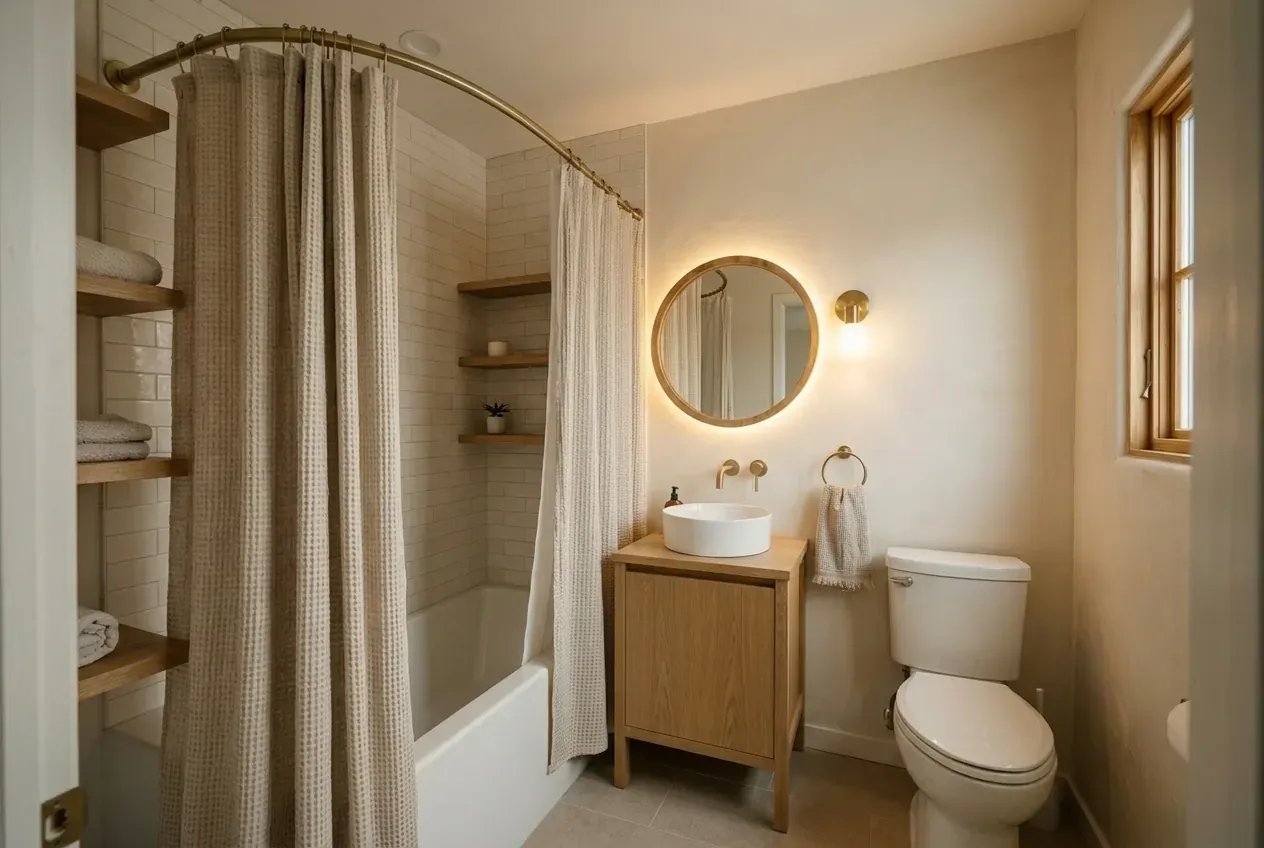 From above and to one side, the full footprint and the walkway read at a glance.
Fabric and finish
A waffle-weave or linen-look curtain in a soft neutral, with a brass or matte black rod, suits most small bathrooms. Keep the liner clear or white so light passes. Wash fabric curtains regularly, since they stay damp in small windowless rooms; see the curtain colour guide for choosing shades. Pairing it with updated bathtub shower combo layouts or fresh tile choices rounds out a rental refresh.
Before you buy
- Measure the wall-to-wall width at rod height.
- Check that the rod’s adjustable range covers that width.
- Confirm the curve clears the toilet and vanity door.
- Pick a weighted or magnetic liner.
- Check the rod’s stated weight limit against your curtain.
- Test that the walls are tile or another smooth surface if you plan to use tension.
Curated Color Palette & Key Textures
- Alabaster Chalk #F5F2EB
- Warm Brass #B8935A
- Warm Greige #BDB3A3
- Charcoal Ink #2F3135
General references
Dimensions in these guides are typical planning ranges, not legal minimums, and they can differ by jurisdiction. Use the references below as starting points, then confirm local code and your lease before making changes.
FAQ
How much extra space does a curved shower rod give you?
A curved shower rod arches outward 6 to 9 inches (15.2 to 22.9 cm) past a standard straight rod, dramatically expanding standing elbow and shoulder room inside the tub.
Will a curved shower curtain rod make a small bathroom feel smaller?
No, because the curtain arches inward toward the tub when open, preserving open floor walkways outside while delivering luxury hotel comfort inside.
Can you install a curved shower curtain rod in an apartment without drilling?
Yes, heavy-duty dual-spring tension curved rods or damage-free industrial adhesive mounting brackets hold firmly on tile without drilling holes.
Save this idea

Keep reading
Related rooms
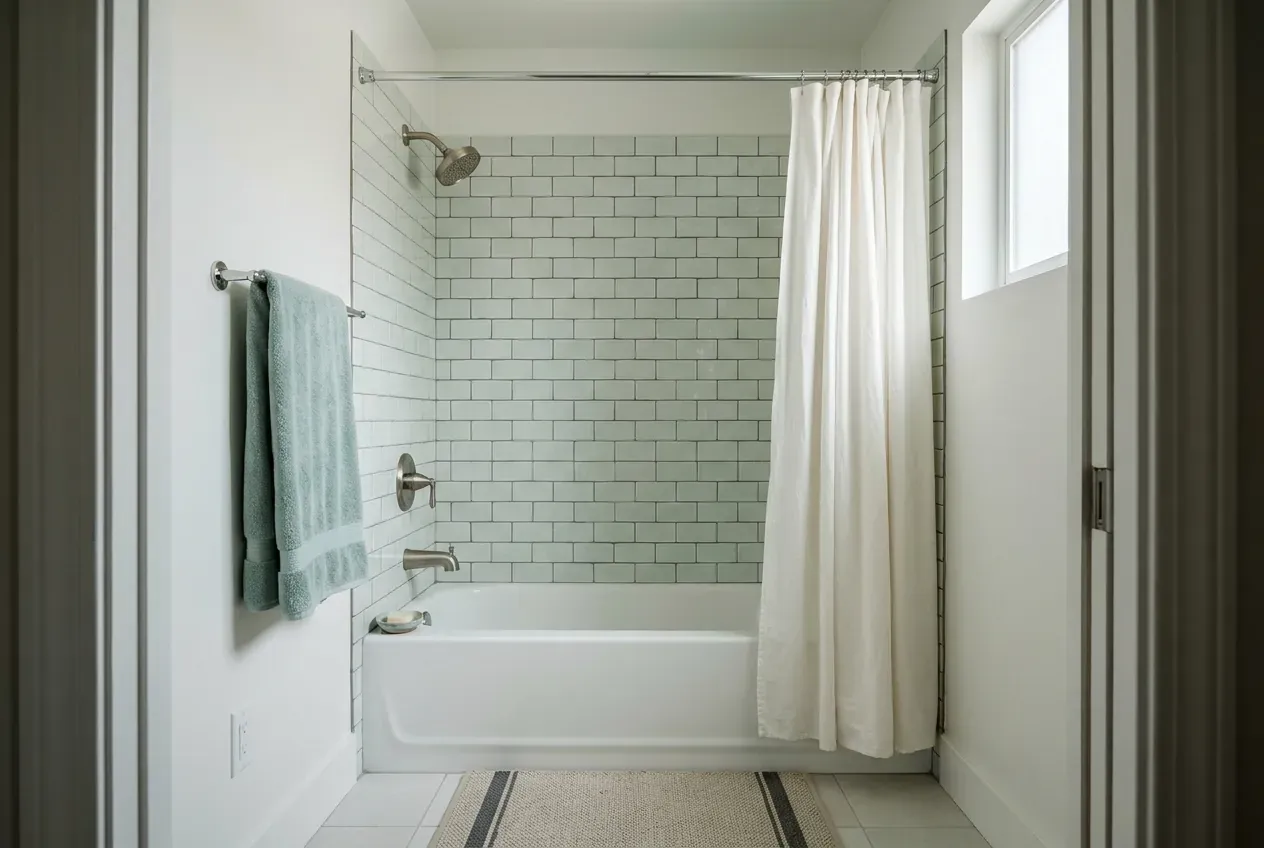
Standard Shower Head Height: 72 to 80 in (183 to 203 cm)
Standard shower head height: mount a fixed head 72 to 80 in (183 to 203 cm) above the floor, 6 in above the tallest user, valve at 38 to 48 in.
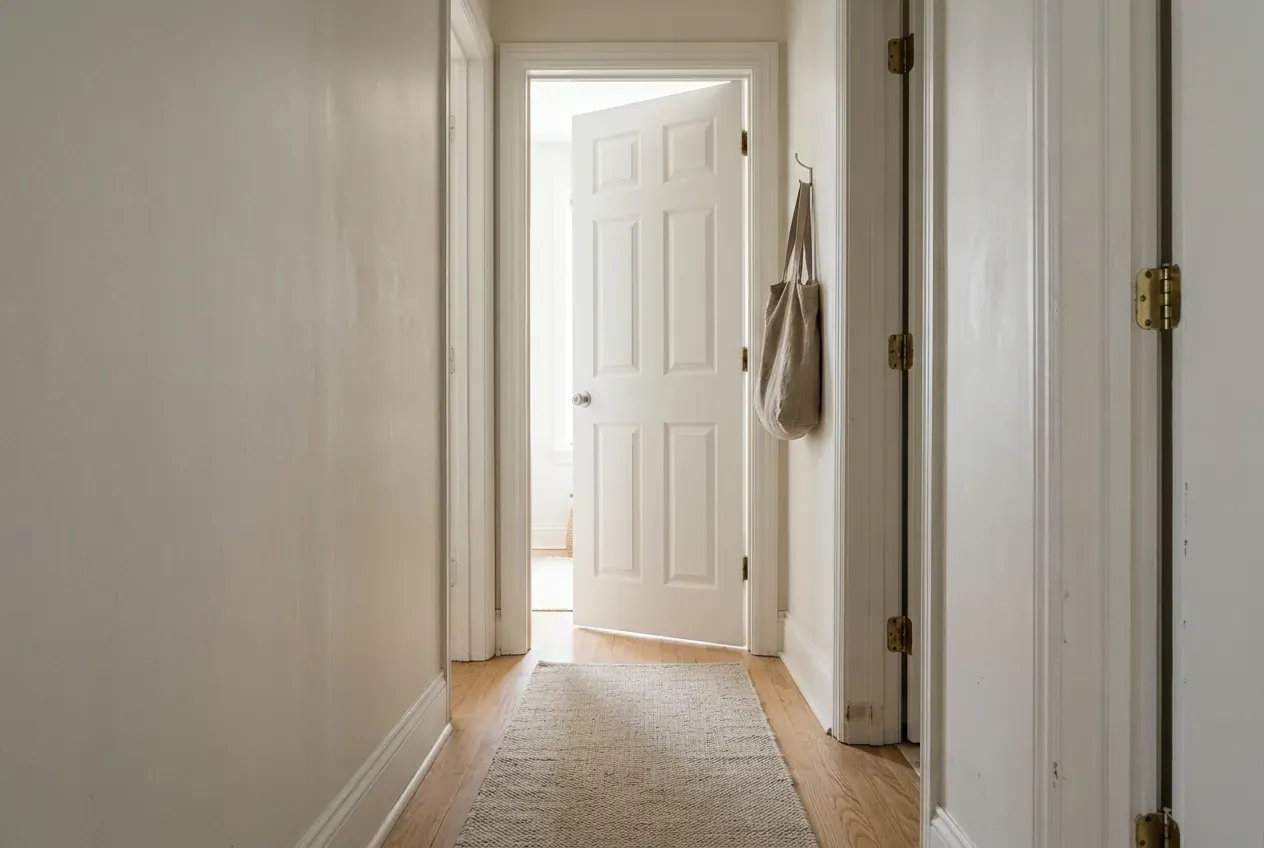
Standard Interior Door Sizes: Widths, Heights, Clearances
Standard interior door sizes: 24 to 36 in (61 to 91 cm) wide and 80 in (203 cm) tall, with clear openings, rough-opening sizes and swing clearance.
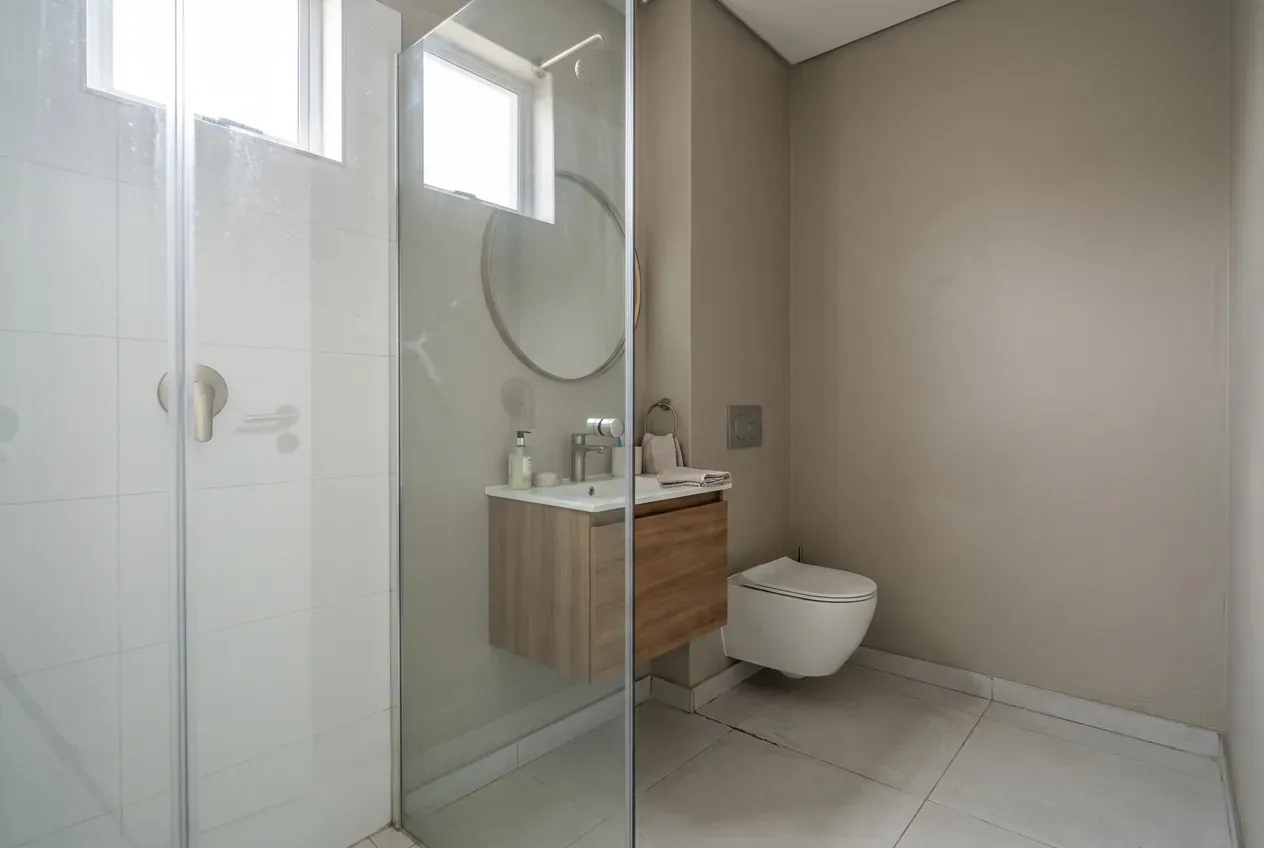
What Is a 3/4 Bathroom? Layouts, Sizes & Code Clearances
What is a 3/4 bathroom? A toilet, sink and shower with no tub, in as little as 5 x 7 ft (152 x 213 cm). Compare quarter, half and full baths.