Chalk Paint Furniture: A Small-Space Renter's Guide
Chalk paint for renters: test a 4 in (10 cm) patch, wait 24 hours, apply two thin coats, then seal with wax or a clear coat for daily use in a small room.
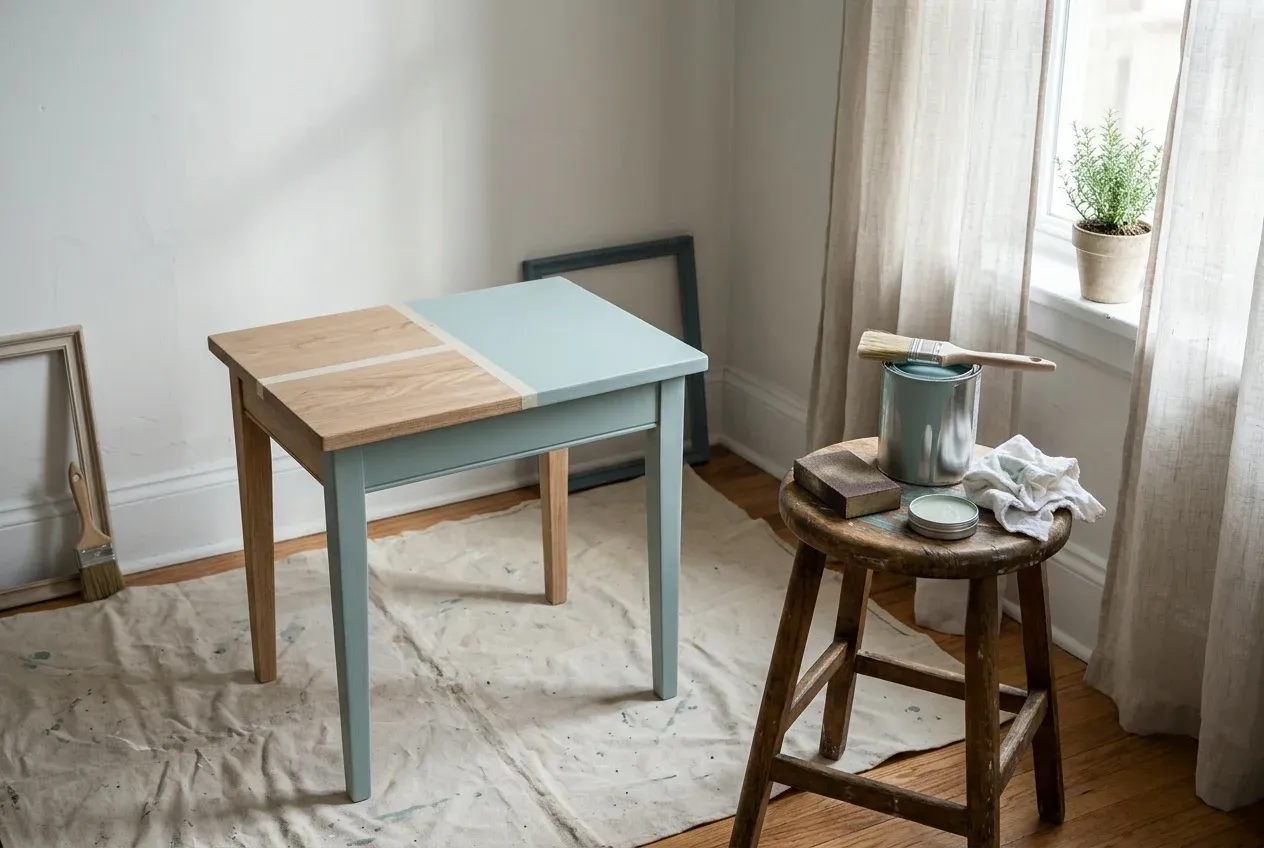
Room specifications
- Room ScaleSmall apartment corner (about 4 x 6 ft) used as a painting station
- Design StylePainted Cottage Revival
- Budget TierBudget ($)
- Palette Swatches4 colors
1. Chalk Paint or Something Else
Chalk paint for furniture works best on low-odour apartment projects because it dries fast, grips matte wood with minimal sanding, and cleans up with water in a 4 x 6 ft (1.2 x 1.8 m) corner. Its ultra-matte mineral finish hides minor brush marks and softens harsh secondhand wood tones without filling a small studio with solvent fumes.
However, chalk paint is not the best choice for every piece. Because the unsealed finish is porous and soft, high-traffic kitchen cabinets or heavy dining tables often fare better with an acrylic-urethane cabinet enamel. If you are refreshing walls alongside your furniture, compare prep steps in our rental wall paint guide and small-room paint selection guide.
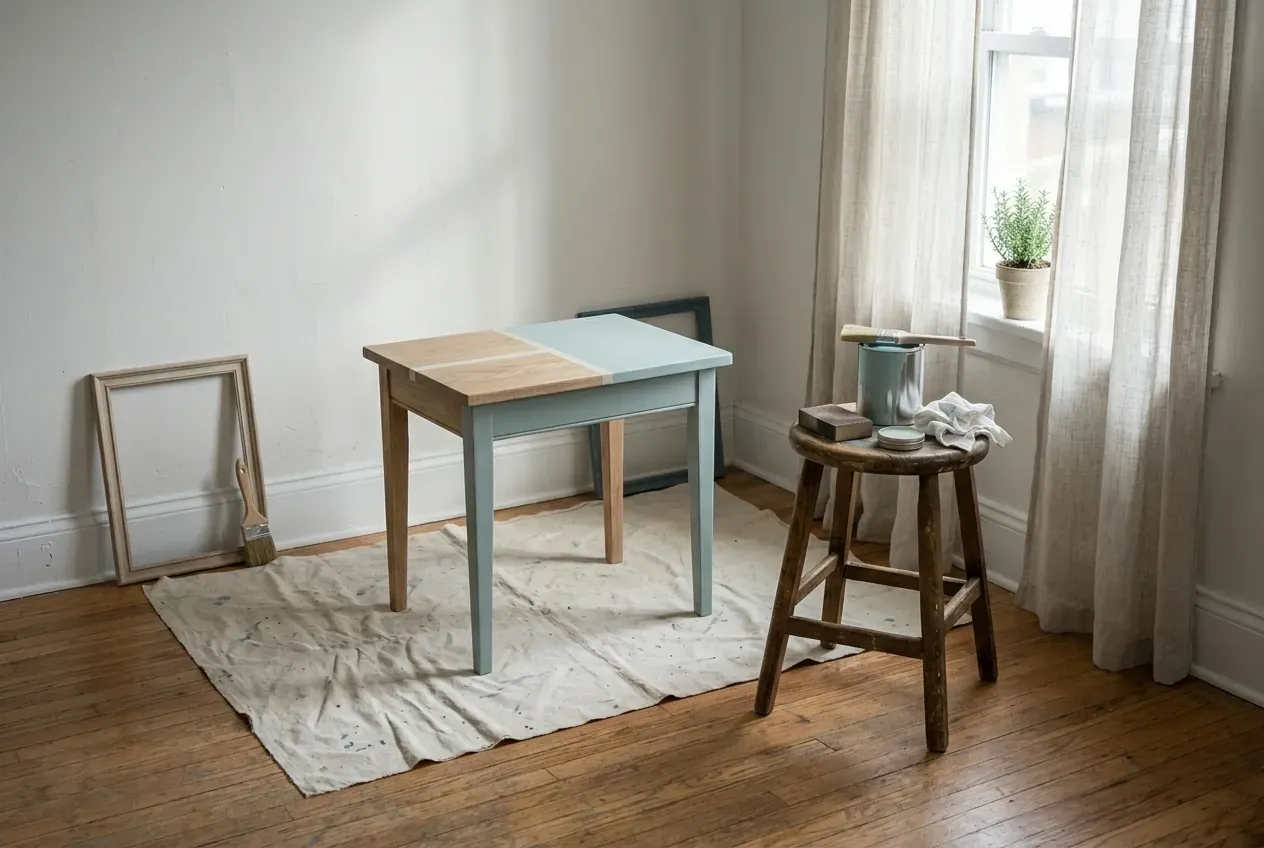 The same room seen from the opposite end, so you can judge the layout from the far side.
2. Prep in One Afternoon
Even “no-sand” chalk paint fails if applied over kitchen grease, furniture polish, or slick melamine. Wipe the entire piece with a mild degreasing cleaner and rinse with damp cloth. Remove knobs and hinges so paint never bridges hardware screws.
On solid or lightly varnished wood, a quick pass with 220-grit sandpaper knocks down shine without creating heavy dust clouds in your apartment. On glossy laminate or flat-pack IKEA pieces, always test a 4 in (10 cm) hidden underside patch and wait 24 hours; slick plastic veneers usually require a thin coat of bonding primer first so the chalk coat does not peel off under a fingernail. Open a window and lay a canvas drop cloth at least 12 in (30 cm) wider than the piece on every side.
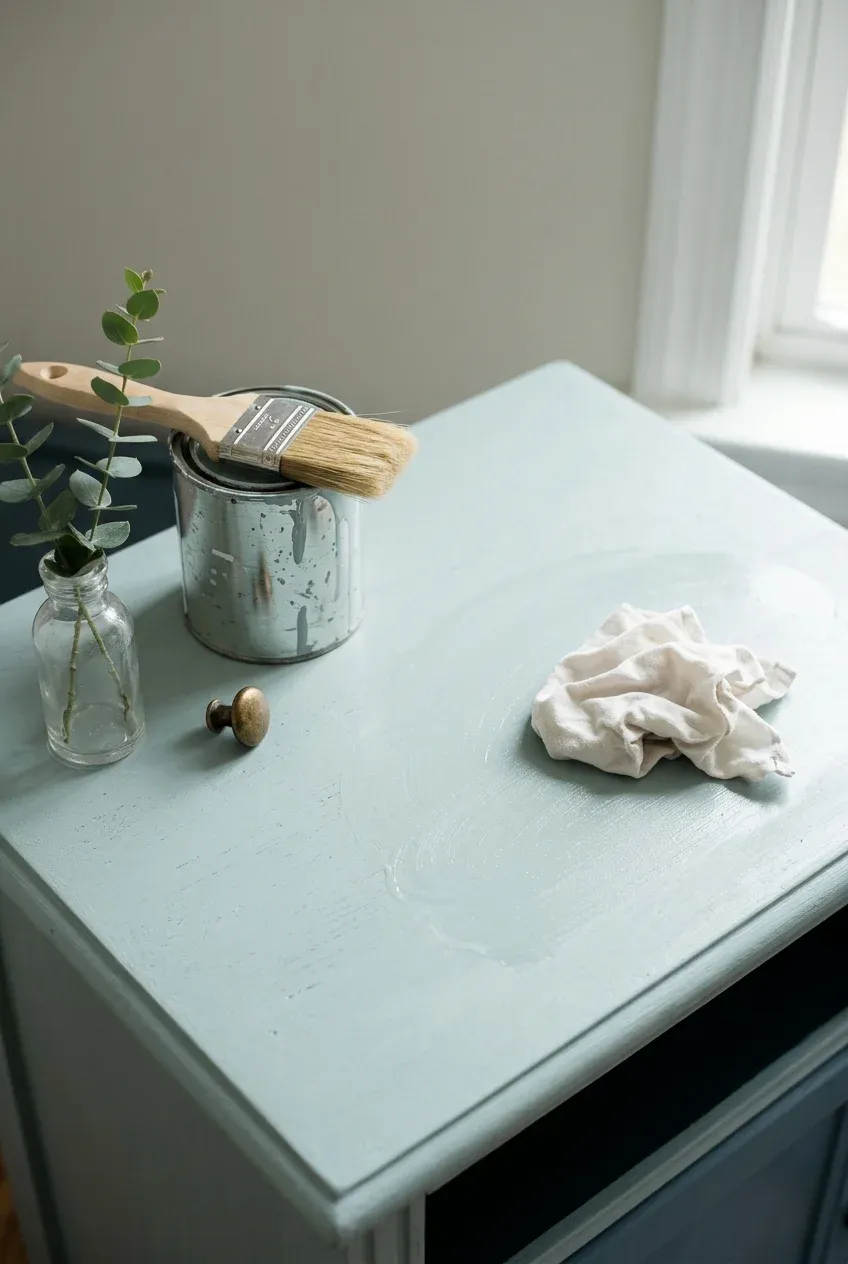
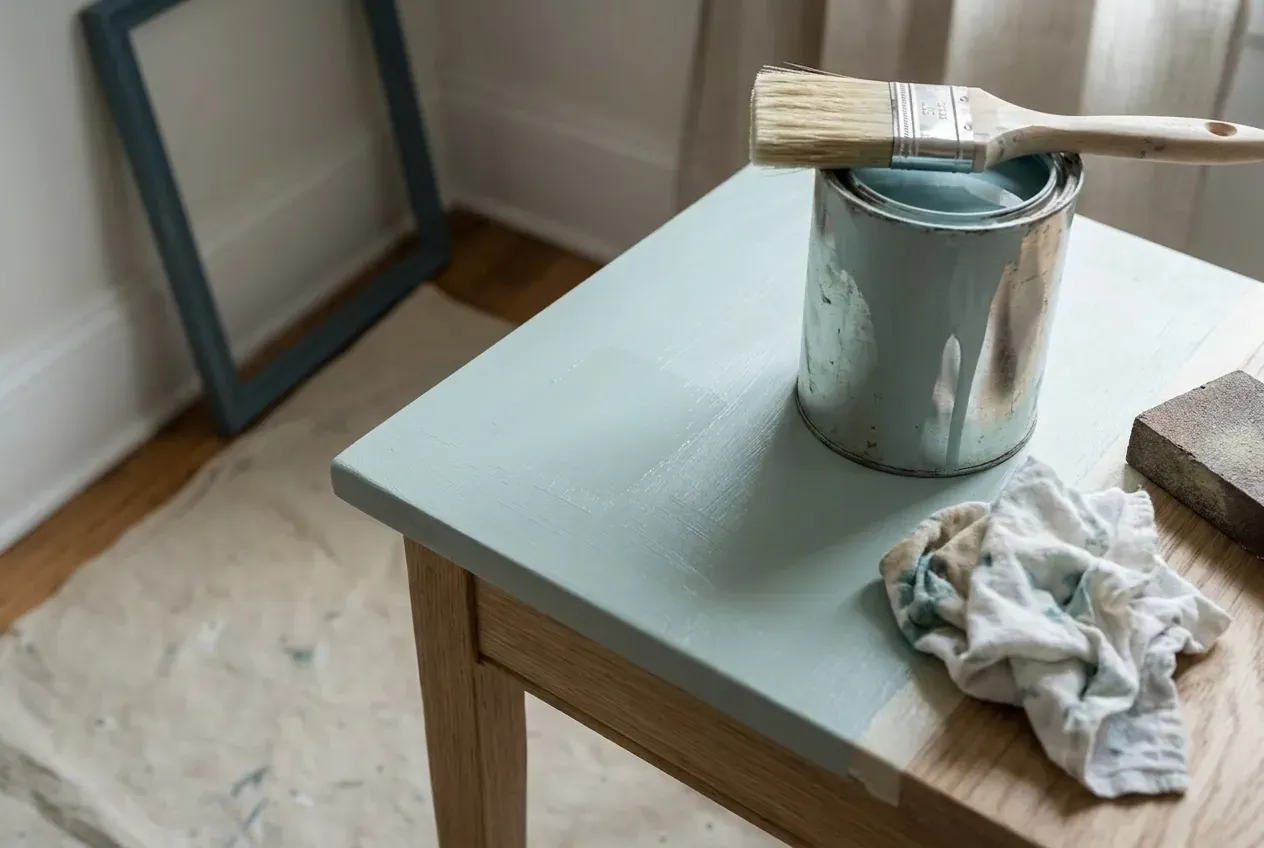 Close up: Test the finish on a 4 in (10 cm) hidden patch and wait 24 hours before committing, because glossy laminate can lift a coat that looks fine when wet.
3. Painting the Piece
Use a 2 in (5 cm) angled synthetic or natural-bristle brush for carved legs and inner corners, and a dense 4 in (10 cm) foam or microfibre mini roller on flat tops and drawer fronts. Two thin coats always outperform one thick coat, which tends to sag on vertical edges and take longer to cure.
Wait the full label-specified dry time—usually 1 to 2 hours—before brushing on the second pass. For a calm coastal-cottage palette in a compact room, pair chalk dust #F5F3F0 walls with duck egg #B9D3CE side tables, painted slate blue #5F8591 drawer fronts, and ink navy wax #1F2F3A accents in recessed trim.
The palette used in this guide
| Colour | Hex | Where it goes |
|---|---|---|
| Chalk Dust | #F5F3F0 | Walls |
| Duck Egg | #B9D3CE | Side tables |
| Painted Slate Blue | #5F8591 | Drawer fronts |
| Ink Navy Wax | #1F2F3A | Accents in recessed trim |
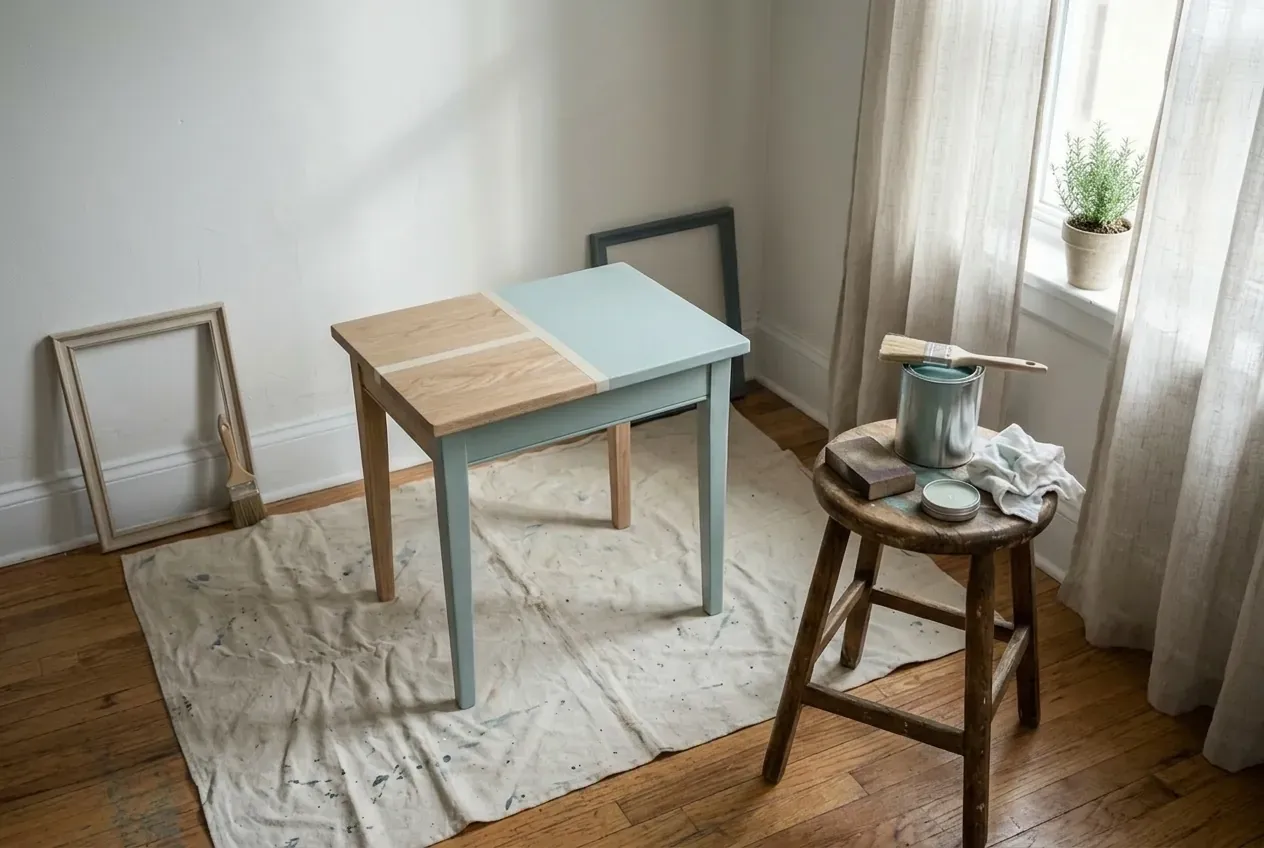 From above and to one side, the full footprint and the walkway read at a glance.
4. Sealing for Real Use
Unsealed chalk paint absorbs water rings and hand oils immediately, so sealing is mandatory. Choose your topcoat based on how hard the piece works:
- Clear Furniture Wax: Rub thin coats into the dry paint with a lint-free cloth and buff after 15 minutes for a velvety sheen—ideal for small storage cabinets and dresser frames.
- Water-Based Clear Coat (Polycrylic): Brush two thin matte coats onto coffee tables, desks, and nightstands that hold hot mugs or water glasses.
Let sealed surfaces cure gently for 48 to 72 hours before setting heavy lamps or books on top so the finish hardens completely.
Drying, Ventilation & Hardware Tips
In a compact apartment, temperature and airflow dictate how cleanly chalk paint levels. Keep a window cracked by 2 in (5 cm) and run a small fan away from the piece so dust never blows onto wet coats. While paint dries, soak tarnished brass knobs in warm soapy water with a soft toothbrush rather than painting over hardware. If a brush leaves faint ridges on a flat tabletop, lightly sand the dry second coat with 400-grit paper before applying water-based clear coat, giving you a smooth finish that wipes clean after every meal.
For renters who want a reversible change on a thrifted piece, chalk paint also layers well over existing wood without stripping down to raw timber. If you ever want to repaint the same nightstand in a few years, a light 220-grit scuff over clean water-based clear coat gives you a fresh surface immediately. Store leftover paint in a sealed glass jar labelled with the room and date, and wrap damp brushes in cling film between coats rather than washing them twice in a tiny kitchen sink. Keep a damp microfibre cloth handy during painting so any stray drips on baseboards wipe away cleanly before they dry.
Taking time to degrease, prime slick laminate, and let your clear coat cure for 48 hours turns a thrifted side table into a durable everyday piece.
Curated Color Palette & Key Textures
- Chalk Dust #F5F3F0
- Duck Egg #B9D3CE
- Painted Slate Blue #5F8591
- Ink Navy Wax #1F2F3A
General references
Dimensions in these guides are typical planning ranges, not legal minimums, and they can differ by jurisdiction. Use the references below as starting points, then confirm local code and your lease before making changes.
FAQ
Do I need to sand before chalk paint?
Often not on bare or lightly finished wood, but clean it and scuff glossy surfaces. Laminate and IKEA pieces usually need a bonding primer first. Check the paint maker's instructions.
How do I seal chalk paint?
Chalk paint is porous, so top it with wax or a water-based clear coat. Wax gives a soft look; a clear coat holds up better on a table that gets daily use.
Can I paint IKEA furniture with chalk paint?
Yes on most pieces if you clean, scuff and prime the laminate first. Test a hidden patch and let it cure before use.
Save this idea

Keep reading
Related rooms

Standard Window Sizes: 24 x 36 to 48 x 72 in Chart
Standard window sizes in inches and cm: most run 24 to 48 in wide by 30 to 72 in high, and a bedroom window needs a 5.7 sq ft clear opening for egress.
TV Dimensions by Screen Size: 65 in Is 56.7 x 31.9 in
TV dimensions by screen size in inches and cm: a 65 in TV is 56.7 x 31.9 in, a 55 in is 47.9 x 27.0 in, plus the viewing distance and stand width for each.
How High to Hang Pictures: 57 in (145 cm) Center
Hang pictures with the center 57 in (145 cm) up, the frame bottom 7 to 10 in (18 to 25 cm) above a sofa, and frames 2 to 3 in (5 to 8 cm) apart.