Narrow Nightstands for Small Bedrooms: Sizing Guide
Fit bedside storage into tight gaps with narrow nightstands: 10 to 12 inch widths, matching the mattress height, and keeping cords off the surface.
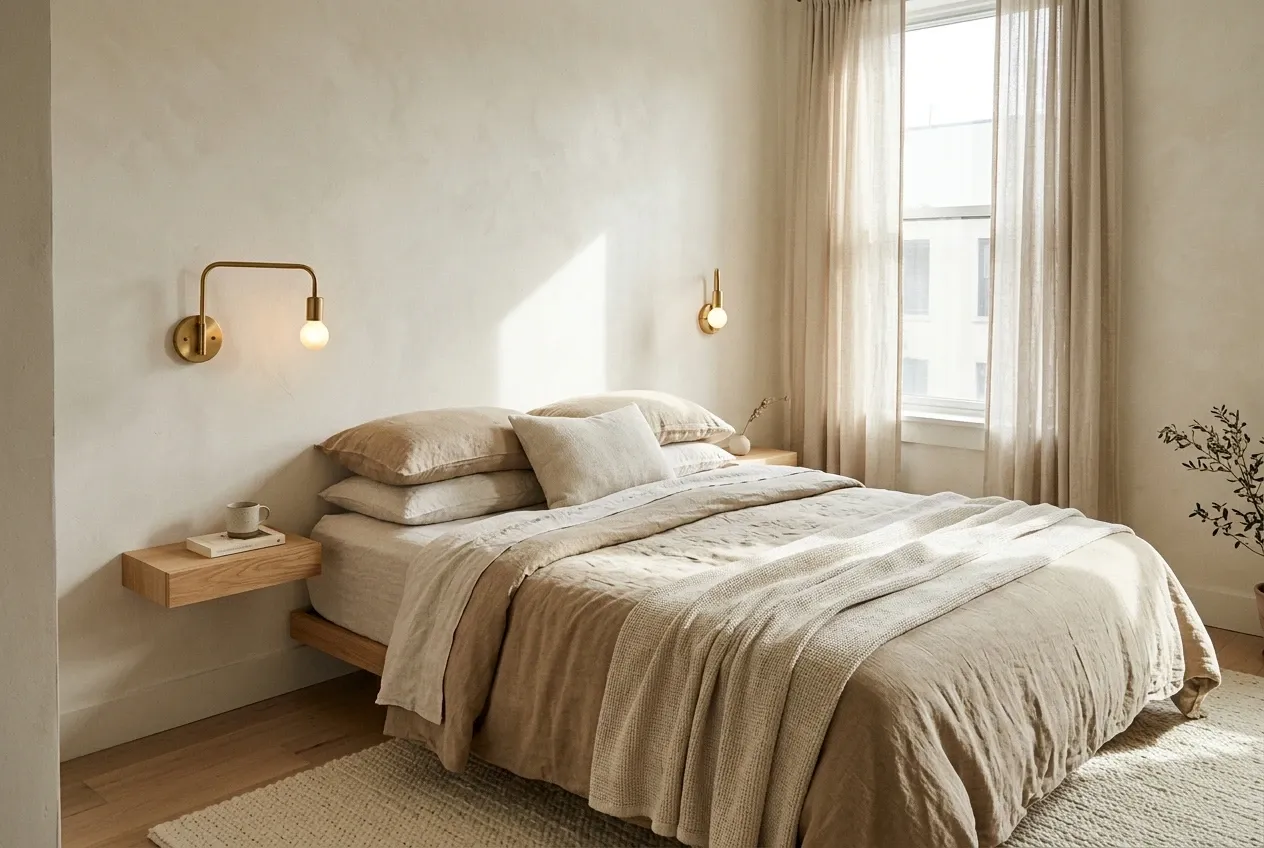
Room specifications
- Room ScaleCompact apartment bedroom (about 9 x 10 ft)
- Design StyleWarm Minimalist / Japandi
- Budget TierBudget ($)
- Palette Swatches4 colors
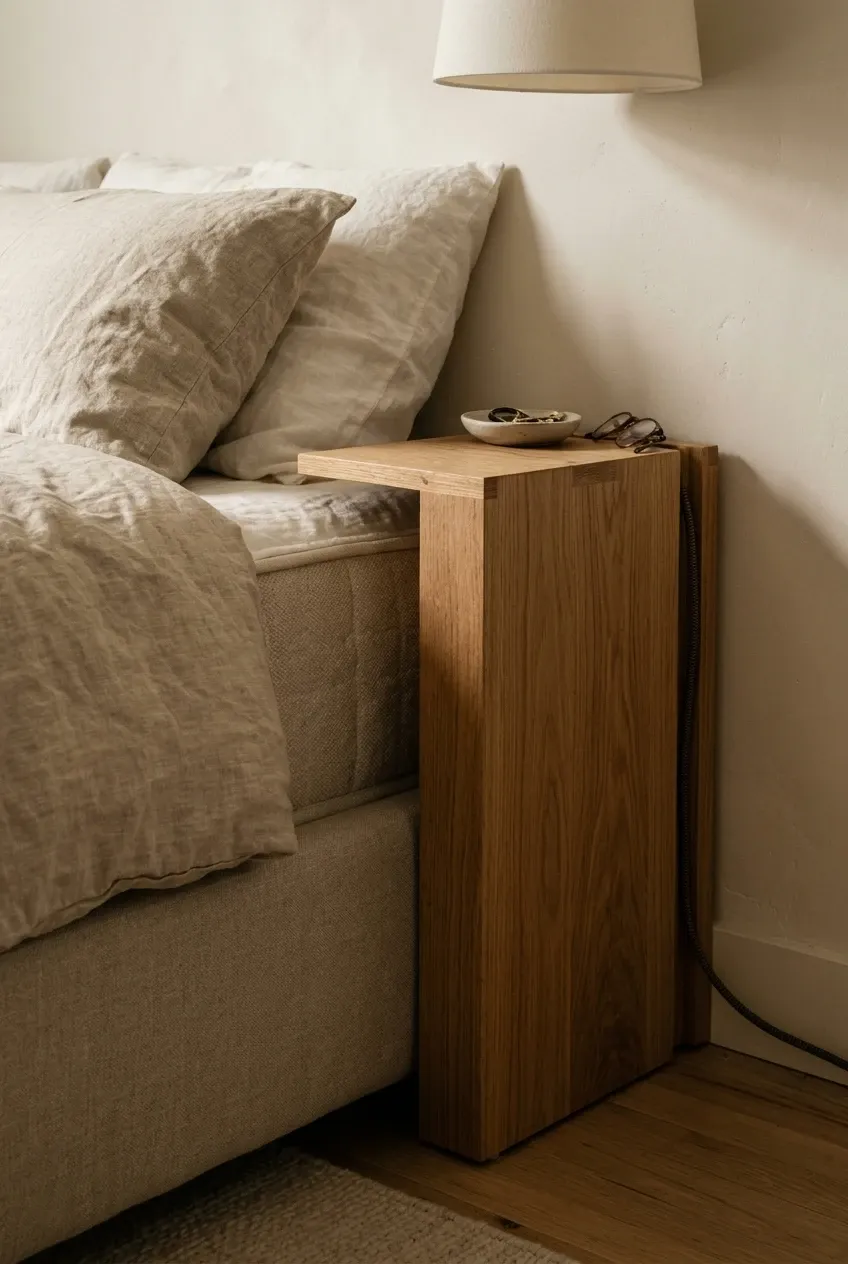
A narrow nightstand in a small bedroom should be about 10 to 12 inches wide (up to 14 at most), 12 to 14 inches deep, and level with the top of the mattress or 1 to 2 inches above it. That is enough for a phone, a glass of water and a book without taking a foot of floor from the walkway.
Standard bedside tables run 20 to 24 inches wide. In a room under 100 square feet, that width crowds closet doors and pinches the path around the bed. A slim table keeps the function and gives the floor back. For styling once it is in, see nightstand styling for small bedrooms. A nightstand is one piece of a wider storage plan: the best storage solutions for small apartments compares the options room by room.
Which dimensions matter
| What | Minimum | Small-room target |
|---|---|---|
| Width | 10 in (25 cm) | 12 in (30 cm) |
| Top vs mattress top | Level | 1 to 2 in higher |
| Depth | 10 in (25 cm) | 12 to 14 in (30 to 35 cm) |
| Space to closet door | 22 in (56 cm) | 26 to 28 in (66 to 71 cm) |
| Floor clearance if floating | 10 in (25 cm) | 14 in (35 cm) |
Height is the part people get wrong. If the top sits below the mattress, you reach down and knock things over in the dark. If it is far above, you reach up awkwardly. Measure the mattress top in your room, with the bedding on, before you look at tables. Other considerations around windows are in the bed under window layout guide.
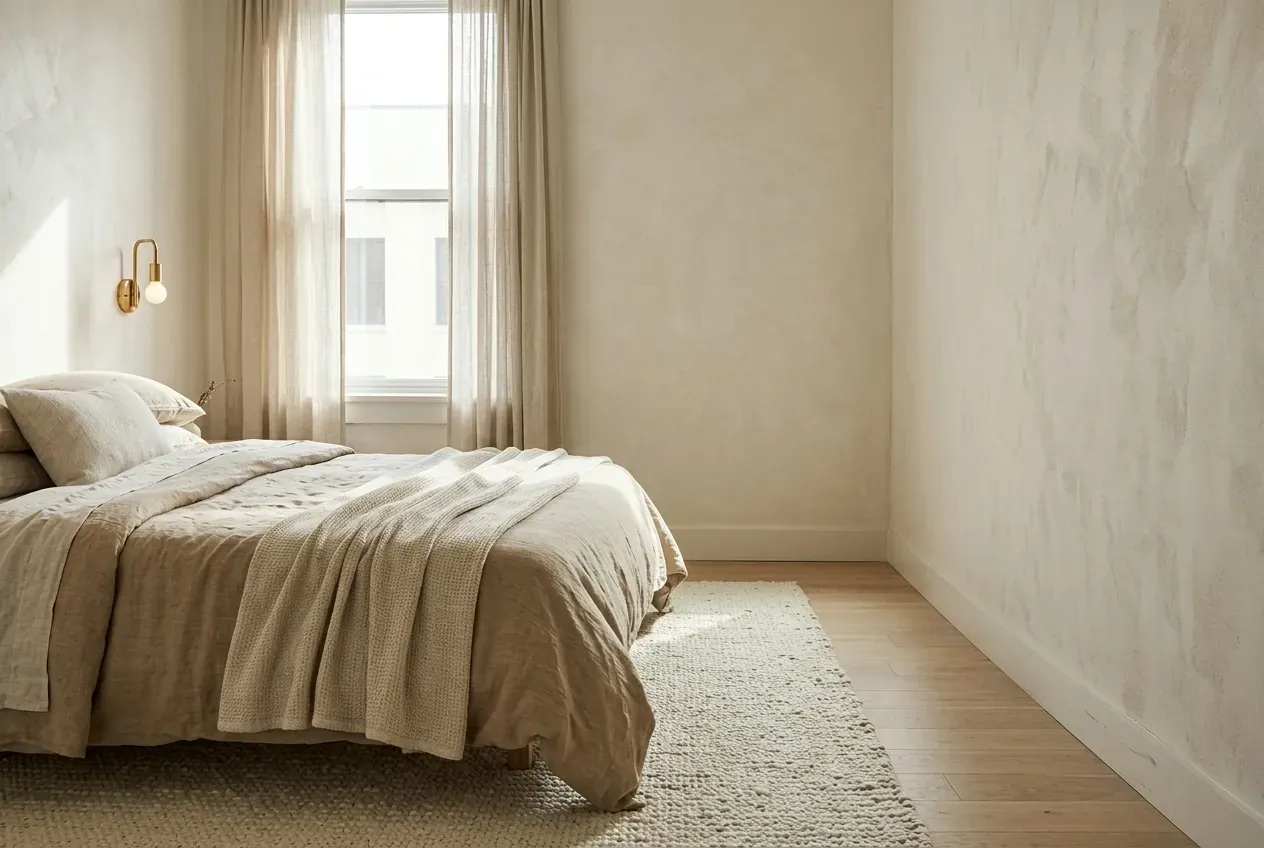 The same room seen from the opposite end, so you can judge the layout from the far side.
Which style fits your gap
A 12-inch gap: floating drawer box. A small wall-hung box, around 11 inches wide and 10 inches deep, frees the floor and holds a book and charger in the drawer. It must be fixed into a stud or with anchors rated for the load. If you rent, ask before drilling, or choose a freestanding table instead.
Under 10 inches: slide-under C-table. A slim metal and wood table whose base slides beneath the bed frame puts the top right beside the mattress. It works only if your bed frame leaves enough space underneath, so check clearance.
More storage needed: a tall, slim pedestal. A 12-inch square unit with open shelves and a closed lower cubby stacks storage upward rather than outward. Tall units should be anchored per the maker’s instructions, particularly if children or pets are around.
Pick the style based on the real gap you measured, not on the picture. Tape the footprint to the floor beside the bed and sit on the edge of the mattress to test it.
Lighting and cords
A 10-inch top has no room for a big lamp base. Consider a plug-in wall sconce above the table, with the light mounted about 56 inches from the floor and centred over the table, so the surface stays free. Check the sconce height guide for renter-friendly options.
To tame charging cables:
- Use adhesive cable clips down the rear edge so cords do not slide behind the bed.
- If a table is flush to the wall, check it clears the baseboard or has a cut-out at the bottom.
- Some tables have a rear groove or cut-out for cords; if yours does not, a clip is simpler than modifying the wood.
- A flat wireless charging pad can sit on the top, but keep it away from keys and metal objects.
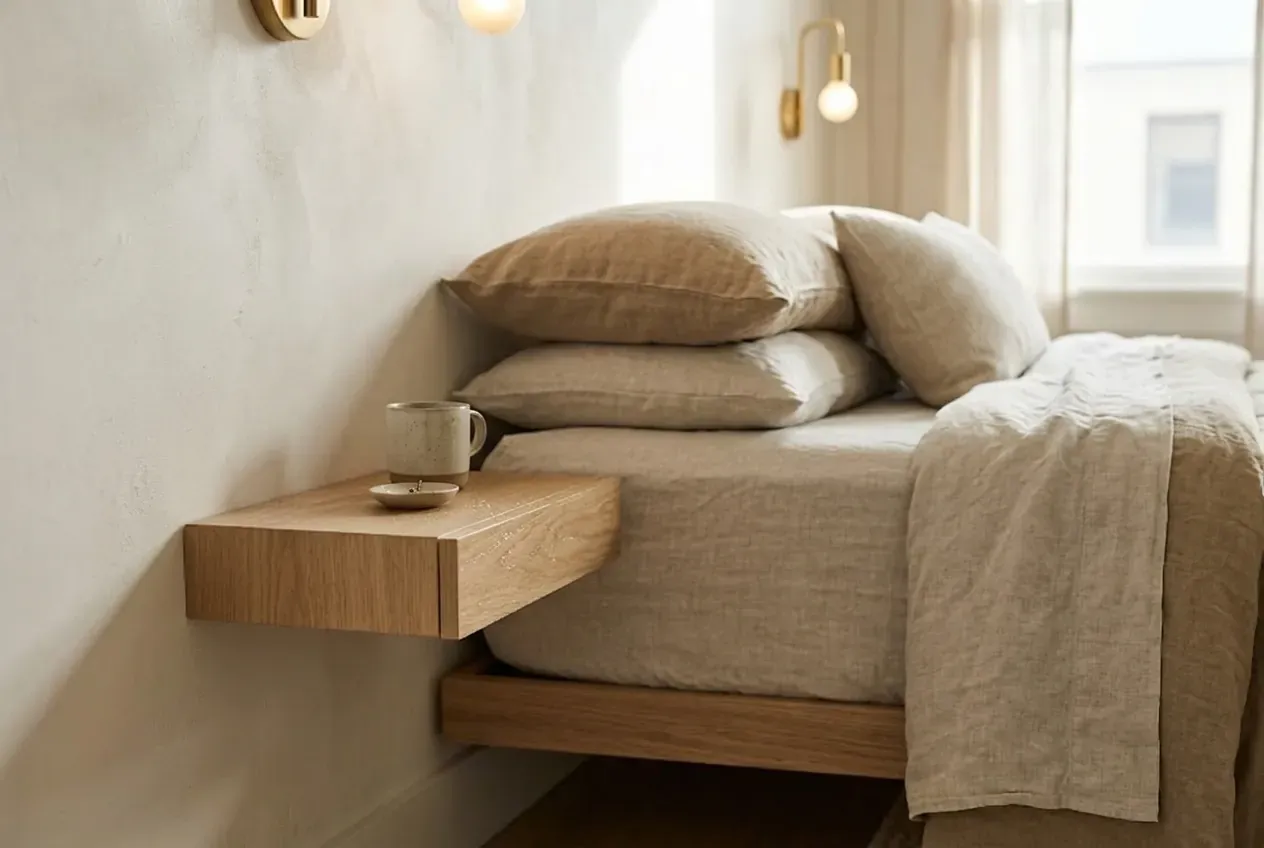 Close up: Align the nightstand top within 1 inch (2.5 cm) of the mattress top and restrict width to 10 to 12 inches (25 to 30 cm).
What to keep on top
Narrow surfaces fill up fast. Limit it to what you use nightly: a shallow dish for jewellery or a ring, and a carafe or glass. Everything else goes in the drawer or on a wall shelf.
Warm oak, pale walls and a brass or brushed-metal accent read as calm and suit most small rooms; the material matters less than the proportions.
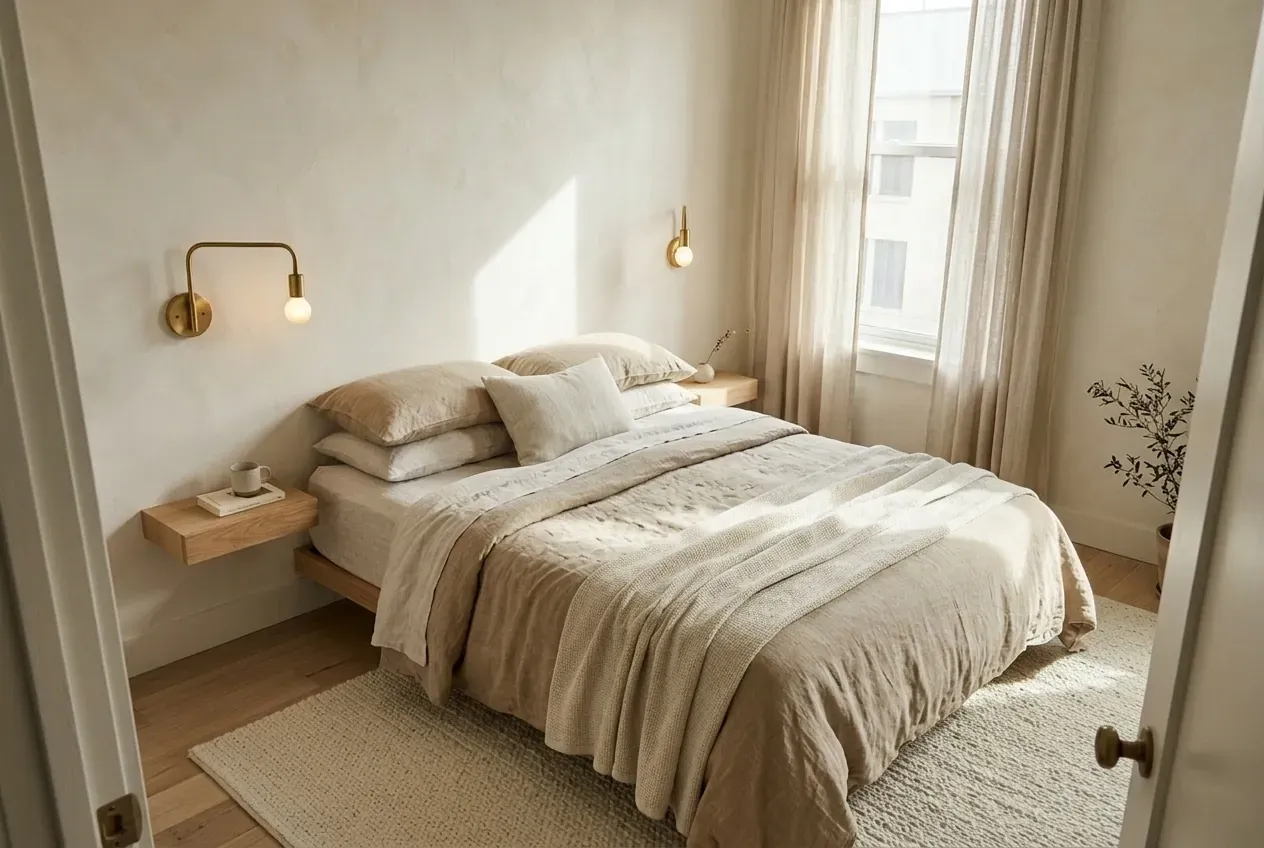 From above and to one side, the full footprint and the walkway read at a glance.
Common mistakes
- Choosing by width alone and ignoring the height against the mattress.
- Placing a deep table beside a closet door.
- Forgetting the cord route until after the table is in.
- Mounting a floating box into drywall alone.
Before you buy
- Measure the gap beside the bed in two places.
- Measure mattress top height with bedding on.
- Confirm the closet door still swings fully.
- Decide on a sconce or small lamp, and where the outlet is.
- For floating styles, check wall type, stud position and your lease.
Curated Color Palette & Key Textures
- Chalk Dust #F6F4EE
- White Oak #C8B293
- Oatmeal Linen #DBD4C5
- Brushed Brass #BFA267
General references
Dimensions in these guides are typical planning ranges, not legal minimums, and they can differ by jurisdiction. Use the references below as starting points, then confirm local code and your lease before making changes.
FAQ
What is the standard width for a narrow bedside table?
A narrow nightstand measures between 10 and 14 inches (25 to 35 cm) wide, allowing it to squeeze into tight gaps between bed frames and walls.
How high should a nightstand be relative to the bed mattress?
A nightstand should sit level with or 1 to 2 inches higher than the top of your sleeping mattress, typically between 24 and 26 inches above the floor.
Are floating nightstands better than legged tables in small rooms?
Floating nightstands are superior in compact rooms because exposing the floor underneath creates visual expanse and leaves room for slippers.
Save this idea

Keep reading
Related rooms
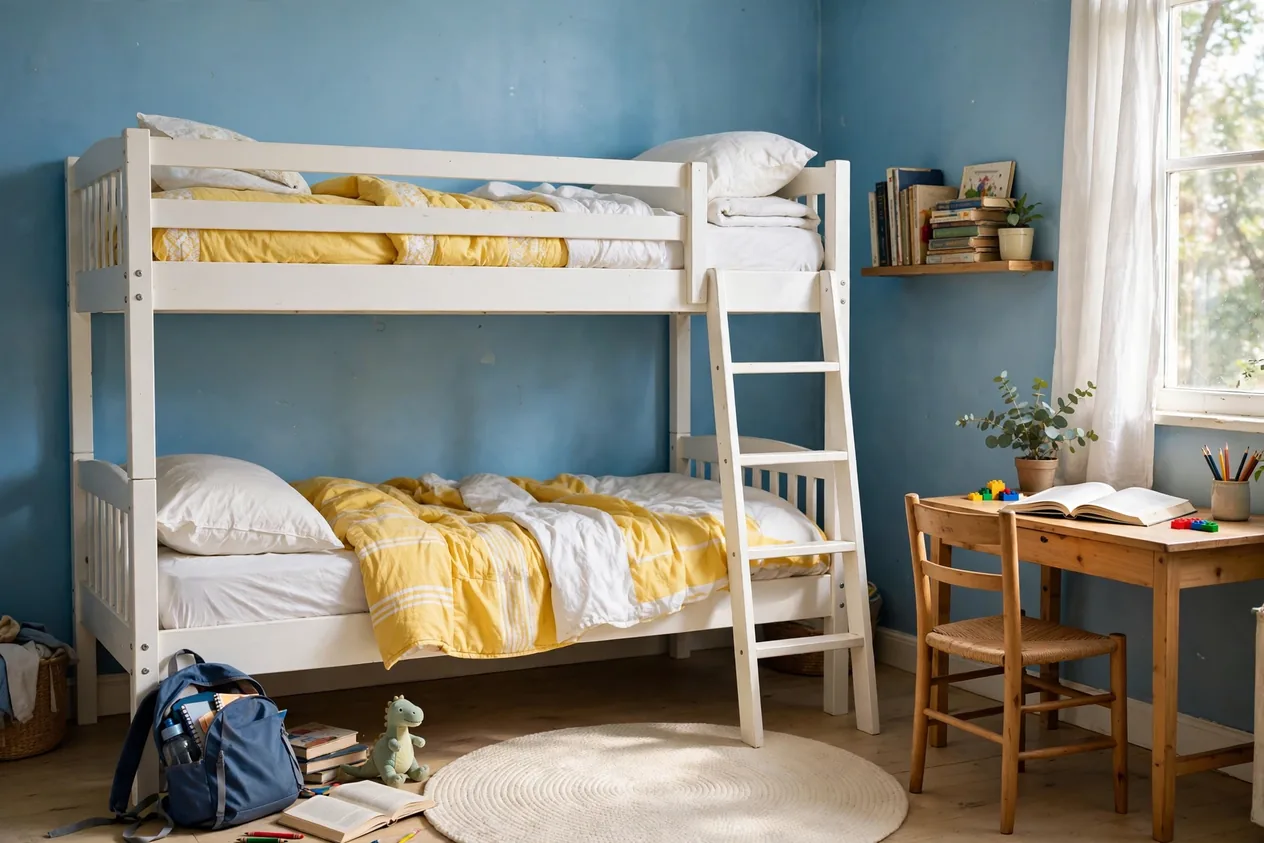
Bunk Bed Dimensions: 5 Sizes, Clearances & Safety Gaps
A twin bunk is 77 x 41 in (196 x 104 cm) and about 62 in tall: all 5 standard sizes, the 5 in guardrail rule, deck spacing and the ceiling check.
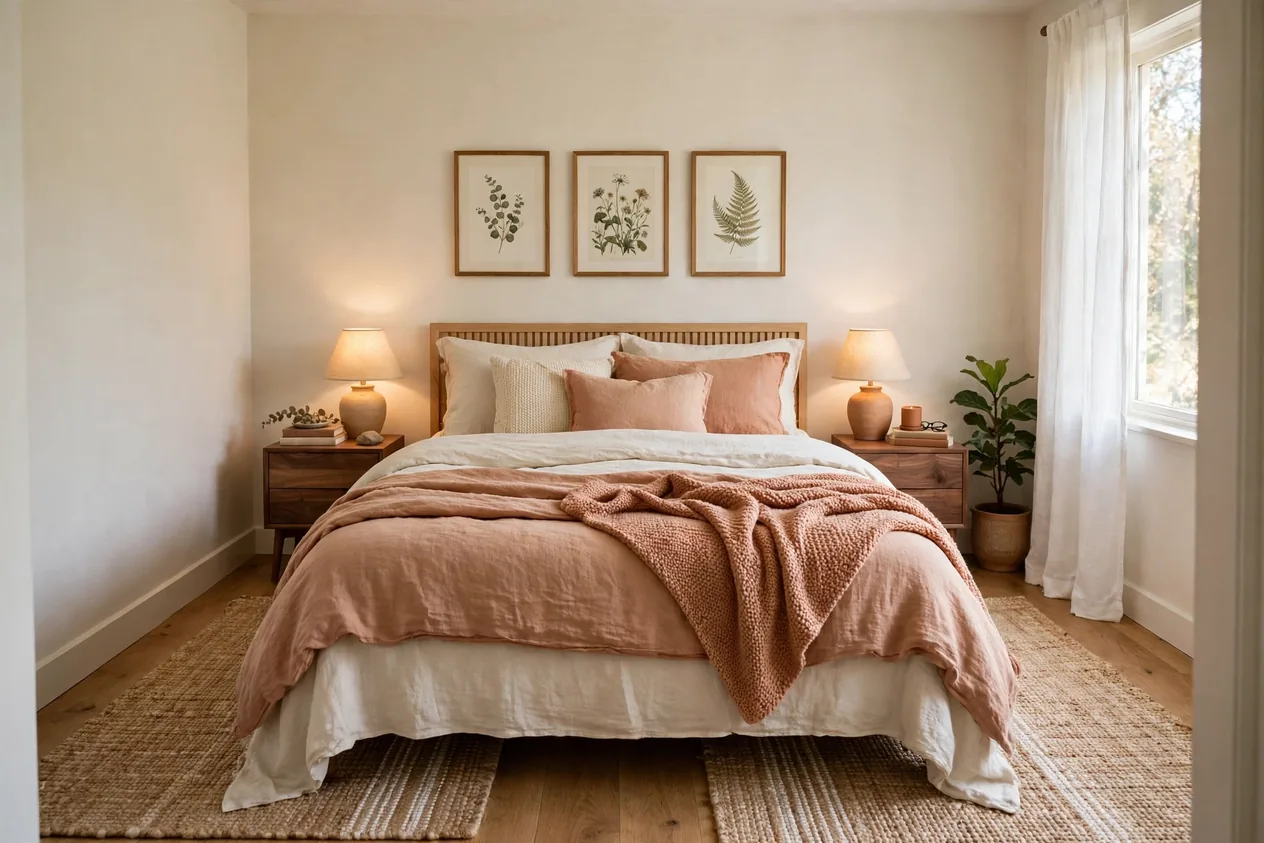
Standard Bed Sizes: Queen 60 x 80 in (152 x 203 cm)
Standard bed sizes in inches and cm: a double (full) is 54 x 75 in, a queen 60 x 80, a king 76 x 80, a California king 72 x 84, plus the room each needs.
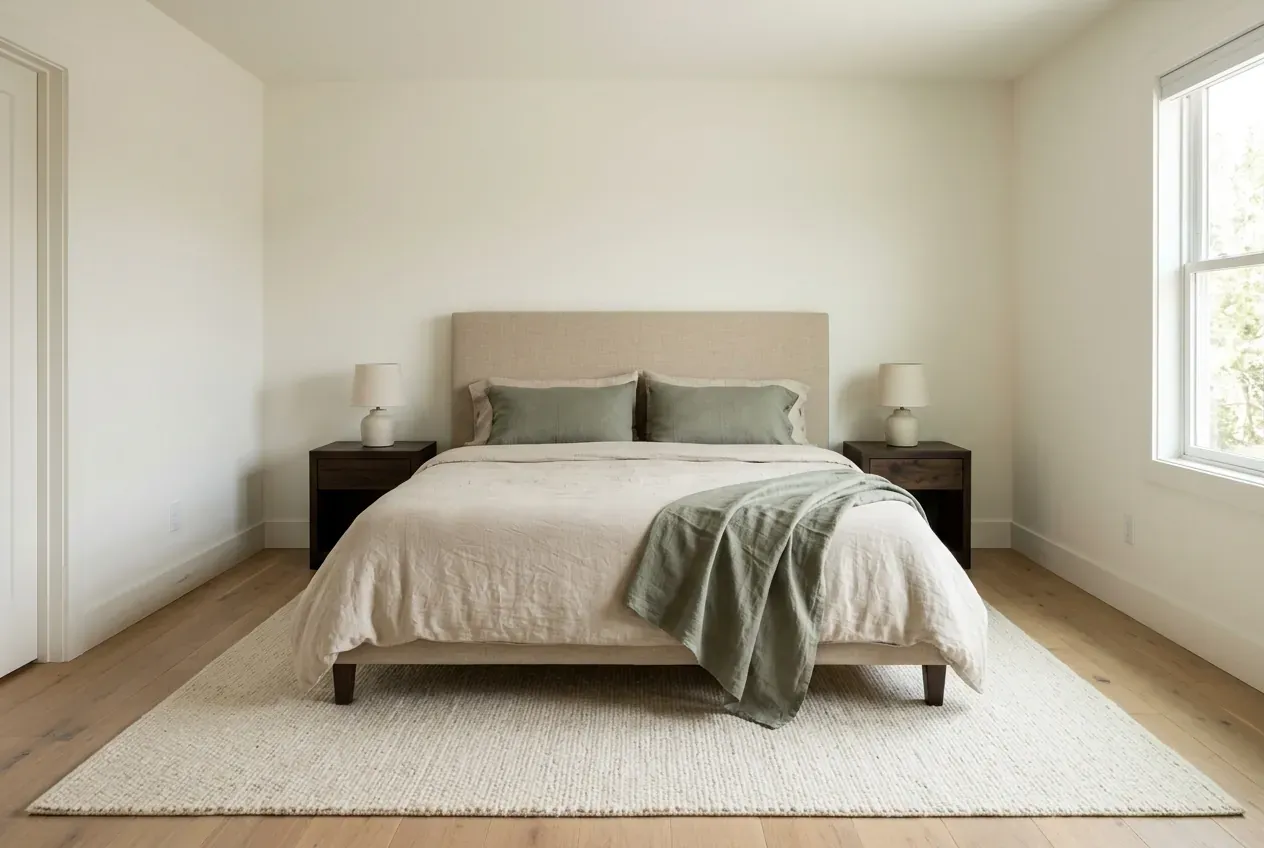
Rug Size for a King Bed: 8x10 Shows 22 in Each Side
Rug size for a king bed: an 8x10 ft rug shows 22 in (56 cm) each side and 43 in past the foot; a 9x12 shows 34 in. See the maths, a chart and a calculator.