Floating Wall Mount Desk Height: Spacing & Ergonomics
Floating wall mount desk height: mount the surface at 28 to 30 in (71 to 76 cm), anchor to studs, and keep 24 to 28 in of chair pushback behind you.
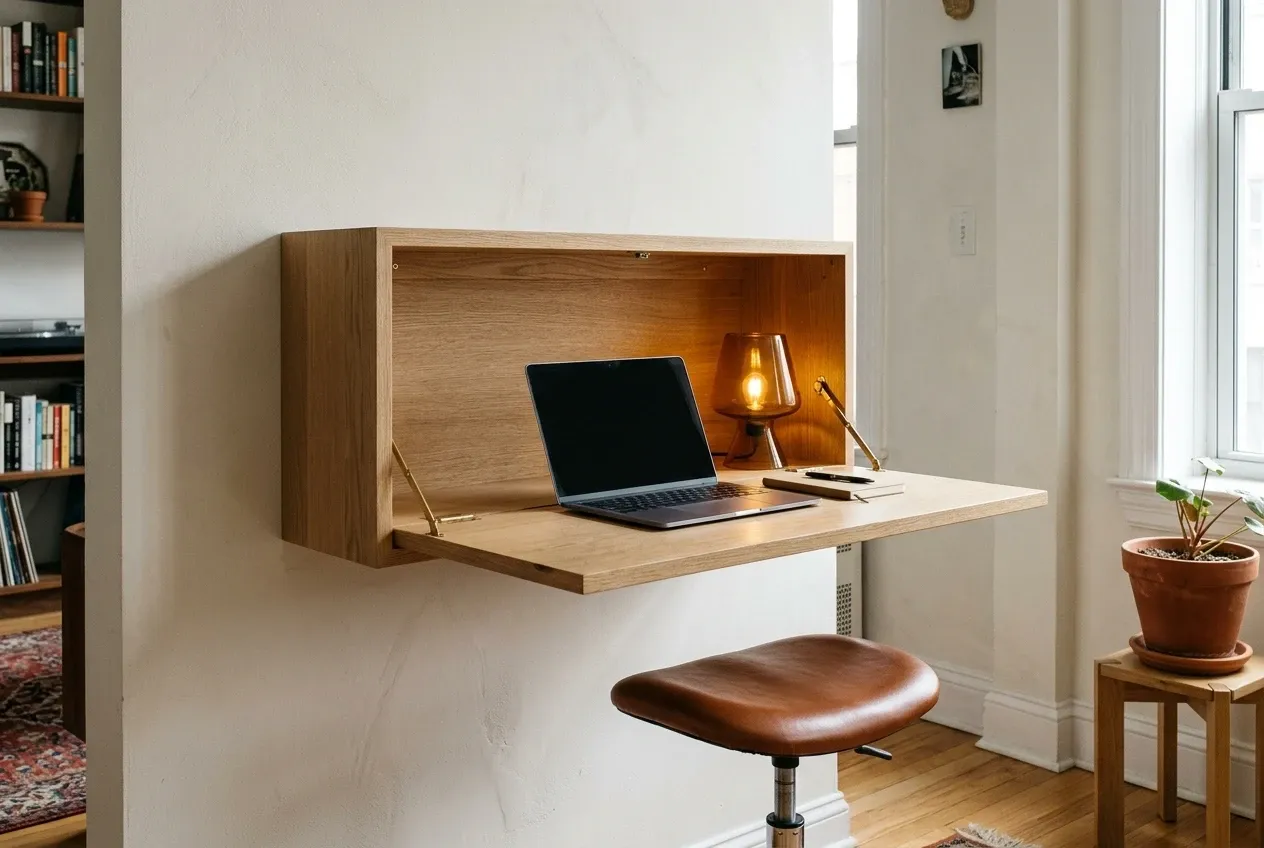
Room specifications
- Room ScaleSmall apartment workspace nook (about 4 x 6 ft)
- Design StyleJapanese Minimalist / Modern Craft
- Budget TierBudget ($)
- Palette Swatches4 colors
As remote and hybrid work become permanent fixtures of urban living, apartment dwellers face the challenge of carving out professional workspaces in bedrooms, living rooms, and studio hallways. Bulky 4-legged executive desks clutter small spaces and visually overwhelm living environments.
Installing a floating wall mount desk frees all the floor beneath your work surface, allowing chairs to tuck completely away and robotic vacuums to pass unimpeded. When coordinated with closet-to-office cloffice dimensions and paint colors or lighting apartment workspaces to reduce eye strain, wall-hung desks deliver ergonomic comfort in tight quarters.
1. Desk Height and Clearance by User Height
Set your desk height to human ergonomic standards before driving wall screws.
| User Height Profile | Ideal Desktop Surface Height | Minimum Knee Clearance Depth | Minimum Under-Desk Width | Required Chair Pushback Space |
|---|---|---|---|---|
| Petite (Under 5’4” / 163 cm) | 26–27 in (66–68 cm) | 15 in (38 cm) | 24 in (61 cm) | 24 in (61 cm) |
| Average (5’4”–5’10” / 163–178 cm) | 28–29 in (71–74 cm) | 18 in (46 cm) | 26 in (66 cm) | 26 in (66 cm) |
| Tall (Over 5’10” / 178 cm) | 30–31 in (76–79 cm) | 20 in (51 cm) | 28 in (71 cm) | 30 in (76 cm) |
| Standing Desk Conversion | 40–44 in (102–112 cm) | 12 in (30 cm) | 24 in (61 cm) | 20 in (51 cm) |
Ergonomic standard: Your elbows should form an open 90- to 100-degree angle when typing, with wrists resting flat without upward bend. Measure your chair cushion height first and add 10 to 11 inches to determine your personal custom desk height.
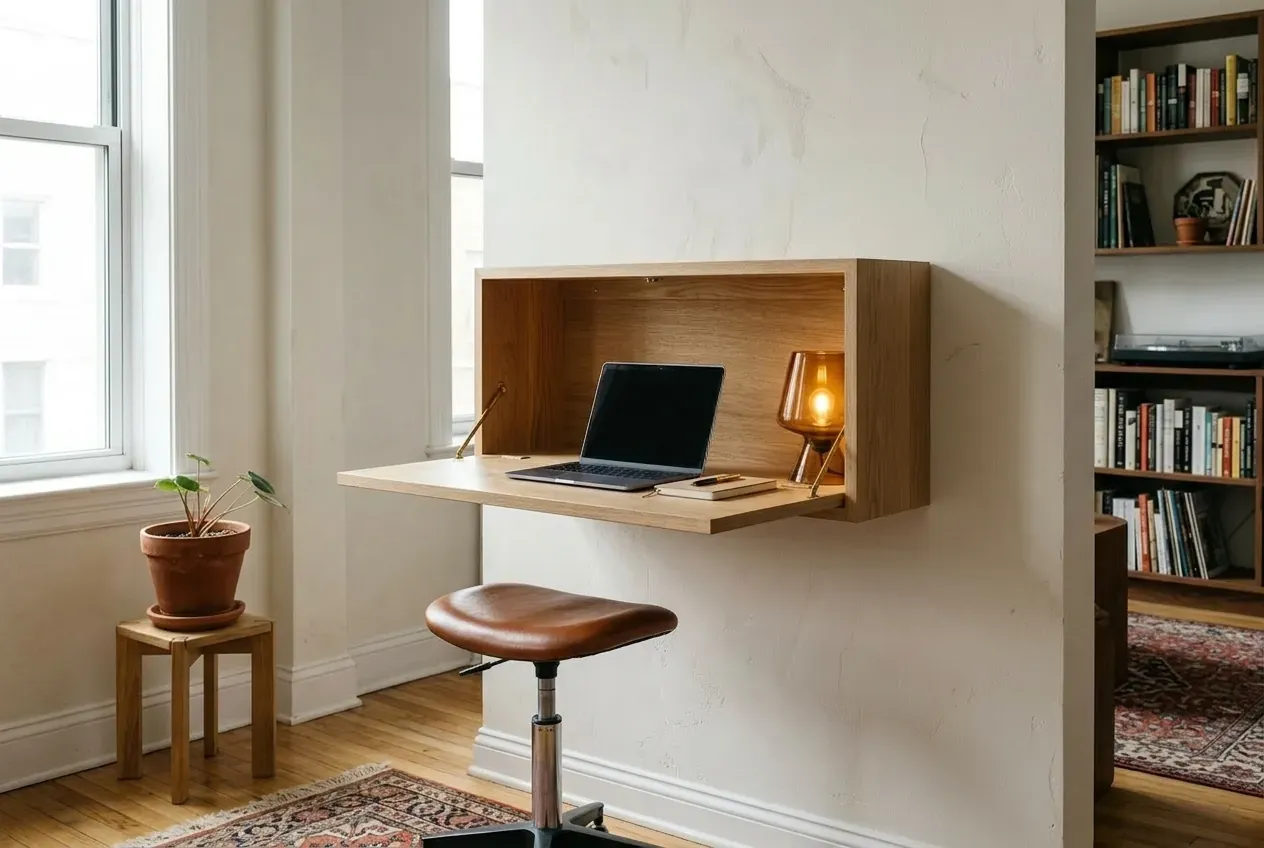 The same room seen from the opposite end, so you can judge the layout from the far side.
2. Floating Desk Layouts for Small Rooms
Option A: The Japanese Rift Oak Secretary Float
Designed for a 4-foot bedroom wall pier between windows.
- Architecture: A 36-inch wide by 18-inch deep fold-down secretary desk in Rift White Oak (
#CFBBA4). - Storage: Internal compartments organizing tablets, stationery, and headphones behind a drop-down door.
- Hardware: Recessed brass piano hinge and concealed magnetic catches.
- Closed Footprint: Extends only 6 inches into the bedroom when the desktop door is folded up.
Option B: The Window-Bay Floating Panorama Ledge
Best for deep sunlit window alcoves.
- Surface: Continuous 1.5-inch thick birch slab spanning 48 inches wall-to-wall inside the window return.
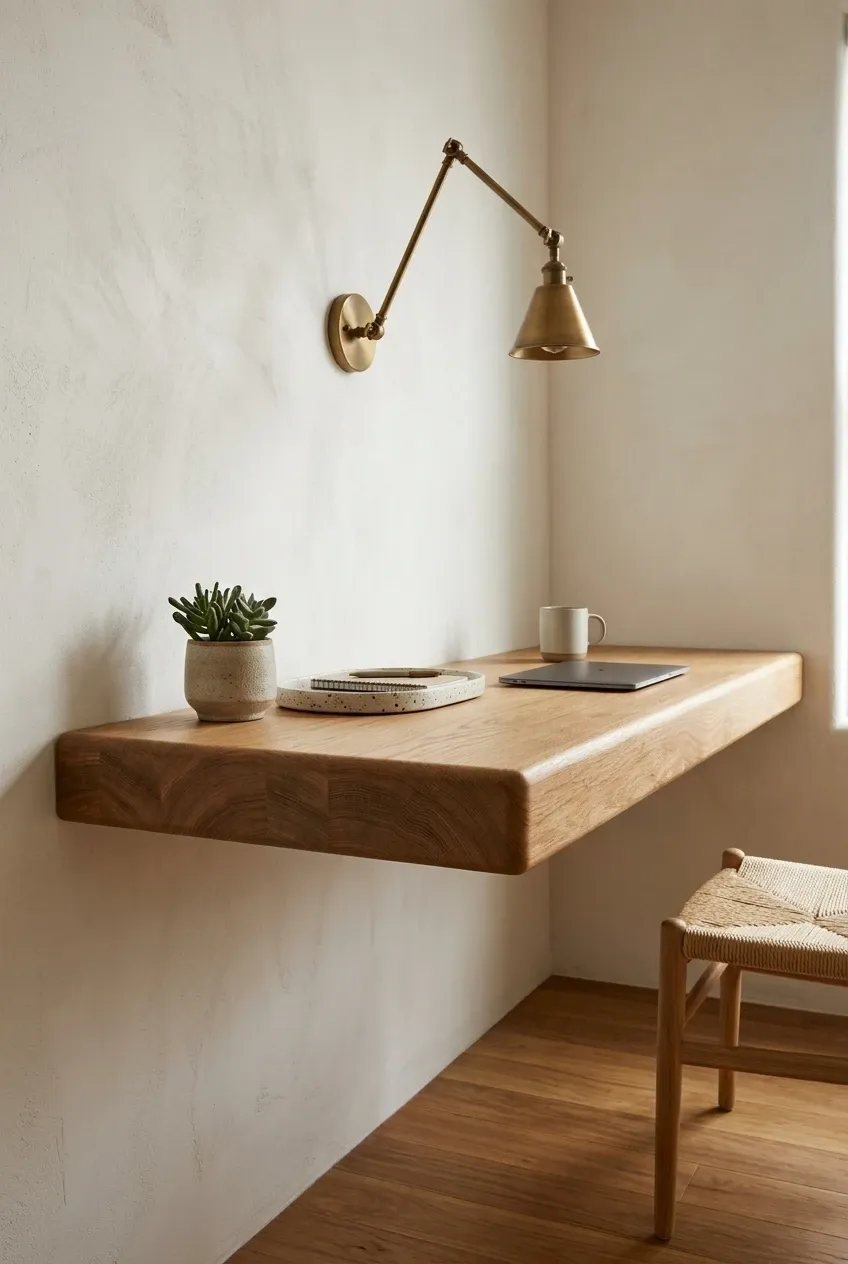
- Lighting: Natural daylight supplemented by an articulated swing-arm brass task sconce.
Option C: The Living Room Floating Media & Desk Hybrid
Best for open studios where one unit performs double duty.
- Layout: A 60-inch low-profile floating credenza that transitions into a desk surface at the window end.
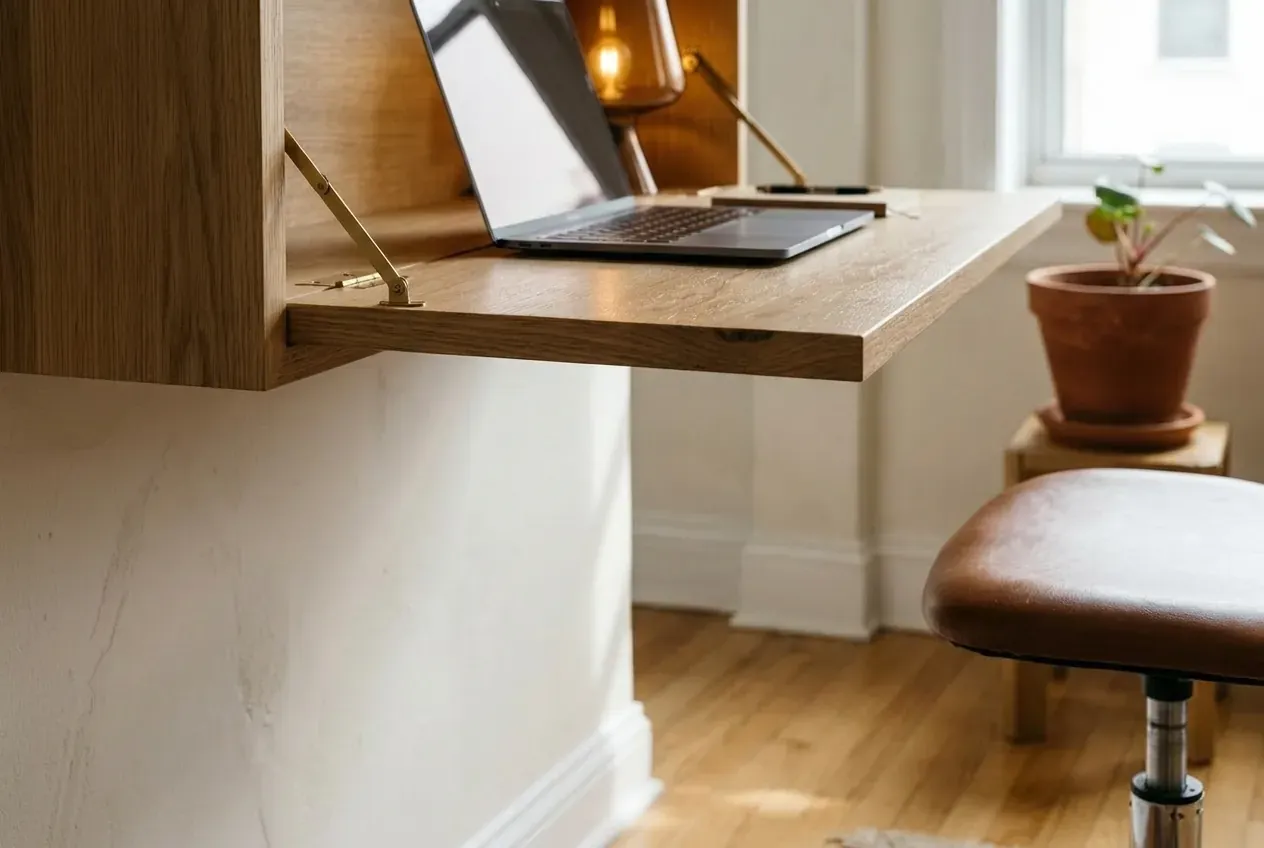 Close up: Mount the upper work surface of a floating desk at 28 to 30 inches (71.1-76.2 cm) above the finished floor for standard seated ergonomics.
3. Four Wire Management & Wall-Mount Rules
- Use an Aluminum French Cleat: Never rely on individual corner brackets. An interlocking aluminum French cleat distributes load evenly across the entire wall span, preventing bracket wobble.
- Concealed In-Wall Power Passthroughs: Use surface wire raceways painted the exact wall color to route cords down from the desk to baseboard outlets without messy dangling wires.
- The 24-Inch Chair Pushback Zone: Always reserve at least 24 to 28 inches of clear floor behind your work chair so you can push back and stand up without knocking into beds or sofas.
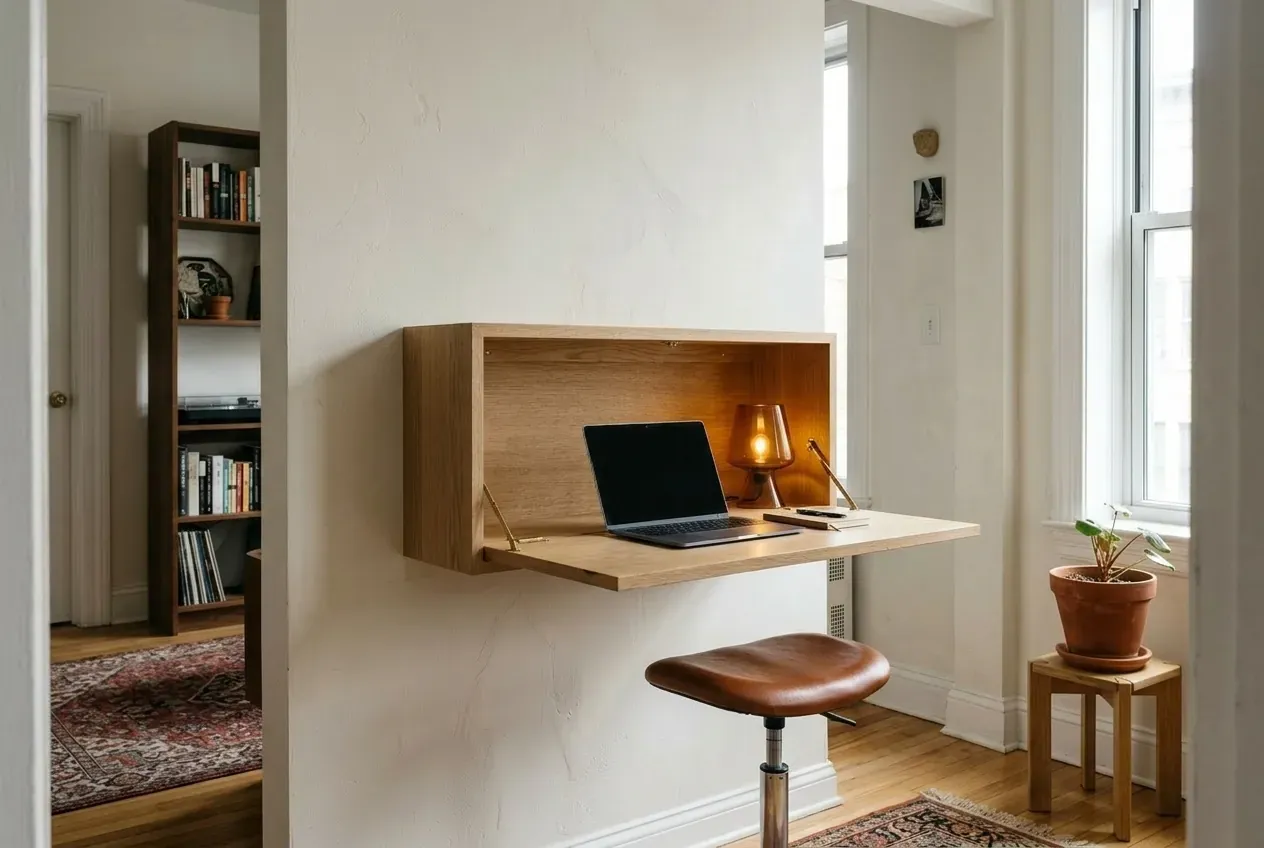 From above and to one side, the full footprint and the walkway read at a glance.
4. Paint and Finish Choices
Let the walls carry most of the room: Muted Bone matte paint (#F5F2EB, LRV 84) keeps the wall quiet. Rift White Oak woodwork (#CFBBA4, LRV 50) and warm canvas upholstery form the middle layer. Keep contrast to small touches: Charcoal Iron brackets (#2C2E30, LRV 6) and Amber Glass task lighting.
Mount the upper work surface of a floating desk at 28 to 30 inches (71.1-76.2 cm) above the finished floor for standard seated ergonomics.
Curated Color Palette & Key Textures
- Rift White Oak #CFBBA4
- Muted Bone #F5F2EB
- Charcoal Iron #2C2E30
- Amber Glass #B88546
General references
Dimensions in these guides are typical planning ranges, not legal minimums, and they can differ by jurisdiction. Use the references below as starting points, then confirm local code and your lease before making changes.
FAQ
What is the standard ergonomic height for a floating wall-mounted desk?
The top of the desktop should sit 28 to 30 inches (71.1 to 76.2 cm) above the floor, allowing your forearms to rest parallel to the surface.
How much weight can a floating wall mount desk hold?
It depends on the bracket and the wall. A desk anchored into two wood studs with structural lag screws holds far more than one on hollow-wall fixings, but the safe figure is what the bracket maker publishes for your wall type, so check the spec sheet and never exceed it.
How deep should a small apartment wall desk be?
An ergonomic desk depth is 18 to 22 inches (45.7 to 55.9 cm), which holds laptops and external monitors while preserving room walkways.
Save this idea

Keep reading
Related rooms
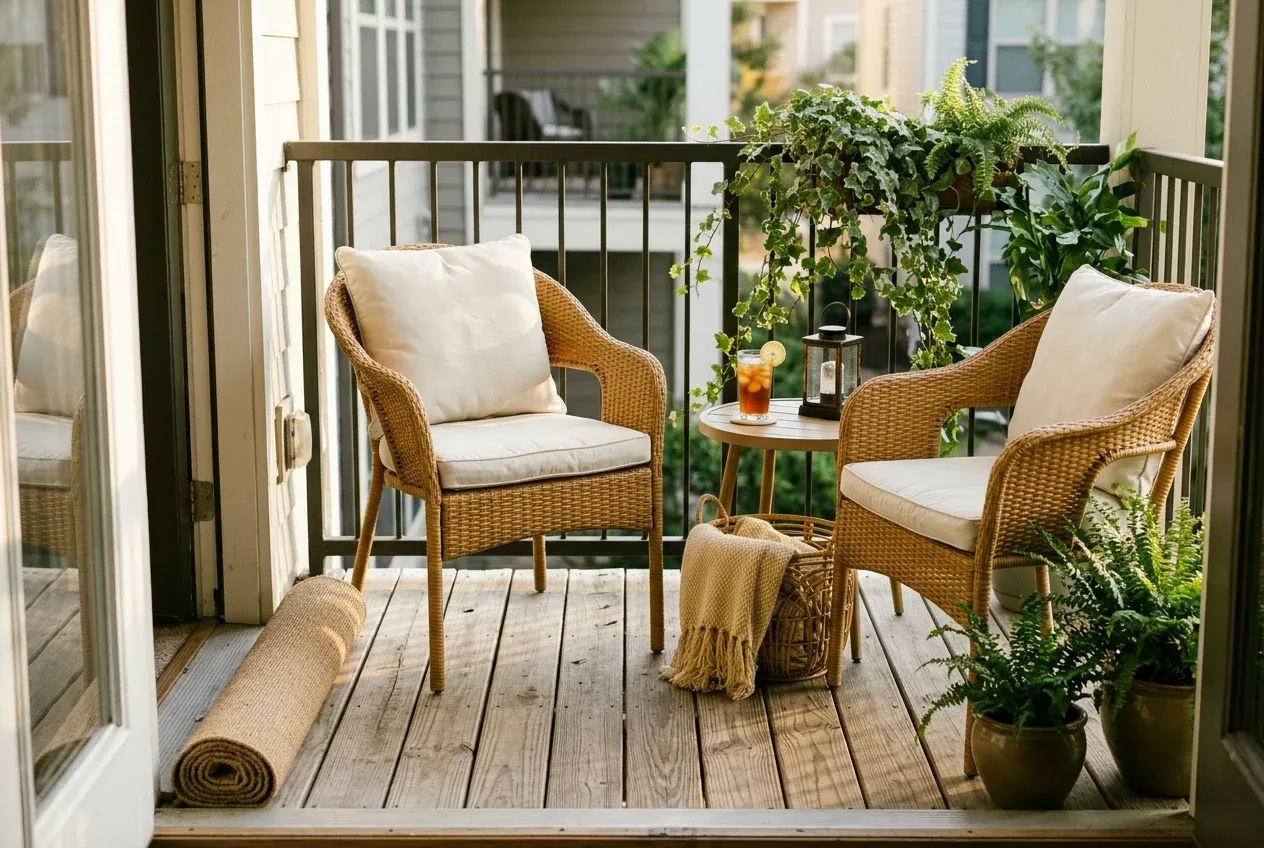
Wicker and Rattan Furniture for a Small Balcony
What wicker furniture is, how it differs from rattan and which version survives a small balcony: weave materials, weather limits and a 4 x 8 ft layout.
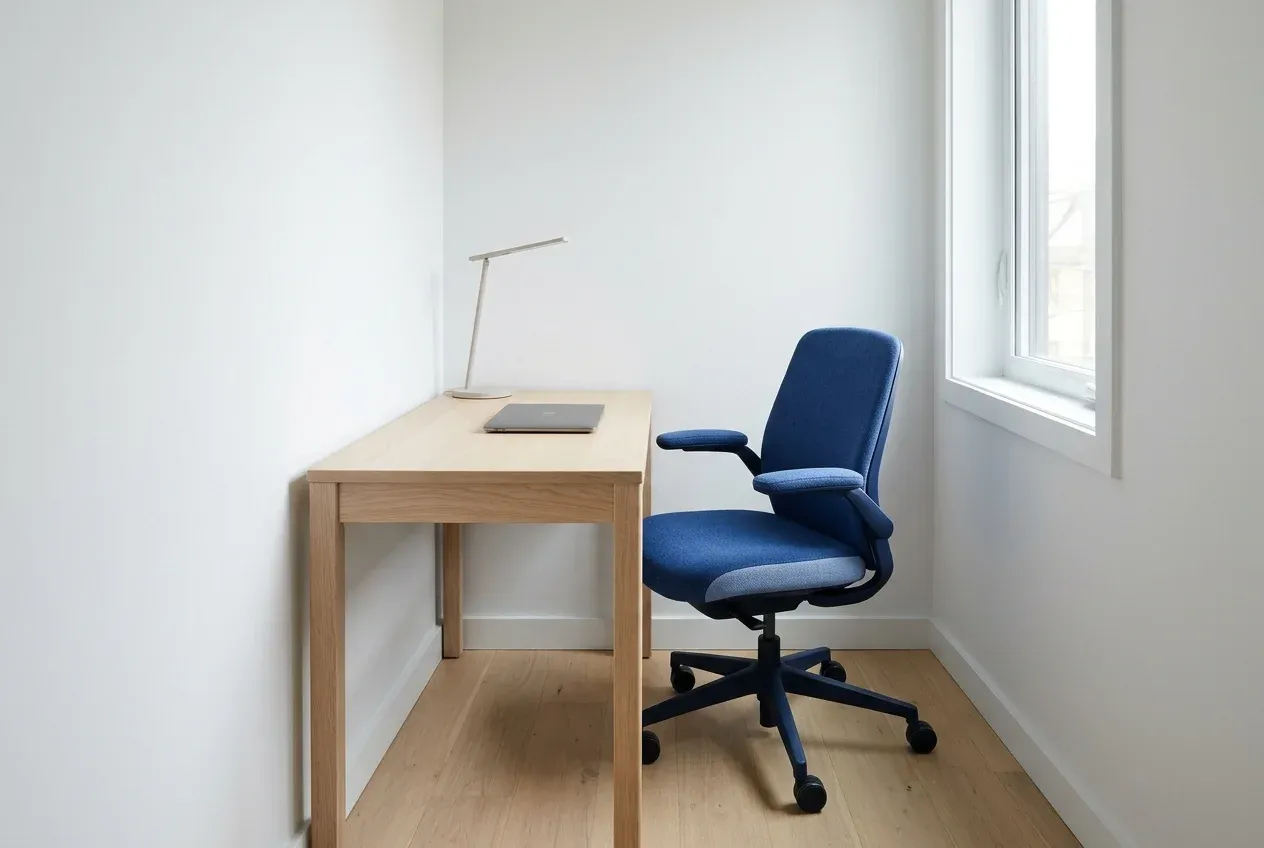
Most Comfortable Office Chair in a Studio Corner
Compact office chair comfort, measured: 16-20 in (41-51 cm) seat height, 2 in (5 cm) of knee room, folding arms, and a fit for 24 in (61 cm) deep desks.
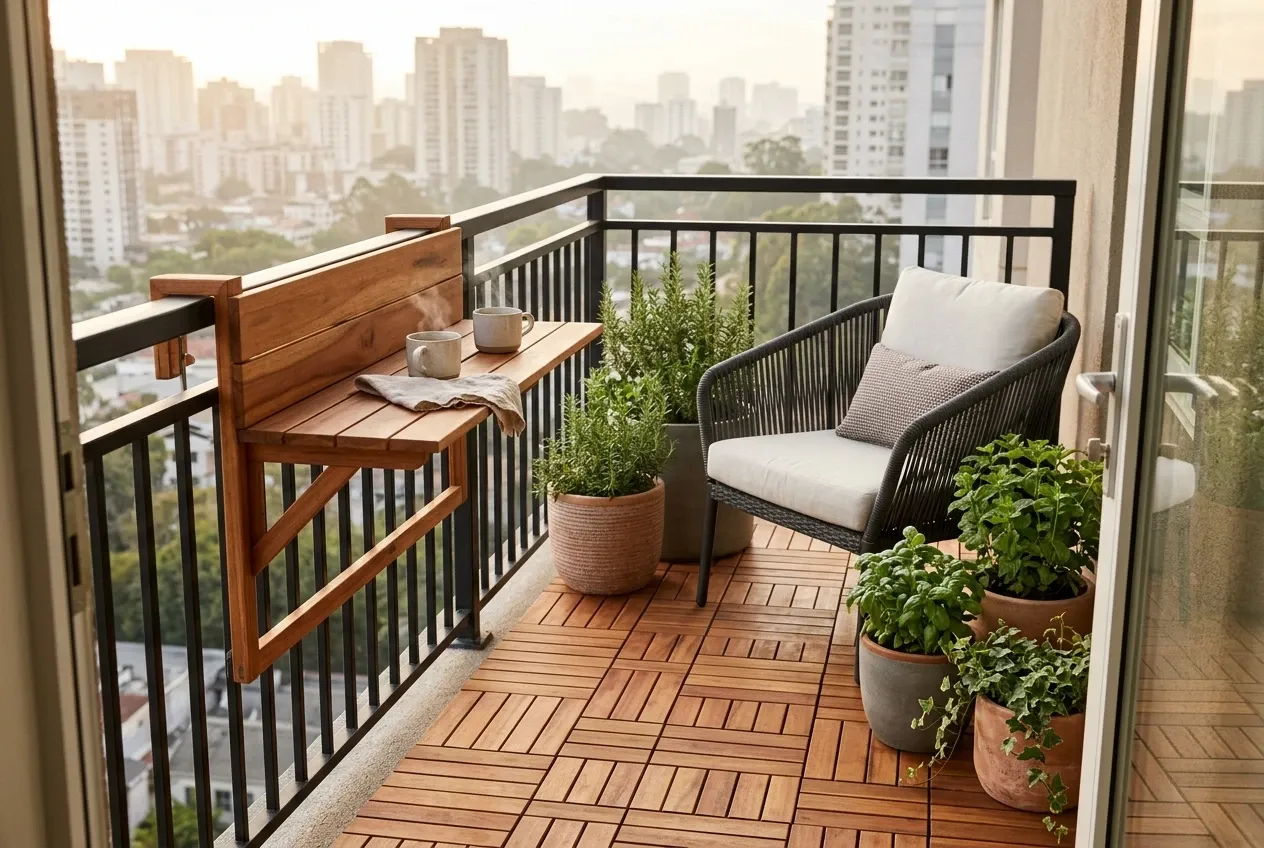
Small Balcony & Workspace Guide
A pillar guide to small balconies and home workspaces: furniture clearances, privacy screens, desk depths, and lighting for compact apartments.