How to Organize Desk Drawers: Small Office Guide
Desk drawer organization for a small home office: what fits in a 12 in shallow drawer, cable routing, dividers and a renter-friendly no-drill insert.
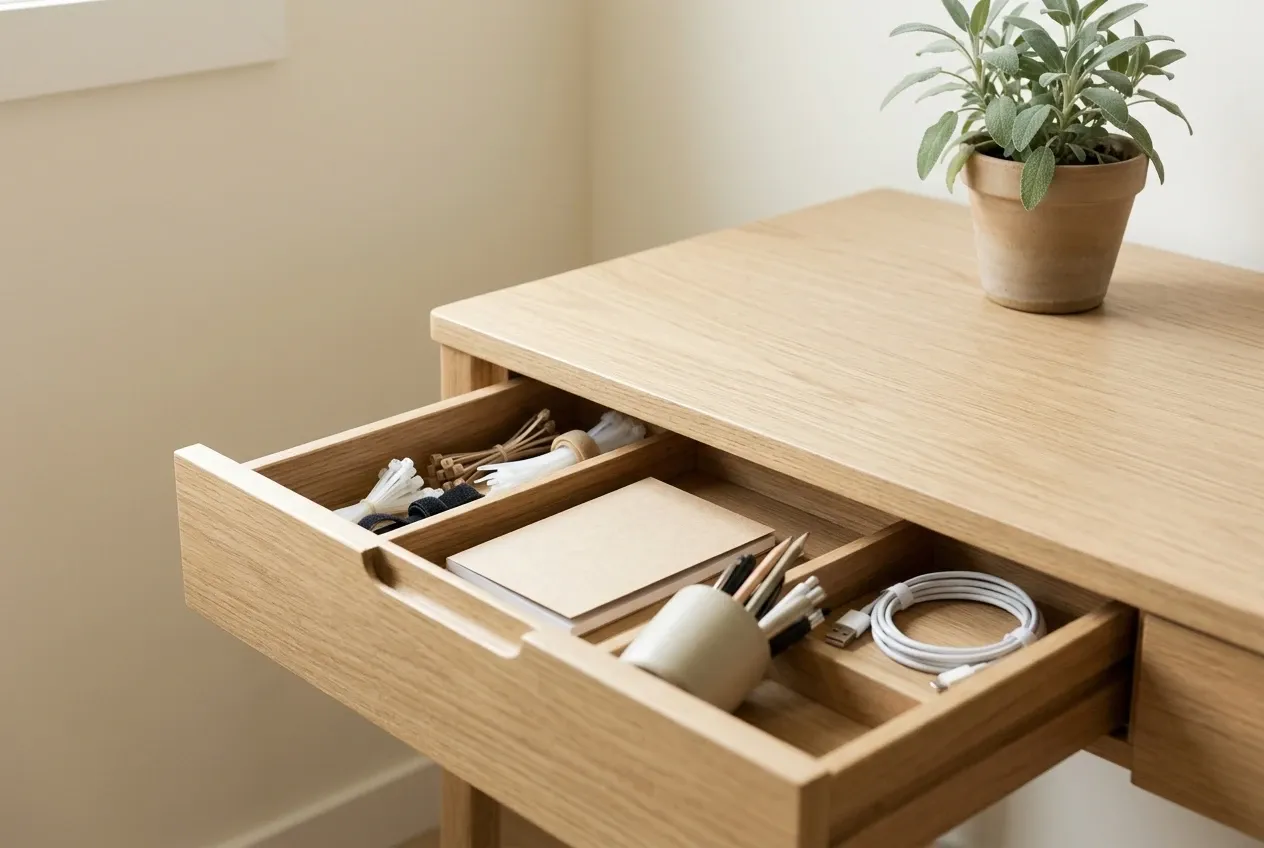
Room specifications
- Room ScaleSmall home office nook (about 6 x 8 ft)
- Design StyleWarm Minimalist / Japandi
- Budget TierBudget ($)
- Palette Swatches4 colors
Desk drawer organization matters in compact home offices and bedroom work nooks, where desk surface real estate is extremely limited. A single laptop, external monitor, and coffee mug can completely overwhelm a 40-inch desktop. When desk drawers become tangled junk depositories filled with loose charging cables, dried-out pens, and random paperwork, the desktop inevitably becomes the overflow dumping ground.
Knowing how to organize desk drawers transforms restricted work nooks into serene, high-output productivity zones. By standardizing internal tray geometry and respecting critical cable bend radii, you ensure every working tool is retrievable in under two seconds.
1. What Fits in Each Desk Drawer Depth
Match stationery items and tech accessories to physical drawer depth boundaries.
| Drawer Classification | Internal Depth Range | Usable Height | Primary Item Allocation & Ergonomic Rule |
|---|---|---|---|
| Shallow Pencil Drawer | 12–14 in (30.5–35.6 cm) | 2.0–2.5 in (5.1–6.4 cm) | Pens, stylus, sticky notes, small earbuds; keep tray depth under 1.75 in. |
| Mid Utility Drawer | 15–18 in (38.1–45.7 cm) | 3.5–4.5 in (8.9–11.4 cm) | External hard drives, charging power bricks, computer mice, calculators. |
| Deep Pedestal Drawer | 18–22 in (45.7–55.9 cm) | 9.0–11.0 in (22.9–27.9 cm) | Vertical hanging letter files, notebook organizers, camera cases. |
| Rear Cable Service Zone | 3.0–4.0 in (7.6–10.2 cm) | Full height | Reserve rear 4 inches for cable bend clearance when running internal docks. |
| Finger Grip Clearance | 1.5–2.0 in (3.8–5.1 cm) | Lateral margin | Finger access gap between adjacent bins to pull small items without jamming. |
Clearance insight: Never fill a desk drawer to the absolute ceiling lip. Leave at least 0.5 inches (1.3 cm) of open overhead clearance above the highest tray item to prevent notebook edges or pens from jamming against the upper desk frame when pulling the drawer open.
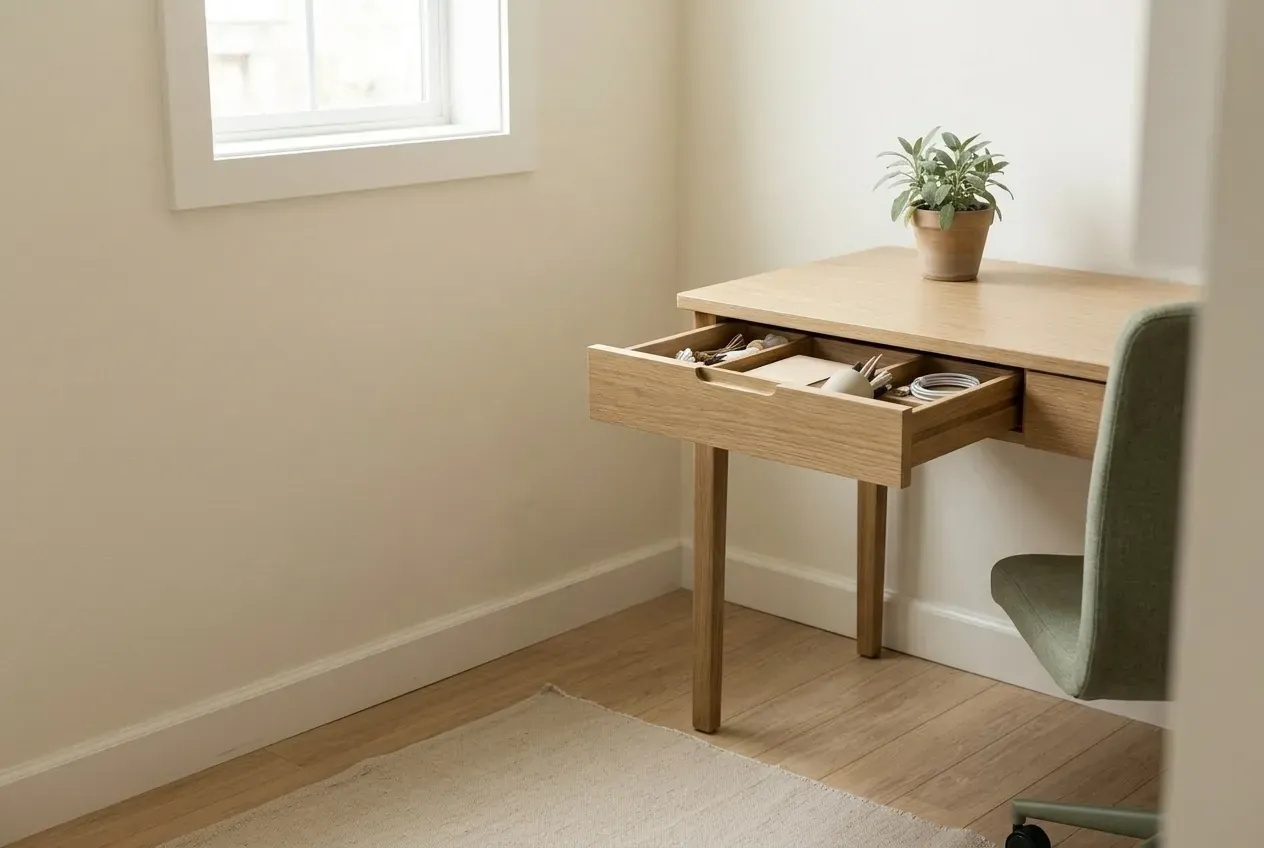 The same room seen from the opposite end, so you can judge the layout from the far side.
2. Drawer Layouts for Shallow, Tech and Deep Drawers
Approach A: The Zoned Modular Grid (Best for 12-to-14 Inch Drawers)
Engineered for shallow drawers beneath compact writing desks.
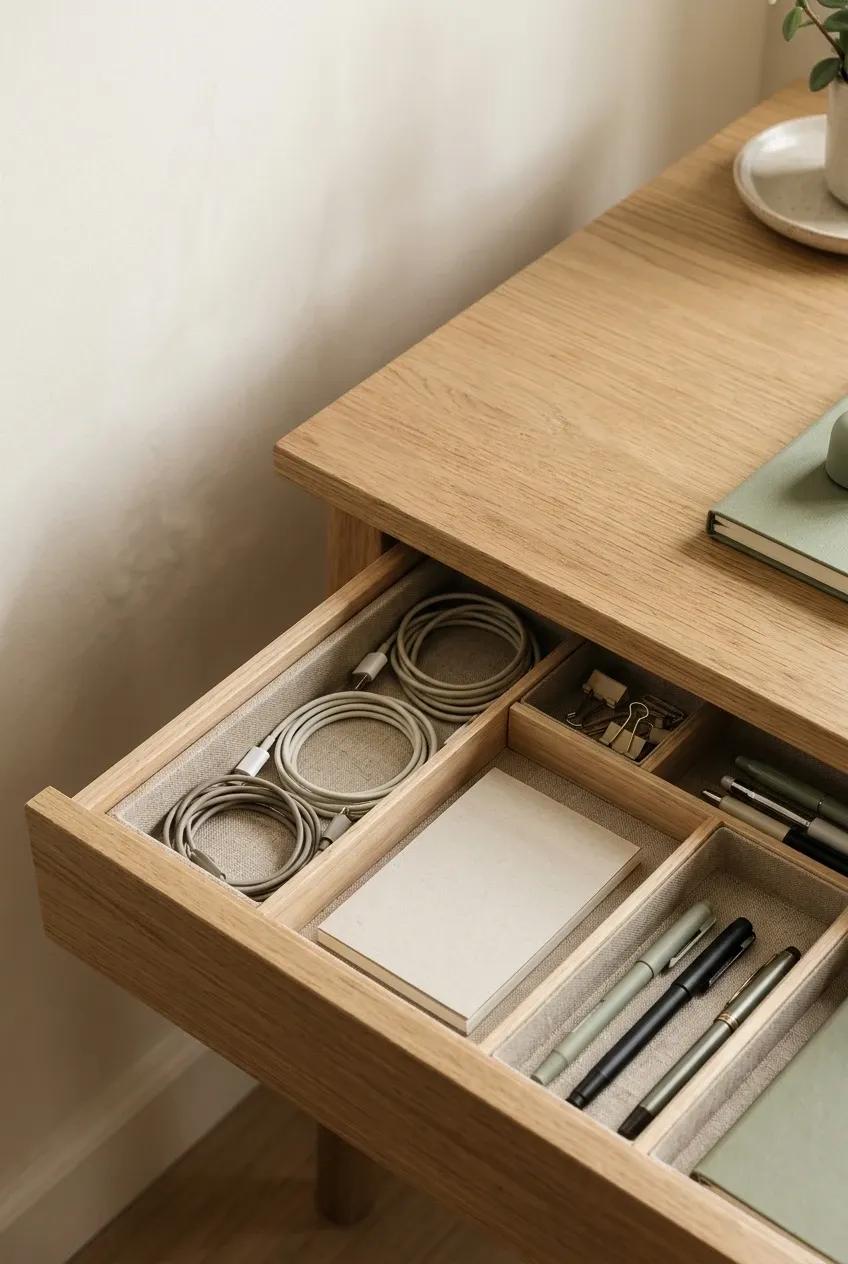
- Front Zone (Immediate Reach): Three 3x6-inch bamboo or recycled felt trays holding primary writing utensils, highlighters, and small USB adapters.
- Center Zone: A 6x9-inch rectangular tray sized specifically to store a notebook and daily paper planner flat.
- Back Zone: Divided cable organizer boxes holding wrapped secondary cords, screen wipes, and extra batteries.
Approach B: The Tech Charging Station Drawer (Best for Cable Clutter)
Optimized for home workers who hate tangled cables across their desktop.
- Hardware Integration: Place a compact, surge-protected 4-port USB-C charging hub in the rear drawer corner.
- Cable Pass-Through: Utilize a clamp-on cable pass-through at the back edge of the drawer to feed power without drilling rental furniture.
Approach C: The Dual-Tier Sliding Tray (Best for Deep Drawers)
Designed for deep desk pedestals lacking vertical compartmentalization.
- Vertical Stacking: Install a sliding upper acrylic tray that glides smoothly across the top lip of the drawer, effectively doubling accessible surface area.
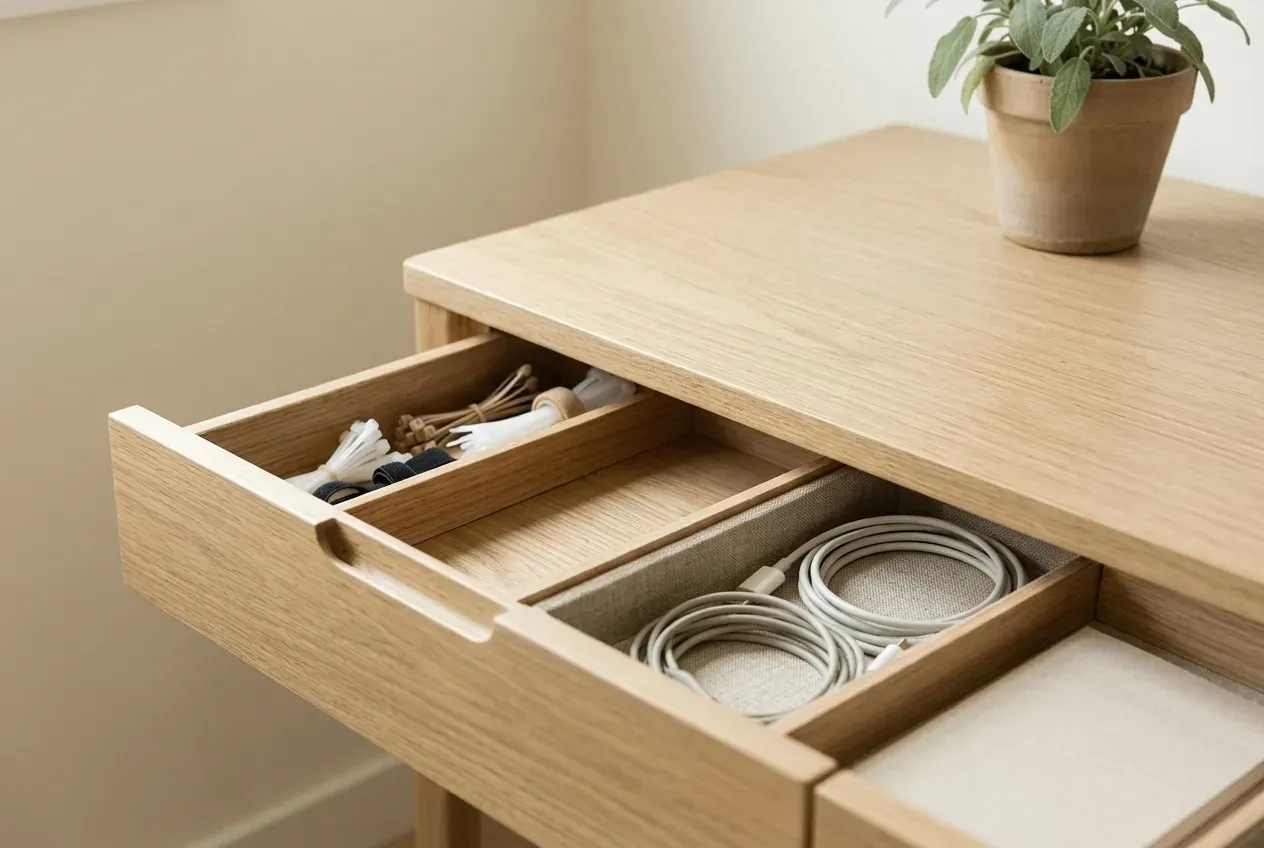 Close up: Keep a 2 in (5 cm) finger clearance between drawer inserts and leave 4 in (10 cm) for cable bend radius.
3. Cable Routing and Tech Organization Without Drilling
- Adhesive Silicone Cable Drops: Fasten flexible silicone wire clips along the interior side walls of the drawer. Snapping charging tips into place keeps cables from falling to the back bottom when unplugged.
- Magnetic Cable Organizers: Place a thin adhesive steel strip along the inside front lip of the drawer. Attach magnetic collar clips to charging cables so they dock cleanly in an upright row.
- No-Drill Under-Desk Wire Trays: Pair your organized drawers with an under-desk clamp-on mesh wire basket. Lifting heavy monitor power bricks and power strips off the floor keeps the legwell clear and protects rental walls.
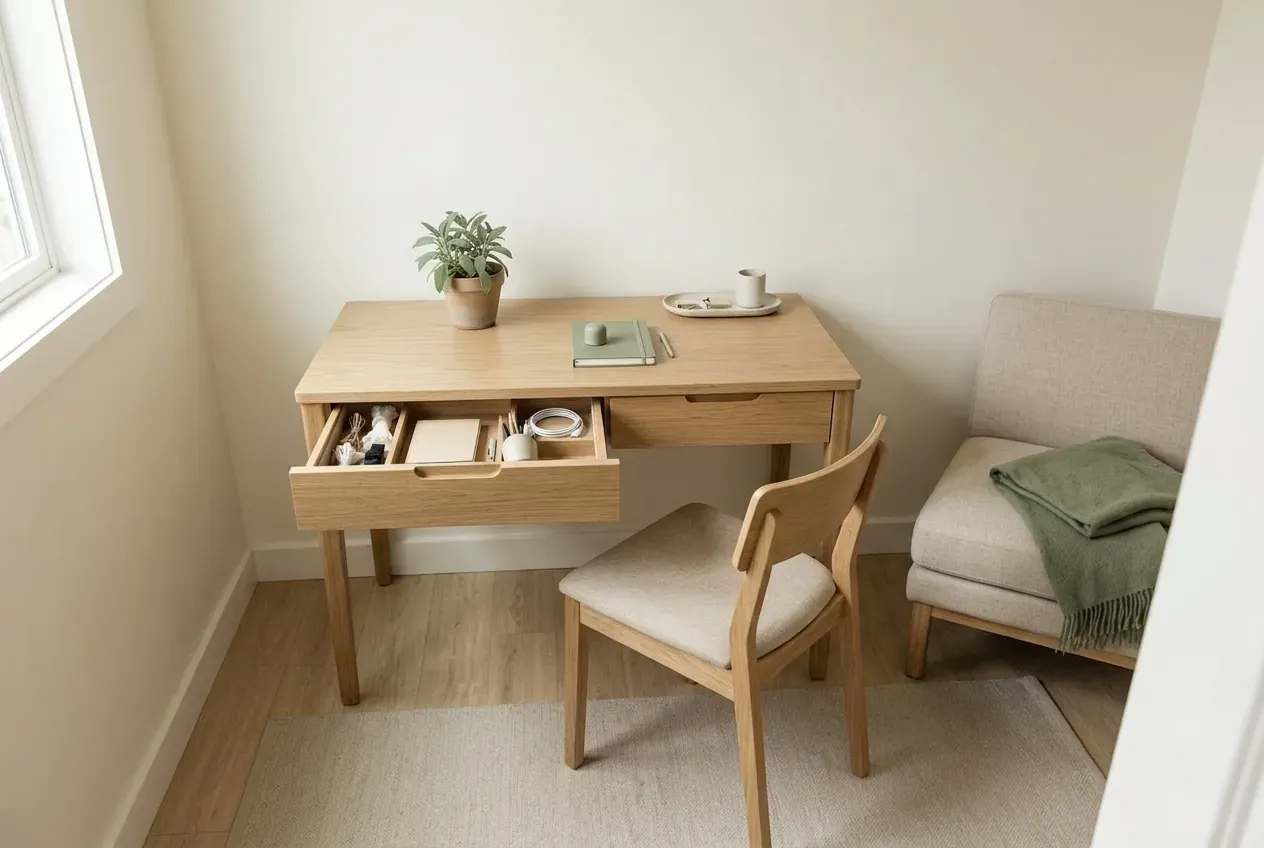 From above and to one side, the full footprint and the walkway read at a glance.
4. A Calm Palette for the Desk and Drawers
Keep the desk visually quiet during long work sessions. Most of the surface area, the wall paint and clean workspace surfaces, works best in Alabaster Chalk (#F5F2EB, LRV 82) to reflect daylight. Light Oak (#C9A97C, LRV 50) drawer joinery and Oat Linen (#D9CDB8) felt tray liners add warmth and muffle rattling. Finish with a small accent: a Sage Moss (#9AA58A, LRV 32) ceramic pencil cup or desktop plant.
For desk placement and ergonomic clearances in tight bedrooms, see our guide on Small Bedroom Corner Desk Setups and explore Floating Wall Mount Desk Height Spacing.
Curated Color Palette & Key Textures
- Alabaster Chalk #F5F2EB
- Oat Linen #D9CDB8
- Light Oak #C9A97C
- Sage Moss #9AA58A
General references
Dimensions in these guides are typical planning ranges, not legal minimums, and they can differ by jurisdiction. Use the references below as starting points, then confirm local code and your lease before making changes.
FAQ
How do I organize a desk drawer with no room?
Use shallow 1.5-inch modular acrylic or bamboo trays that interlock without wasted border space, and purge duplicates to keep only daily working essentials in top drawers.
What size are standard desk drawers?
Standard compact desk drawers measure 12 to 15 inches wide, 14 to 18 inches deep, and only 2.5 to 3.5 inches in interior vertical height.
How do I manage cables under a small desk?
Install a clamp-on or adhesive wire cable tray under the rear desk edge and bundle charging bricks with reusable velcro ties to keep cables completely off floorboards.
Save this idea

Keep reading
Related rooms

Wicker and Rattan Furniture for a Small Balcony
What wicker furniture is, how it differs from rattan and which version survives a small balcony: weave materials, weather limits and a 4 x 8 ft layout.
Most Comfortable Office Chair in a Studio Corner
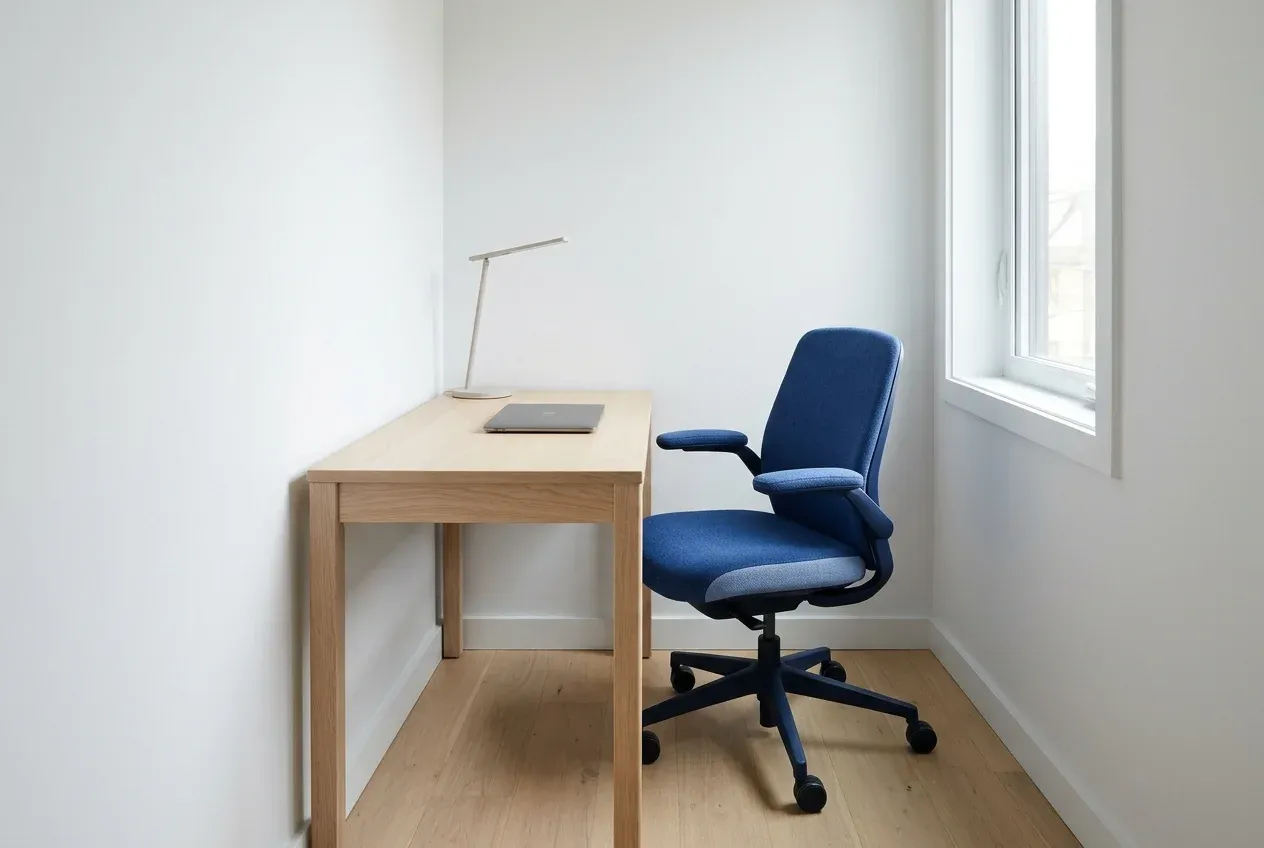
Compact office chair comfort, measured: 16-20 in (41-51 cm) seat height, 2 in (5 cm) of knee room, folding arms, and a fit for 24 in (61 cm) deep desks.
Small Balcony & Workspace Guide
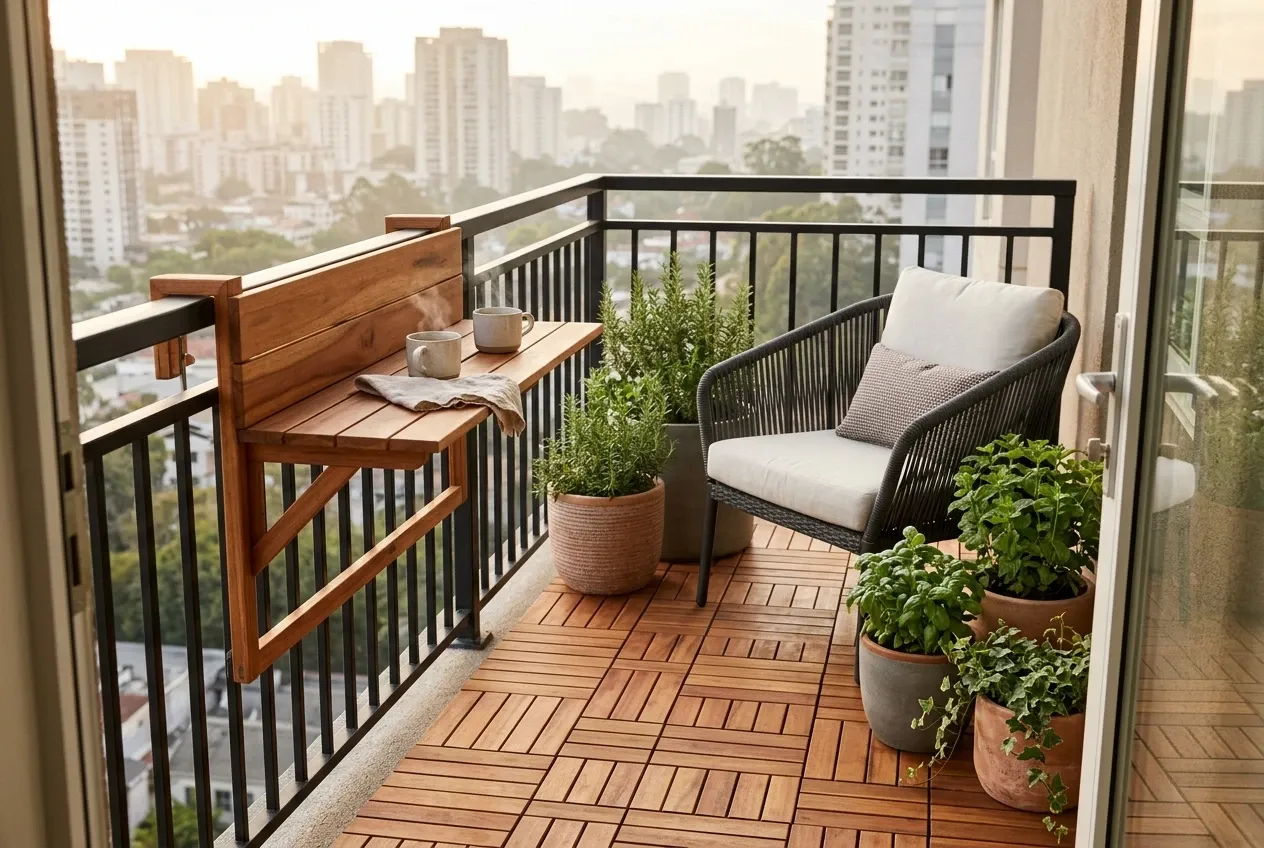
A pillar guide to small balconies and home workspaces: furniture clearances, privacy screens, desk depths, and lighting for compact apartments.