Small Laundry Closet Storage for Renters, No Drilling
How to organize a laundry room in a 3x3 ft rental closet without drilling: tension-pole shelves, slim carts, over-door racks and dryer safety clearances.
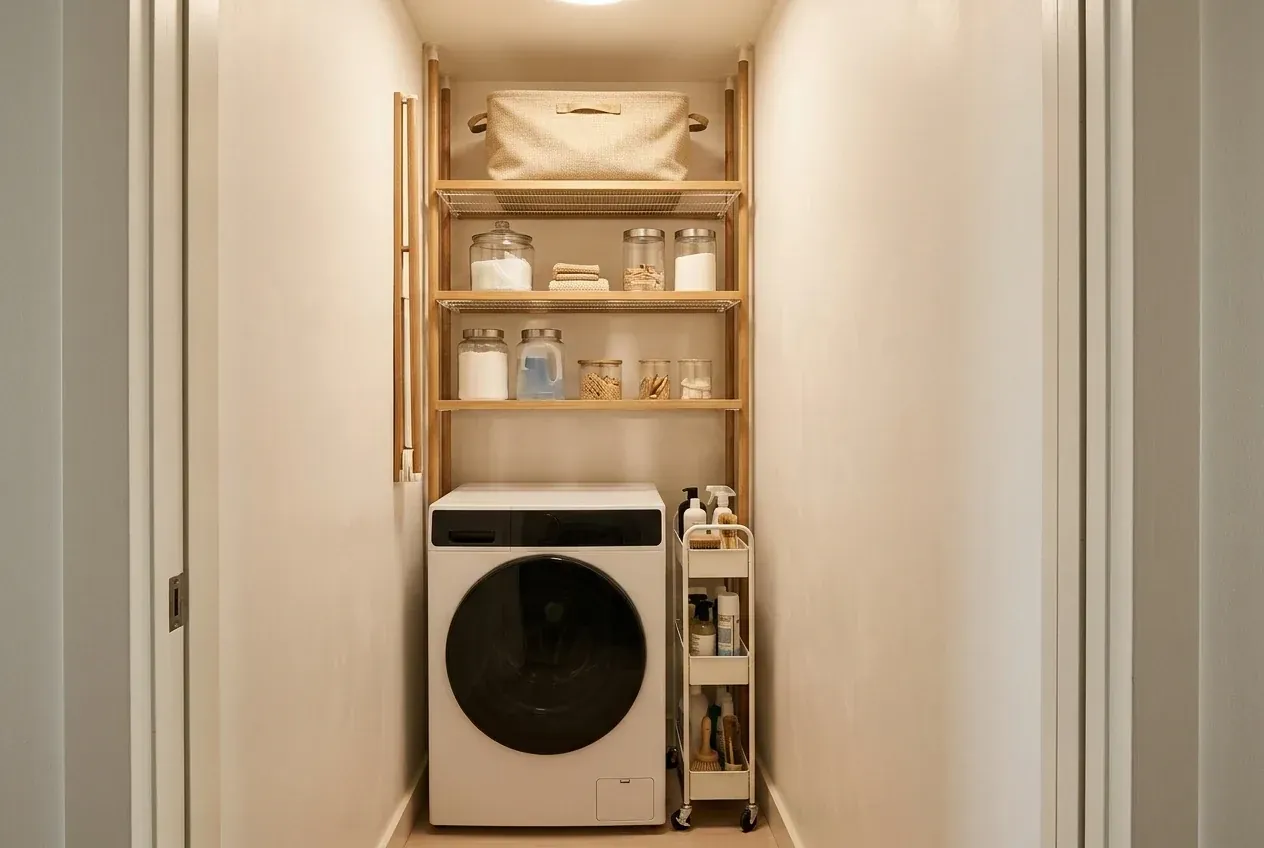
Room specifications
- Room ScaleLaundry closet (about 3 x 3 ft)
- Design StyleWarm Minimalist / Japandi
- Budget TierBudget ($)
- Palette Swatches4 colors
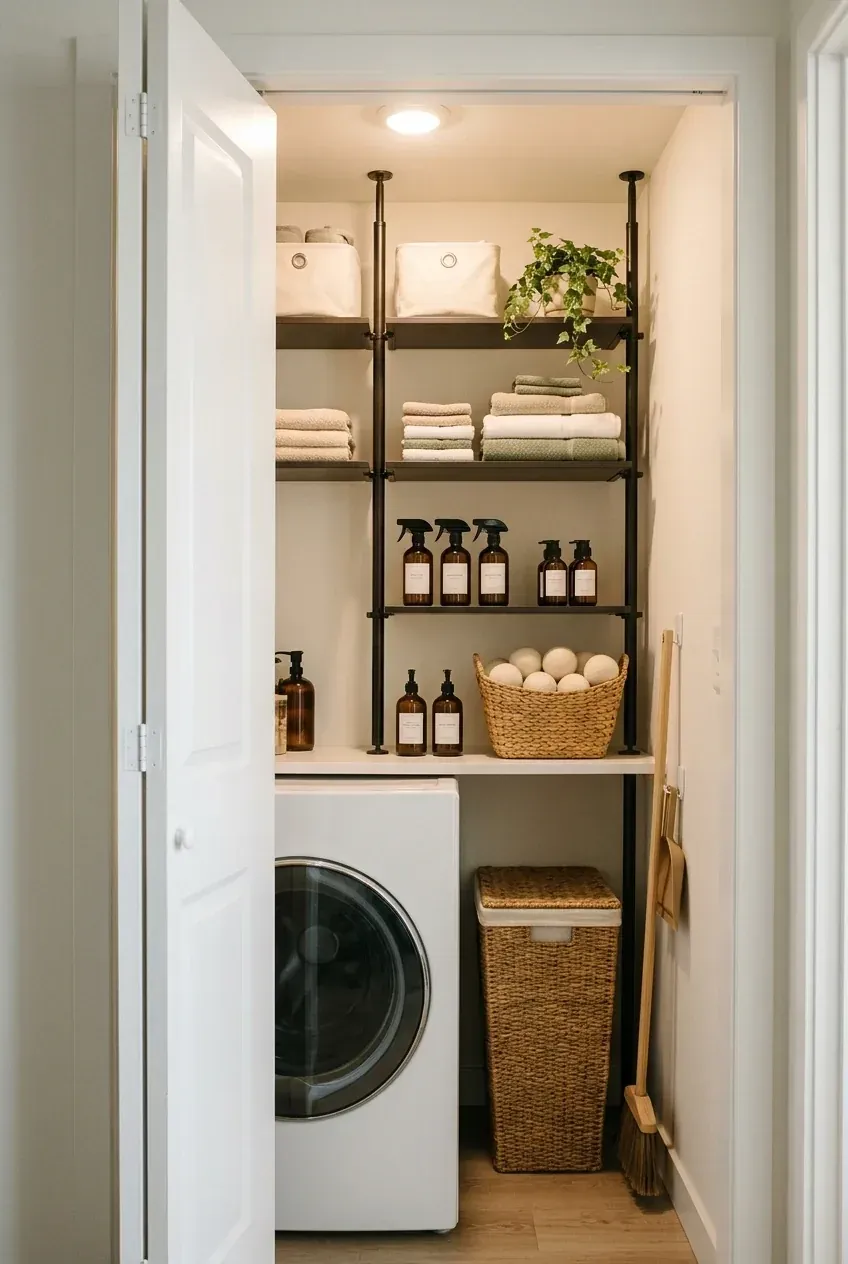
How to organize a laundry room in a rental apartment means accepting the footprint you were given. The area is frequently squeezed into a shallow 3x3 ft (0.91 x 0.91 m) closet containing a stacked washer-dryer unit. With appliances filling nearly the whole enclosure, finding space for detergent bottles, stain sprays, dryer balls, and laundry hampers is a constant challenge.
The one gap that shelving cannot reach is the 4 to 8 inch (10 to 20 cm) space behind the appliances, and shelf behind washer and dryer solves it without drilling. Rushing into buying storage organizers without checking appliance clearances creates serious fire and mechanical hazards. Blocking dryer exhaust ducts causes overheating, hanging heavy wire racks over top-loading lids prevents them from opening, and cluttering the floor makes loading wash loads difficult. For the other rooms, see the best storage solutions for small apartments and how to organize a small apartment room by room.
Whether setting up a utility nook with no closet or organizing a secondary storage zone near a cloffice, you can triple your laundry storage without driving a single screw into rental drywall.
1. Comparing No-Drill Laundry Closet Storage
Compare the five primary no-drill storage options for compact laundry closets.
| Option | Fits When | Drilling? | Watch Out For |
|---|---|---|---|
| Over-door rack | Bifold or hinged door exists | No (hangs on door top) | Must clear machine front when closet door shuts. |
| Tension-pole shelf | Vertical side gap > 8 in (20.3 cm) | No (spring tension) | Ceiling drywall must be solid and uncracked. |
| Freestanding slim shelf | Overhead ceiling space > 24 in | No (freestanding legs) | Must not block emergency water shutoff valves. |
| Narrow rolling cart | Side gap of 6–10 in (15.2–25.4 cm) | No (caster wheels) | Requires smooth floor; avoid catching on hoses. |
| Over-washer shelf | Side-by-side machines exist | No (straddles units) | Top-load lids require 20+ inches of open upward swing. |
All dimensions are typical small-appliance ranges. Always check your appliance manual for required airflow clearances before adding shelving.
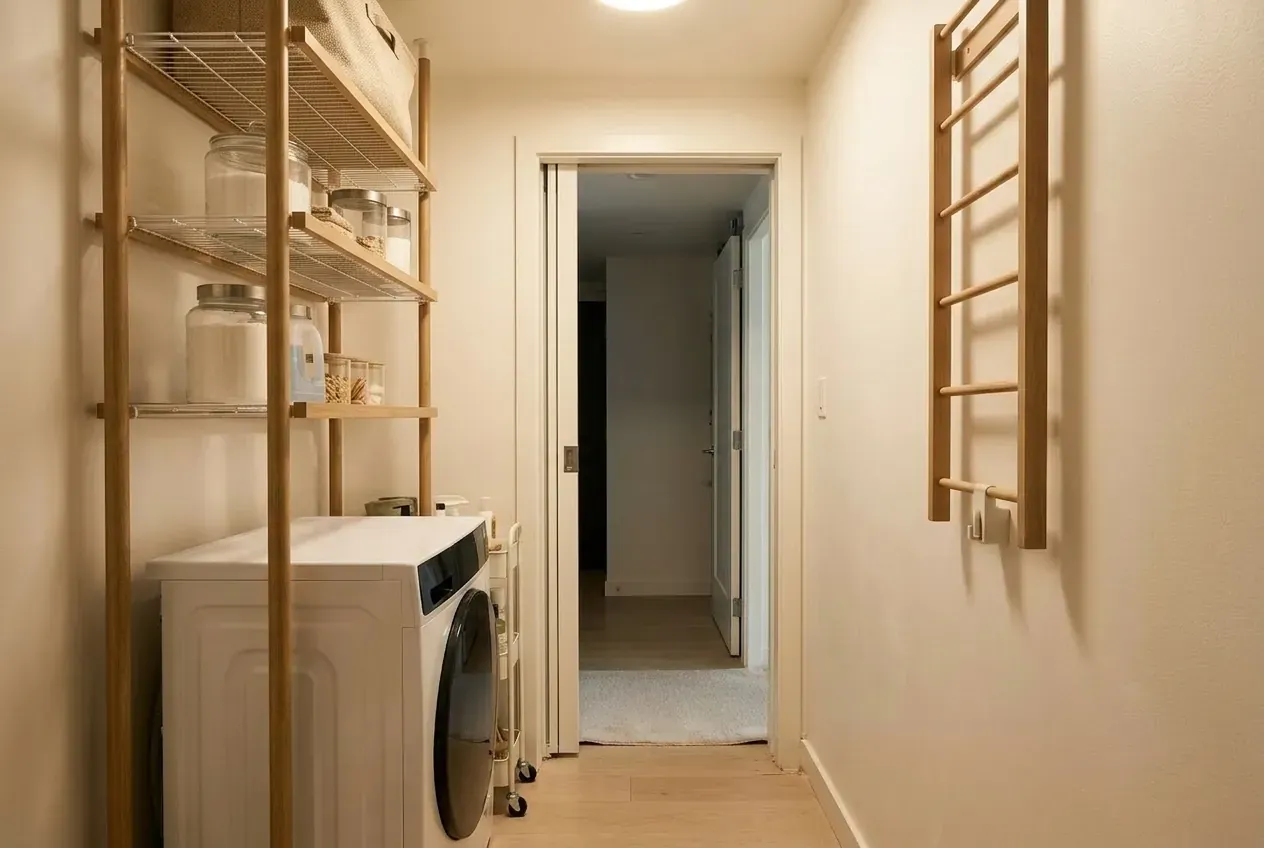 The same room seen from the opposite end, so you can judge the layout from the far side.
2. Where Each Storage Approach Fits in a Small Laundry Closet
Approach A: Tension-Pole Shelf Above the Dryer
Best for stacked units with at least 18 inches (45.7 cm) of open overhead air space.
- The Structure: Two spring-loaded vertical tension poles extending from the floor or appliance top to the ceiling, supporting two wire or oak-veneer shelves.
- Storage Allocation: Holds detergent pods, wool dryer balls in glass jars, and folded mesh wash bags.
- Clearance: Bottom shelf sits 6 inches (15.2 cm) above the dryer top to allow hot air dissipation.
Approach B: Slim Cart Between the Wall and Machine
Best for laundry nooks with an unused 8-inch (20.3 cm) gap beside the washer.
- The Structure: An ultra-narrow 6-inch (15.2 cm) wide by 24-inch (61.0 cm) deep 3-tier rolling metal cart with rubber casters.
- Utility: Slides out smoothly for access to liquid jugs; pushes flush back to hide visual clutter behind the door frame.
Approach C: Over-the-Door Detergent Rack
Best for closets with solid hinged interior doors.
- The Structure: A multi-tier steel wire rack hung over the door header with felt-lined brackets.
- Door Clearance: Check that the interior basket depth (typically 4 inches / 10.2 cm) does not collide with the curved drum of the washer when closed.
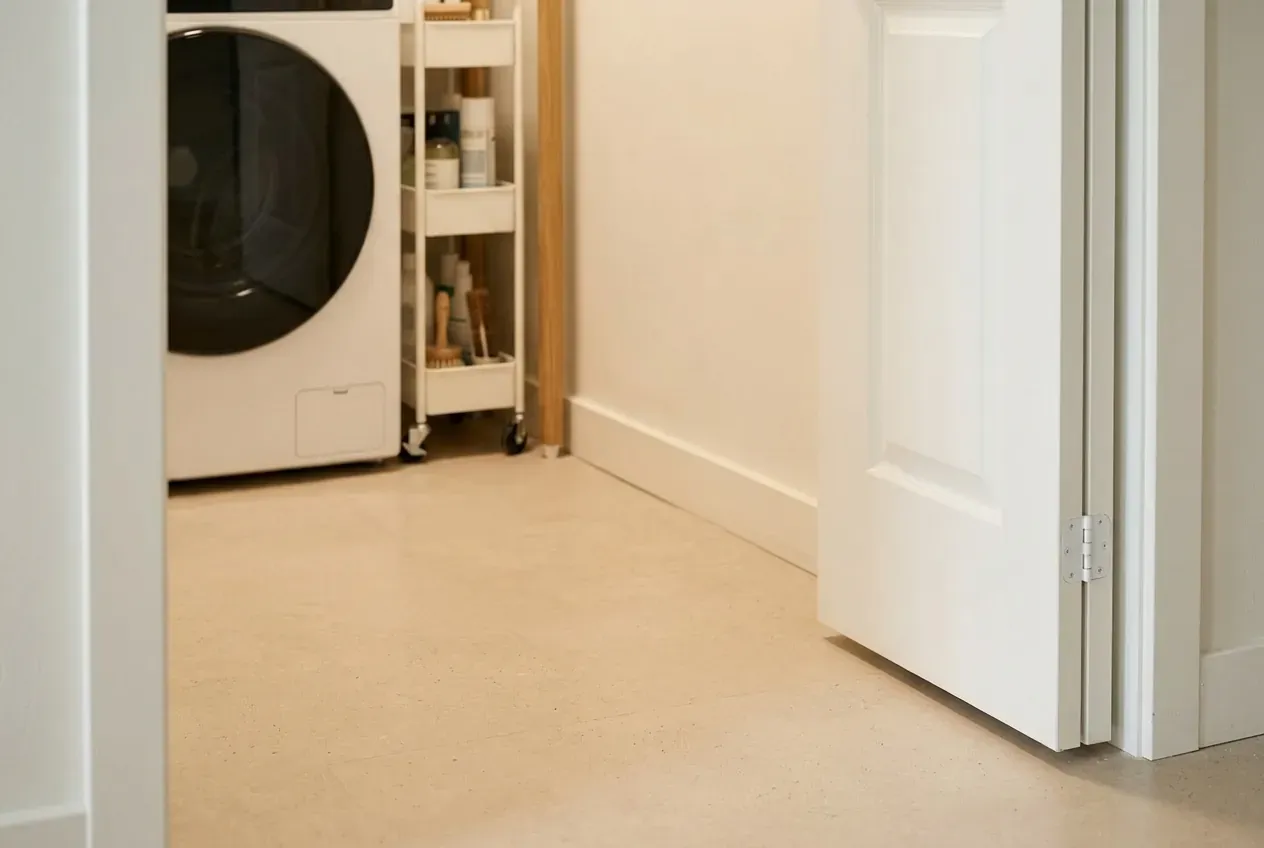 Close up: Keep 30 in (76.2 cm) of clear floor in front of the closet to load and unload.
3. Floating Shelves in a Laundry Room: The Renter Version
Searching for floating shelves laundry room ideas usually turns up drilled-in shelves on a bracket. In a rental, floating shelves in laundry room closets have to be recreated without drilling instead, using tension poles or adhesive brackets. In a rental laundry closet, that is not an option — so the floating look is recreated with tension poles or adhesive brackets instead. Three approaches, in order of how much they hold:
| Method | Weight limit | Drilling | Best for |
|---|---|---|---|
| Tension-pole shelf | 15–25 lb (7–11 kg) per shelf | None | Detergent, dryer balls, folded linens |
| Adhesive shelf bracket | 5–10 lb (2–5 kg) per shelf | None | Light jars, dryer sheets |
| Drilled floating shelf | 30–50 lb (14–23 kg) | Yes | Full utility storage |
Tension-pole shelves: how the load actually works
A tension-pole shelf carries weight through vertical compression, not through the wall. That has two consequences:
- The ceiling takes the load. Each pole presses against the ceiling with roughly 40 to 60 lb (18 to 27 kg) of force when correctly tensioned. A cracked or hollow plaster ceiling will not hold it.
- Weight distribution matters more than total weight. A 20 lb (9 kg) load spread across two shelves is safer than the same load on one, because each pole pair shares the force.
Keep the bottom shelf at least 6 in (15.2 cm) above the appliance top so heat can dissipate — the same clearance rule as the blueprints above.
Floating shelves in a laundry room with side-by-side machines
If your washer and dryer sit side by side rather than stacked, you have the overhead space a stacked closet lacks. A full-width shelf spanning both machines works if it clears the lid swing:
- Top-load washers need 20+ inches (51 cm) of upward swing. A shelf below that height blocks the lid.
- Front-loaders have no lid constraint, so the shelf can sit closer — but keep 6 in (15.2 cm) for heat.
- Span depth: Use a shelf 12 in (30.5 cm) deep, not the full 22 in (55.9 cm) cabinet depth, so you can still reach the back.
Portable and apartment laundry machines: the other half of the problem
Some renters do not have a laundry closet at all. A portable clothes washer or a compact apartment laundry machine changes the storage math:
| Appliance | Typical footprint | Water hookup |
|---|---|---|
| Portable washer (top-load) | 20 x 20 in (51 x 51 cm) | Sink adapter |
| Portable washer (front-load) | 24 x 24 in (61 x 61 cm) | Sink adapter |
| Washer-dryer combo | 24 x 24 in (61 x 61 cm) | Permanent plumbing |
| Apartment laundry machine | 27 x 27 in (69 x 69 cm) | Permanent plumbing |
A portable machine on casters can roll out of a closet, run against a sink, and roll back — which frees the closet for shelving while the machine is in use. Budget 30 in (76.2 cm) of clear floor in front for the rollout path, and check that the drain hose reaches your sink without crossing a doorway.
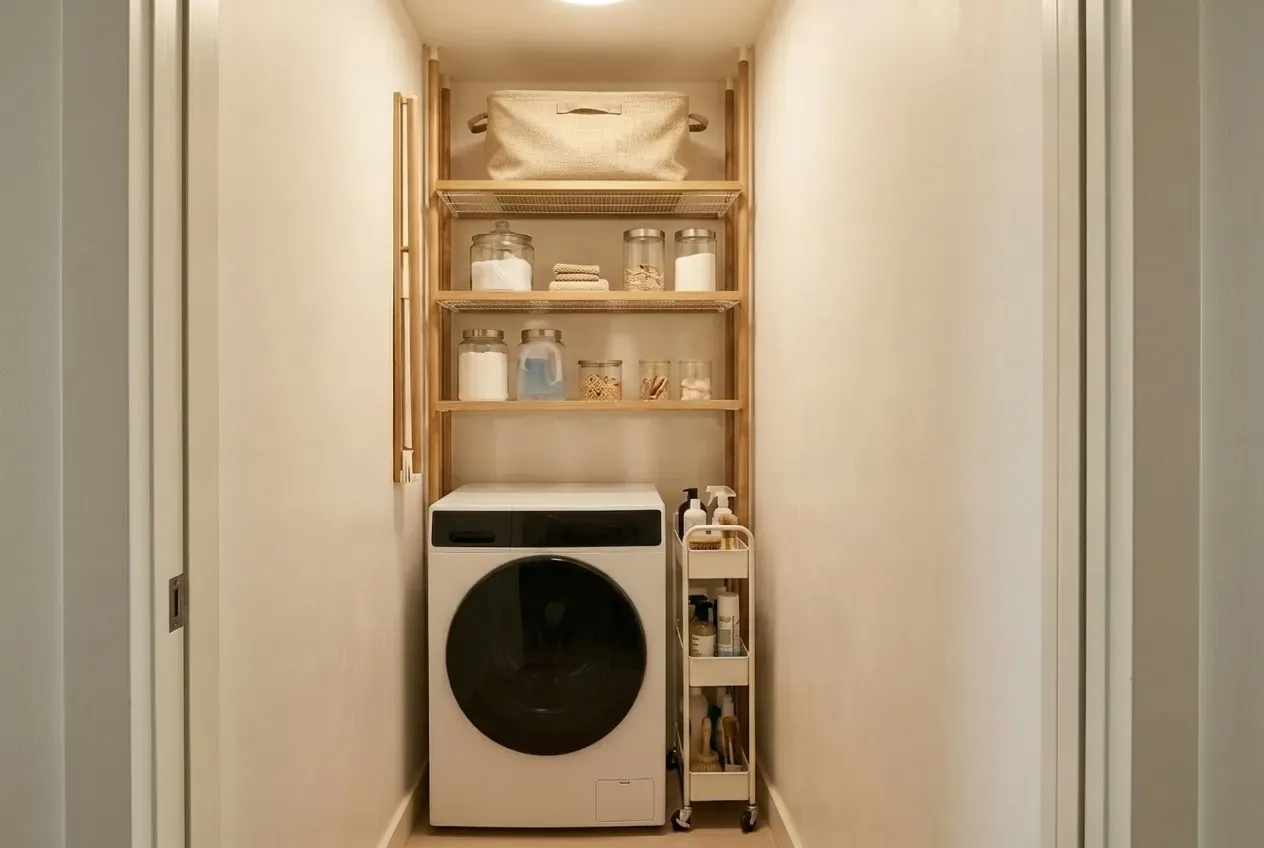 From above and to one side, the full footprint and the walkway read at a glance.
4. Fire Safety, Ventilation, and Appliance Care
A laundry closet houses high-wattage heating elements and plumbing lines that demand strict safety awareness:
- Ventilation Clearance: Never cover, compress, or wrap storage shelves around the flexible dryer exhaust duct. Maintain at least 4 to 6 inches (10.2 to 15.2 cm) of rear clearance as specified in your appliance manual.
- Lint Accumulation: Clean the dryer lint trap before every single load. Never store loose cardboard boxes or paper items within 12 inches (30.5 cm) of the dryer motor housing.
- Chemical Storage: Keep chlorine bleach and harsh stain removers stored upright in leak-proof trays, away from heat exhaust.
- Water Shutoff Access: Ensure the main dual-lever water supply valves and drain hose remain fully visible and reachable in under 3 seconds in case of hose failure.
5. Laundry Closet Color Plan
Paint the walls and doors Alabaster Chalk (#F5F2EB, approximate LRV 83) so the closet reads as bright. Use Oat Linen hamper bags (#D9CDB8, approximate LRV 60) and Light Oak shelf trims (#C9A97C, approximate LRV 42) as the secondary layer. Keep accents small: Sage Moss ceramic detergent canisters (#9AA58A, approximate LRV 38) with warm 2700K plug-in puck lights mounted under shelves.
Keep 30 in (76.2 cm) of clear floor in front of the closet to load and unload.
Curated Color Palette & Key Textures
- Alabaster Chalk #F5F2EB
- Oat Linen #D9CDB8
- Light Oak #C9A97C
- Sage Moss #9AA58A
General references
Dimensions in these guides are typical planning ranges, not legal minimums, and they can differ by jurisdiction. Use the references below as starting points, then confirm local code and your lease before making changes.
FAQ
How do you add storage to a stackable washer dryer closet?
Utilize the narrow 6-to-10-inch gap beside the machines with a slim rolling utility cart, and mount an over-the-door storage rack on the inside of the closet door.
Can you install shelves over a washer and dryer in a rental?
Yes, use floor-to-ceiling spring tension storage poles with adjustable shelves, which clamp tightly between floor and ceiling without screws or wall anchors.
How much ventilation space does an apartment dryer need?
Dryers typically require at least 1 inch (2.5 cm) of side clearance and 4 to 6 inches (10.2 to 15.2 cm) of rear clearance for exhaust airflow. Always check your appliance manual.
How do you get floating shelves in a rental laundry room without drilling?
Use floor-to-ceiling tension poles with adjustable shelves, or adhesive brackets for light loads. Tension shelves hold 15 to 25 lb (7 to 11 kg) per shelf; adhesive brackets hold 5 to 10 lb (2 to 5 kg). Drilled floating shelves hold 30 to 50 lb (14 to 23 kg) but need a lease that permits it.
How much weight can tension-pole shelves hold in a laundry closet?
Roughly 15 to 25 lb (7 to 11 kg) per shelf. The load transfers to the ceiling, which carries 40 to 60 lb (18 to 27 kg) of compression per pole. A cracked or hollow plaster ceiling will not support it.
What size portable washing machine fits an apartment?
Top-load portable washers run about 20 x 20 in (51 x 51 cm) and front-load units about 24 x 24 in (61 x 61 cm). A washer-dryer combo is a similar 24 in footprint but needs permanent plumbing, while a portable unit runs from a sink adapter.
Save this idea

Keep reading
Related rooms
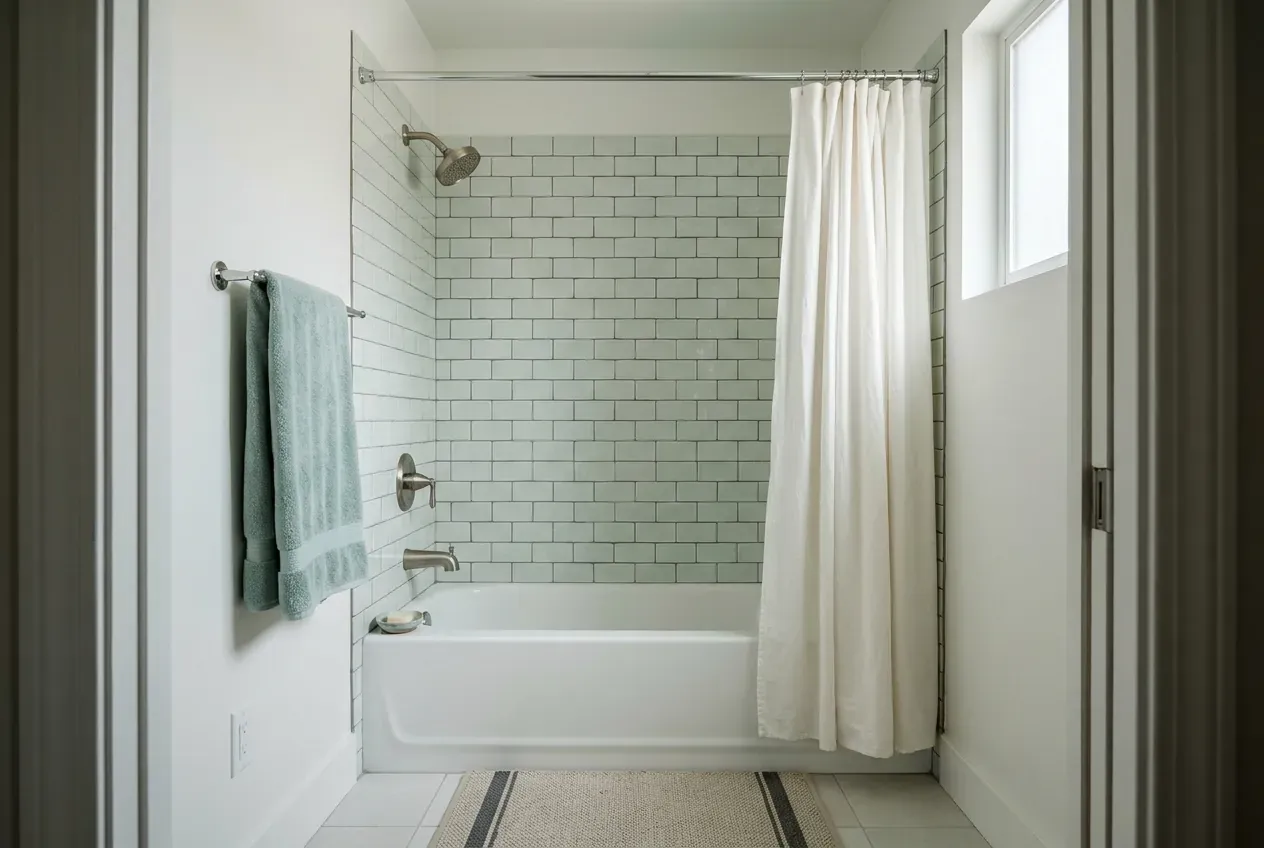
Standard Shower Head Height: 72 to 80 in (183 to 203 cm)
Standard shower head height: mount a fixed head 72 to 80 in (183 to 203 cm) above the floor, 6 in above the tallest user, valve at 38 to 48 in.
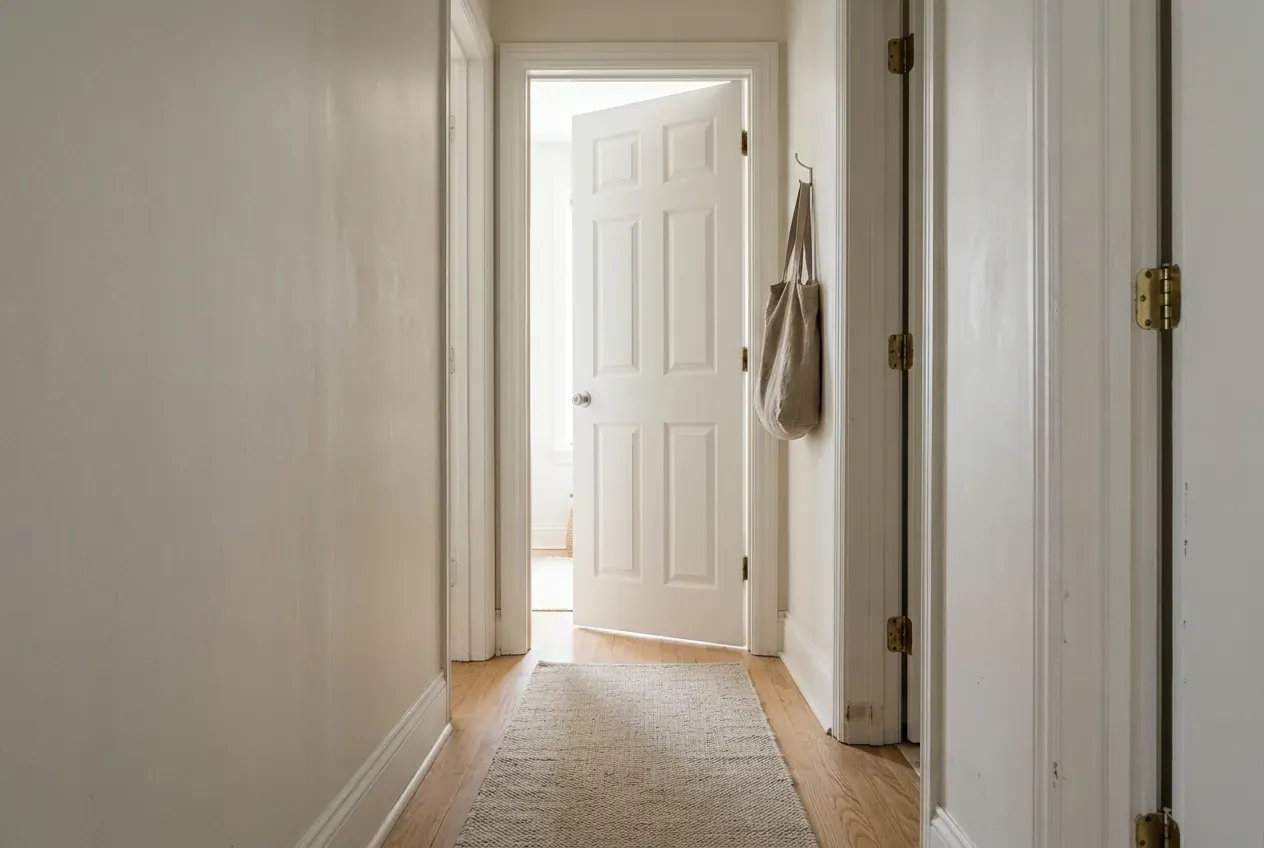
Standard Interior Door Sizes: Widths, Heights, Clearances
Standard interior door sizes: 24 to 36 in (61 to 91 cm) wide and 80 in (203 cm) tall, with clear openings, rough-opening sizes and swing clearance.
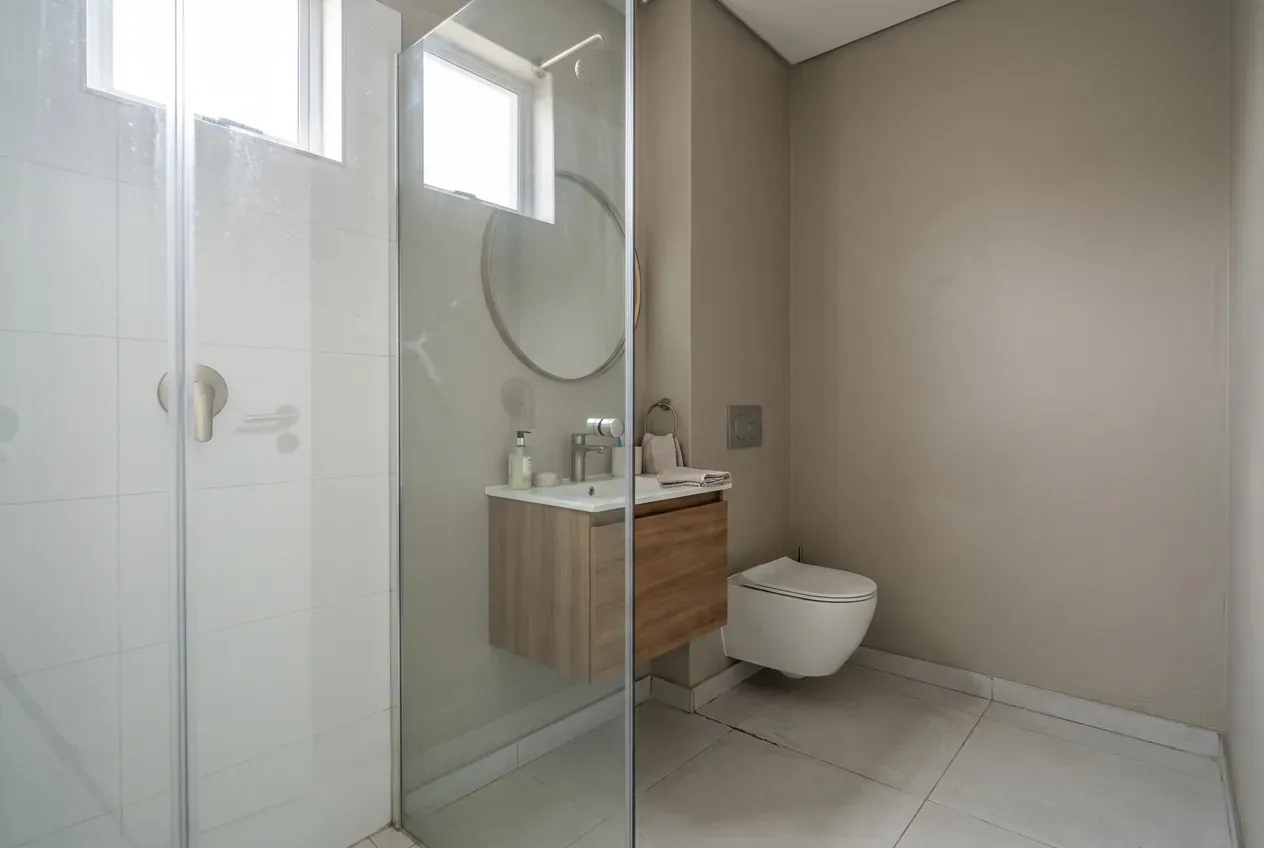
What Is a 3/4 Bathroom? Layouts, Sizes & Code Clearances
What is a 3/4 bathroom? A toilet, sink and shower with no tub, in as little as 5 x 7 ft (152 x 213 cm). Compare quarter, half and full baths.