Rug Pad Size Guide: How Big Should a Rug Pad Be?
Rug pad size, solved: trim the pad 1 to 2 in (2.5 to 5 cm) smaller than the rug on every side, with 5x8 to 9x12 charts and renter-safe picks.
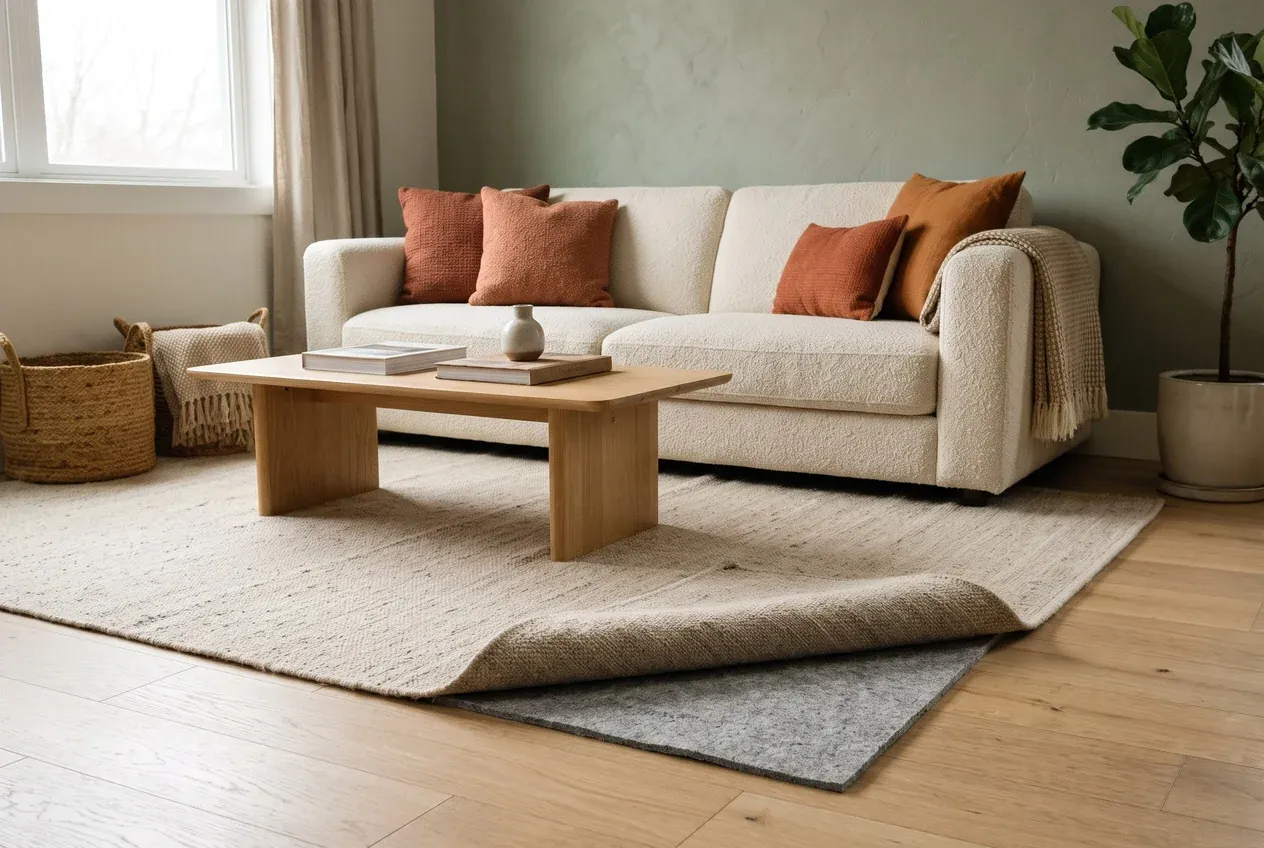
Room specifications
- Room ScaleSmall living room (about 10 x 12 ft)
- Design StyleWarm Minimalist / Japandi
- Budget TierBudget ($)
- Palette Swatches4 colors
The right rug pad size is 1 to 2 inches (2.5 to 5 cm) smaller than the rug on every side, so the rug edge covers it. It does not need to be the exact same size. Buy the pad in the same nominal size as the rug, such as a 5x8 pad for a 5x8 rug, then trim it down. Never use a pad larger than the rug.
A rug that slides, curls at the corners and creeps across the floor is a common complaint in rentals. The cause is usually a missing or wrongly sized pad, not the rug, and a pad costs less than the rug it protects. Small rooms feel the problem more, because a 5x8 or 6x9 rug sits close to doorways and gets walked on at the edge, which is where a badly sized pad fails first.
This guide covers how to size and measure a pad, which type to buy, how thick it should be, and how to install it without risking your deposit. Pair it with the rug size guide and the standard rug sizes chart. If you have not chosen a sofa yet, start with small couches for small spaces.
Rug pad size: how to measure and size a pad
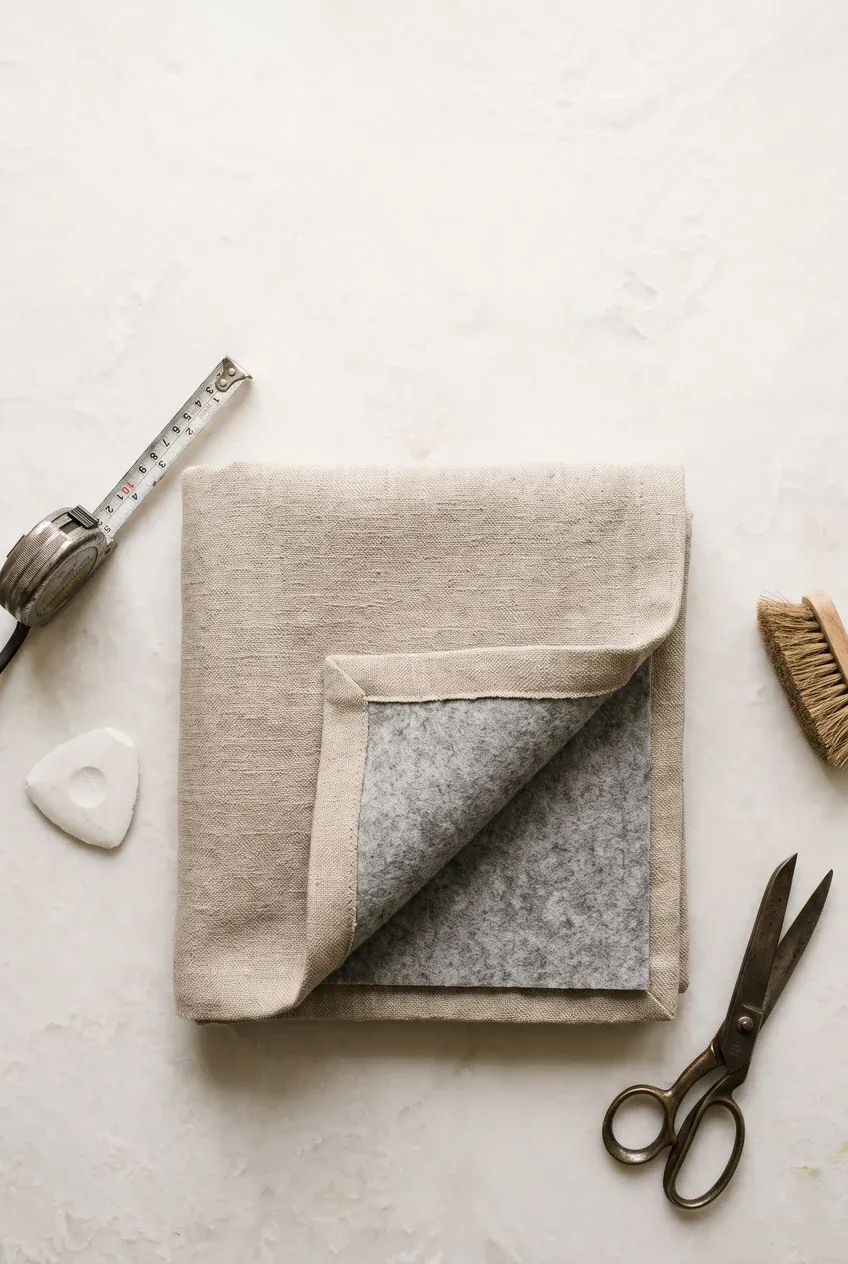
- Measure the rug itself, length and width, on the floor or on its back.
- Subtract 1 to 2 inches from each side. That gives the finished pad size.
- Buy the standard pad closest to the rug size, at or above that size.
- Trim it with scissors or a utility knife (steps below).
The 1 to 2 inch margin stops two failures. A pad that shows at the border looks unfinished and traps dirt at the seam. A pad that is too large ripples under the rug and creates a trip edge.
| Rug size | Pad to buy | Trim to about |
|---|---|---|
| 5x8 ft | 5x8 | 4 ft 10 in x 7 ft 10 in |
| 6x9 ft | 6x9 | 5 ft 10 in x 8 ft 10 in |
| 8x10 ft | 8x10 | 7 ft 10 in x 9 ft 10 in |
| 9x12 ft | 9x12 | 8 ft 10 in x 11 ft 10 in |
| 2x8 ft runner | 2x8 | 1 ft 10 in x 7 ft 10 in |
If your exact size is out of stock, buy the next size up and cut it down. Buying smaller and stretching the pad does not work; it pulls away from the corners and the rug curls. For runners, the same rule applies in a galley kitchen or a hallway. For a narrow room, see narrow living room rug placement.
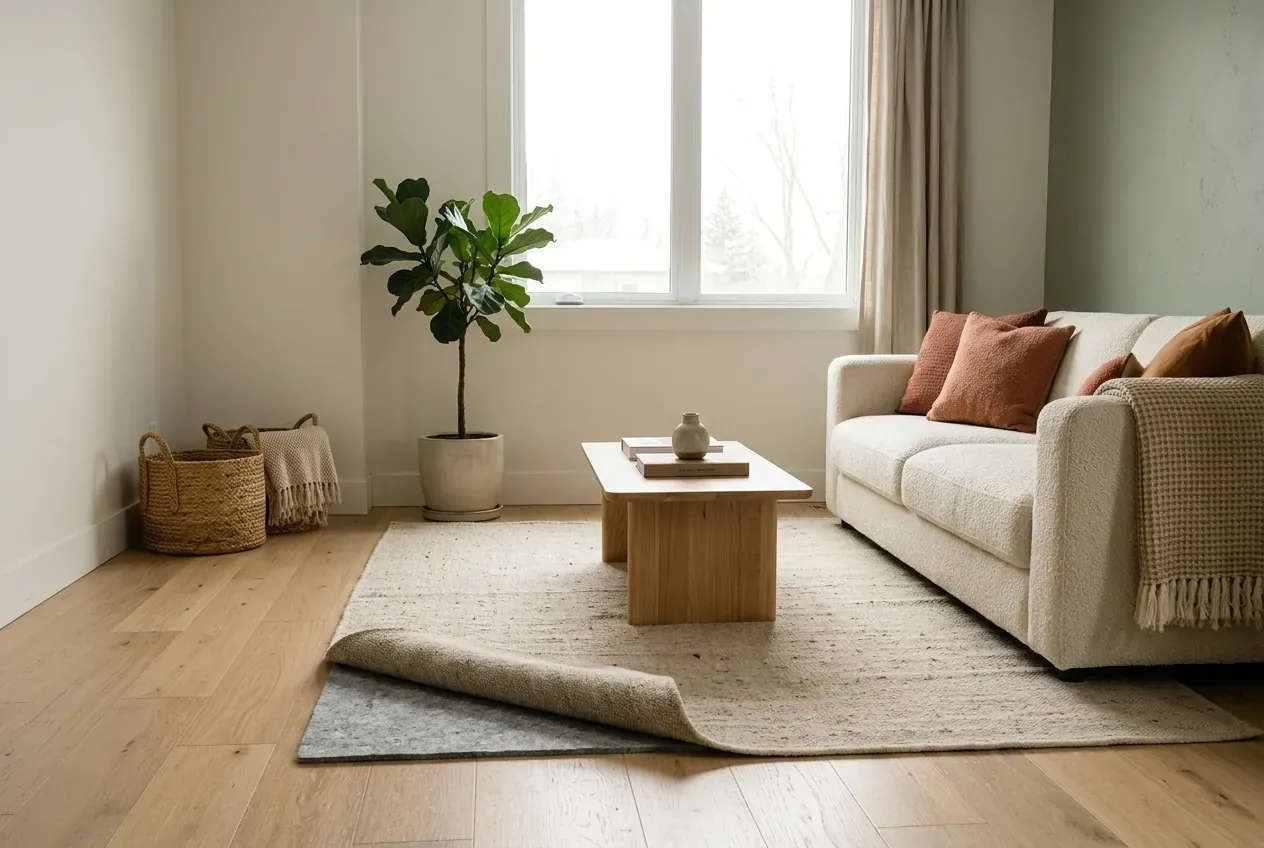 The same room seen from the opposite end, so you can judge the layout from the far side.
How to trim a pad
- Lay the rug face-down and centre the pad on the back.
- Check that the rug extends 1 to 2 inches past the pad on every side.
- Mark the cut line with chalk.
- Cut in long, steady strokes. A utility knife on a cutting mat gives the straightest edge on thick felt.
- Flip the rug and push it sideways to check the grip and that no pad shows.
Which type of pad to buy
| Type | Grip | Cushion | Best floor | Note |
|---|---|---|---|---|
| Felt and rubber | High | High | Hardwood, laminate, tile | Slightly thicker; check door clearance |
| Felt only | Medium | High | Carpet | Can shift on smooth floors |
| Natural rubber | High | Low | Hardwood, tile, entry | Little cushion |
| PVC waffle | High | Low | Not recommended | Can react with some finishes |
| Gripper tape or mesh | Medium | None | Quick fixes | Temporary |
For most rentals, felt and rubber is the practical pick: the felt cushions, the rubber grips, and no adhesive is needed. Avoid PVC pads on polyurethane-finished wood, vinyl plank and laminate, since the plasticisers can stain the surface. Check the pad’s care label for your floor type.
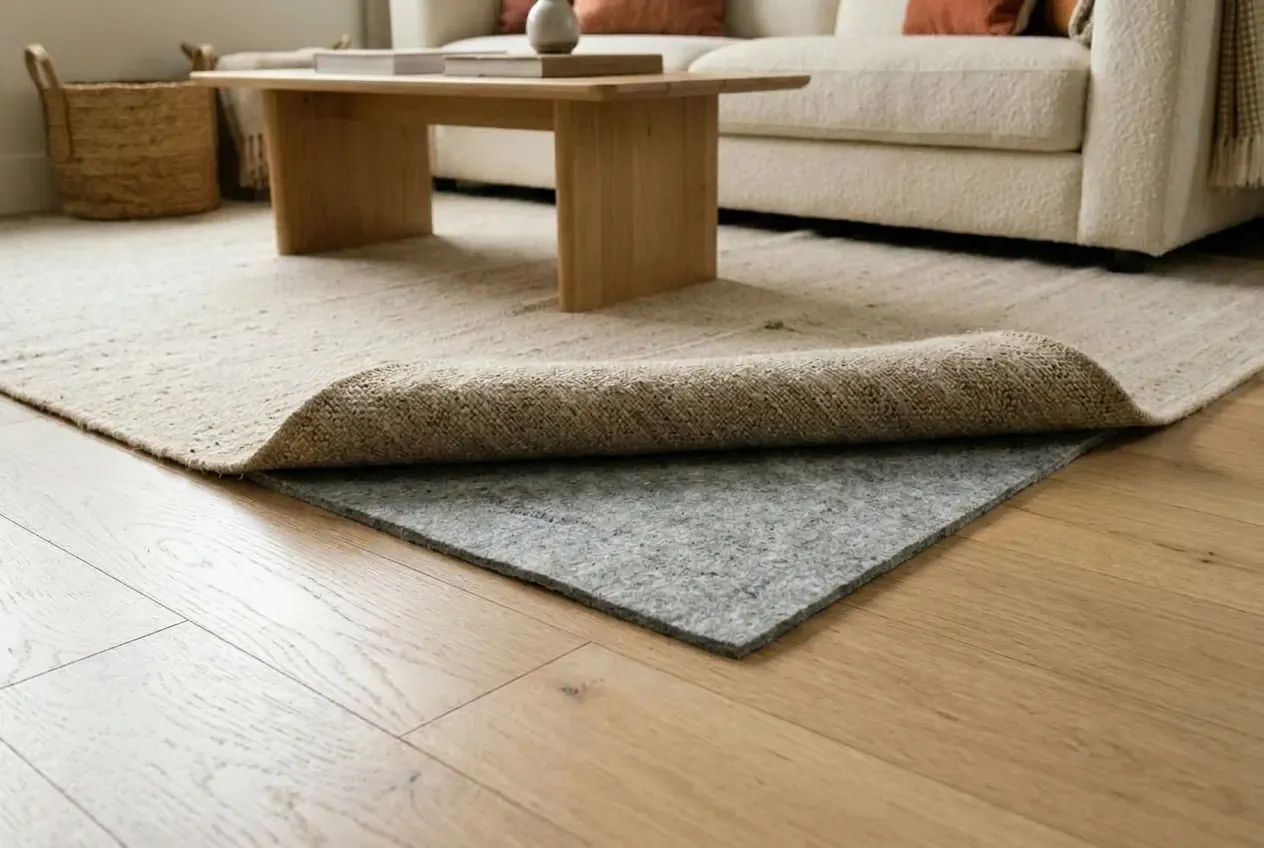 Close up: Trim the rug pad 1 to 2 in (2.5 to 5 cm) smaller than the rug on every side.
How thick should it be?
Measure the gap under any door that swings over the rug.
- About 0.13 inch (3 mm): under doors that must clear the rug, and under low-pile flatweaves.
- About 0.25 inch (6 mm): a common choice for living rooms and bedrooms.
- About 0.5 inch (12 mm): only under a thin rug on hard flooring where you want more cushion. It will catch on many door sweeps.
If the rug is already plush, use a thinner pad, not a thicker one.
Renter-safe installation
- Do not use double-sided carpet tape on finished hardwood. It can lift the finish, and you may be charged for the repair.
- Let the front legs of a sofa or accent chair rest on the rug to hold it down.
- Wait for a new floor finish to cure, usually about 30 days, before putting down adhesive-backed products; the same cure-time logic applies to renter-friendly accent walls.
- Lift the rug when moving it. Dragging grinds grit between pad and floor.
The rug on top matters too. See best rugs for hardwood floors and the washable rug sizing guide.
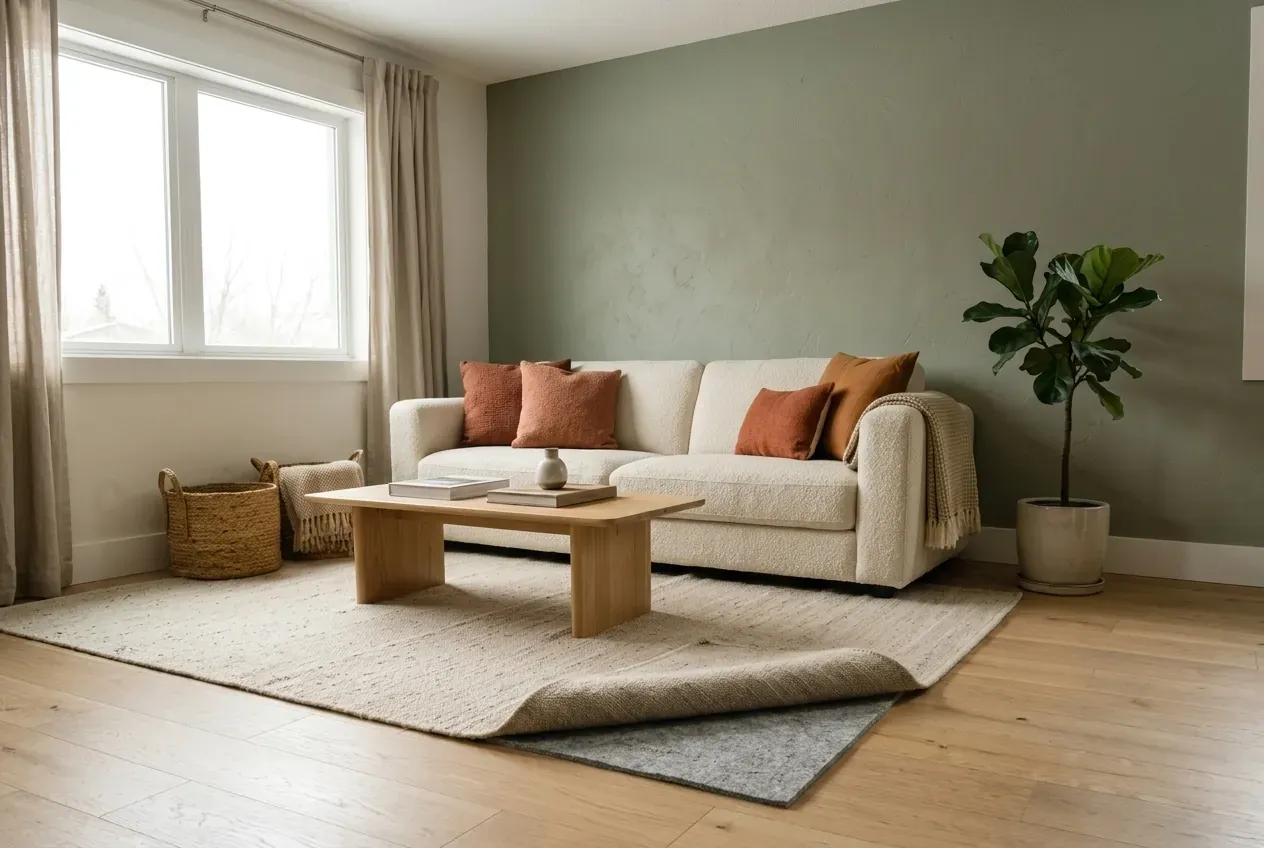 From above and to one side, the full footprint and the walkway read at a glance.
Fixing a pad that is already wrong
- Too big: trim it using the steps above.
- Too small, rug still slides: add a second thin non-slip pad underneath, offset from the first, or replace it with a correctly sized felt-and-rubber pad.
- Layered rugs: put the grip pad under the bottom rug only. A second pad between rugs makes the stack unstable.
When you may not need a pad
- A heavy wool rug may grip well on its own; push it sideways to test.
- Some rugs ship with a non-slip backing. A second pad adds height for no gain.
- Where a door has tight clearance, use a thin gripper mesh instead.
- On wall-to-wall carpet, use only a thin pad, or none.
Before you buy
- Measure the rug, then subtract 1 to 2 inches per side.
- Pick felt and rubber for hard floors.
- Check the door gap and choose the thickness.
- Skip PVC and carpet tape on finished floors.
- Have sharp scissors or a utility knife ready.
Curated Color Palette & Key Textures
- Alabaster Chalk #F5F2EB
- Oat Linen #D9CDB8
- Light Oak #C9A97C
- Sage Moss #9AA58A
General references
Dimensions in these guides are typical planning ranges, not legal minimums, and they can differ by jurisdiction. Use the references below as starting points, then confirm local code and your lease before making changes.
FAQ
What size rug pad do I need?
Match the pad to the rug, then trim it 1 to 2 inches (2.5 to 5 cm) smaller on every side. A 5x8 rug takes a 5x8 pad, a 6x9 rug takes a 6x9 pad, and an 8x10 rug takes an 8x10 pad. Never use a pad larger than the rug.
Should the rug pad be smaller than the rug?
Yes. Keep the pad 1 to 2 inches smaller on all four sides so it never peeks past the rug edge. A pad that shows at the border looks unfinished and catches dirt at the seam.
Do you need a rug pad on hardwood floors?
Yes. On hardwood a felt-and-rubber pad stops the rug sliding and curling, cushions footfall, and shields the finish from grit and dye transfer. Avoid PVC waffle pads, which can react with polyurethane and leave stains.
Can you put a rug pad on carpet?
Use a thin felt pad or a felt-and-rubber pad with a low-profile rubber side. A thick pad under a rug on carpet makes the surface unstable and can buckle underfoot; a 0.25 inch pad is usually the limit.
How thick should a rug pad be?
Use about 0.25 inch (6 mm) for most rooms. Choose 0.13 inch (3 mm) under doors that must clear the rug, and up to 0.5 inch (12 mm) only under a thin flatweave on hard flooring where you want extra cushion.
Save this idea

Keep reading
Related rooms
Standard Window Sizes: 24 x 36 to 48 x 72 in Chart
Standard window sizes in inches and cm: most run 24 to 48 in wide by 30 to 72 in high, and a bedroom window needs a 5.7 sq ft clear opening for egress.
TV Dimensions by Screen Size: 65 in Is 56.7 x 31.9 in
TV dimensions by screen size in inches and cm: a 65 in TV is 56.7 x 31.9 in, a 55 in is 47.9 x 27.0 in, plus the viewing distance and stand width for each.
How High to Hang Pictures: 57 in (145 cm) Center
Hang pictures with the center 57 in (145 cm) up, the frame bottom 7 to 10 in (18 to 25 cm) above a sofa, and frames 2 to 3 in (5 to 8 cm) apart.