Renter-Friendly Wall Panels: Slats, Counts and Removal
Renter-friendly wall panels: how many 1.5 in (4 cm) slats cover a 10 ft (3 m) wall, peel-and-stick tests and how to remove them without damage.
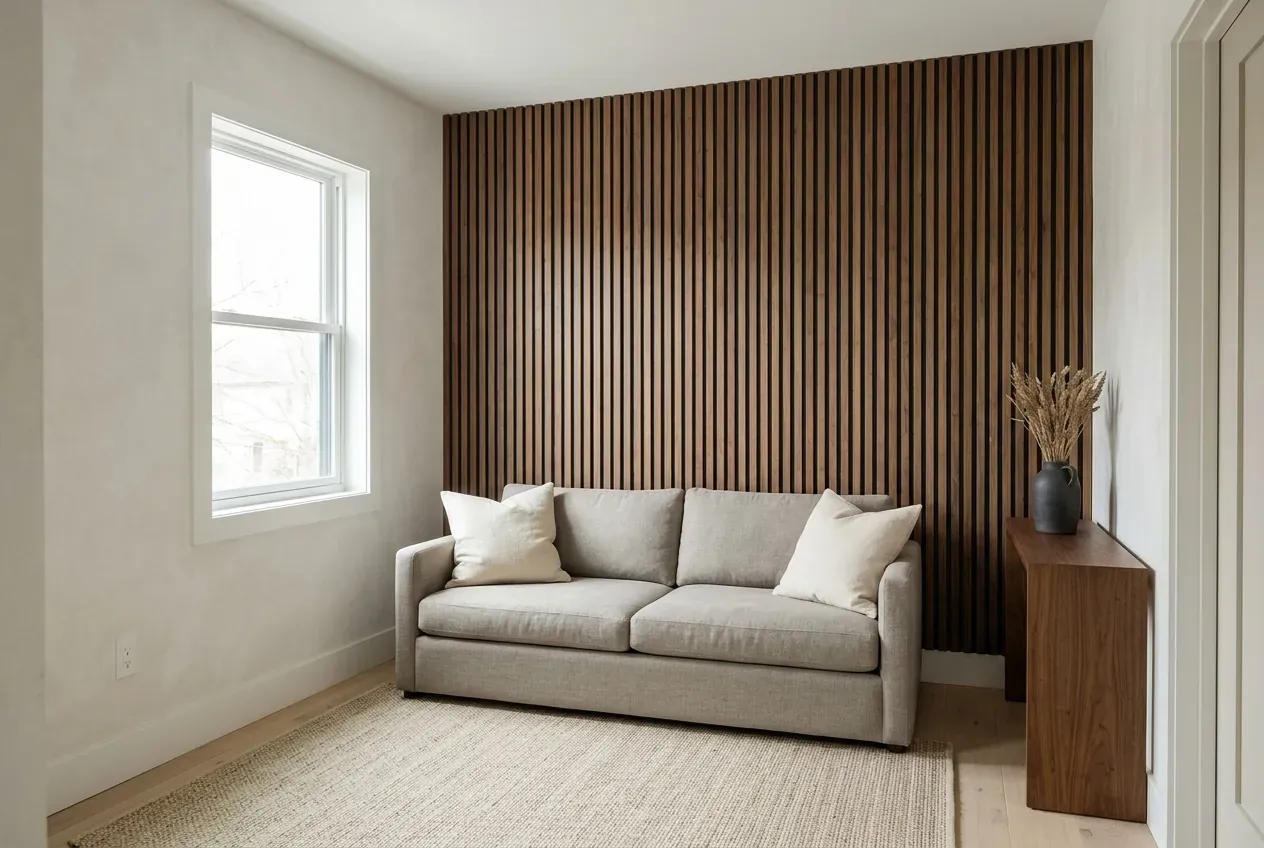
Room specifications
- Room ScaleSmall living room (about 11 x 13 ft) with a 10 ft feature wall
- Design StyleWalnut Slat Feature Wall
- Budget TierBudget ($)
- Palette Swatches4 colors
Slat wall calculator
Enter the wall and the slat size. It counts the slats and shows the leftover so you can plan the end.
Each slat repeats every 2.25 in (5.72 cm), so the wall takes 53 slats and leaves 0.8 in (1.9 cm). The slats cover about 53 sq ft. Check the product's real slat width, and test the adhesive on a hidden spot before using it in a rental.
Front view of the wall to scale. Each stripe is one slat; the red strip is the leftover width.
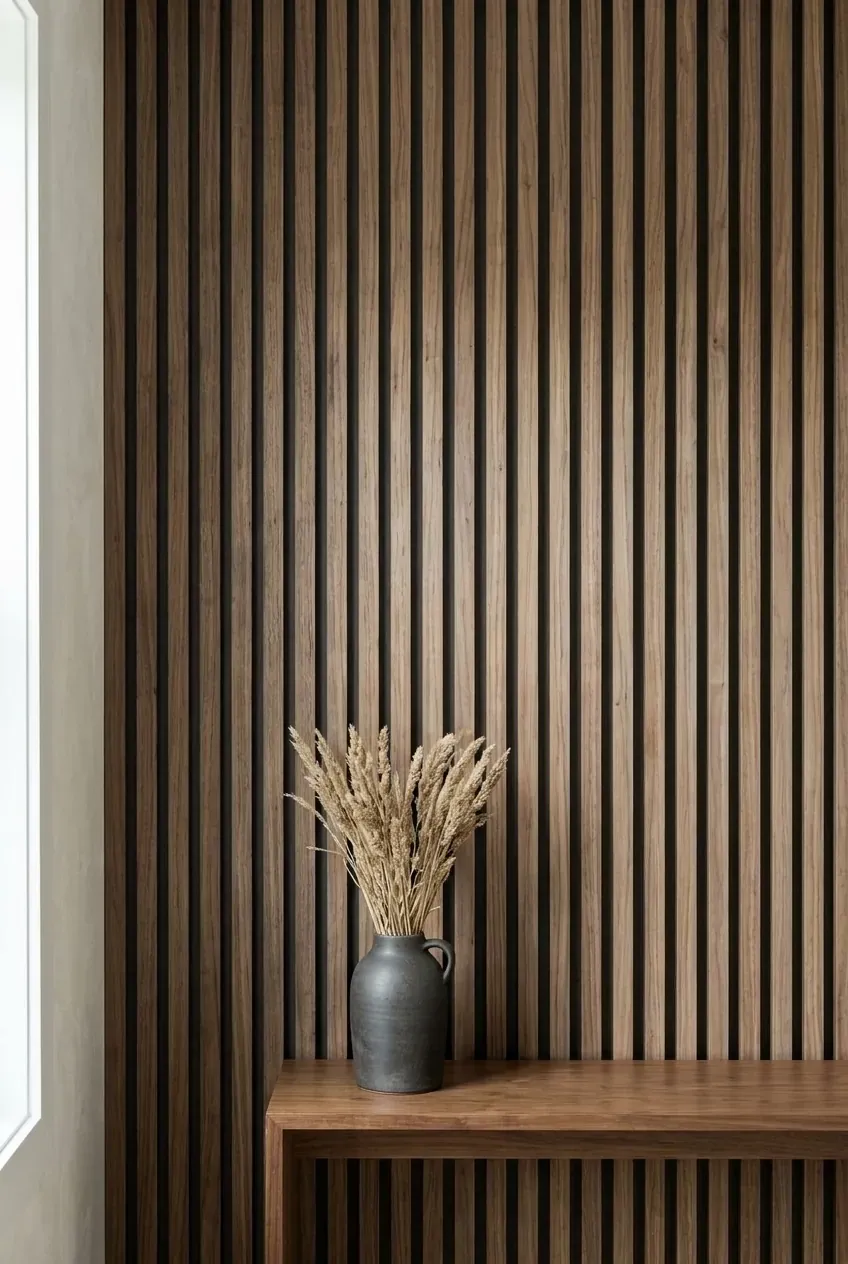
Renter-friendly wall panels add architectural depth to a small living room without giving up floor space. Using common 1.5 in (4 cm) vertical slats with 0.75 in (2 cm) gaps creates a 2.25 in (5.7 cm) repeating pitch, so a 10 ft (3.05 m) feature wall requires 53 slats across 120 in (305 cm).
Renter-Friendly Wall Panel Types and What Each Needs
Not every wall covering suits leased drywall. Compare how each lightweight construction attaches before ordering, or start with our comparison of renter-friendly accent walls using wallpaper or paint.
- Peel-and-stick slats: Thin wood-veneer strips, often 0.25 to 0.5 in (0.6 to 1.3 cm) thick, mounted on removable adhesive tape or a dark backing sheet. They need clean, smooth paint and a plumb start line.
- Acoustic felt panels: Soft polyester squares, commonly 12 x 12 in (30 x 30 cm) or 24 x 24 in (61 x 61 cm), hung with removable mounting strips that place minimal load on paint.
- Lightweight foam or PVC tiles: Molded panels fixed with low-tack adhesive tabs. Check the product label for exact dimensions and adhesive rules, because weights vary by maker.
To verify your wall width and slat count before buying, use the calculator above. For softer wall textures, see grass-cloth wallpaper for small rental rooms or peel-and-stick wallpaper in a living room.
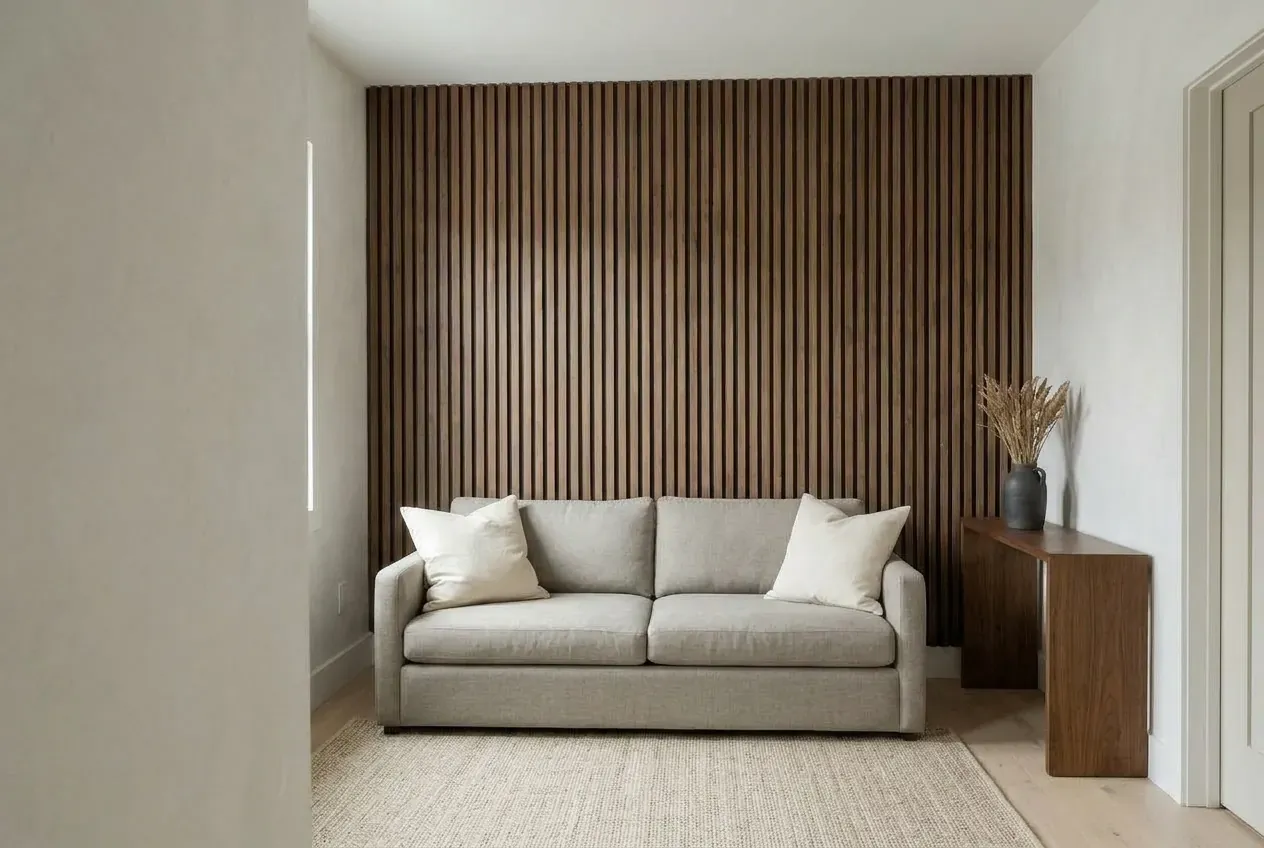 The slat wall is the single 10 ft (3 m) wall behind the sofa; the other walls stay plain.
Slat Count Arithmetic for a Peel-and-Stick Slat Wall
Planning a peel-and-stick slat wall relies on one figure: the pitch, which is the slat width plus one gap. A common 1.5 in (4 cm) slat with a 0.75 in (2 cm) gap gives a 2.25 in (5.7 cm) pitch. On an 8 ft (2.44 m) wall, strips run 96 in (244 cm) tall, trimmed to clear a 4 in (10 cm) baseboard if present.
| Wall Width | Pitch | Slats Needed | Width Covered | Leftover | Area at 8 ft (2.44 m) |
|---|---|---|---|---|---|
| 6 ft (72 in / 183 cm) | 2.25 in (5.7 cm) | 32 | 72 in (183 cm) | 0 in (0 cm) | 48 sq ft (4.5 sq m) |
| 8 ft (96 in / 244 cm) | 2.25 in (5.7 cm) | 42 | 94.5 in (240 cm) | 1.5 in (3.8 cm) | 64 sq ft (5.9 sq m) |
| 10 ft (120 in / 305 cm) | 2.25 in (5.7 cm) | 53 | 119.25 in (303 cm) | 0.75 in (2 cm) | 80 sq ft (7.4 sq m) |
| 12 ft (144 in / 366 cm) | 2.25 in (5.7 cm) | 64 | 144 in (366 cm) | 0 in (0 cm) | 96 sq ft (8.9 sq m) |
Always divide your measured wall by the pitch on the product label, since slat sizes vary. On a 10 ft (3.05 m) wall, 53 slats leave a clean 0.75 in (2 cm) corner reveal and avoid thin ripped strips. Measure around wall outlets, commonly centered near 12 in (30 cm) above the floor, before cutting.
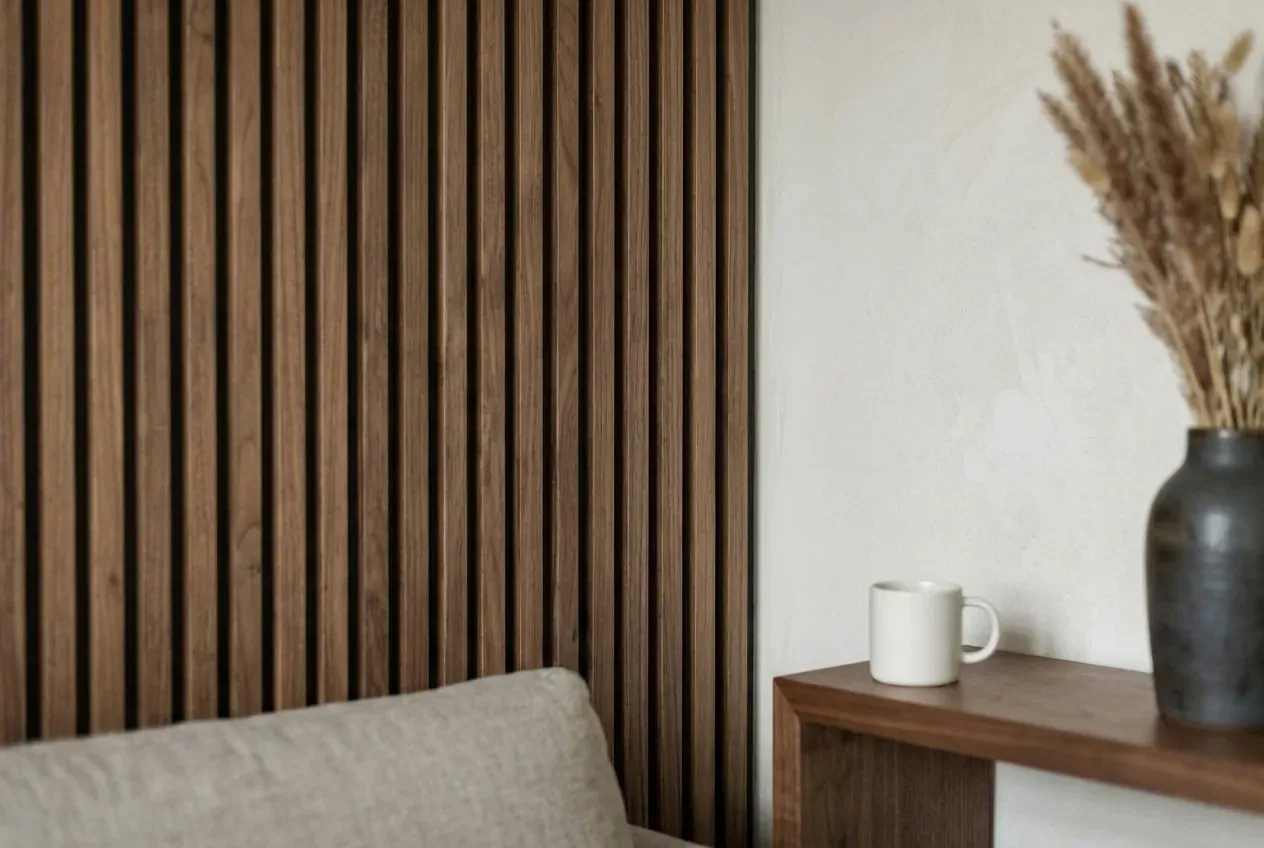 A 1.5 in (4 cm) slat and a 0.75 in (2 cm) gap give a 2.25 in (5.7 cm) pitch.
Installing and Removing Removable Wall Panels Without Damage
No adhesive guarantees damage-free removal, because aged latex paint and humid air weaken drywall bonds. Read your lease, get written landlord permission, and test a hidden 4 x 4 in (10 x 10 cm) patch behind furniture for a few weeks before covering an 80 sq ft (7.4 sq m) wall.
Before applying removable wall panels, wipe the drywall clean and snap a plumb line. At move-out, warm each strip with a hair dryer held 4 to 6 in (10 to 15 cm) away on low heat, then peel slowly at a flat angle along the wall. If any paint lifts, use our guide to patch and paint rental walls.
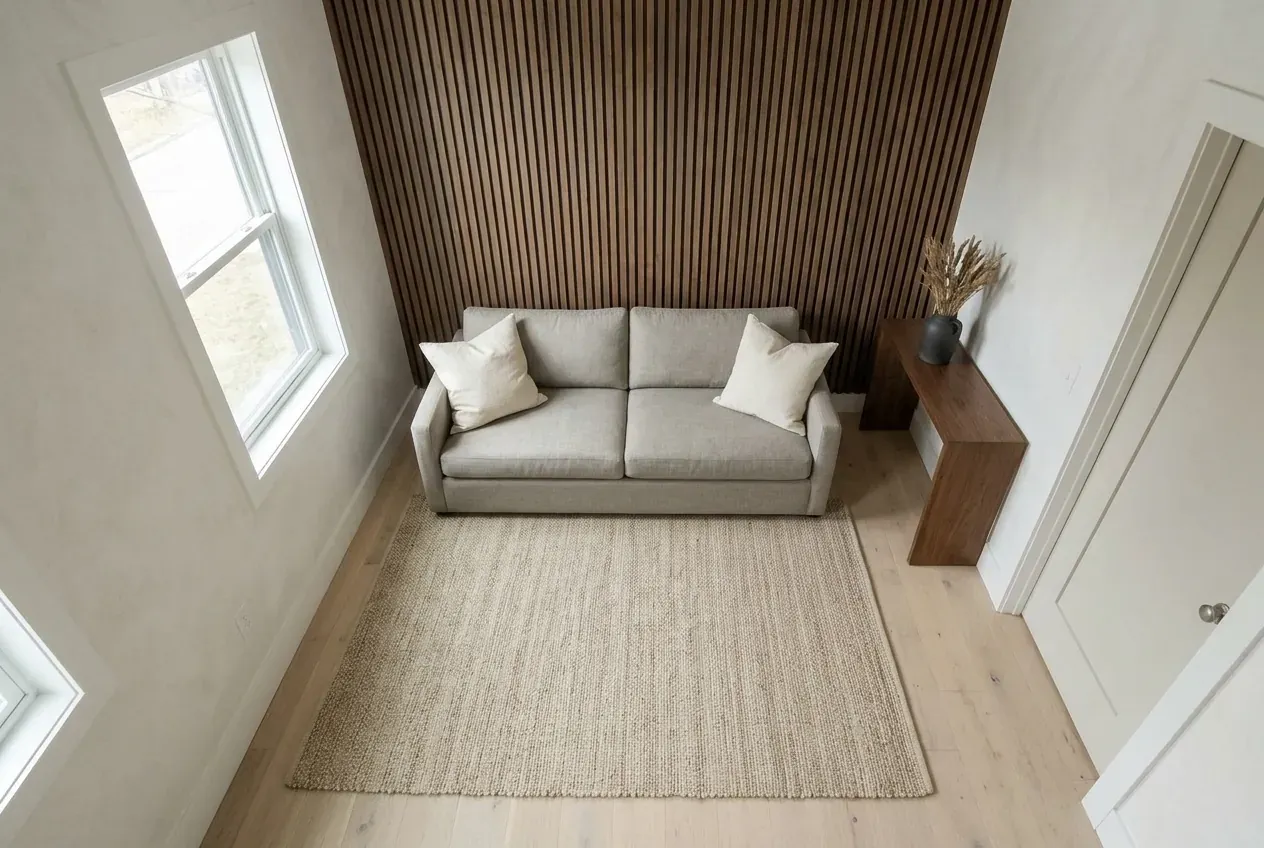 From above the feature wall adds texture without taking any floor space.
Paint, Lighting and Furniture Around Renter-Friendly Wood Paneling
In an 11 x 13 ft (3.35 x 3.96 m) living room, keep renter-friendly wood paneling on one 10 ft (3.05 m) wall behind the sofa so the other walls stay calm. Balance the vertical texture with Limewash White (#F3F1EA) walls, a 72 in (183 cm) sofa in Greige Slat (#C9BFAF), Walnut Slat (#7C6347) strips, and Charcoal Reveal (#2C2B29) in the 0.75 in (2 cm) gaps and ceramic accents.
Pair the wall with a 14 in (36 cm) deep side console and a 5 x 8 ft (1.52 x 2.44 m) rug to preserve a 30 in (76 cm) path to the 80 in (203 cm) door—treat 30 in (76 cm) as a design guideline, not building code. Side daylight from a 48 x 54 in (122 x 137 cm) window grazes the slats softly. For deeper mood, see our dark moody wallpaper guide for small rooms or browse small living rooms.
Curated Color Palette & Key Textures
- Limewash White #F3F1EA
- Greige Slat #C9BFAF
- Walnut Slat #7C6347
- Charcoal Reveal #2C2B29
General references
Dimensions in these guides are typical planning ranges, not legal minimums, and they can differ by jurisdiction. Use the references below as starting points, then confirm local code and your lease before making changes.
FAQ
Can you use wall panels in a rental?
Yes, lightweight peel-and-stick slats, felt acoustic squares, and thin foam tiles can work in a rental if your lease permits removable wall coverings. Always test one hidden patch of about 4 x 4 in (10 x 10 cm) for a few weeks first, and get written landlord approval.
How many slats do I need for a 10 foot wall?
Using 1.5 in (4 cm) wide slats with 0.75 in (2 cm) gaps gives a 2.25 in (5.7 cm) repeating pitch. Divide a 120 in (305 cm) wall width by 2.25 in (5.7 cm) to get 53 slats covering 119.25 in (303 cm), leaving 0.75 in (2 cm) spare.
How do you remove peel-and-stick panels without damaging paint?
Warm the adhesive slowly with a hair dryer held 4 to 6 in (10 to 15 cm) away on low heat, then peel the panel back at a flat angle rather than pulling straight out. Removal is never guaranteed damage-free, so keep touch-up supplies ready.
Save this idea

Keep reading
Related rooms
Standard Window Sizes: 24 x 36 to 48 x 72 in Chart
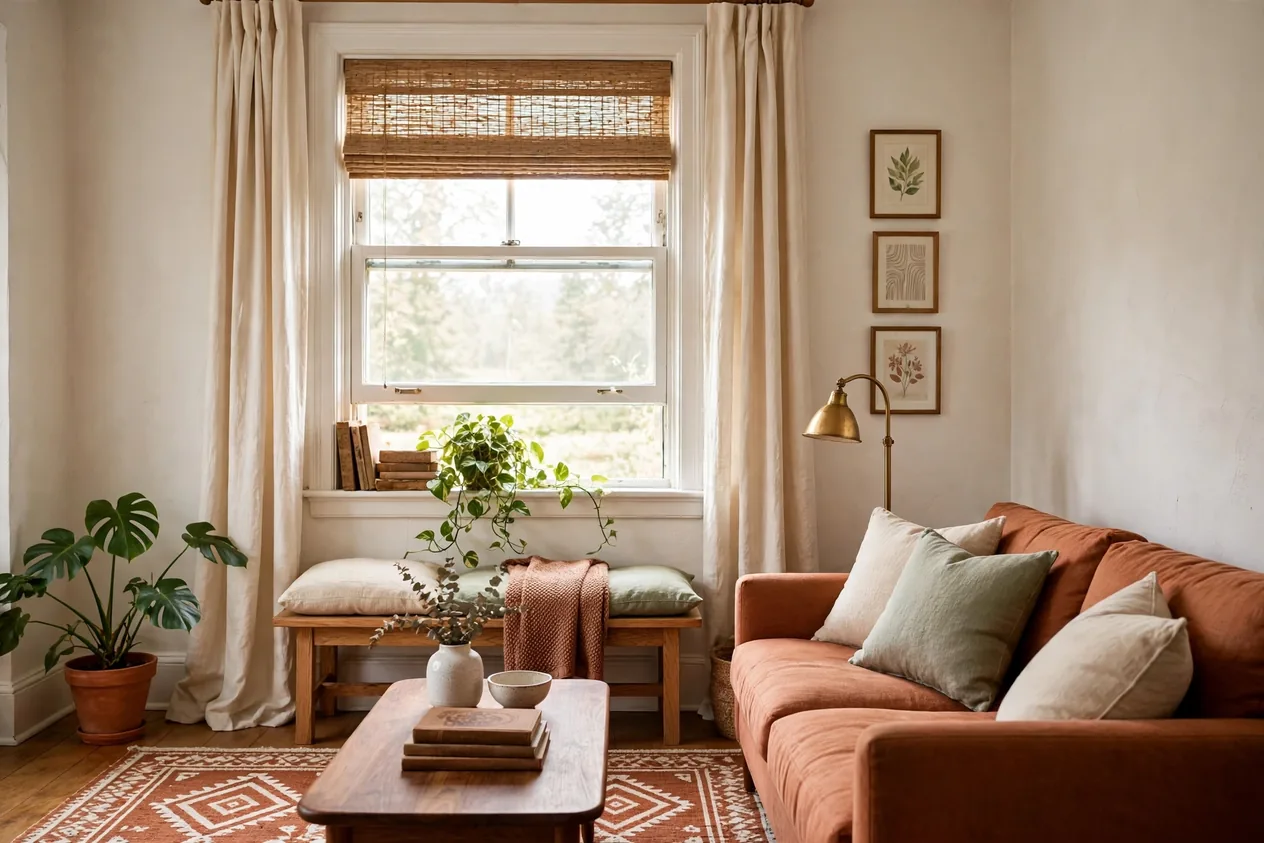
Standard window sizes in inches and cm: most run 24 to 48 in wide by 30 to 72 in high, and a bedroom window needs a 5.7 sq ft clear opening for egress.
TV Dimensions by Screen Size: 65 in Is 56.7 x 31.9 in
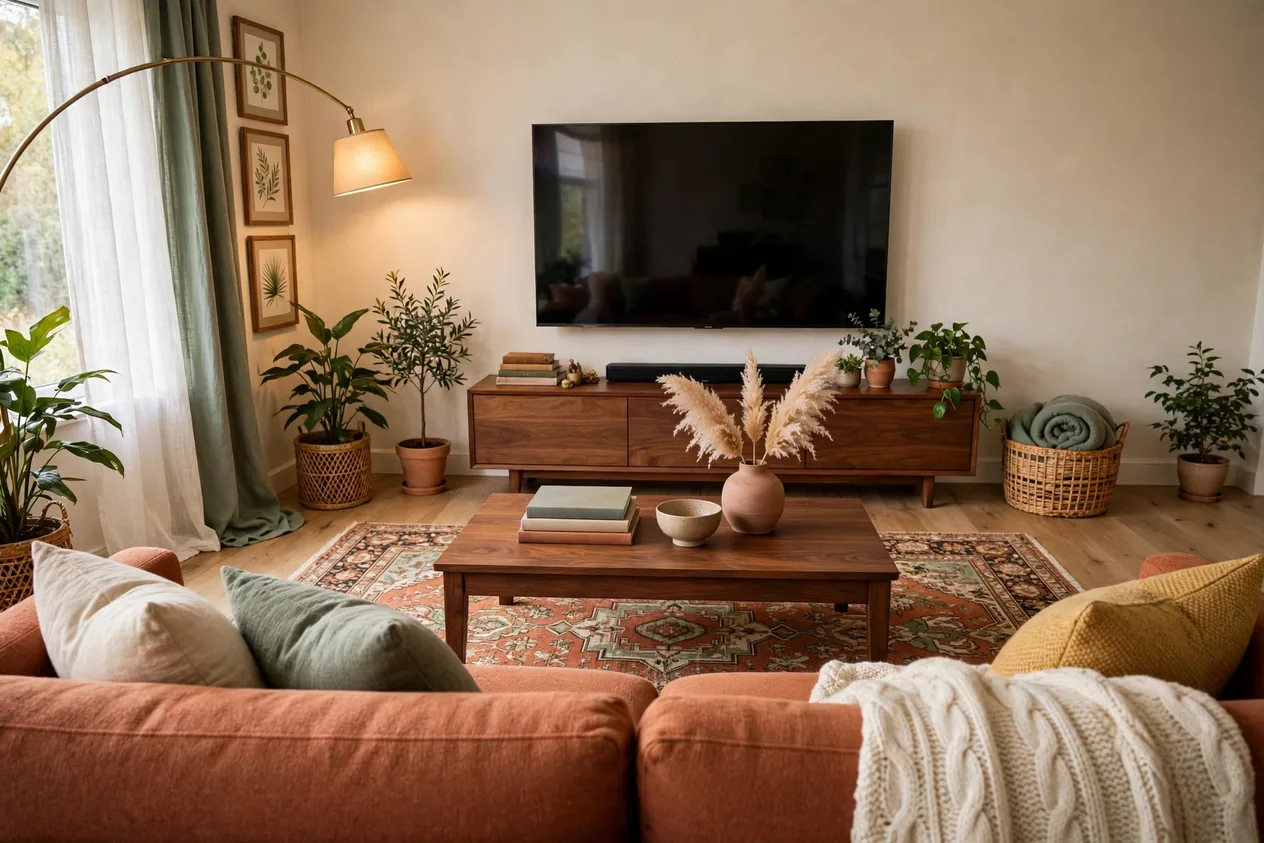
TV dimensions by screen size in inches and cm: a 65 in TV is 56.7 x 31.9 in, a 55 in is 47.9 x 27.0 in, plus the viewing distance and stand width for each.
How High to Hang Pictures: 57 in (145 cm) Center
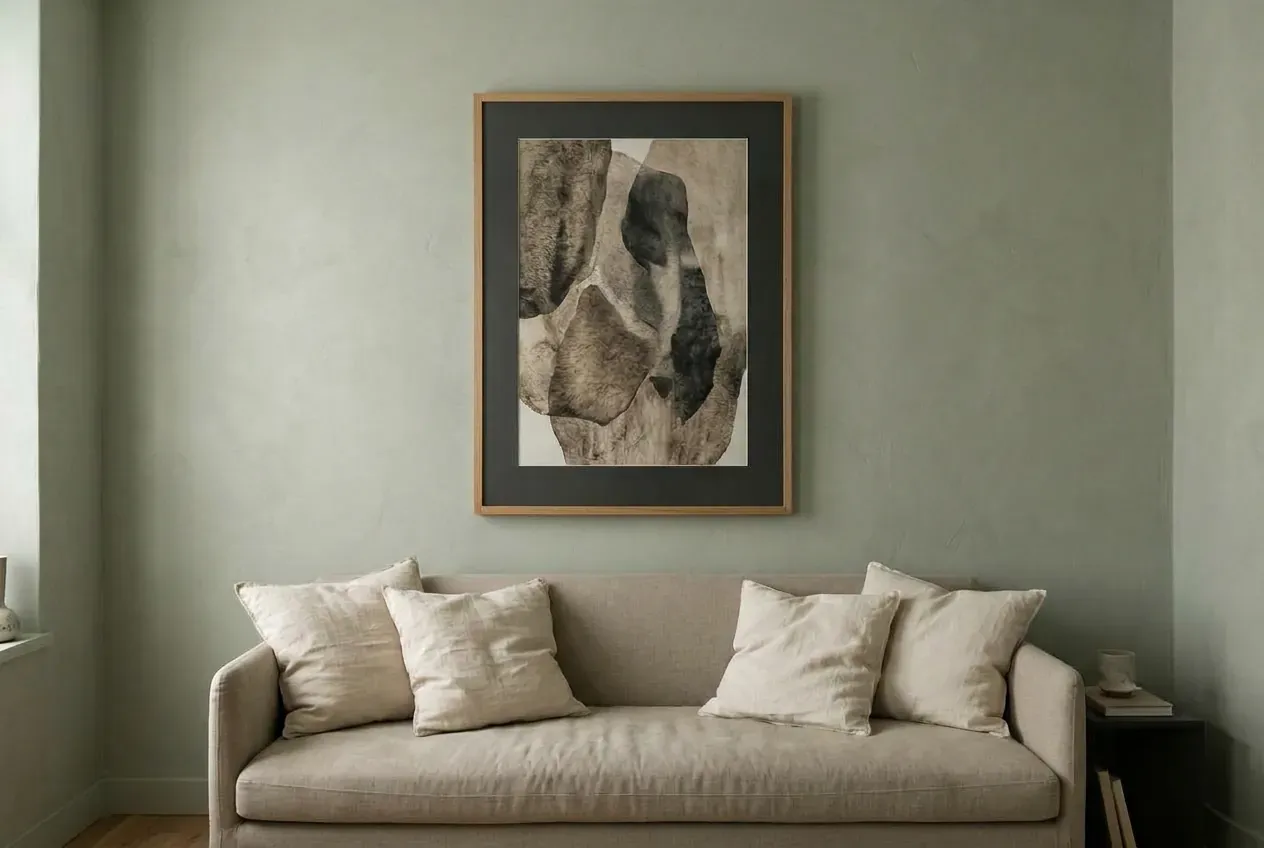
Hang pictures with the center 57 in (145 cm) up, the frame bottom 7 to 10 in (18 to 25 cm) above a sofa, and frames 2 to 3 in (5 to 8 cm) apart.