Bathroom Storage Bench: Sizes and Clearances
A bathroom storage bench: the 15 in (38 cm) seat height, 30 in (76 cm) clearance from a shower door, and the wet-zone materials that survive steam.
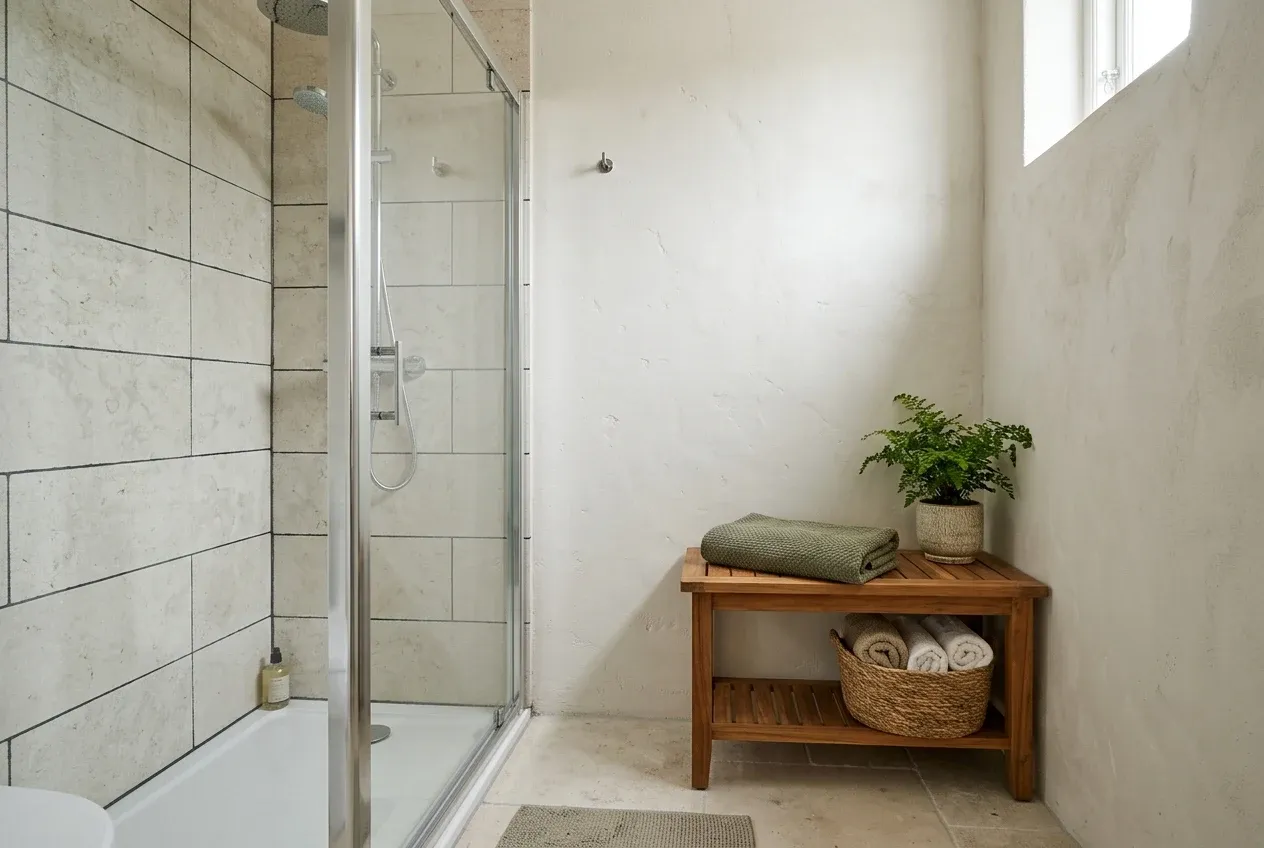
Room specifications
- Room ScaleSmall bathroom (about 5 x 8 ft) with a walk-in shower
- Design StyleOrganic Spa / Muted Modern
- Budget TierMid-Range ($$)
- Palette Swatches4 colors
A bathroom storage bench should be about 15 to 16 in (38 to 41 cm) tall and 12 in (30 cm) deep, and it needs 30 in (76 cm) of floor between it and a hinged shower door. Get those three numbers right and a bench gives a 5 x 8 ft bathroom a dry spot for folded towels and a seat for drying off or tying shoes. Get them wrong and the door clips the wood or you turn sideways to reach the sink.
Most benches sold for hallways or dining areas are the wrong product here. They are taller, deeper, and built from materials that do not like shower steam.
How big should a bathroom bench be?
Think of the bench as a low piece that sits below the sightline of everything else in the room.
| Spec | Bathroom range | Why |
|---|---|---|
| Seat height | 15 to 16 in (38 to 41 cm) | Stays below window sills and towel bars |
| Length | 24 to 32 in (61 to 81 cm) | Fits along a short wall |
| Depth | 12 in (30 cm) | Holds towels folded in thirds |
| Foot lift | at least 3 in (8 cm) | Air moves under it and mats dry |
An 18 in (46 cm) dining-style bench works as a seat but looks heavy in a tiny room. Dropping to 15 in keeps the upper wall open, and the bench sits well under a typical 34 in (86 cm) vanity top. If you want to compare with other rooms, the small entryway bench size guide and the breakfast nook bench notes cover seats that are allowed to be taller.
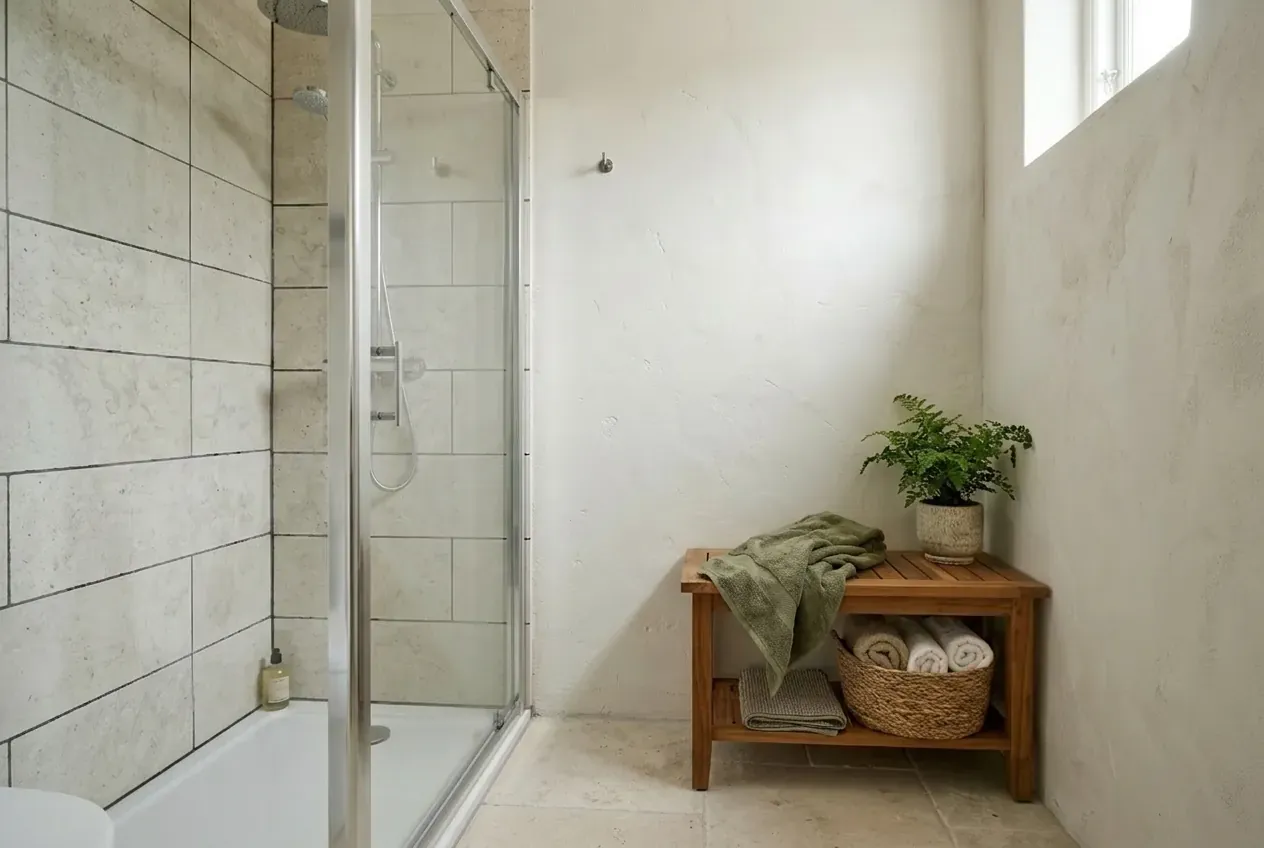 The same room seen from the opposite end, so you can judge the layout from the far side.
Clearances to tape out before you order
Use painter’s tape to mark the bench footprint and then open every door and drawer.
- Hinged shower door: keep 30 in (76 cm) between the bench front and the closed door so it swings fully open.
- Sliding shower door: 24 in (61 cm) is enough, which can free up a few inches for a deeper seat.
- Vanity drawers: keep 21 in (53 cm) so drawers pull all the way out.
- Walkway: keep at least 24 in (61 cm) of clear floor to the toilet or the opposite wall.
These are comfort targets, not code numbers. If your bathroom is smaller than the layout assumed here, a wall-mounted shelf is a better answer than a bench.
Which materials survive steam?
Unsealed particleboard swells quickly beside a shower. Ask what the piece is made of and how the underside is finished.
- Teak contains natural oils and is the usual choice for wet areas. It is more expensive and weathers to grey unless you oil it.
- Sealed bamboo is lighter and cheaper. Check that the coating covers the bottoms of the legs, because that is where water sits.
- Lacquered MDF only makes sense with a working exhaust fan and metal or rubber feet that hold it off damp tile.
Whatever the material, run the fan during and after showers. The dehumidifier sizing guide explains what to do when there is no window or fan.
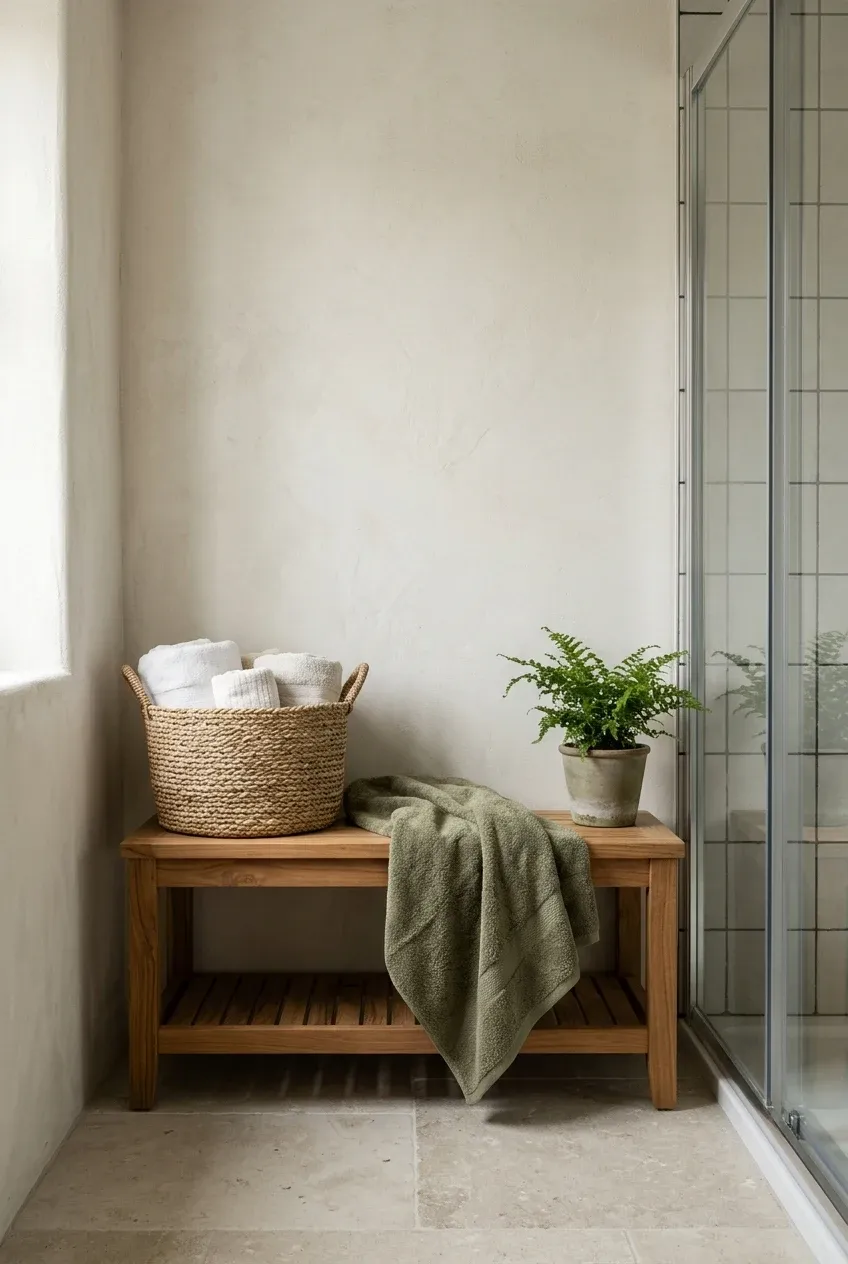
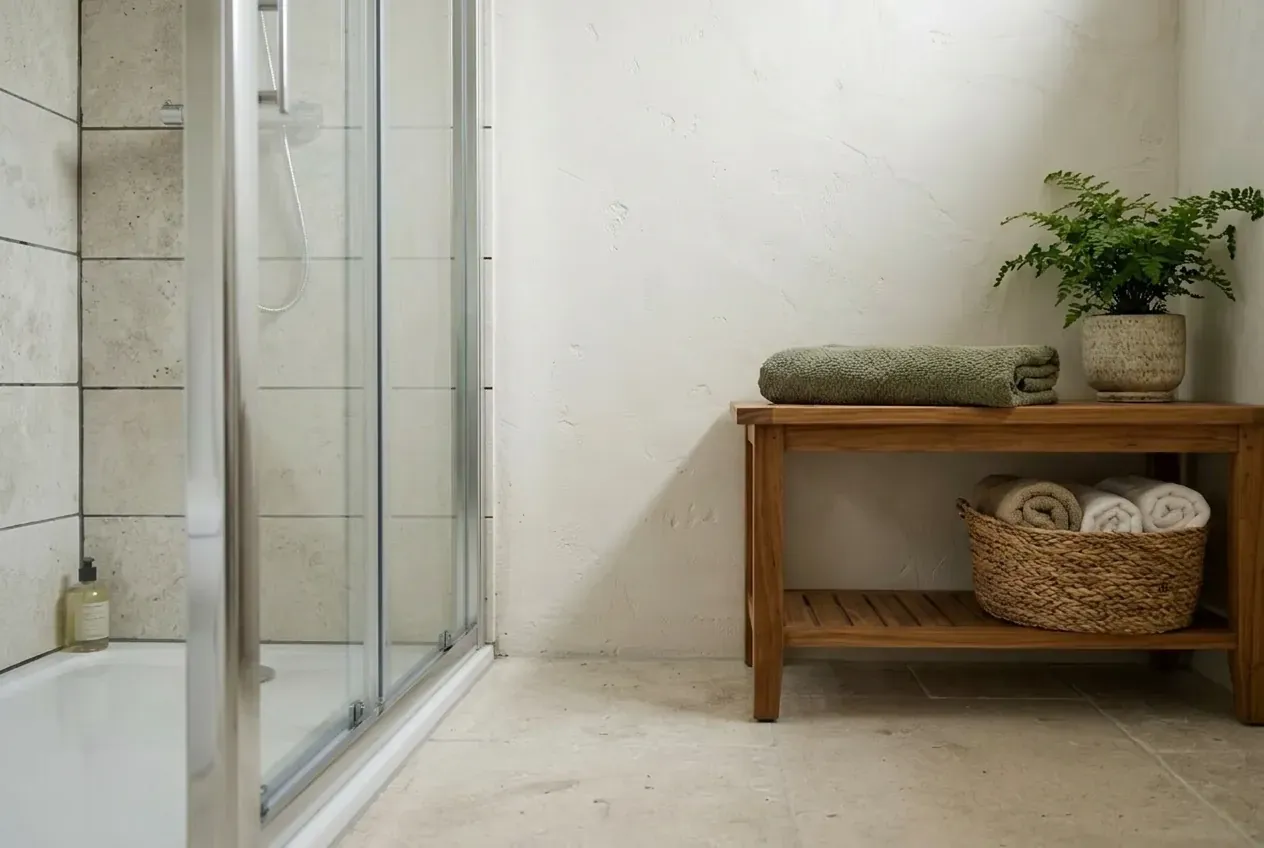 Close up: Leave 30 in (76 cm) between the bench and a shower door so the door opens fully without hitting the seat.
Storage depth: what actually fits
A 12 in (30 cm) deep bench holds bath towels folded in thirds or a slim woven basket without overhanging the front edge. A 9 in (23 cm) ultra-narrow bench works for rolled hand towels, toiletries and washcloths, but a full bath sheet will stick out a few inches. Open slats and baskets breathe better than closed lift-top lids, which trap damp towels.
If the bench is your only storage, add vertical capacity above it with hooks or a rail from the towel rack guide, and look at recessed cabinet options if a wall is deep enough.
Colour and styling in plain terms
Pale, warm walls and tile reflect daylight and make a low bench look light. Wood tones suit brushed or chrome-finish fixtures. A single olive-green or grey towel and one small plant on top is plenty; piling on accessories makes the seat unusable.
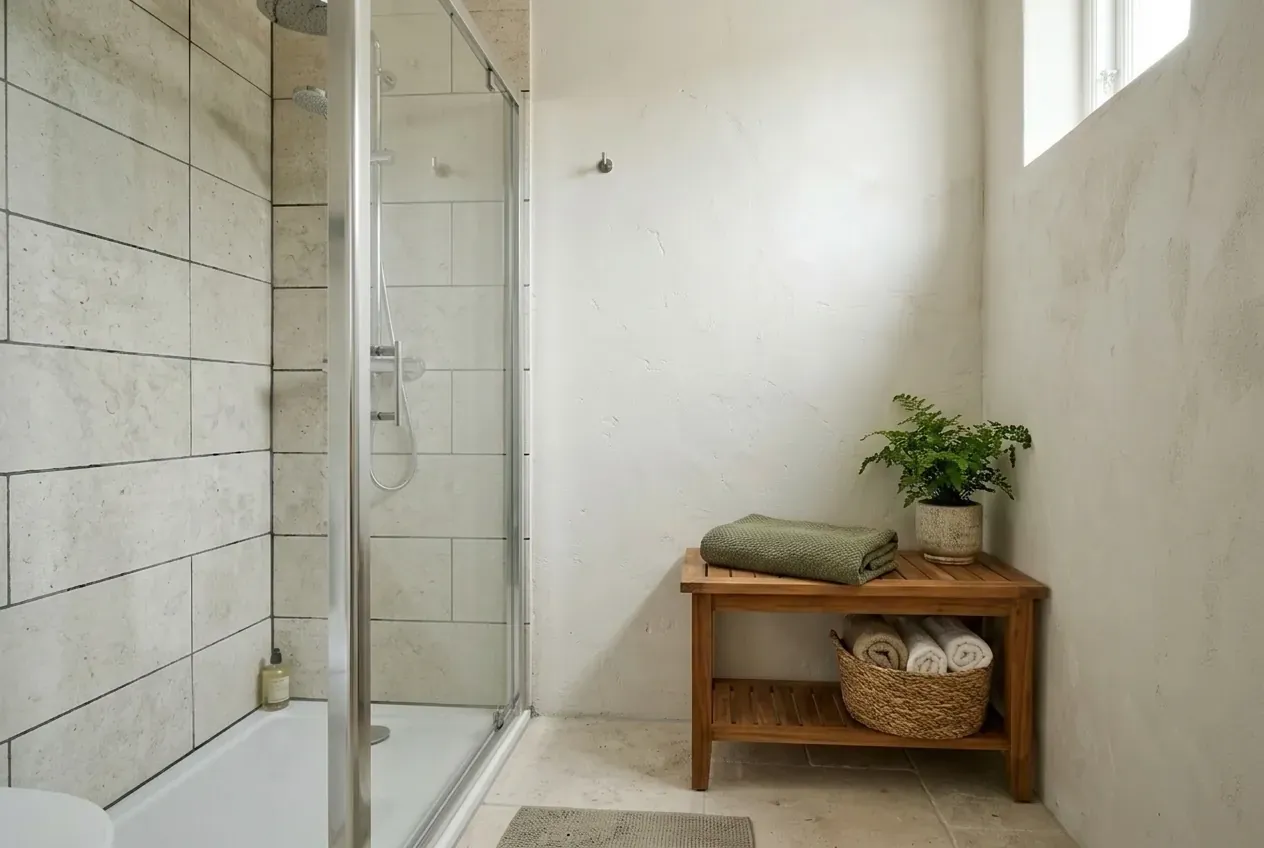 From above and to one side, the full footprint and the walkway read at a glance.
Common mistakes
- Buying a bench by seat height only and forgetting the door swing.
- Placing a bench flush against a shower with no gap, so water runs under it.
- Choosing a closed box with no airflow.
- Putting it where it blocks the vanity drawers.
Before you buy
- Tape a 12 in by 24 to 32 in rectangle on the floor.
- Open the shower door, entry door and every vanity drawer.
- Confirm 30 in (hinged) or 24 in (sliding) of clearance at the shower.
- Check the product for sealed leg bottoms and at least 3 in of foot lift.
- Confirm the fan runs, or plan to wipe the bench down after showers.
Curated Color Palette & Key Textures
- Stone Chalk #F2F0EA
- Muted Olive #6F7D5C
- Graphite #2E3230
- Chrome Grey #B9C4C0
General references
Dimensions in these guides are typical planning ranges, not legal minimums, and they can differ by jurisdiction. Use the references below as starting points, then confirm local code and your lease before making changes.
FAQ
How tall should a bathroom bench be?
Aim for 15 to 16 in (38 to 41 cm) tall—low enough to keep a 5 x 8 ft bathroom feeling open while staying comfortable to sit on.
Can I put a bench in a small bathroom?
Yes, as long as it is 12 in (30 cm) deep or less and leaves 30 in (76 cm) of clearance in front of a hinged shower door or 24 in (61 cm) in front of a sliding door.
What wood is best for a bathroom bench?
Teak is the most durable choice for steamy bathrooms thanks to its natural water resistance, followed by well-sealed bamboo on raised legs.
Save this idea

Keep reading
Related rooms
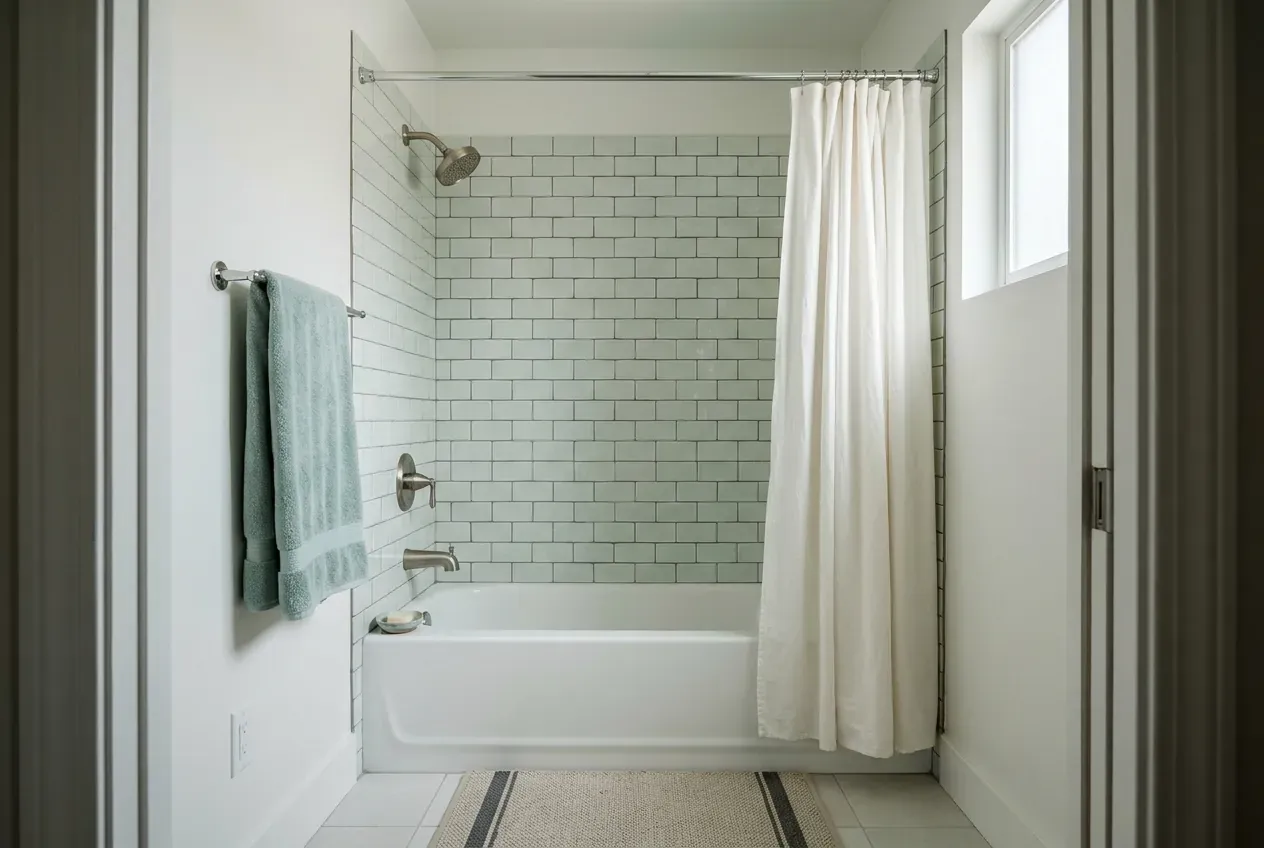
Standard Shower Head Height: 72 to 80 in (183 to 203 cm)
Standard shower head height: mount a fixed head 72 to 80 in (183 to 203 cm) above the floor, 6 in above the tallest user, valve at 38 to 48 in.
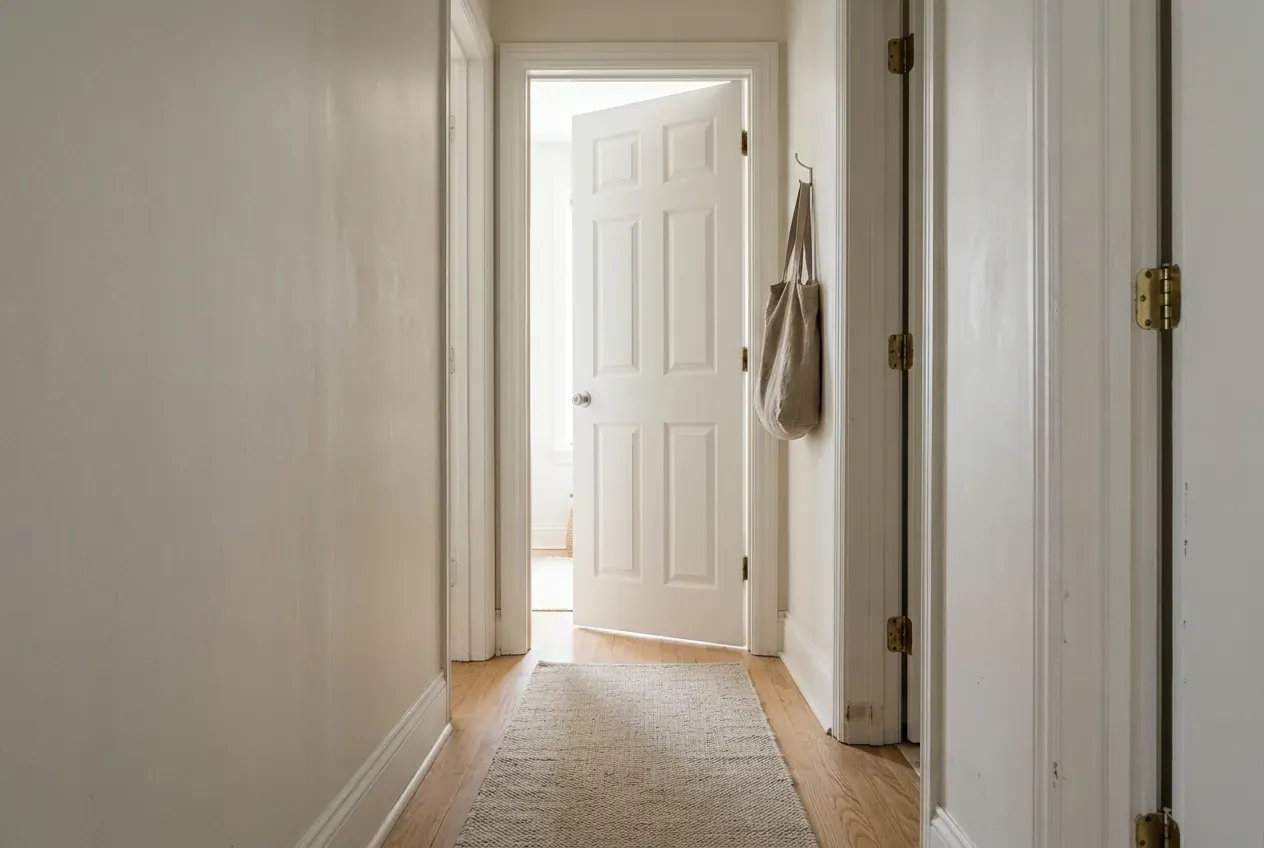
Standard Interior Door Sizes: Widths, Heights, Clearances
Standard interior door sizes: 24 to 36 in (61 to 91 cm) wide and 80 in (203 cm) tall, with clear openings, rough-opening sizes and swing clearance.
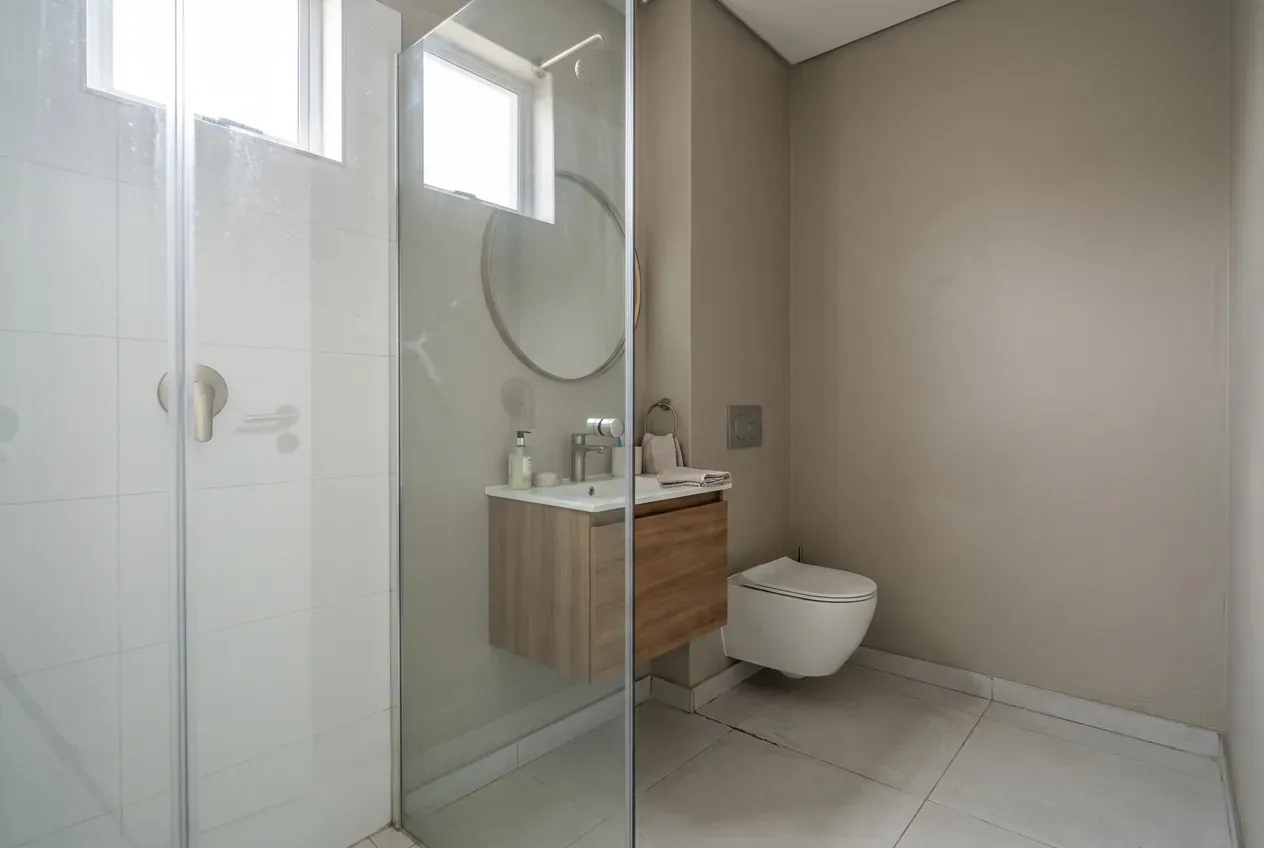
What Is a 3/4 Bathroom? Layouts, Sizes & Code Clearances
What is a 3/4 bathroom? A toilet, sink and shower with no tub, in as little as 5 x 7 ft (152 x 213 cm). Compare quarter, half and full baths.