Sofa vs Couch Difference: What the Words Actually Mean
The sofa vs couch difference is register, not size: sofa is the trade word, couch the everyday one. Seat height, 17 to 18 in (43 to 46 cm), matters more.
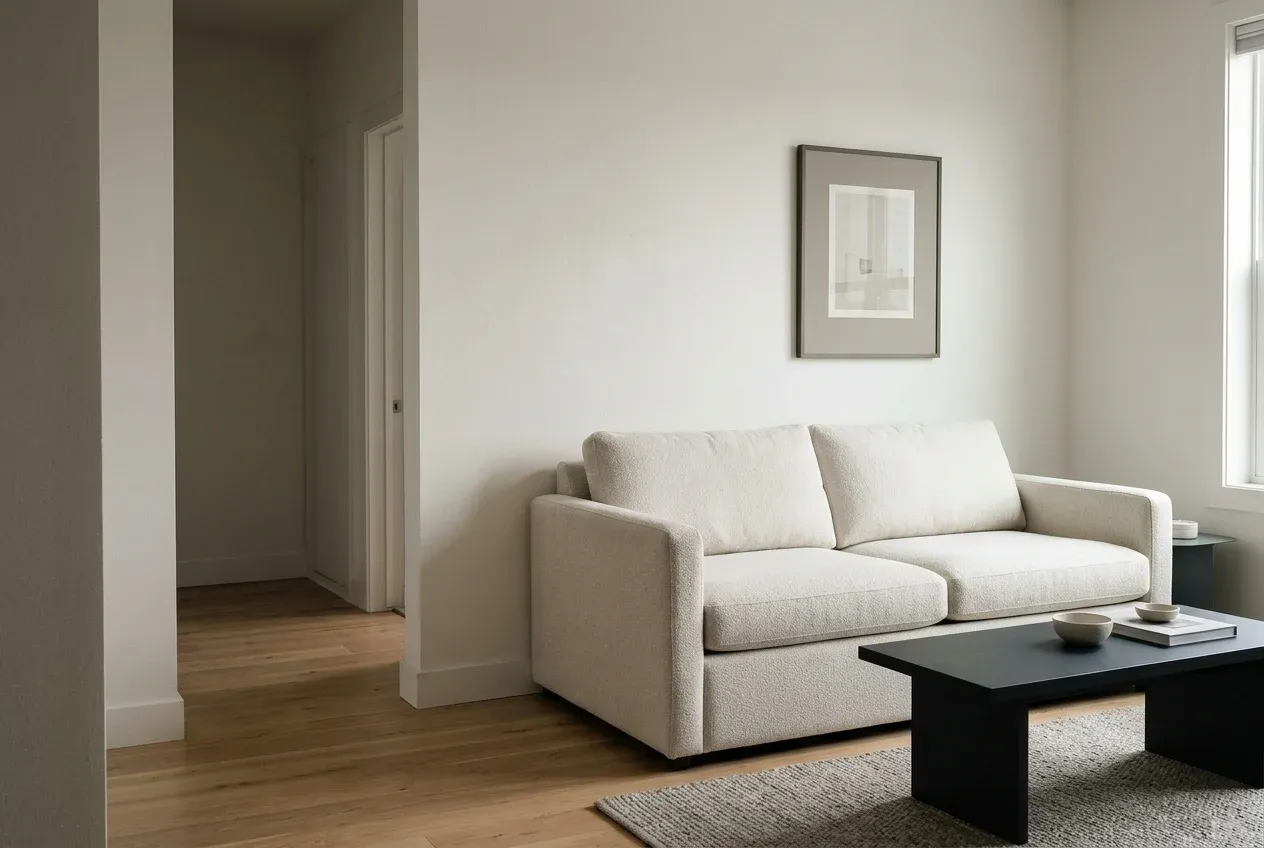
Room specifications
- Room ScaleSmall living room (about 10 x 12 ft) with a two-seat upholstered seat
- Design StyleEditorial Classic
- Budget TierMid-Range ($$)
- Palette Swatches4 colors
The sofa vs couch difference is register, not size. Sofa and couch name the same thing: an upholstered seat with a back and arms, built for two or more people, and a seat height of 17 to 18 in (43 to 46 cm) suits most adults under either label. “Sofa” is the retail and trade word; “couch” is the older, everyday one. Neither word guarantees a length, a cushion count or a frame type, so a 72 in (183 cm) two-seater can carry either label.
What actually decides how it fits
If you are choosing between pieces, ignore the label and compare proportions. In a 10 x 12 ft (3.0 x 3.7 m) living room, these three matter most:
- Seat height: 17 to 18 in (43 to 46 cm) from floor to the top of the cushion suits most adults.
- Frame width: 68 to 76 in (173 to 193 cm) for a compact two- or three-seater.
- Reach to the table: 16 to 18 in (41 to 46 cm) between the seat front and the coffee table.
Add a seat depth around 21 to 22 in (53 to 56 cm), which supports knees without forcing a slouch.
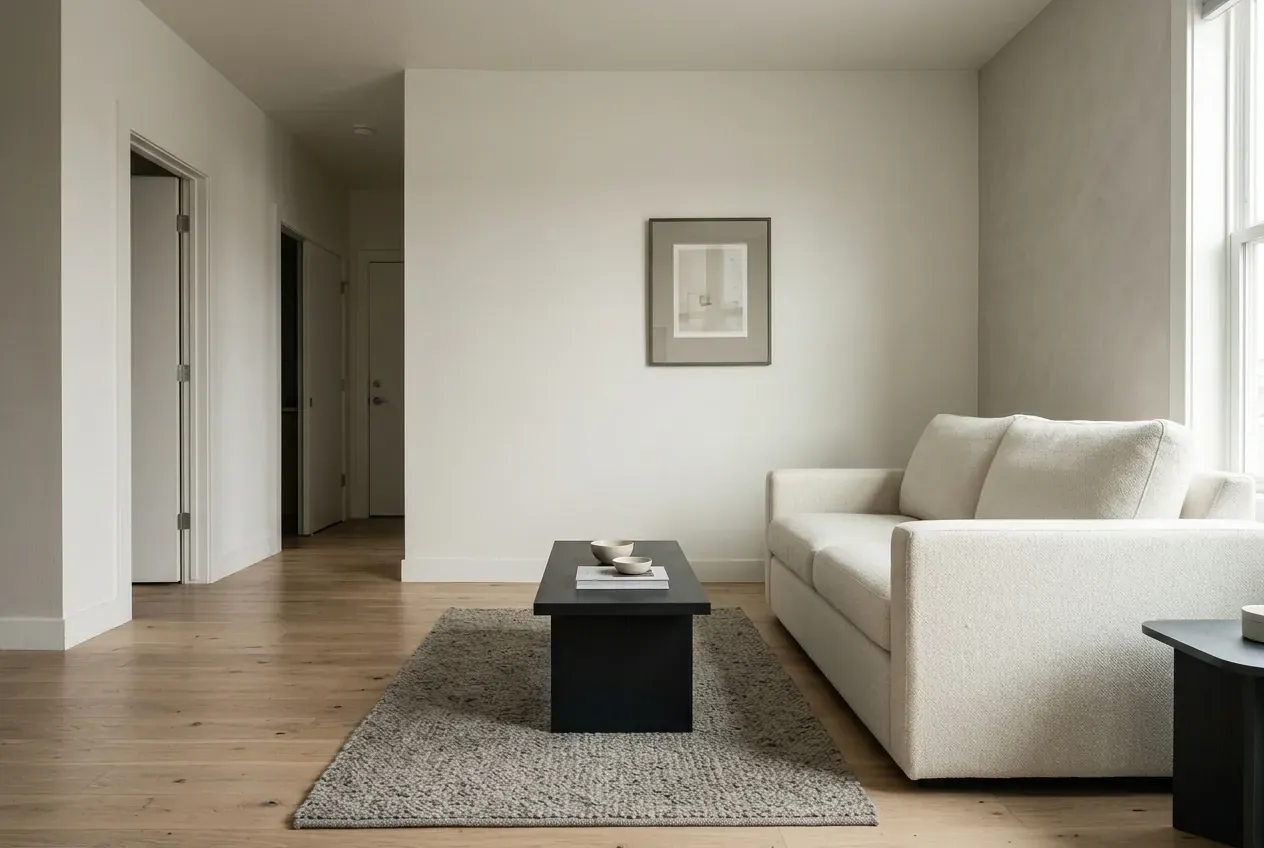 The same room seen from the opposite end, so you can judge the layout from the far side.
Where each word came from
Both words entered English by the 1600s from different furniture traditions. Couch comes from the Old French verb coucher, “to lie down”, and first described a piece for reclining, closer to a daybed or chaise. Sofa comes from the Arabic suffah, a raised bench covered in carpets and cushions, and reached European drawing rooms through Turkish.
Over four centuries those physical differences faded. In casual speech many North Americans say “couch” while browsing “sofa” in online catalogues, and British and Commonwealth speakers lean toward “sofa” in both settings. Neither word belongs strictly to one country.
The sofa vs couch difference in the trade
Showrooms and delivery teams use “sofa” as the standard term and add a modifier for the shape.
| Trade term | Usual meaning |
|---|---|
| Sofa | Full-length upholstered seat, typically 70 to 90 in (178 to 229 cm) |
| Loveseat | Compact two-person frame, typically 52 to 64 in (132 to 163 cm) |
| Settee | Upright, shallower seat, often with exposed wood legs |
| Sectional | Modular multi-piece set with a chaise or corner return |
If you are comparing footprints rather than names, see the guides on small couches for tight rooms, apartment loveseat clearances and deep sofas in small living rooms.
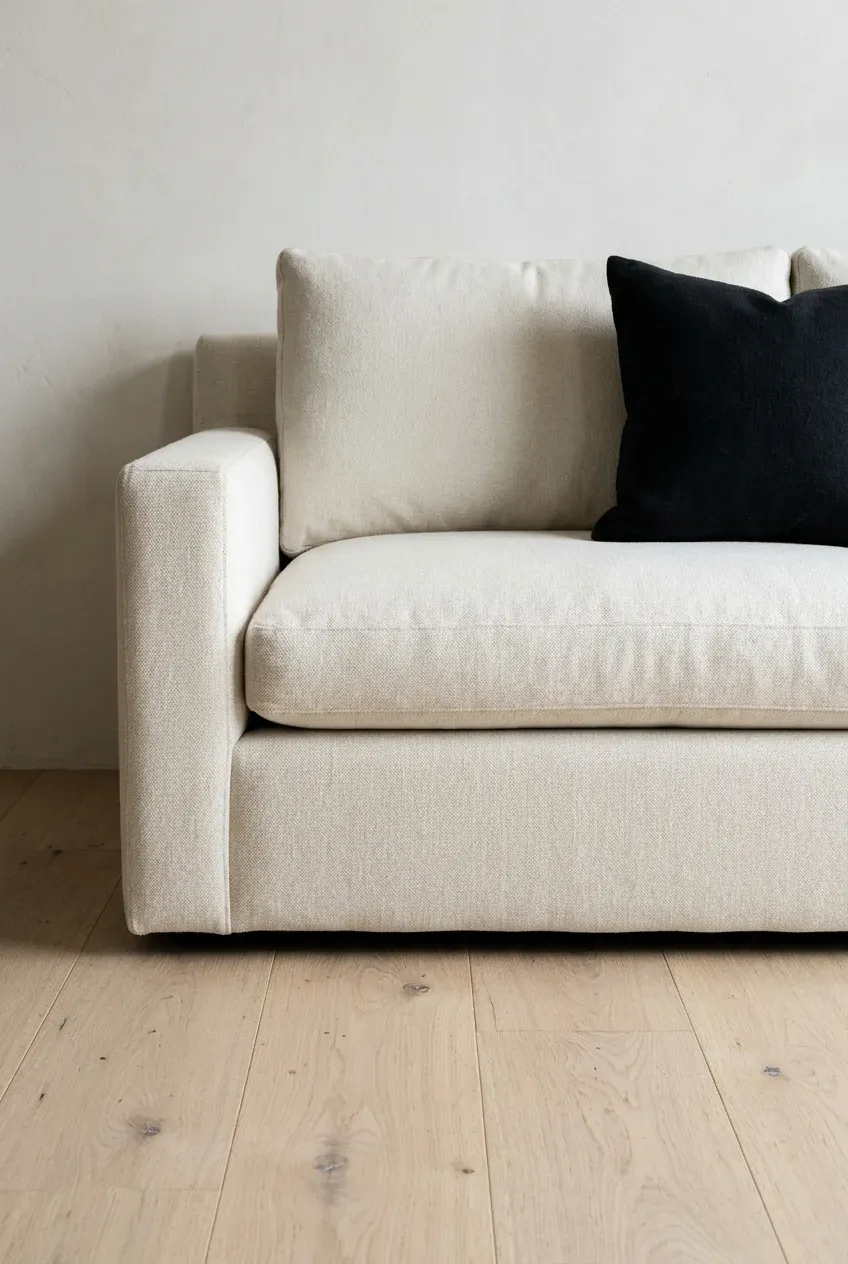
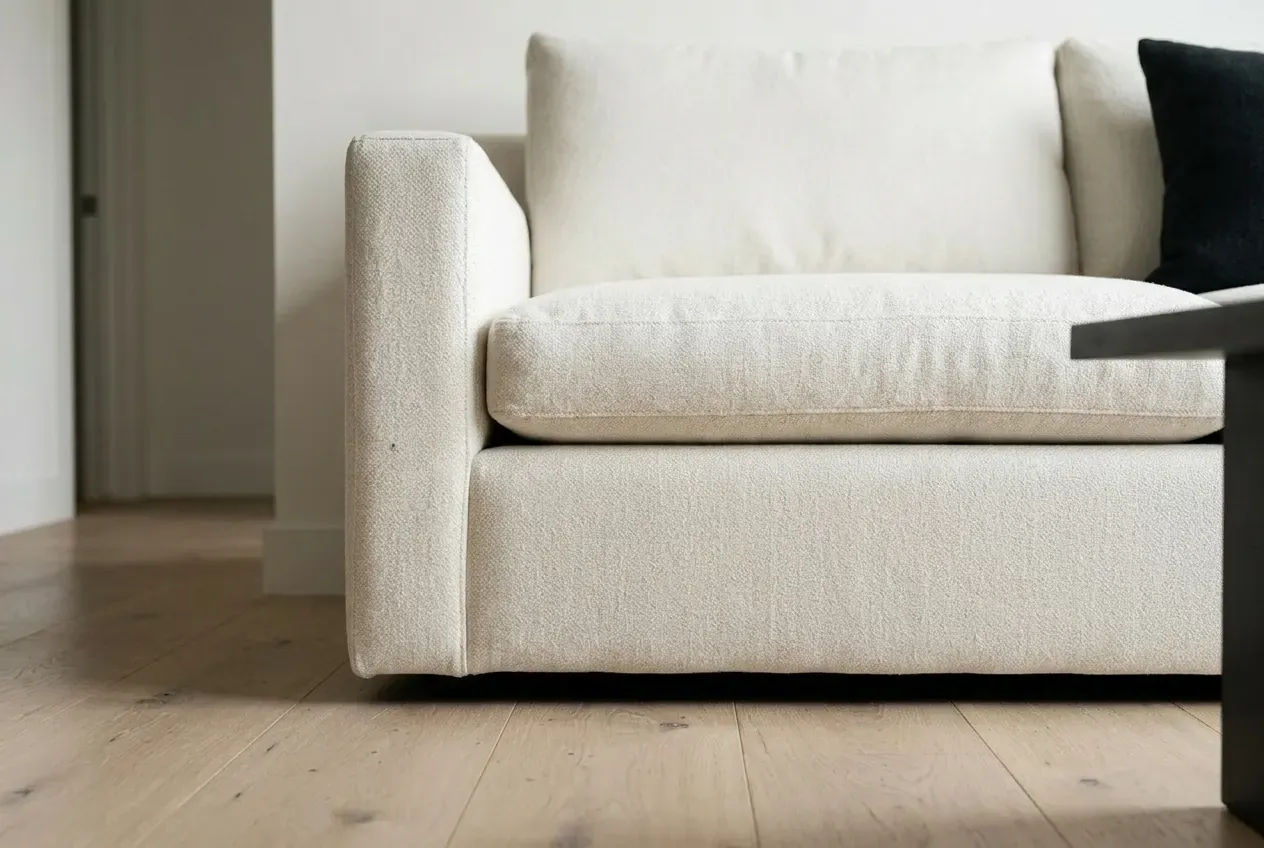 Close up: Seat height decides how a piece sits more than the label does: 17-18 in (43-46 cm) from floor to the top of the cushion suits most adults.
Which word to use
- Selling or listing: use “sofa”. It matches retail categories and the search filters buyers use.
- Talking casually: either is fine. “Couch” often suits a relaxed, deep-cushioned family-room piece where “sofa” can sound formal.
- Moving quotes and delivery forms: “sofa”, plus the dimensions, since movers price by size.
Measurements that matter more than the label
- Entry path: measure doorways, stair turns and the building entry (a typical door is about 30 to 32 in, or 76 to 81 cm wide) and confirm the sofa’s diagonal depth clears them before delivery day.
- Arms: slim track arms of about 4 to 5 in (10 to 13 cm) give more seat width inside the same frame than wide rolled arms do.
- Overall height: 30 to 34 in (76 to 86 cm) keeps sightlines open across a compact room.
- Depth and legs: about 33 to 36 in (84 to 91 cm) deep, with 4 to 6 in (10 to 15 cm) of exposed leg so light passes underneath.
- Walkway: at least 30 in (76 cm) clear on the main route.
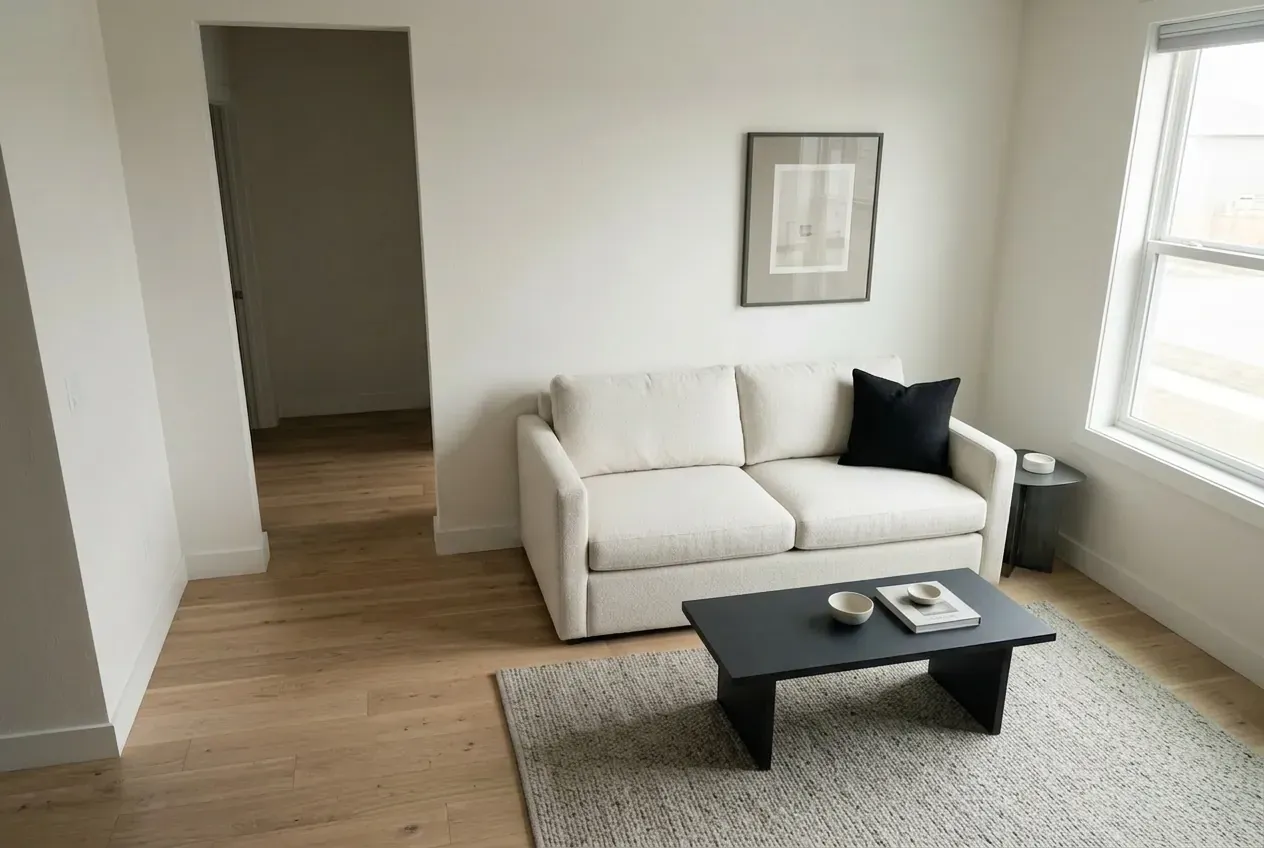 From above and to one side, the full footprint and the walkway read at a glance.
Checking quality in the store
Whatever the tag says, sit on it. Look at the frame and spring construction in the product details: eight-way hand-tied or sinuous steel springs with high-resilience foam tend to hold seat height longer than webbing alone. Press the cushions and see how quickly they recover.
Common mix-ups
- A settee or loveseat is a smaller sofa, not a different category from a couch.
- A daybed or chaise is closer to the original meaning of couch, a piece for lying down.
- A sectional is still a sofa, built in pieces.
Before you buy
- Decide your width, depth and walkway numbers first, then shop by those.
- Measure the path into the room, including diagonals on stairs.
- Check the seat height against the 17 to 18 inch range.
- Search with “sofa” for the widest set of results, then add “couch” to catch casual listings.
For room-by-room sizing, see sofa sizing in a 250 sq ft apartment, narrow living room layout rules and small living room layouts.
Curated Color Palette & Key Textures
- Bone Paper #F5F3EE
- Greige Stone #C9C4BA
- Iron Grey #5A5E5C
- Soft Black #21242A
General references
Dimensions in these guides are typical planning ranges, not legal minimums, and they can differ by jurisdiction. Use the references below as starting points, then confirm local code and your lease before making changes.
FAQ
Is a couch the same as a sofa?
In practice yes - both name a padded seat for two or more people. The difference is register: sofa is the trade and furniture-retail word, couch is the older everyday word.
Why do Americans say couch and British speakers say sofa?
Not reliably. Couch came from French couch, sofa from Arabic via Turkish; both crossed into English by the 1600s and neither is now tied to one country.
Which word should I use when selling a sofa?
Sofa. It is what retail listings, search filters and delivery terms use, so it matches what a buyer is searching for.
Save this idea

Keep reading
Related rooms

Standard Window Sizes: 24 x 36 to 48 x 72 in Chart
Standard window sizes in inches and cm: most run 24 to 48 in wide by 30 to 72 in high, and a bedroom window needs a 5.7 sq ft clear opening for egress.

TV Dimensions by Screen Size: 65 in Is 56.7 x 31.9 in
TV dimensions by screen size in inches and cm: a 65 in TV is 56.7 x 31.9 in, a 55 in is 47.9 x 27.0 in, plus the viewing distance and stand width for each.

How High to Hang Pictures: 57 in (145 cm) Center
Hang pictures with the center 57 in (145 cm) up, the frame bottom 7 to 10 in (18 to 25 cm) above a sofa, and frames 2 to 3 in (5 to 8 cm) apart.