Deep Sofas for Small Living Rooms: Dimensions and Layouts
Deep couch guide for small rooms: how to measure seat depth against your leg length, the walkway math, and when an extra-deep sofa fits a 10 x 12 ft room.
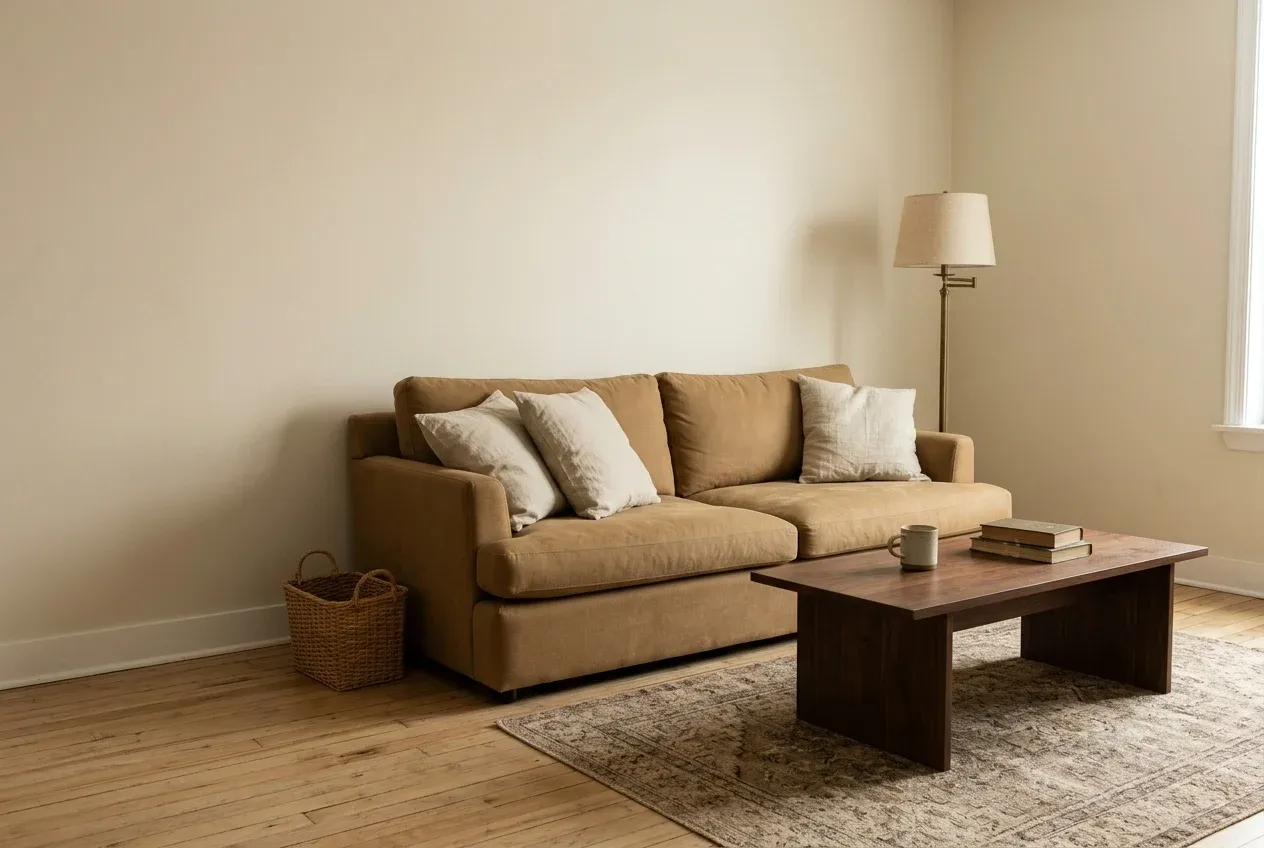
Room specifications
- Room ScaleSmall living room (about 10 x 12 ft) with a 7 ft seating wall
- Design StyleDeep Lounge / Camel Neutral
- Budget TierMid-Range ($$)
- Palette Swatches4 colors
For a small living room, a deep seat couch should have a seat depth of about 24 to 26 inches and an overall frame depth of 36 to 38 inches, with a full 30 inch walkway in front. Go beyond that, to a 42 inch or deeper frame, and a 10 x 12 ft room starts to lose its path.
Everyone wants a sink-in sofa, but depth costs floor. Knowing the difference between seat depth and frame depth lets you get the comfort without trapping yourself behind the coffee table. Standard sofas have a seat depth around 21 to 22 inches; adding 3 to 4 inches feels noticeably plusher and still leaves floor.
Seat depth is not frame depth
Catalogues list overall depth. To get the true lounging space, subtract the back cushion and frame thickness, usually 11 to 13 inches. A 38 inch frame therefore gives a seat of about 25 inches.
| Sofa type | Seat depth | Frame depth | Walkway left in a 10 x 12 ft room |
|---|---|---|---|
| Compact apartment | 20 to 22 in (51 to 56 cm) | 32 to 34 in (81 to 86 cm) | 40 in (102 cm) or more |
| Deep (this guide) | 24 to 26 in (61 to 66 cm) | 36 to 38 in (91 to 97 cm) | 30 to 36 in (76 to 91 cm) |
| Extra-deep lounge | 28 to 30 in (71 to 76 cm) | 40 to 44 in (102 to 112 cm) | Under 30 in (76 cm) |
| Chaise sectional | 24 to 26 in seat, 60 in or more chaise | 36 to 38 in (91 to 97 cm) | 30 in only if the corner is otherwise unused |
These are planning ranges based on typical specification sheets, not a standard. Measure the actual sofa.
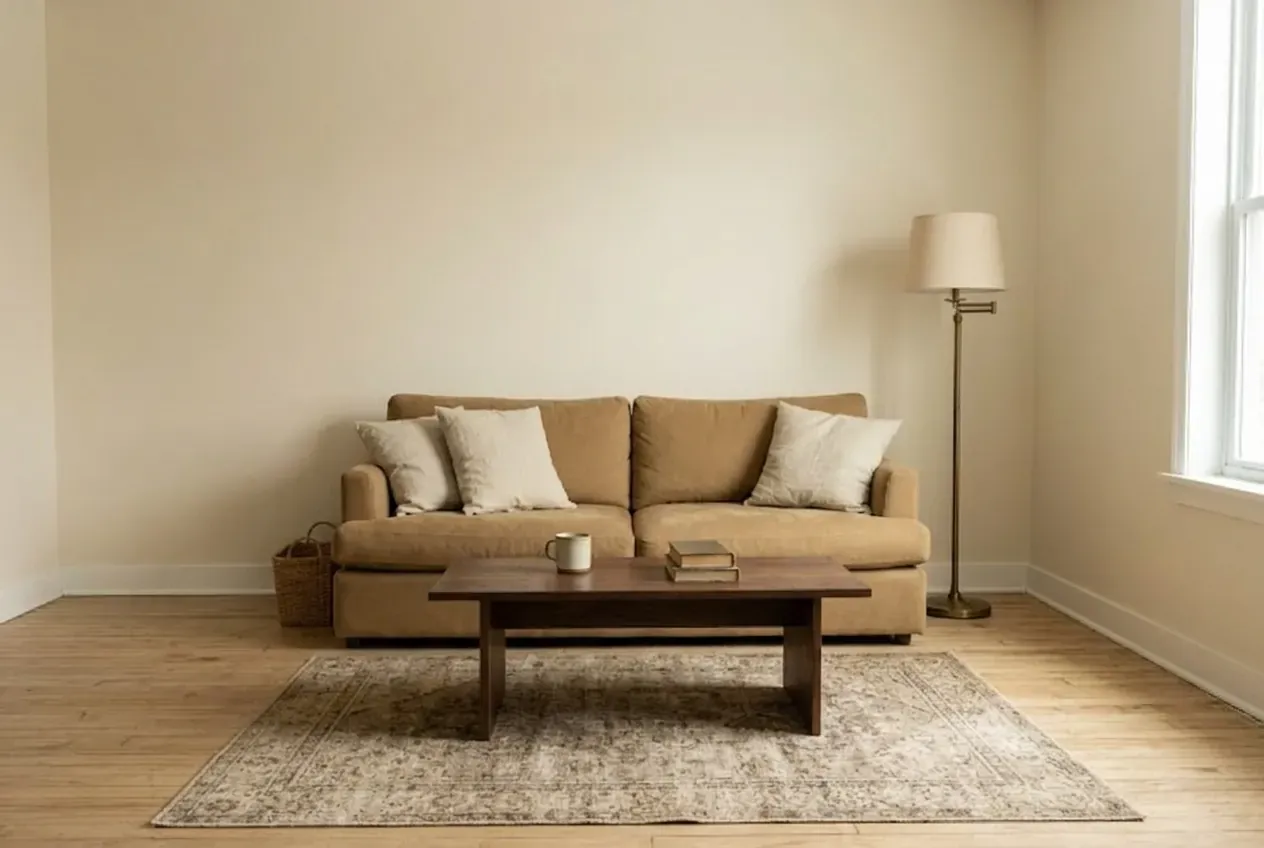 The same room seen from the opposite end, so you can judge the layout from the far side.
Match the depth to your legs
Sit upright on your current sofa and see where the seat edge meets the back of your knee.
- Shorter people (under about 5 ft 6 in) do better with a 24 inch seat and a firm lumbar pillow behind the back.
- Taller people (about 5 ft 7 in and up) usually find 25 to 26 inches supports the thighs without slouching.
- Fixed chaise: adds 60 to 65 inches of depth on one side, which can block a balcony door in a small room.
A firm lumbar pillow, about 14 x 20 in, helps shorter guests sit upright. For compact alternatives, see small couches for small spaces and the sofa size guide for 250 sq ft studios.
The walkway arithmetic
Take a living room 10 ft (120 inches) deep: a 38 inch frame, an 18 inch gap, and a 24 inch coffee table total 80 inches, which leaves 40 inches behind the table for the main path or a media console. If the sofa were 44 inches deep, that drops to 34 inches and the front lane gets tight. A sofa that floats needs a console behind it; see the sofa console table guide.
Tape the full depth on the floor before you commit. Then check 18 inches to the coffee table and 30 inches along the main path to the hallway.
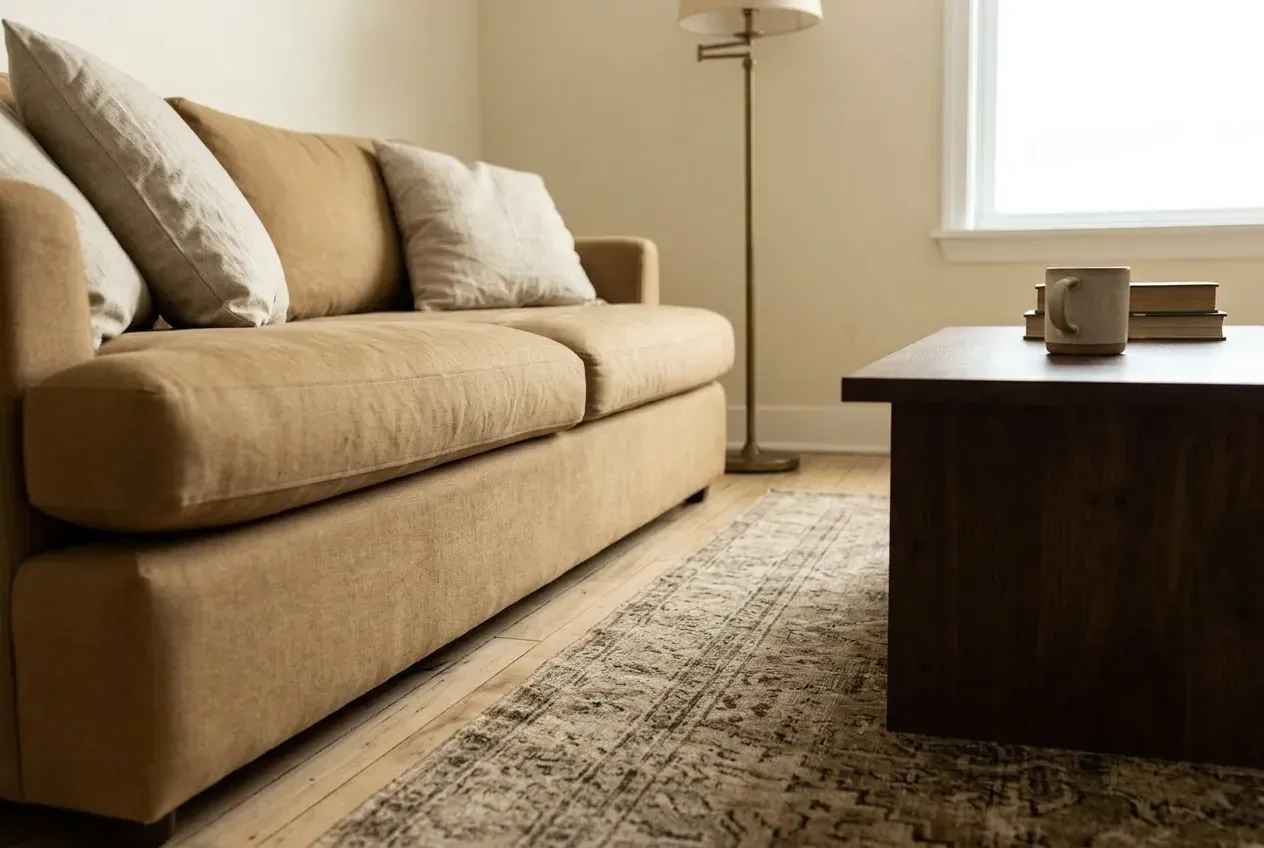 Close up: Keep a deep couch’s seat depth between 24 and 26 in (61 and 66 cm) and leave at least 30 in (76 cm) of walkway in front of it so a 10 x 12 ft room still passes.
When a deep sofa is worth it
| Choose deep when | Choose standard when |
|---|---|
| The room is 10 x 12 ft or larger with a long wall | The short side is under 10 ft |
| You are about 5 ft 7 in or taller | You are under about 5 ft 4 in and dislike pillows |
| The sofa sits against a wall | The sofa has to float, with a console behind |
| You watch TV from a fixed seat | The room is also the path to the kitchen |
A deep sofa earns its place in one case: a room with a long wall where the seating faces the TV across the short dimension. Elsewhere, the extra few inches of frame cost more than they give.
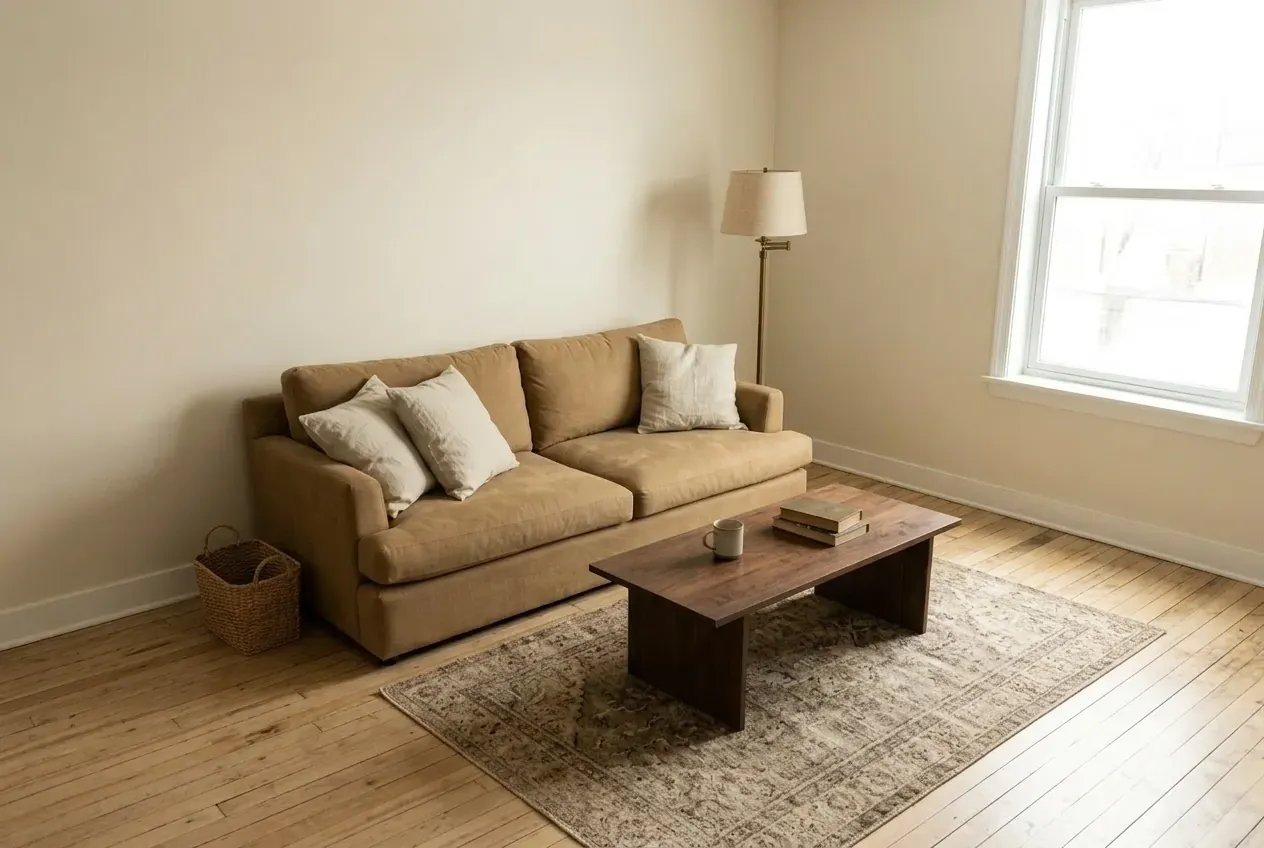 From above and to one side, the full footprint and the walkway read at a glance.
Make a deep sofa work in a tight room
- Add a movable ottoman. If you can only fit a 34 inch frame, a square ottoman lets you put your feet up at night and slide it aside during the day.
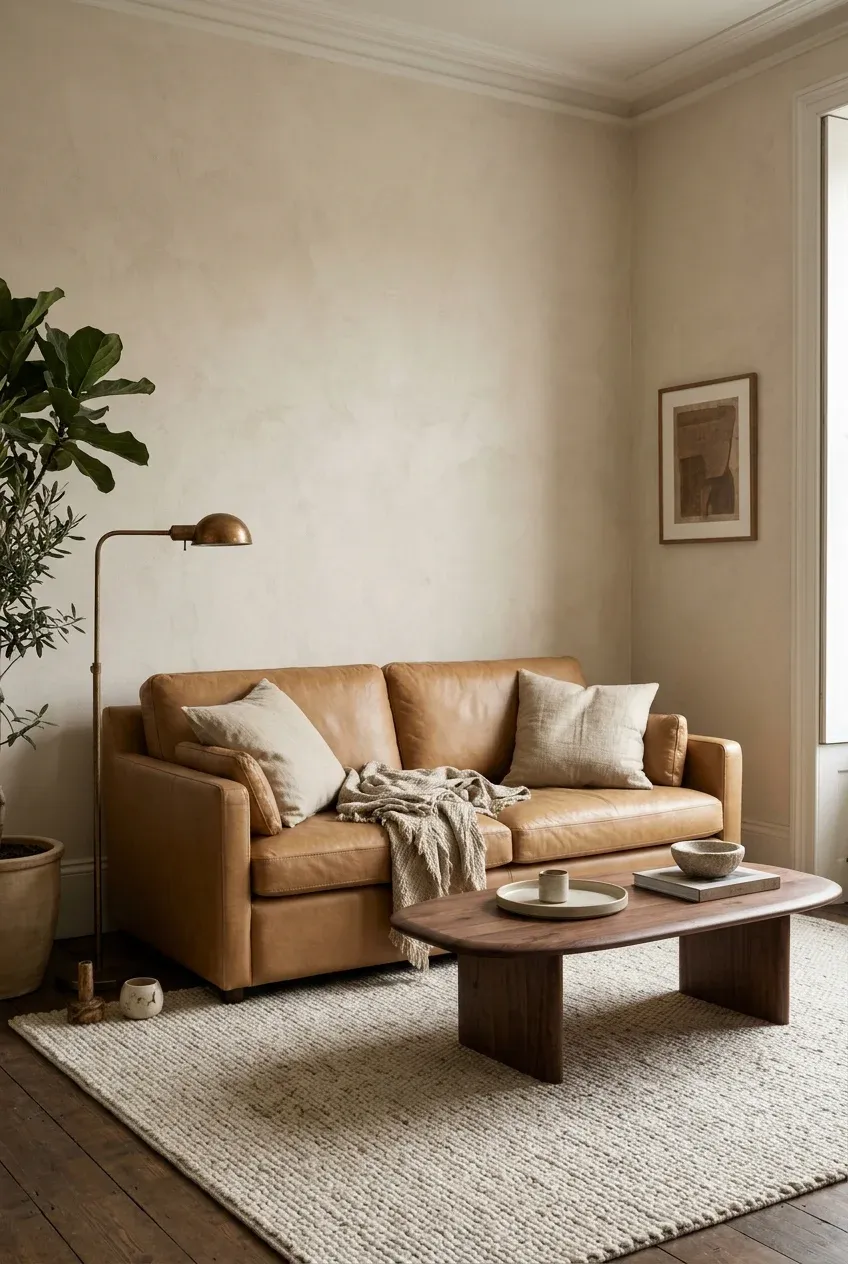
- Pick a low coffee table. Around 16 inches high, in walnut or a similar wood, so the table does not add height beside a heavy sofa.
- Tuck a lamp behind the arm. A floor lamp beside the sofa frees up the end table space.
- Choose a warm tan or camel fabric. It looks relaxed with an oat wall colour and a dark wood table.
- Check the delivery route. A deeper sofa may need more turning space in stairs and corridors.
When the room is short on one dimension, finish with the small living room layout guide to check the whole plan.
Before you buy
- Find the seat depth and frame depth on the spec sheet.
- Subtract about 11 to 13 inches to confirm the true seat depth.
- Tape the frame and walk the path.
- Keep 18 inches to the coffee table and 30 inches for the main route.
- Add a firm lumbar pillow if you are shorter.
- Consider a chaise only if the corner is otherwise dead.
Curated Color Palette & Key Textures
- Oat Milk #F2EBDD
- Camel Tan #C89F6D
- Bitter Chocolate #4A362A
- Antique Brass #A8843F
General references
Dimensions in these guides are typical planning ranges, not legal minimums, and they can differ by jurisdiction. Use the references below as starting points, then confirm local code and your lease before making changes.
FAQ
How deep should a couch be for a small living room?
Choose a sofa with a 24 to 26 in (61 to 66 cm) seat depth and an overall frame depth of 36 to 38 in (91 to 97 cm).
Is a deep couch comfortable for short people?
Yes, provided you keep a firm 3 in (8 cm) thick lumbar pillow behind your lower back so your feet still reach the floor when sitting upright.
How much walkway do I need in front of a deep couch?
Leave at least 18 in (46 cm) between the sofa and coffee table, and 30 in (76 cm) along the main walking path.
Save this idea

Keep reading
Related rooms
Standard Window Sizes: 24 x 36 to 48 x 72 in Chart
Standard window sizes in inches and cm: most run 24 to 48 in wide by 30 to 72 in high, and a bedroom window needs a 5.7 sq ft clear opening for egress.
TV Dimensions by Screen Size: 65 in Is 56.7 x 31.9 in
TV dimensions by screen size in inches and cm: a 65 in TV is 56.7 x 31.9 in, a 55 in is 47.9 x 27.0 in, plus the viewing distance and stand width for each.
How High to Hang Pictures: 57 in (145 cm) Center
Hang pictures with the center 57 in (145 cm) up, the frame bottom 7 to 10 in (18 to 25 cm) above a sofa, and frames 2 to 3 in (5 to 8 cm) apart.