Small Bathroom Trash Can: Where to Place It
Where a small bathroom trash can goes: the 6 in (15 cm) gap that clears the toilet, slim versus round shapes, and the door-swing corner to avoid.
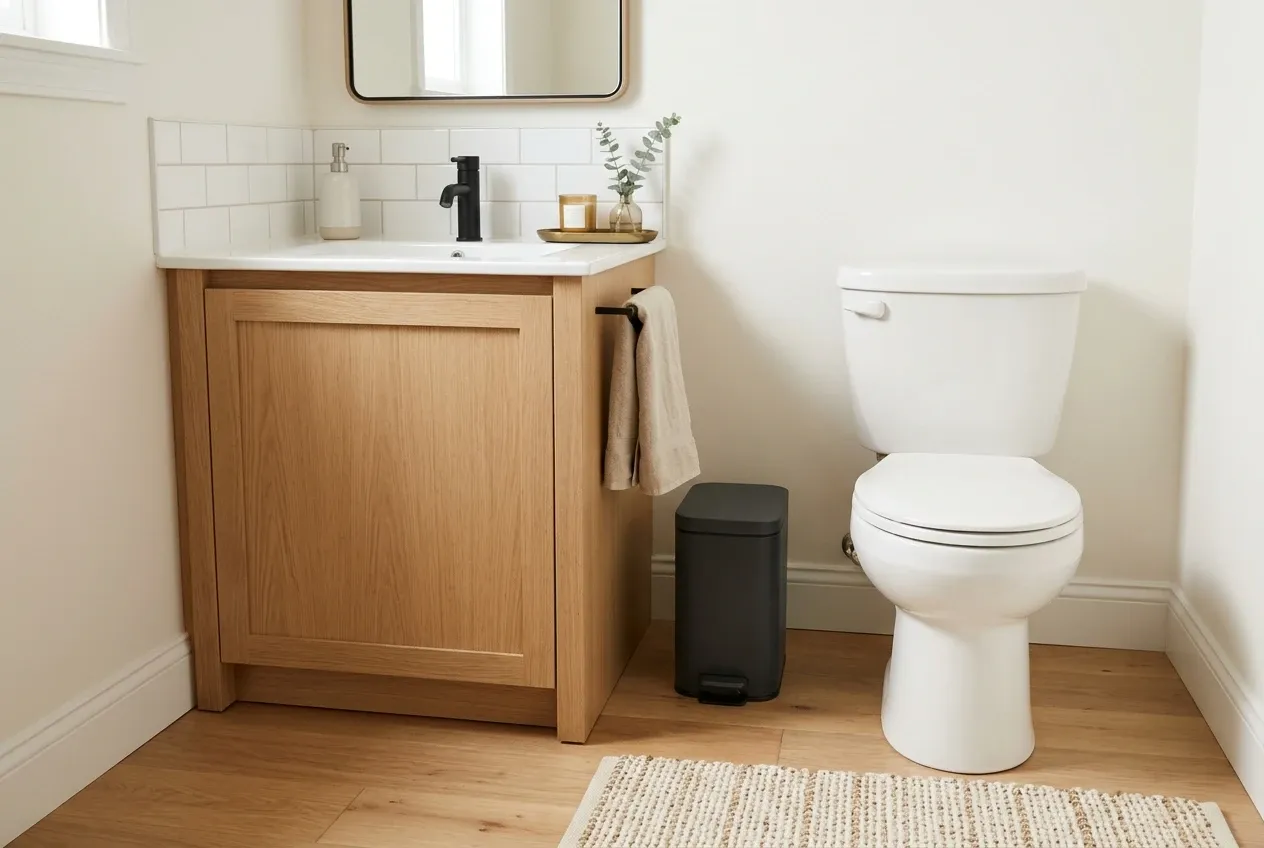
Room specifications
- Room ScaleSmall bathroom (about 5 x 8 ft)
- Design StyleWarm Minimalist / Japandi
- Budget TierBudget ($)
- Palette Swatches4 colors
In a small bathroom, put a slim bin in the toilet gap with about 6 in (15 cm) of clearance, in the corner behind the door, or on the side of the vanity. Every small bathroom needs a trash can, yet it is almost universally forgotten during spatial planning. In tight 5x8 foot layouts, an improperly placed waste bin becomes an infuriating obstacle: it gets kicked by shins at the sink, blocks vanity cabinet doors from swinging open, and jams bathroom entryways. When residents toss an open plastic bucket into the center of the floor, it ruins the room’s design and creates visual clutter.
Integrating a bathroom waste bin requires selecting ultra-slim rectangular geometry and respecting critical 6-inch plumbing clearances. By coordinating waste bin placement with vanity dimensions analyzed in Narrow Bathroom Sinks & Vanity Clearances, you maintain clean, hygienic functionality.
1. Bin Footprints and Clearances for Tight Bathrooms
Match bin capacity and geometry to tight architectural clearances.
| Bin Profile / Capacity | Footprint Dimensions | Lid Clearance Height | Optimal Placement Zone & Clearances |
|---|---|---|---|
| Slim Rectangular (5 L) | 5.5 x 10.5 in (14.0 x 26.7 cm) | 18–20 in (45.7–50.8 cm) | Best for 6–8 in gap between toilet base and vanity cabinet. |
| Standard Round (8 L) | 9.0 in diameter (22.9 cm) | 22–24 in (55.9–61.0 cm) | Requires open corner; too wide for narrow toilet alcoves. |
| Wall-Hung Floating (3 L) | 4.5 x 8.5 in (11.4 x 21.6 cm) | Mount at 18 in height | Mounts to side of vanity; keeps the floor clear for mopping. |
| Clearance to Toilet Bowl | Min 6 in (15.2 cm) | Side gap | Prevents waste bin from interfering with seated leg room. |
| Door Swing Buffer | Min 2.0 in (5.1 cm) | Door swing arc | Essential setback so swinging entry doors do not strike the bin. |
Lid rule: In compact bathrooms, always choose a step-pedal or touchless motion-sensor lid. Open-top bins expose waste to humid shower steam and visual sightlines, breaking the serene spa aesthetic.
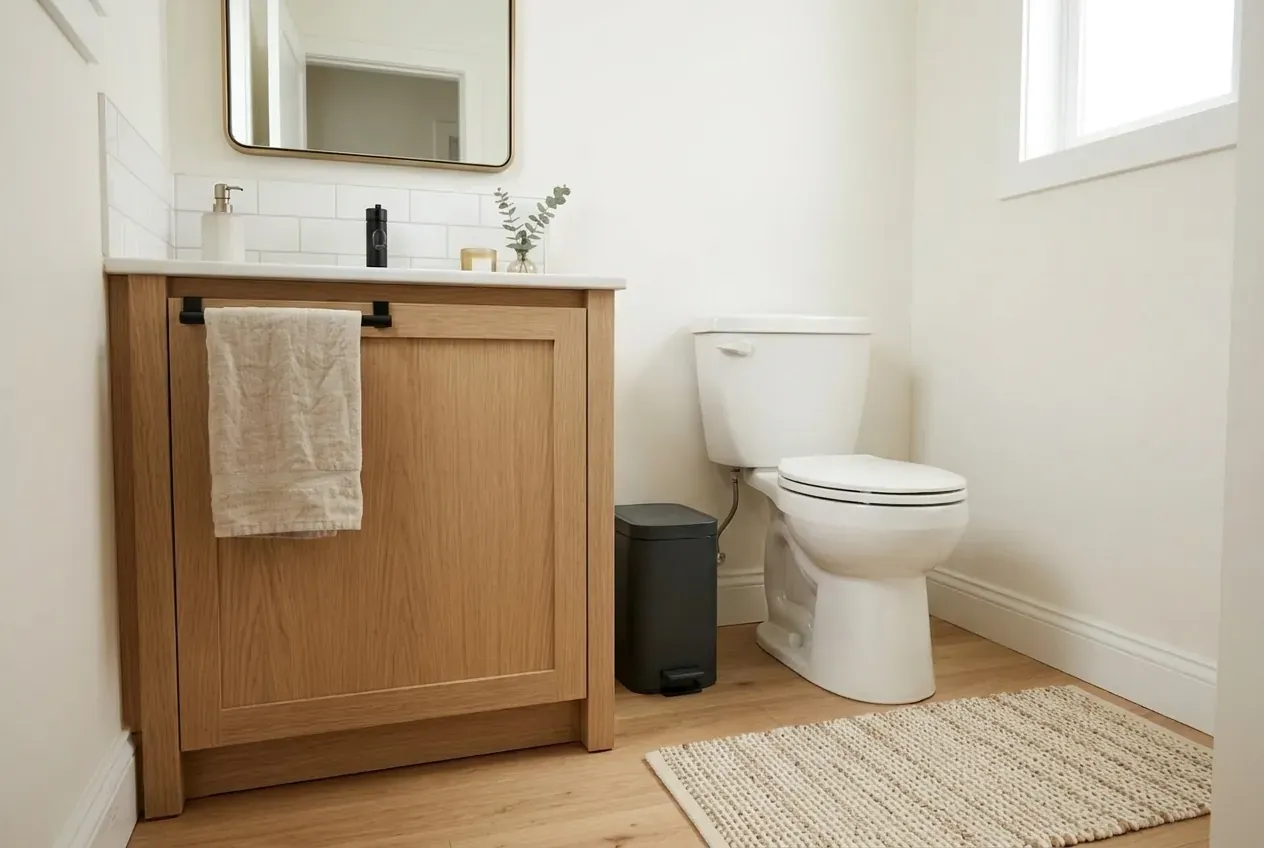 The same room seen from the opposite end, so you can judge the layout from the far side.
2. Where to Put the Bin: Toilet Gap, Door Corner, or Vanity Side
Plan A: The Toilet-to-Vanity Gap (Best for 5x8 ft Bathrooms)
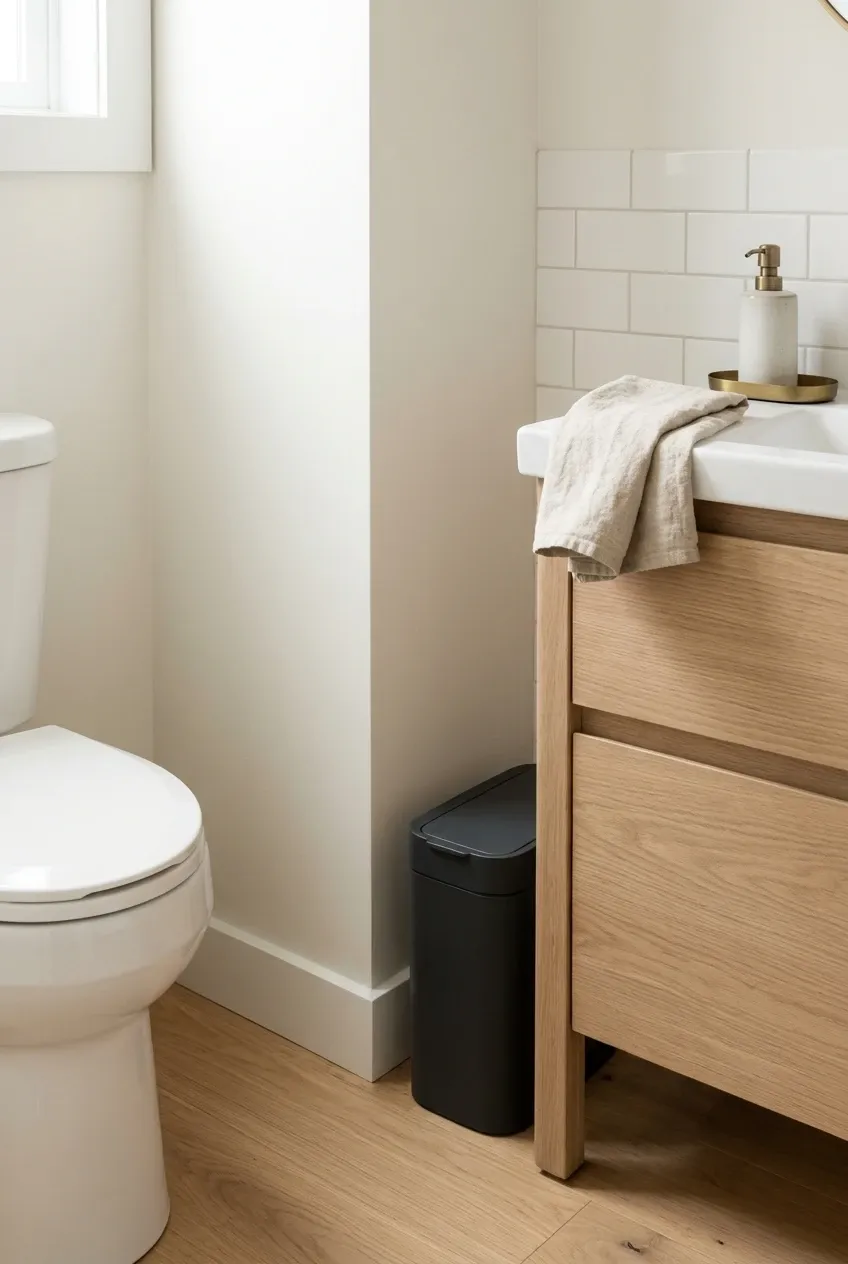
Engineered for standard layouts where a 7-inch gap exists between the porcelain toilet bowl and the vanity side panel.
- Bin Choice: A slim 5-liter stainless or matte Charcoal Ink (
#2F3135) can with a narrow front step-pedal. - Clearance: Leaves 6 inches of clearance to the toilet base, remaining completely invisible from the doorway.
Plan B: The Dead Corner Behind the Door (Best for Powder Rooms)
Optimized for powder rooms detailed in Small Half Bath Powder Room Decor Guide.
- Placement: Positioned in the 90-degree corner behind the inward-swinging entry door.
- Buffer: Install a baseboard doorstop to ensure the door handle stops 3 inches short of the bin.
Plan C: The Vanity-Mounted Floating Bin (Best for Floating Vanities)
Designed for modern bathrooms with floating wall-hung vanities.
- Hardware: Mount a compact 3-liter bin using adhesive brackets directly to the side panel of the vanity cabinet, hovering 6 inches above the floor for effortless vacuuming.
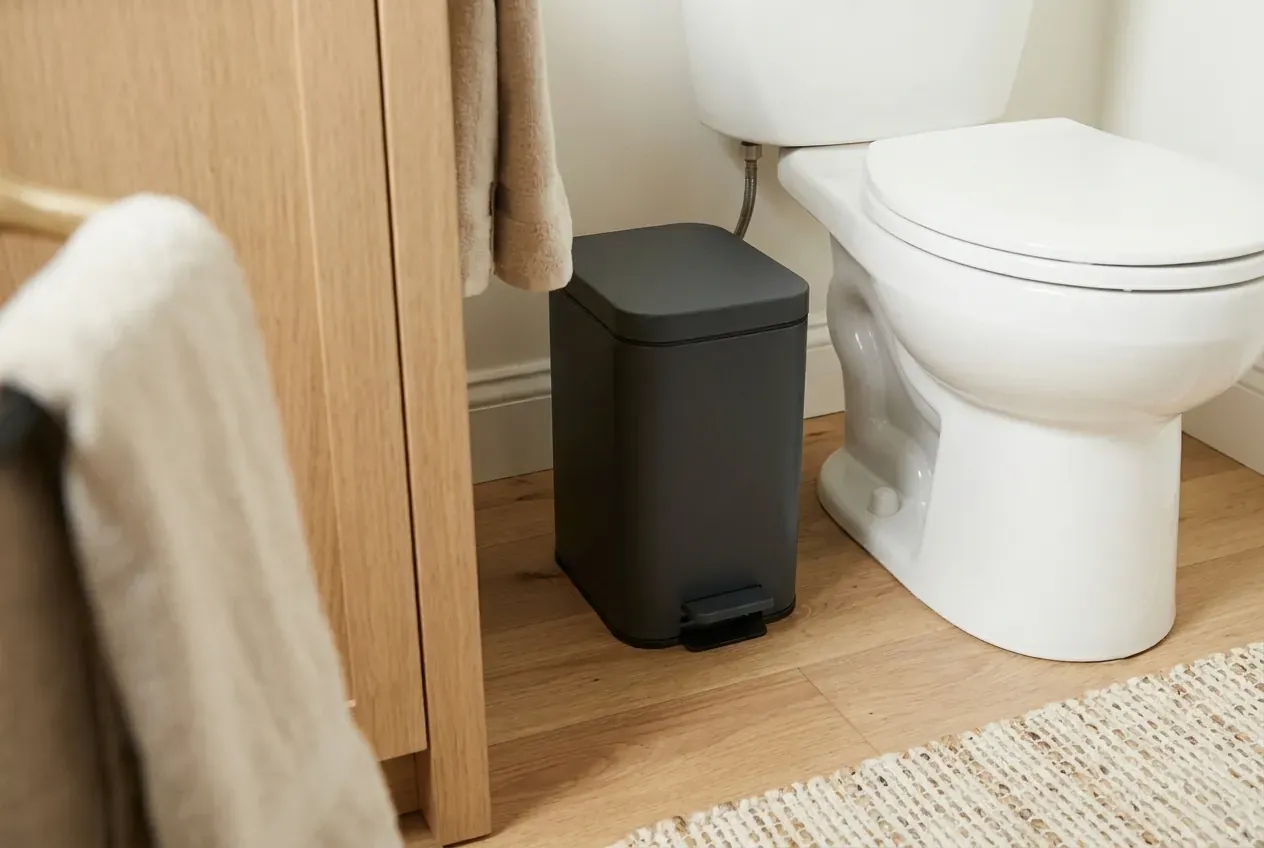 Close up: Leave a 6 in (15 cm) gap between a slim trash can and the toilet base so the lid clears.
3. Shape and Size Math: Why Round Bins Fail in Small Spaces
- The Round Geometry Penalty: A round 8-liter trash can requires an 9-inch circle plus 2 inches of perimeter clearance—wasting floor space on empty dead corners.
- Rectangular Space Optimization: A rectangular bin fits flush against walls and cabinet kickplates, utilizing linear depth rather than protruding into walking aisles.
- Rug Clearance Coordination: Ensure the trash can base sits completely on bare tile rather than half-on and half-off your bath mat, avoiding wobbling and spilled contents as outlined in Small Bathroom Rug Placement.
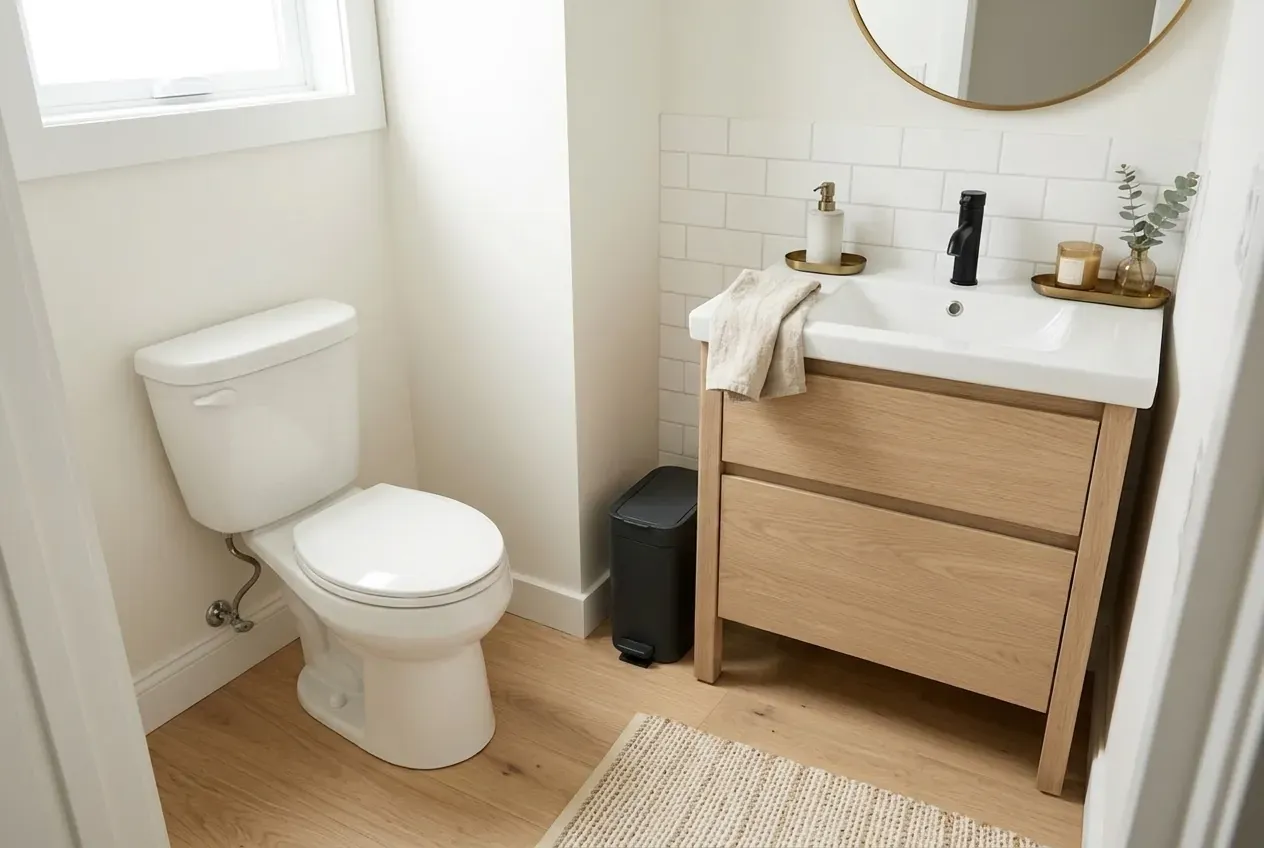 From above and to one side, the full footprint and the walkway read at a glance.
4. Colors That Help the Bin Disappear
Make utilitarian accessories blend into the background. Alabaster Chalk (#F5F2EB, LRV 82) wall paint covers most of the room and bounces daylight. Light Oak (#C9A97C) vanity millwork and Oat Linen (#D9CDB8) bath mats (LRV 52) supply the middle tone. A Charcoal Ink (#2F3135) matte trash can (LRV 14) and Aged Brass (#B89255) accessories add small, understated contrast.
Keep your waste bin finish coordinated with your faucet and towel bars to ensure a cohesive, designer finish. In ultra-narrow powder rooms, selecting a bin with an internal bag retention ring ensures plastic liner edges stay completely hidden from view.
Curated Color Palette & Key Textures
- Alabaster Chalk #F5F2EB
- Oat Linen #D9CDB8
- Aged Brass #B89255
- Charcoal Ink #2F3135
General references
Dimensions in these guides are typical planning ranges, not legal minimums, and they can differ by jurisdiction. Use the references below as starting points, then confirm local code and your lease before making changes.
FAQ
Where should a trash can go in a small bathroom?
The best location is in the narrow gap between the toilet base and the vanity, or in the dead corner behind the open entry door.
Should a bathroom trash can have a lid?
Yes, always choose a step-pedal or motion-sensor lid in a small bathroom to conceal personal waste and maintain sanitary visual minimalism.
What size trash can fits a small bathroom?
A slim rectangular 5-liter (1.3-gallon) bin measuring approximately 5 to 6 inches wide and 10 to 12 inches deep fits narrow spaces without blocking walkways.
Save this idea

Keep reading
Related rooms
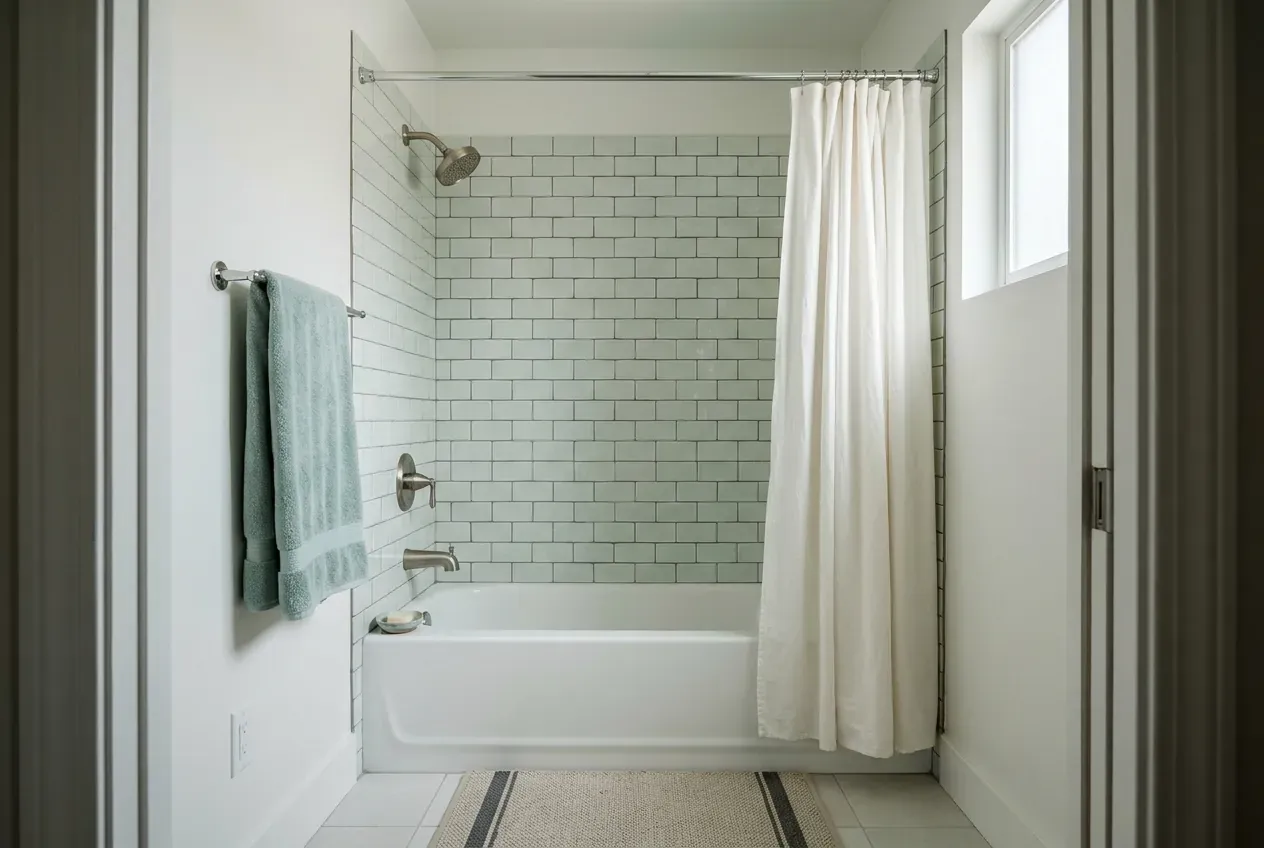
Standard Shower Head Height: 72 to 80 in (183 to 203 cm)
Standard shower head height: mount a fixed head 72 to 80 in (183 to 203 cm) above the floor, 6 in above the tallest user, valve at 38 to 48 in.
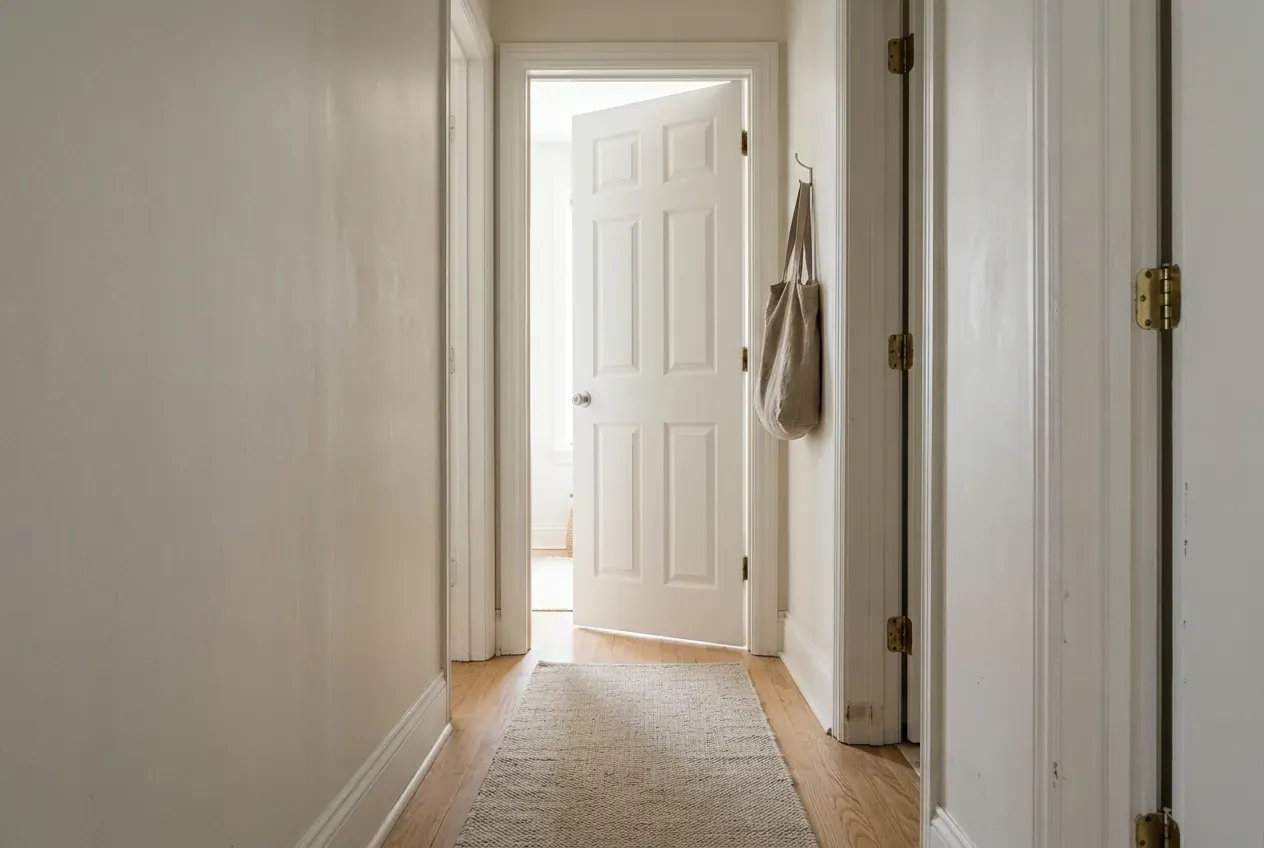
Standard Interior Door Sizes: Widths, Heights, Clearances
Standard interior door sizes: 24 to 36 in (61 to 91 cm) wide and 80 in (203 cm) tall, with clear openings, rough-opening sizes and swing clearance.
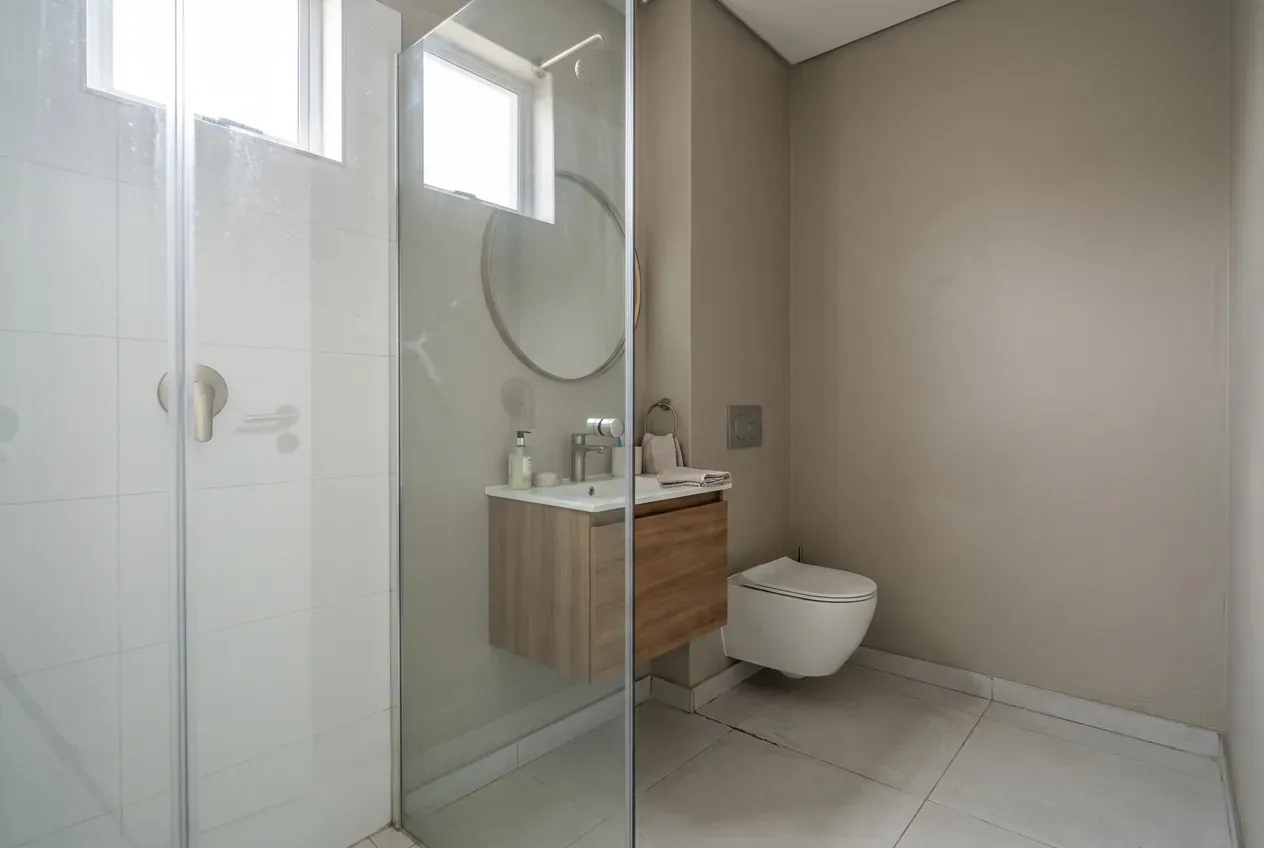
What Is a 3/4 Bathroom? Layouts, Sizes & Code Clearances
What is a 3/4 bathroom? A toilet, sink and shower with no tub, in as little as 5 x 7 ft (152 x 213 cm). Compare quarter, half and full baths.