Hoosier Cabinet for a Small Kitchen: What to Know
A Hoosier cabinet adds counter and storage to a small kitchen: 40 to 48 in (102 to 122 cm) wide, 25 to 27 in deep, with 36 in (91 cm) of aisle in front.
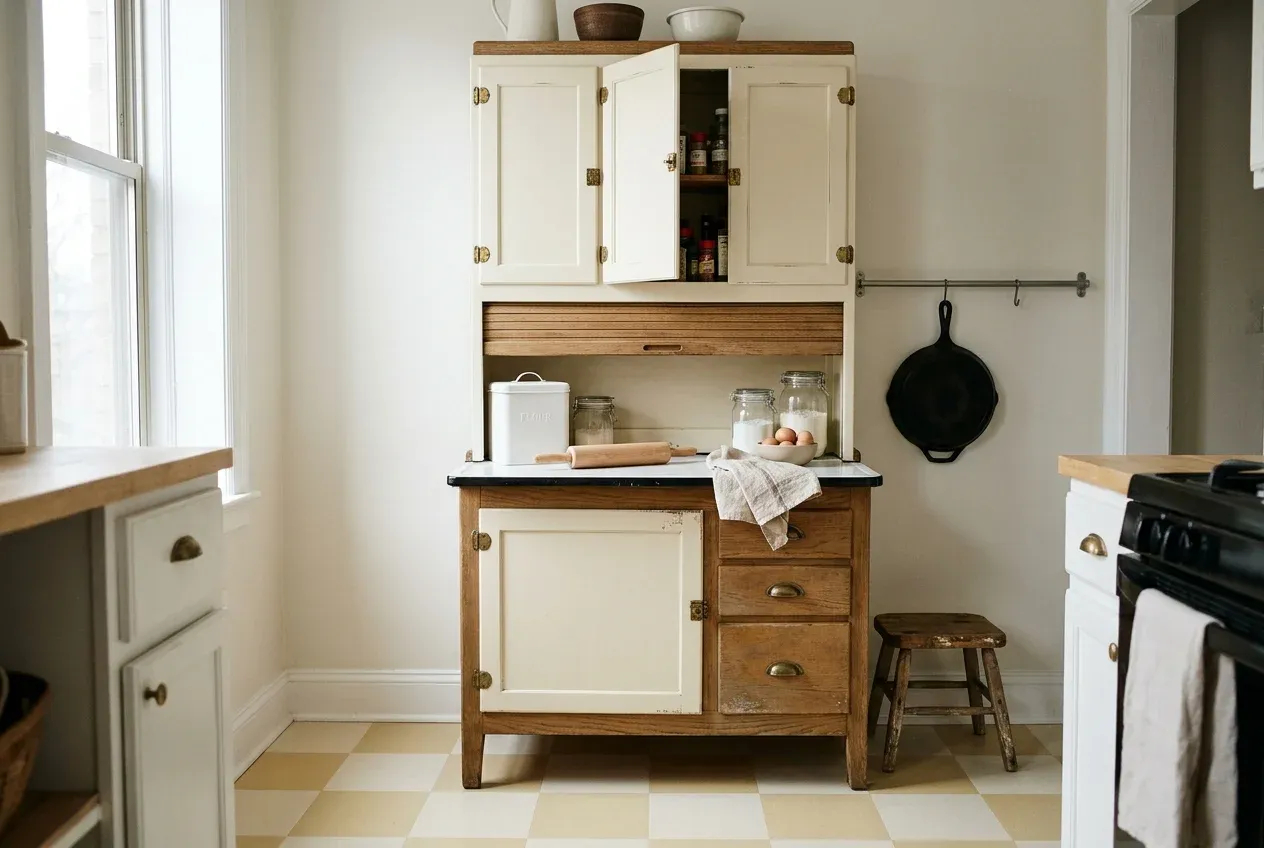
Room specifications
- Room ScaleSmall kitchen (about 7 x 9 ft) with no counter space beside the fridge
- Design StyleFarmhouse Revival
- Budget TierMid-Range ($$)
- Palette Swatches4 colors
1. What a Hoosier Cabinet Is
A Hoosier cabinet is a freestanding early-1900s kitchen workstation that packs an extendable porcelain-enamel work surface, upper pantry shelves, spice racks, a roll-top tambour door, and deep lower drawers into a single 40 to 48 in (102 to 122 cm) wide footprint. Built before fitted kitchen cabinetry became standard, it functioned as an all-in-one baking station and dry pantry.
For apartments where the landlord’s kitchen offers only a sink base and a stove with zero prep counter, a Hoosier cabinet solves both counter shortage and dry storage in one freestanding piece—without drilling into rental walls.
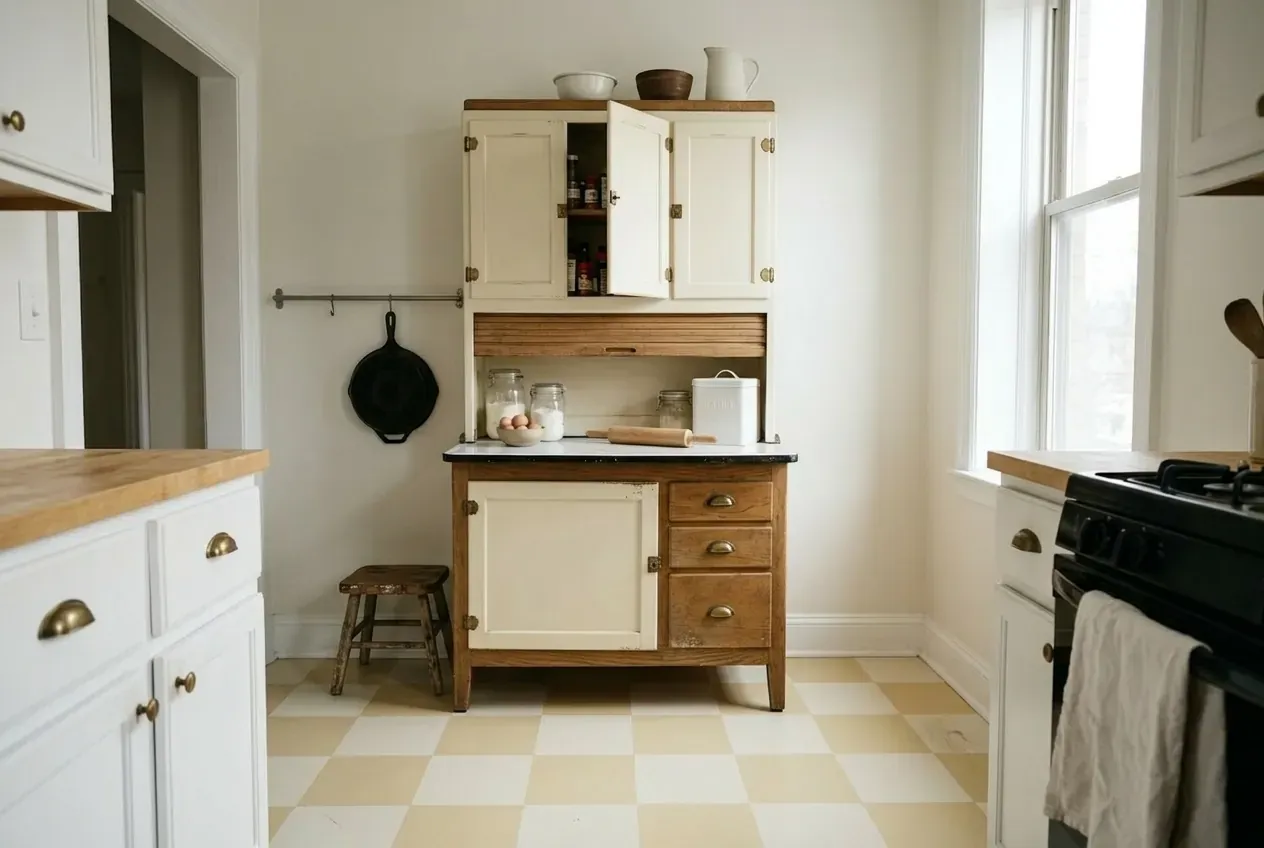 The same room seen from the opposite end, so you can judge the layout from the far side.
2. Is It Right for a Small Kitchen
Before hauling a vintage cabinet into a 7 x 9 ft (2.1 x 2.7 m) kitchen, check three dimensions carefully:
- Base Depth: Most Hoosier bases run 25 to 27 in (64 to 69 cm) deep—slightly deeper than modern 24 in (61 cm) counters—plus another 8 to 10 in (20 to 25 cm) when the enamel work leaf pulls forward.
- Aisle Clearance: A common planning guideline is leaving 36 in (91 cm) of clear floor in front of the cabinet so you can pull out lower drawers without hitting the fridge or stove opposite.
- Two-Piece Transport: Check whether the upper hutch lifts off the base; most vintage units separate into two halves to clear 30 in (76 cm) apartment doors.
Compare footprints with modern freestanding small storage cabinets and no-upper-cabinet layouts before deciding.
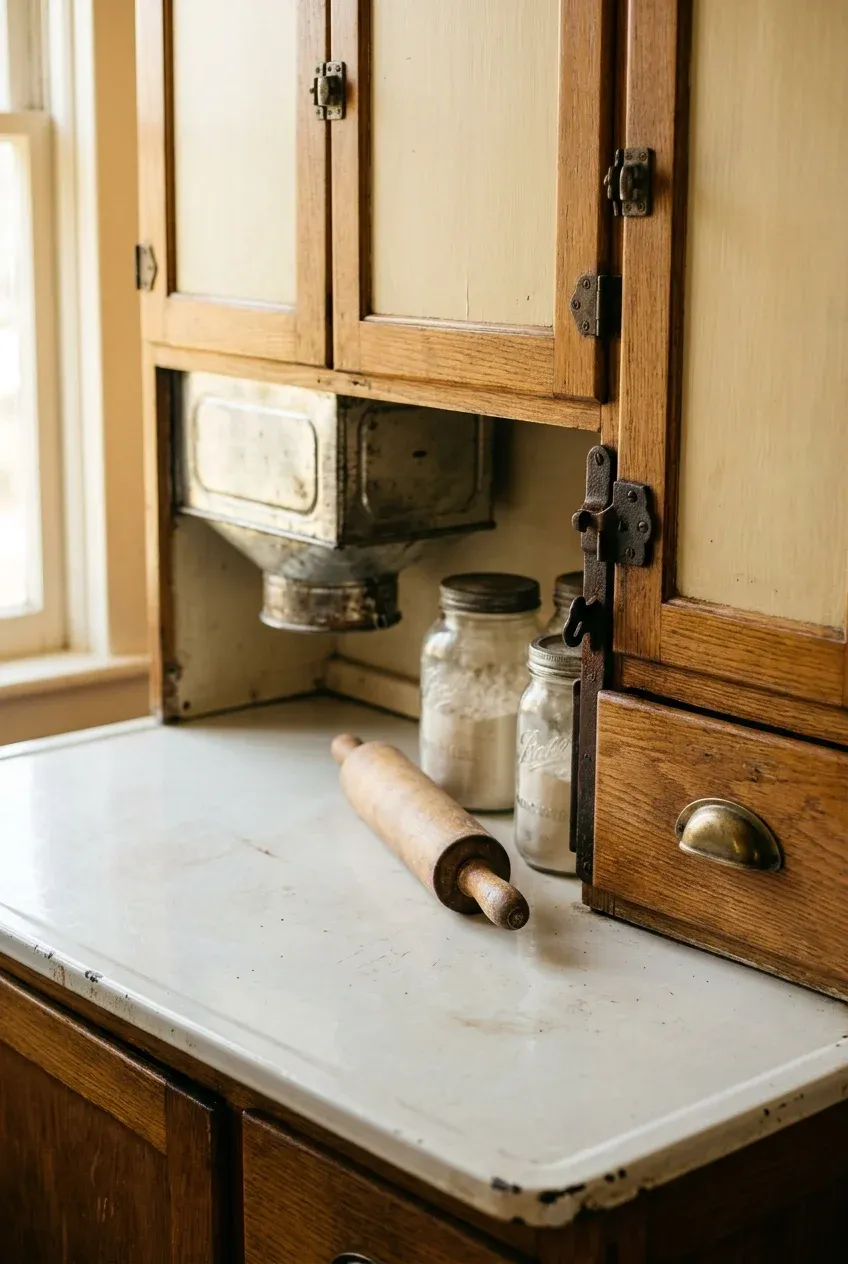
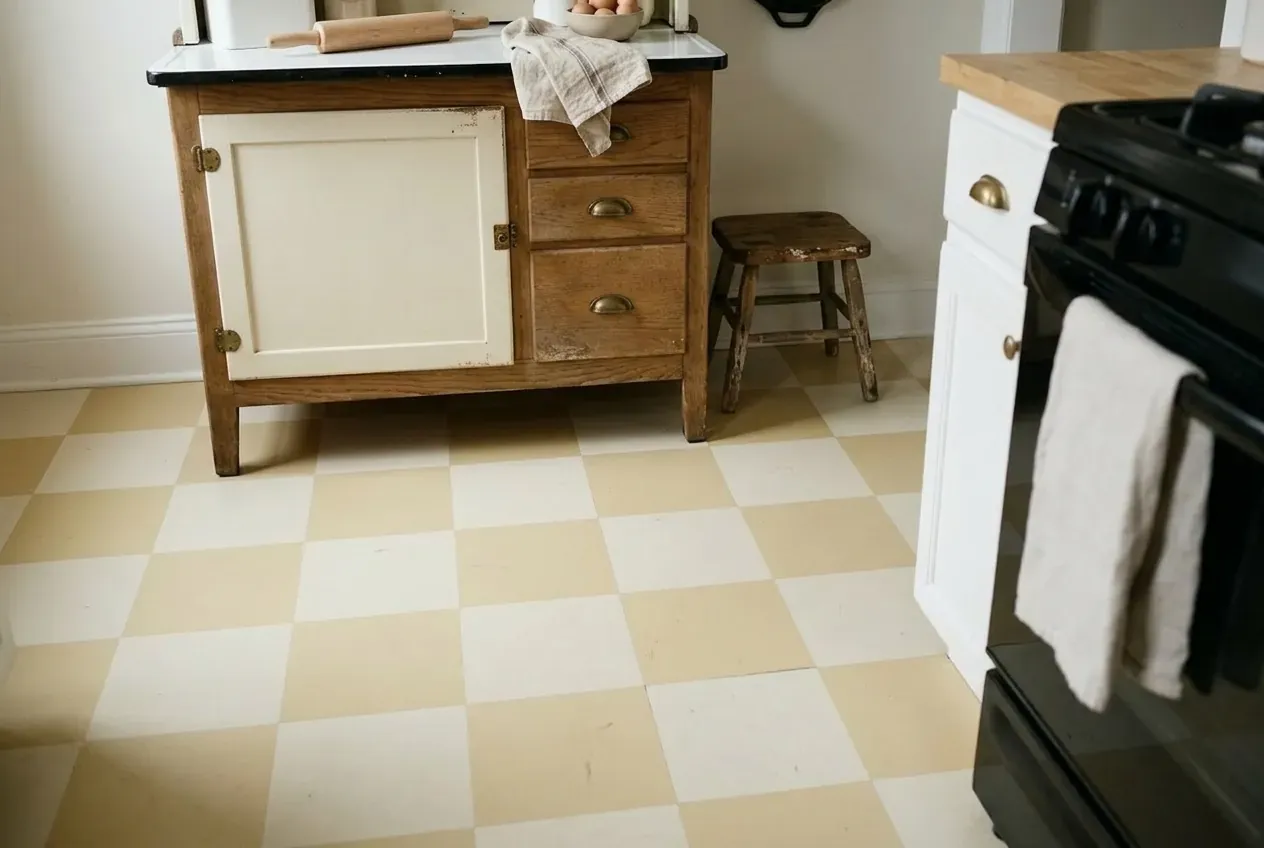 Close up: Measure the wall width, depth and the height under any shelf before you buy: a typical vintage cabinet is deeper than a wall cabinet, so leave at least 36 in (91 cm) of aisle in front.
3. Checking a Vintage One
| Component | What to Inspect | Red Flag |
|---|---|---|
| Enamel Work Top | Smooth glaze; clean sliding tracks | Deep rust holes or bent steel edges |
| Tambour Roll Door | Glides smoothly up and down | Torn canvas backing or jammed slats |
| Drawers & Flour Bin | Clean wood runners; dry tin lining | Woodworm pinholes or sour damp smell |
Ask the seller whether any buttermilk #EBDFB5 or enamel white #F8F6EF paint is original or a recent DIY coat over peeling lead-era varnish—if you plan to prep food directly on the pull-out leaf, stick to an unchipped porcelain-enamel top or lay a removable wooden cutting board over it.
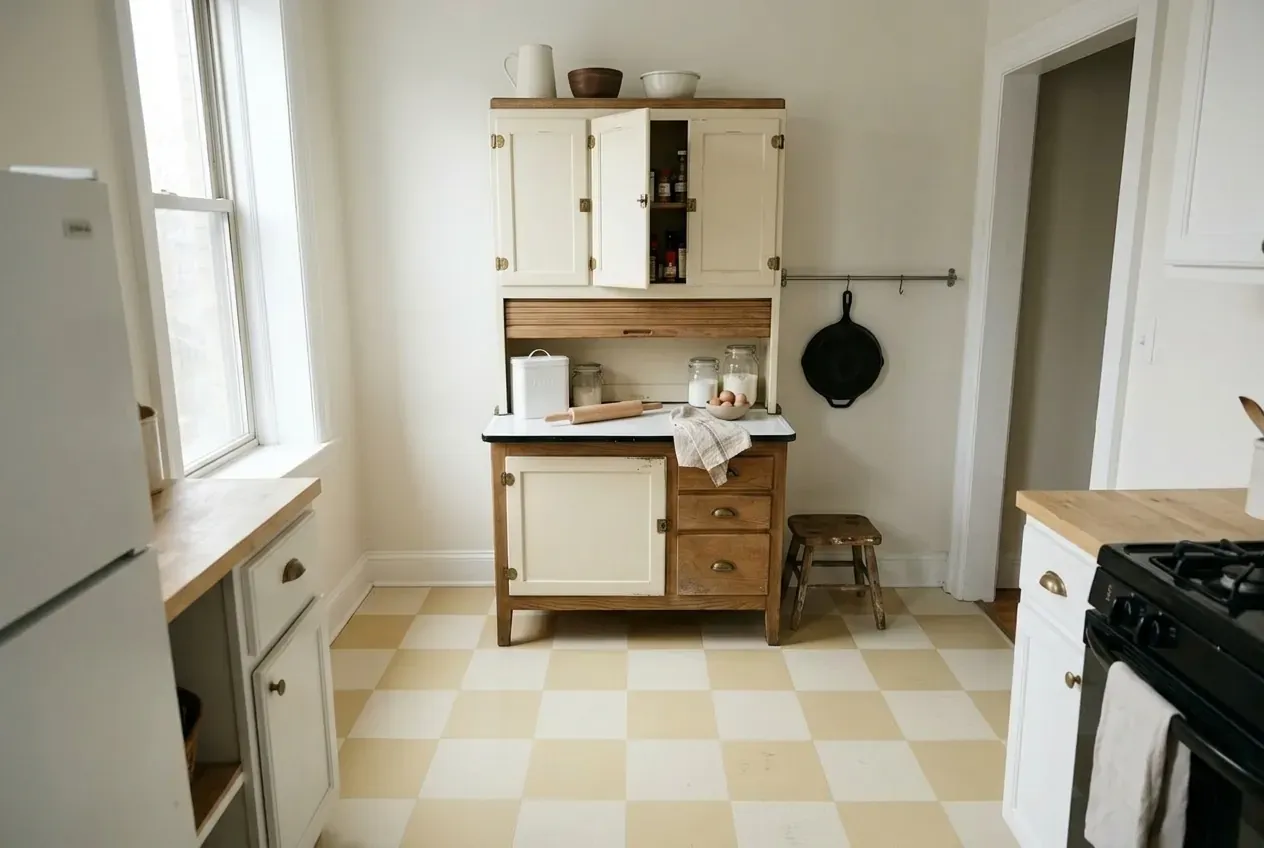 From above and to one side, the full footprint and the walkway read at a glance.
4. Using It Today
In a modern 7 x 9 ft (2.1 x 2.7 m) kitchen, let the upper oak varnish #B07E45 hutch hold everyday mugs, dry grains in glass jars, and spices behind the tambour door, while the pull-out enamel surface serves as a dedicated coffee bar or baking prep deck. Ground the warm oak with cast iron #34302B skillets on a side hook and keep the 36 in (91 cm) aisle completely clear.
Floor Protection & Everyday Maintenance
A vintage oak Hoosier cabinet loaded with flour, dry goods, and cast iron can weigh 180 to 250 lb (82 to 113 kg), so set wide felt or rubber furniture cups beneath its four feet before sliding it onto rental vinyl or hardwood. Check that the pull-out enamel leaf locks firmly on its side stops before kneading dough or setting a heavy stand mixer on top. Wipe enamel white #F8F6EF tops with warm soapy water—never abrasive scouring powder—to preserve the original glossy glaze and keep oak varnish #B07E45 doors moving smoothly on dry soap-rubbed runners.
If your apartment kitchen lacks electrical outlets right beside the Hoosier wall, keep the cabinet strictly for dry pantry goods, mixing bowls, baking sheets, and manual coffee gear like a pour-over kettle and hand grinder rather than running extension cords across a 36 in (91 cm) walkway. Line deep lower drawers with washable cork or linen mats so heavy ceramic bowls do not slide and chip when drawers open. With its roll-top tambour door pulled down at night, a Hoosier cabinet hides everyday spice jars and baking clutter in seconds, keeping a 7 x 9 ft (2.1 x 2.7 m) kitchen calm.
Before finalizing placement in a 7 x 9 ft (2.1 x 2.7 m) kitchen, double-check that the upper tambour door and lower cabinet doors open fully without clipping adjacent fridge handles or stove knobs. With 36 in (91 cm) of clear aisle in front, a Hoosier cabinet adds both pantry capacity and a durable prep surface. Taking five minutes to verify your exact wall dimensions, fabric care label, and 30 in (76 cm) doorway clearance before ordering prevents costly apartment returns and keeps the room comfortable.
Curated Color Palette & Key Textures
- Enamel White #F8F6EF
- Buttermilk #EBDFB5
- Oak Varnish #B07E45
- Cast Iron #34302B
General references
Dimensions in these guides are typical planning ranges, not legal minimums, and they can differ by jurisdiction. Use the references below as starting points, then confirm local code and your lease before making changes.
FAQ
What is a Hoosier cabinet?
A freestanding kitchen cabinet from the early 1900s that combined a work surface with drawers, shelves and built-in storage such as a flour bin, designed to replace a pantry.
Can a Hoosier cabinet work in a small modern kitchen?
Yes, as an extra counter and storage, if the aisle in front stays at least 36 in (91 cm) wide. Measure first, because vintage cabinets are usually deeper than modern wall cabinets.
How do I check a vintage Hoosier cabinet?
Check the work surface for chips and rust, open every drawer and door, look for woodworm holes and smell the interior for damp. Ask the seller about repairs and restoration.
Save this idea

Keep reading
Related rooms
Pendant Light Height: Hang 30 to 36 in Over a Table
Hang pendants 30 to 36 in (76 to 91 cm) above a table or island, 7 ft (213 cm) above open floor, with worked drop lengths for 8 and 9 ft ceilings.
Tablecloth Size Guide: Table Size Plus 16 to 24 in
Tablecloth size guide: add twice the drop to your table, so an 8 to 12 in (20 to 30 cm) drop means table size plus 16 to 24 in. Round and rectangle chart.
Dining Table Size for 6 and 8 People: 72 and 96 in
Dining table size for 6 people is 72 x 36 in (183 x 91 cm); for 8 people, 96 x 36 in. See the 24 in per diner maths and the room each table needs.